 Vorschau anzeigen
 Versenden
 Teilen
 Details anzeigen

 Herunterladen
 Ähnliche Objekte
 Röntgenaufnahme
 Diashow
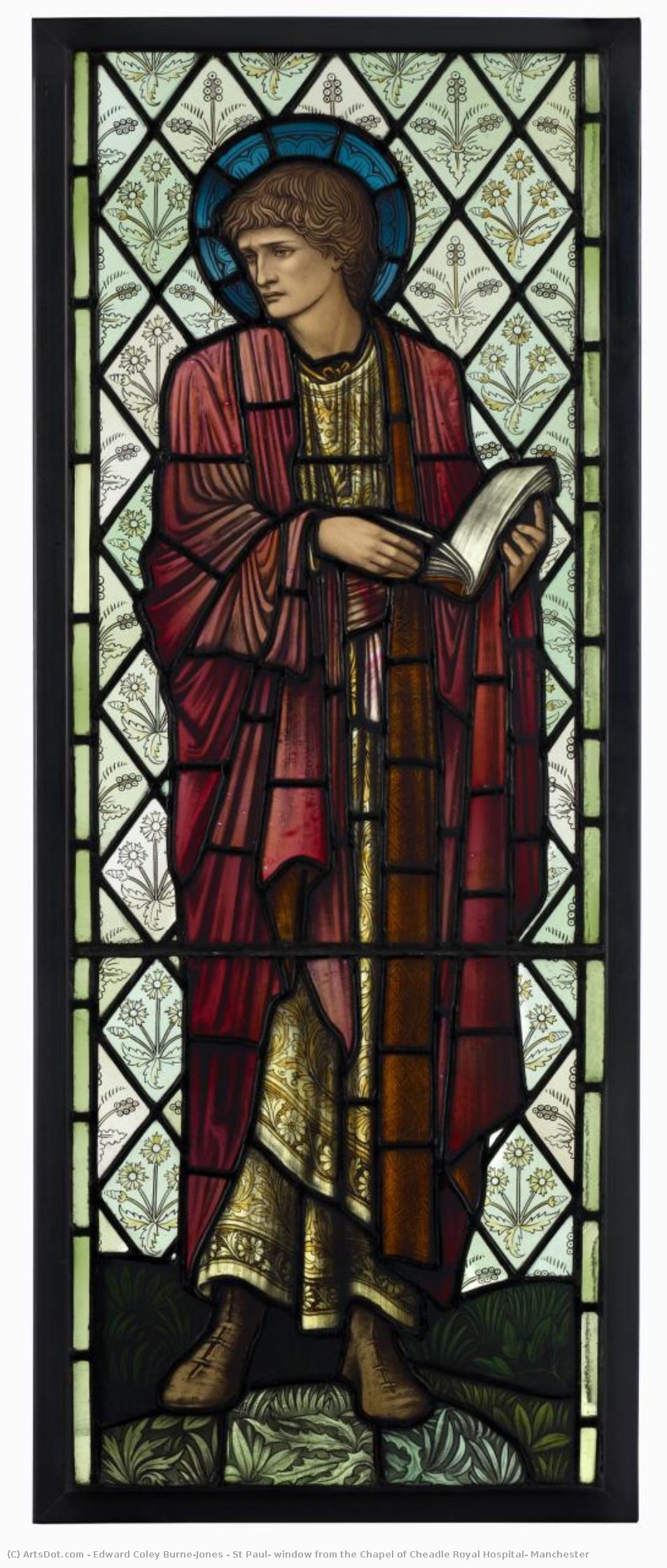
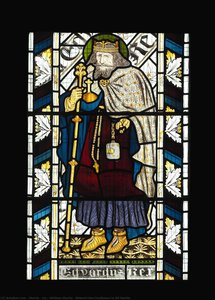
St Paul, window from the Chapel of Cheadle Royal Hospital, Manchester
 Acrylic On Canvas
- WallArt
- Pre-Raphaelite Brotherhood
 1892
1892 122.0 x 45.0 cm
 National Gallery of Victoria
 Weiterlesen
Handgefertigte Ölreproduktion
Handgemaltes Ölgemälde auf Leinwand in Ihrer Wunschgröße und mit Rahmen, auf Bestellung von unseren Künstlern angefertigt. ( Druck bestellen Bild kaufen)




P118B $10

P118H $10

P118W $10

P438Z $10

P508JH $12

P508YH $12

P805H $10

P805Z $10

P919BZ $10

P919G $10

P919XJ $10

P959ZH $10

P968JZ $12

W106C $8

W218G $10

W218JH $8

W218Y $10

W307PJ $10

W316G $10

W316PJ $8

W316Y $10

W398PJ $8

W4111J $10

W500HY $15

W500JH $15

W692G $12

W849H $8

W940BG $15

W953PJ $8




Wählen Sie aus unseren vordefinierten Formaten, die den ursprünglichen Proportionen des Kunstwerks entsprechen.

Sie können Ihre eigenen Maße eingeben, um einen bestimmten Rahmen oder Platz auszufüllen. Wenn die gewählte Größe nicht den Proportionen des Originalbildes entspricht, werden wir das Kunstwerk entweder beschneiden oder das Gemälde durch zusätzliche, handgemalte Elemente erweitern. Ein digitales Mockup wird Ihnen zur Genehmigung zugesandt, bevor die Produktion beginnt.
Bitte beachten Sie, dass die Bildschirmvorschau nicht die tatsächliche Beschneidung oder Erweiterung widerspiegelt. Nur das Mockup zeigt die endgültige Komposition exakt an.
Obwohl Sondermaße verfügbar sind, empfehlen wir, eine Größe aus der vordefinierten Liste zu wählen, um die ursprünglichen Proportionen beizubehalten.
Nach der Bestellung wird das ArtsDot.com-Team dem Kunden Anweisungen per E-Mail zusenden und eine Mockup-Vorschau bereitstellen.
Weltweiter Versand () in nur 3 bis 4 Wochen statt der üblichen 5 Wochen. (28 August). Keine Kompromisse bei der Qualität.

Kostenloser weltweiter Expressversand

Hochwertige Leinenleinwand

Umfassender Versicherungsschutz beim Versand

Zollgebühren-Rückerstattungsgarantie

Garantie für exakte Farbtreue

60 Tage Rückgaberecht (nur bei Mängeln)

100% Geld-zurück-Garantie

Mengenrabatt verfügbar
 Die Glasoption ist nur für Größen unter 110 cm verfügbar.

St Paul, window from the Chapel of Cheadle Royal Hospital, Manchester
Art der Reproduktion
Format der Reproduktion
-


Gesamtpreis
$ 263
A Glimpse of Divinity: Burne-Jones’s St. Paul Window
Edward Coley Burne-Jones's "St. Paul, window from the Chapel of Cheadle Royal Hospital, Manchester" is more than just a stained glass panel; it’s a poignant distillation of Victorian spirituality and Pre-Raphaelite artistry. Completed in 1892, this piece captures a moment of contemplative grace – St. Paul, depicted mid-sentence, holding a book, his posture embodying both intellectual rigor and profound faith. The window isn't merely decorative; it’s a carefully constructed narrative, inviting viewers into the heart of Christian theology and offering a visual meditation on knowledge, scripture, and divine inspiration.
- Subject Matter: The central figure is St. Paul, a pivotal apostle in the New Testament, known for his conversion and his role in spreading Christianity. His pose—one foot raised, a gesture of both authority and vulnerability—is instantly recognizable and deeply symbolic.
- Style & Technique: Burne-Jones masterfully blends elements of Pre-Raphaelite romanticism with Victorian sensibilities. The rich, jewel-toned palette – deep reds, blues, and golds – creates an atmosphere of solemnity and reverence. The meticulous detail in the drapery and facial features speaks to Burne-Jones’s technical skill, while the slightly stylized representation aligns with the Pre-Raphaelite movement's rejection of academic art conventions.
- Material & Construction: The window is crafted from traditional stained glass techniques, utilizing lead lines to hold the individual pieces of colored glass together. The careful layering and blending of colors create a luminous effect, transforming light into a vibrant, ethereal experience.
Historical Context: A Chapel Commissioned for Healing
Understanding the window’s context is crucial to appreciating its significance. The Chapel of Cheadle Royal Hospital, built in 1875, was designed as a place of respite and recovery for patients needing convalescence. The hospital itself was founded by Joseph Adshead, a wealthy Manchester industrialist who envisioned a haven away from the city’s grime and bustle. Burne-Jones's commission reflects this ethos – a desire to create an environment that nurtured both physical and spiritual healing. The window wasn’t simply a decorative element; it was intended to inspire hope, faith, and a sense of connection with something larger than oneself.
Interestingly, the window’s journey is marked by its reuse across multiple sites – initially in St Mark's Church, New Ferry, then Holy Trinity, Sloane Street, and finally finding its permanent home at Cheadle Royal. This demonstrates Burne-Jones’s versatility as an artist and his willingness to adapt existing designs for new patrons. The window’s survival is a testament to its enduring beauty and the esteem in which it was held.
Symbolism & Interpretation
Beyond the immediate depiction of St. Paul, the window is rich with symbolic meaning. The book he holds represents scripture – the foundation of Christian belief. His raised foot symbolizes his authority as an apostle, while his contemplative posture suggests a deep engagement with theological thought. The surrounding figures—the two individuals in the upper left and the one in the lower right—add layers of narrative complexity, perhaps representing listeners or witnesses to Paul’s proclamation. The bird, positioned near the upper right corner, could symbolize the Holy Spirit, further reinforcing the window's spiritual message.
Burne-Jones was deeply influenced by medieval art and symbolism, and this is evident in the window’s carefully considered composition and its evocative use of color and light. The overall effect is one of serene contemplation—a reminder of faith, knowledge, and the enduring power of spiritual inspiration.
A Legacy of Beauty: Reproductions & Artistic Inspiration
Reproductions of “St. Paul, window from the Chapel of Cheadle Royal Hospital” capture a significant portion of the original’s luminous quality and intricate detail. When selecting a reproduction, consider the materials used – archival-quality prints on museum-grade paper will ensure that the colors remain vibrant for generations to come. This stunning artwork offers a timeless aesthetic, lending itself beautifully to both traditional and contemporary interior design settings. Its rich symbolism and evocative imagery continue to resonate with viewers today, making it a cherished piece of Victorian art history.
Ähnliche Kunstwerke
Über den Künstler
Frühes Leben und Ausbildung
Edward Coley Burne-Jones, ein renommierter britischer Künstler und Designer, wurde am 28. August 1833 in Birmingham, im Vereinigten Königreich, geboren. Sein frühes Leben war geprägt vom Tod seiner Mutter, Elizabeth Coley Jones, sechs Tage nach seiner Geburt. Er wurde von seinem Vater, Edward Richard Jones, und der Familienvermieterin Ann Sampson aufgezogen. Burne-Jones besuchte ab 1844 die King Edward VI Grammar School und studierte später von 1848 bis 1852 an der Birmingham School of Art.Akademische Laufbahn und die Brotherhood
Burne-Jones widmete sich am Exeter College in Oxford der Theologie, wo er William Morris begegnete. Gemeinsam mit einer Gruppe von Freunden aus Birmingham, dem sogenannten "Birmingham Set", gründeten sie eine intime Gesellschaft namens "die Brotherhood". Diese Zeit war geprägt vom Einfluss John Russkins und Tennysons auf ihre Arbeit sowie Besuchen von Kirchen und der Verehrung des Mittelalters.Künstlerische Karriere und bemerkenswerte Werke
Burne-Jones' künstlerische Karriere blühte in verschiedenen Medien, darunter Malerei, Glasmalerei und dekorative Kunst, auf. Seine frühen Gemälde waren vom Stil Dante Gabriel Rossettis beeinflusst, doch er entwickelte bald seinen eigenen einzigartigen Stil. Zu seinen bemerkenswertesten Werken zählen:- The Beguiling of Merlin, das 1877 in der Grosvenor Gallery ausgestellt wurde und seinen Aufstieg zum Star der Ästhetischen Bewegung markierte.
- Glasmalereien in verschiedenen Kirchen, wie z.B. St. Philip's Cathedral in Birmingham und Holy Trinity Church in Sloane Square, Chelsea.
- Zusammenarbeiten mit William Morris an dekorativen Kunstwerken, einschließlich Designs für Morris, Marshall, Faulkner & Co.
Persönliches Leben und späte Jahre
Burne-Jones heiratete 1860 Georgiana "Georgie" Macdonald, mit der er drei Kinder hatte. Seine späteren Jahre waren von einer leidenschaftlichen Affäre mit seiner griechischen Modellin Maria Zambaco geprägt, die in ihrem Selbstmordversuch endete. Trotzdem blieb Burne-Jones bis zu seinem Tod am 17. Juni 1898 bei seiner Frau.Vermächtnis und Einfluss
Edward Coley Burne-Jones' Beiträge zur Präraffaelitenbewegung und seine innovativen Glasmalereien haben einen bleibenden Eindruck in der britischen Kunst hinterlassen. Sein Einfluss ist in verschiedenen Bereichen der dekorativen Kunst sichtbar, von Keramikfliesen bis hin zu Schmuck.- Erkunden Sie weitere Werke von Burne-Jones auf ArtsDot.com.
- Entdecken Sie die British Council Collection, mit bemerkenswerten Künstlern, in den Kunstsammlungen von ArtsDot.
Referenzen:
- wikipedia: edward burne-jones
- Wabot Kunstassistent von ArtsDot für Einblicke in Kunst und Künstler.
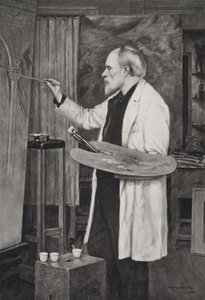
Edward Coley Burne-Jones
1833 - 1898 , Vereinigtes Königreich
Kurzinfos
- Beeinflusste Künstler/Bewegungen:
- Dekorative Kunst
- Keramikfliesen, Schmuck
- Bemerkenswerte Werke:
- The Beguiling of Merlin
- Drei weibliche Figuren
- Fides
- Einflussreiche Künstler:
- Dante Gabriel Rossetti
- John Ruskin
- Tennyson
- Geburtsdatum: 28. August 1833
- Geburtsort: Birmingham, Vereinigtes Königreich
- Künstlerische Bewegung: Präraffaeliten, Ästhetizismus
- Nationalität: Britisch
- Todatum: 17. Juni 1898
- Vollständiger Name: Edward Coley Burne-Jones
Ähnliche Artikel
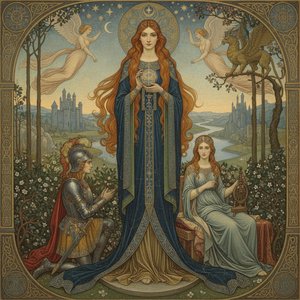
Edward Burne-Jones: Eine präraphaelitische Vision von Mythos, Symbolik und ästhetischem Idealismus
Entdecken Sie das faszinierende Werk von Edward Burne-Jones und die präraphaelitische Bewegung! Analysen, Hintergrundinformationen & hochwertige Reproduktionen bei ArtsDot.

The Verdant Gaze: Victorian Naturalism & the Aesthetic Revolution in Art
Explore the captivating world of Victorian Naturalism & the Pre-Raphaelite movement! Discover Rossetti, Burne-Jones & more iconic artists. Expert analysis & high-quality reproductions at ArtsDot.
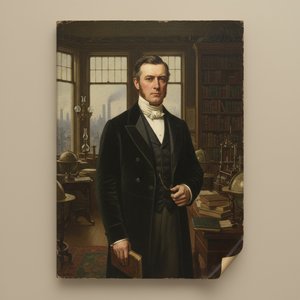
Frank O. Salisbury: Capturing an Era Through Victorian Portraiture & Atmospheric Realism
Explore the life & work of Frank O. Salisbury, Britain's celebrated 'Painter Laureate'. Discover his masterful Victorian portraits, atmospheric realism, and captivating historical murals. A deep dive into a remarkable artistic legacy.
The Refined Aesthetic of Victorian Illustration: A Study in Narrative & Technique
Explore the captivating world of Victorian illustration! Discover Pre-Raphaelite influences, key artists like Rossetti & Stephens, and the era's rich narrative detail. A deep dive for art enthusiasts.
William Powell Frith: Gesellschaftsbilder des Viktorianismus und der Aufstieg des Realismus
Entdecken Sie das Werk von William Powell Frith und die Gesellschaftsbilder des Viktorianismus! Analysen, Biografie & der Aufstieg des Realismus in der englischen Malerei. Jetzt lesen!