
- Startseite

- Ölgemälde-Reproduktion
- family of indian painters who were active in the pahari region, mainly in the kangra valley, from around 1740 to 1830
 Vorschau anzeigen
 Versenden
 Teilen
 Details anzeigen

 Herunterladen
 Ähnliche Objekte
 Röntgenaufnahme
 Diashow
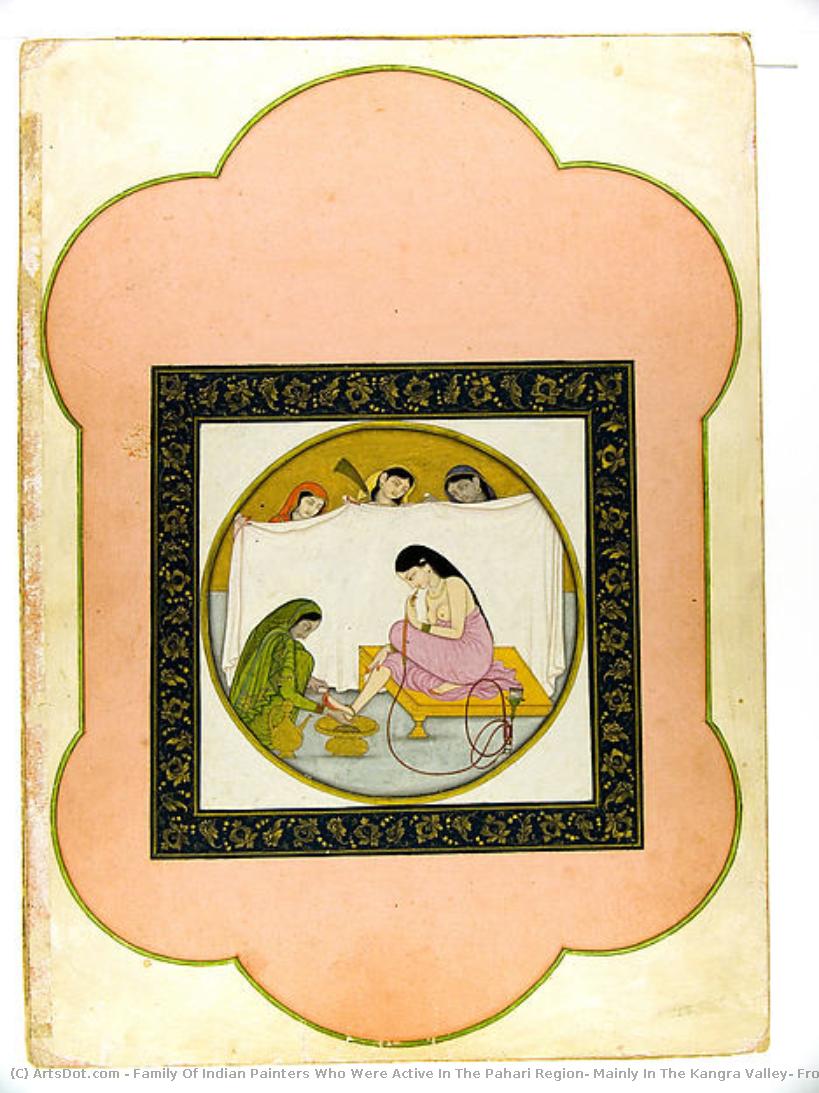
Radha Prepares to Meet Her Lover
 Pahari Painting
 1780
1780 28.0 x 20.0 cm
 Weiterlesen
Handgefertigte Ölreproduktion
Handgemaltes Ölgemälde auf Leinwand in Ihrer Wunschgröße und mit Rahmen, auf Bestellung von unseren Künstlern angefertigt. ( Druck bestellen Bild kaufen)




































Wählen Sie aus unseren vordefinierten Formaten, die den ursprünglichen Proportionen des Kunstwerks entsprechen.

Sie können Ihre eigenen Maße eingeben, um einen bestimmten Rahmen oder Platz auszufüllen. Wenn die gewählte Größe nicht den Proportionen des Originalbildes entspricht, werden wir das Kunstwerk entweder beschneiden oder das Gemälde durch zusätzliche, handgemalte Elemente erweitern. Ein digitales Mockup wird Ihnen zur Genehmigung zugesandt, bevor die Produktion beginnt.
Bitte beachten Sie, dass die Bildschirmvorschau nicht die tatsächliche Beschneidung oder Erweiterung widerspiegelt. Nur das Mockup zeigt die endgültige Komposition exakt an.
Obwohl Sondermaße verfügbar sind, empfehlen wir, eine Größe aus der vordefinierten Liste zu wählen, um die ursprünglichen Proportionen beizubehalten.
Nach der Bestellung wird das ArtsDot.com-Team dem Kunden Anweisungen per E-Mail zusenden und eine Mockup-Vorschau bereitstellen.
Weltweiter Versand () in nur 3 bis 4 Wochen statt der üblichen 5 Wochen. (7 September). Keine Kompromisse bei der Qualität.

Kostenloser weltweiter Expressversand

Hochwertige Leinenleinwand

Umfassender Versicherungsschutz beim Versand

Zollgebühren-Rückerstattungsgarantie

Garantie für exakte Farbtreue

100-Tage-Rückgaberecht (nur bei Mängeln)

100% Geld-zurück-Garantie

Mengenrabatt verfügbar
 Die Glasoption ist nur für Größen unter 110 cm verfügbar.

Radha Prepares to Meet Her Lover
Art der Reproduktion
Format der Reproduktion
-


Gesamtpreis
$ 363
Ähnliche Kunstwerke

Über den Künstler
The Legacy of the Kangra School: Exploring the Artistic Family Behind Pahari Miniature Painting
The Kangra School, nestled in the verdant Himalayan foothills of Himachal Pradesh, stands as a beacon of Indian miniature painting—a tradition profoundly shaped by the artistic endeavors of a remarkable family. Emerging around 1740 and flourishing until approximately 1830, this lineage represents the first generation following the legendary masters Pandit Seu and Nainsukh, establishing itself as one of the most influential forces in Himalayan art history. To understand their contribution is to delve into a world where individual talent was inextricably linked to familial heritage, creating a cohesive yet diverse aesthetic that captured the very soul of the Pahari region. The foundations of this dynasty were laid by Pandit Seu, the patriarch whose meticulous approach and dedication to portraying Hindu mythology—particularly the enchanting legends of Krishna—became the cornerstone of the Kangra style. His workshop in Guler served as a crucible for artistic excellence. This tradition was further refined by his nephew, Nainsukh, a painter of unparalleled brilliance who dared to experiment with innovative techniques. By skillfully blending the grandeur of Mughal influences with traditional Pahari sensibilities, Nainsukh expanded the stylistic repertoire available to his descendants, imbuing images with an unprecedented emotional depth and a gift for precise observation.A Collaborative Vision: The Six Younger Artists
The true breadth of this family's impact is best seen through the collective work of the six younger artists: Khushala, Kama, Gaudhu, Nikka, Ranjha, and Fattu. As the sons of Manaku and Nainsukh, these painters inherited a prestigious workshop and a shared artistic vocabulary. While they faced the inevitable challenges of limited patronage and the necessity of seeking opportunities in various small courts across the region, their prolific output remains a testament to their consistent vision. Their work demonstrates a fascinating evolution, where the more angular and monochrome tendencies seen in some early works gradually transitioned into the refined, lyrical, and emotionally resonant style that defines the peak of the Kangra School. The movement of these artists was often dictated by the political landscape of the time. As Nainsukh himself left the family workshop in Guler to find work in Jasrota and later Basohli, his kin followed similar paths, seeking new patrons among the Rajput rulers. This dispersion, while challenging for a centralized school, allowed the Kangra style to permeate different courts, leaving an indelible mark on the artistic landscape of the entire valley.Artistic Mastery and Historical Significance
The achievements of this family extend far beyond mere technical skill; they captured the essence of human emotion and divine romance. Their oeuvre includes celebrated series such as the Gita Govinda, the Bhagavata Purana, and the Ramayana, works that utilized a sophisticated language of color and line to narrate sacred stories. The mastery of their "absolutely assured hand" allowed them to convey subtle nuances of facial expression and the delicate textures of nature, making their miniatures windows into a spiritual and romantic ideal. The historical significance of this group lies in their role as bridge-builders between eras and styles. They successfully integrated the sophisticated elements of Mughal painting—such as refined portraiture and complex compositions—into the local Pahari tradition, which had previously been more focused on religious iconography. In doing so, they created a unique aesthetic that was both cosmopolitan and deeply rooted in the Himalayan landscape. Today, the legacy of these painters remains a vital chapter in the history of Indian art, representing a period of unparalleled harmony between technical innovation and spiritual devotion.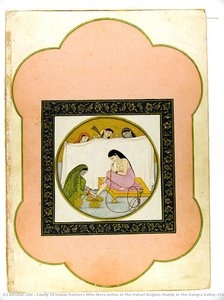
Kurzinfos
- Artistic Movement Or Style: Pahari art
- Artists Or Movements Influenced By This Artist: ['European Romanticism']
- Artists Who Influenced This Artist:
- Pandit Seu
- Nainsukh
- Date Of Death: Living
- Full Name: Family of Indian painters
- Nationality: Indian
- Notable Artworks:
- Churning of the ocean Manthan
- The Palace of the Pandava Brothers Set
- Place Of Birth: Guler, India
Ähnliche Artikel
Raja Ravi Varma: Bridging Tradition & Modernity in 19th-Century Indian Art
Explore the life & art of Raja Ravi Varma, a pioneer who fused European techniques with Indian iconography. Discover his iconic paintings, lasting legacy, and influence on modern Indian art at ArtsDot.
The Enduring Motif of Love in Art History: A Cross-Cultural Exploration of Representation and Emotion
Explore the rich history of love in art! Discover iconic masterpieces, artistic techniques & cultural symbolism from antiquity to modern times. Expert analysis for collectors.
Ewige Bindungen: Kunst, um Ihre Liebesgeschichte zu feiern – Ein Leitfaden für Frischvermählte
Feiern Sie Ihre Liebe mit Kunst! Entdecken Sie bei einzigartige Gemälde & personalisierte Kunstwerke für Ihr Zuhause. Expertenberatung & höchste Qualität.
Die 10 romantischsten Kunstwerke: Meisterwerke für Ihr Zuhause |
Entdecken Sie die 10 romantischsten Kunstwerke aller Zeiten! Von Caspar David Friedrich bis Delacroix – Meisterwerke voller Liebe, Sehnsucht & Leidenschaft. Hochwertige Reproduktionen auf . Jetzt inspirieren lassen!
Jubiläumsgeschenke mit Bedeutung: 10 Kunstwerke für ewige Liebe |
Entdecken Sie 10 Kunstwerke für ein unvergessliches Jubiläum! Von Van Gogh bis Monet – romantische Gemälde & Kunstdrucke online kaufen. Finden Sie das perfekte Geschenk für Ihre Liebe auf .