 Vorschau anzeigen
 Versenden
 Teilen
 Details anzeigen

 Herunterladen
 Ähnliche Objekte
 Röntgenaufnahme
 Diashow
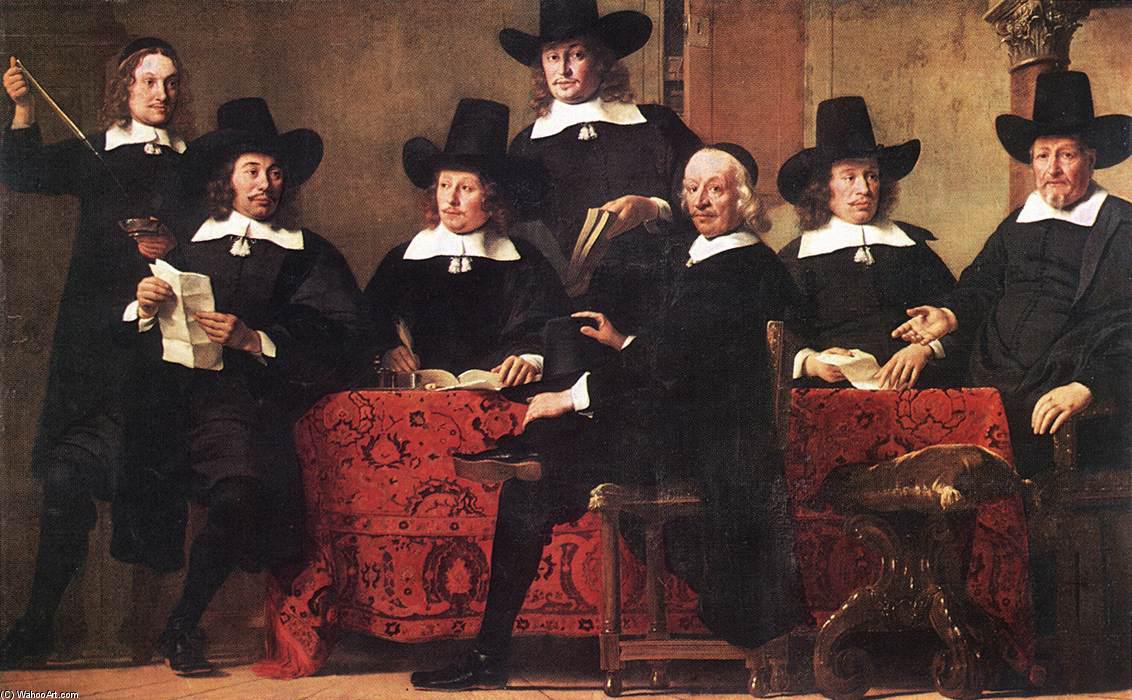
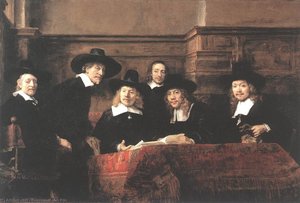
Governors of the Wine Merchant's Guild
 Oil On Canvas
- WallArt
- Dutch Golden Age
 193.0 x 305.0 cm
 Alte Pinakothek
 Weiterlesen
Handgefertigte Ölreproduktion
Handgemaltes Ölgemälde auf Leinwand in Ihrer Wunschgröße und mit Rahmen, auf Bestellung von unseren Künstlern angefertigt. ( Druck bestellen Bild kaufen)




P118B $10

P118H $10

P118W $10

P438Z $10

P508JH $12

P508YH $12

P805H $10

P805Z $10

P919BZ $10

P919G $10

P919XJ $10

P959ZH $10

P968JZ $12

W106C $8

W218G $10

W218JH $8

W218Y $10

W307PJ $10

W316G $10

W316PJ $8

W316Y $10

W398PJ $8

W4111J $10

W500HY $15

W500JH $15

W692G $12

W849H $8

W940BG $15

W953PJ $8




Wählen Sie aus unseren vordefinierten Formaten, die den ursprünglichen Proportionen des Kunstwerks entsprechen.

Sie können Ihre eigenen Maße eingeben, um einen bestimmten Rahmen oder Platz auszufüllen. Wenn die gewählte Größe nicht den Proportionen des Originalbildes entspricht, werden wir das Kunstwerk entweder beschneiden oder das Gemälde durch zusätzliche, handgemalte Elemente erweitern. Ein digitales Mockup wird Ihnen zur Genehmigung zugesandt, bevor die Produktion beginnt.
Bitte beachten Sie, dass die Bildschirmvorschau nicht die tatsächliche Beschneidung oder Erweiterung widerspiegelt. Nur das Mockup zeigt die endgültige Komposition exakt an.
Obwohl Sondermaße verfügbar sind, empfehlen wir, eine Größe aus der vordefinierten Liste zu wählen, um die ursprünglichen Proportionen beizubehalten.
Nach der Bestellung wird das ArtsDot.com-Team dem Kunden Anweisungen per E-Mail zusenden und eine Mockup-Vorschau bereitstellen.
Weltweiter Versand () in nur 3 bis 4 Wochen statt der üblichen 5 Wochen. (22 August). Keine Kompromisse bei der Qualität.

Kostenloser weltweiter Expressversand

Hochwertige Leinenleinwand

Umfassender Versicherungsschutz beim Versand

Zollgebühren-Rückerstattungsgarantie

Garantie für exakte Farbtreue

60 Tage Rückgaberecht (nur bei Mängeln)

100% Geld-zurück-Garantie

Mengenrabatt verfügbar
 Die Glasoption ist nur für Größen unter 110 cm verfügbar.

Governors of the Wine Merchant's Guild
Art der Reproduktion
Format der Reproduktion
-


Gesamtpreis
$ 263
Beschreibung des Kunstwerks
A Portrait of Power and Piety: Ferdinand Bol’s “Governors of the Wine Merchant’s Guild”
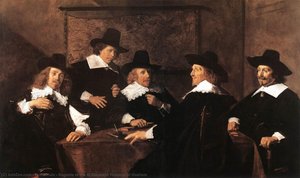
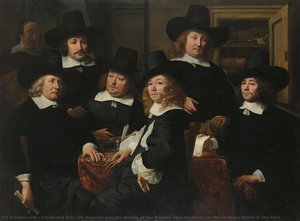
Ferdinand Bol's "Governors of the Wine Merchant’s Guild," painted circa 1648, is more than just a depiction of seven men seated around a table; it’s a meticulously crafted window into the heart of 17th-century Amsterdam and the intricate world of merchant guilds. This monumental oil painting, measuring an impressive 193 x 305 cm, immediately commands attention with its dramatic lighting, symmetrical composition, and the profound seriousness etched on the faces of its subjects. Bol, a student of Rembrandt’s, masterfully employs the painterly techniques learned from his mentor, creating a scene brimming with both realism and an almost theatrical intensity.
The painting centers around these figures – men dressed in the somber black robes and hats characteristic of religious or scholarly groups – who were undoubtedly influential members of Amsterdam’s Wine Merchant’s Guild. Their attire speaks volumes about their status, signifying piety, authority, and a commitment to upholding the guild's regulations. The table before them is laden with books, papers, and partially consumed goblets, suggesting an atmosphere of intellectual pursuit alongside the practicalities of trade. Bol doesn’t simply portray these men; he captures a moment of deliberation, a quiet contemplation amidst the weighty responsibilities of leadership.
The Rembrandt Influence: Light, Shadow, and Texture
Bol's artistic lineage is undeniably rooted in Rembrandt’s style, yet “Governors of the Wine Merchant’s Guild” possesses a distinct character that transcends mere imitation. Like Rembrandt, Bol was a master of light and shadow, utilizing chiaroscuro – the dramatic contrast between light and dark – to sculpt the figures and imbue the scene with depth and emotion. The unseen source of illumination casts long, powerful shadows across their faces and clothing, emphasizing textures and creating a sense of volume that is remarkably tactile.
Furthermore, Bol’s meticulous attention to detail is evident in the rendering of fabrics – the rich folds of the robes, the sheen of the hats, the texture of the leather belts. He employs layering techniques, building up color gradually to achieve an astonishing level of realism. This painstaking approach, combined with his understanding of anatomy and perspective, results in a portrait that feels both historically accurate and emotionally resonant.
Symbolism and Context: A Window into Dutch Society
Beyond the immediate depiction of the guild members, “Governors of the Wine Merchant’s Guild” offers a glimpse into the social and economic fabric of 17th-century Amsterdam. The guild system was a cornerstone of the city's prosperity, regulating trade, ensuring quality control, and providing mutual support to its members. These men weren’t simply merchants; they were guardians of tradition, upholders of order, and representatives of a powerful civic institution.
The painting’s creation coincided with a period of significant economic growth in the Dutch Republic – a time of burgeoning trade, scientific discovery, and artistic innovation. The guild system played a crucial role in fostering this prosperity, channeling resources and expertise towards collective goals. Bol's portrait serves as a visual testament to the importance of these institutions in shaping the cultural and economic landscape of Amsterdam.
A Timeless Masterpiece: Reproduction and Legacy
Ferdinand Bol’s “Governors of the Wine Merchant’s Guild” is a rare and valuable work, offering a captivating window into a pivotal moment in Dutch history. Today, ArtsDot offers high-quality reproductions that faithfully capture the painting's original beauty and detail. These meticulously crafted prints allow art lovers to experience Bol’s masterful technique and evocative storytelling within their own homes or offices.
Whether you are an avid collector, a design enthusiast seeking inspiration, or simply someone who appreciates exceptional artistry, “Governors of the Wine Merchant’s Guild” remains a timeless masterpiece – a testament to the power of portraiture to capture not only likeness but also character, status, and the spirit of an era.
Ähnliche Kunstwerke
Über den Künstler
Das Leben und Wirken Ferdinand Bols
Ferdinand Bol, geboren am 24. Juni 1616 in Dordrecht, war ein niederländischer Maler, Radierer und Zeichner der Zeit des Barock. Sein Werk ist stark von Rembrandt beeinflusst, bei dem er lernte und dessen Stil er lange nachahmte. Er gilt als einer der bedeutendsten Vertreter der holländischen Malerei des 17. Jahrhunderts.
Frühe Jahre und Ausbildung
Bol entstammte einer Familie aus Dordrecht. Seine ersten künstlerischen Anregungen erhielt er vermutlich von Jacob Gerritsz. Cuyp, einem angesehenen Maler seiner Heimatstadt. Um 1635 zog er nach Amsterdam, wo er in die Werkstatt von Rembrandt van Rijn eintrat und dort bis etwa 1641 als Assistent arbeitete. Diese Zeit prägte seinen Stil entscheidend. Er übernahm Rembrandts Technik des Chiaroscuro (Hell-Dunkel-Kontraste) und seine expressive Pinselführung.
Künstlerische Entwicklung und Hauptwerke
Nach seiner Zeit bei Rembrandt etablierte sich Bol als freischaffender Künstler in Amsterdam. Sein Werk umfasst vor allem Porträts, historische Szenen und Genrebilder. Zu seinen bedeutendsten Werken zählen:
- Der Friedensschluss zwischen Claudius Civilis und Quintus Petillius Cerialis auf der zerstörten Brücke: Ein Gemälde, das seine Meisterschaft in historischen Darstellungen demonstriert.
- Selbstporträts: Bol schuf mehrere Selbstporträts, die Aufschluss über sein äußeres Erscheinungsbild und seinen künstlerischen Werdegang geben.
- Porträts von Bürgern und Regenten: Er malte zahlreiche Porträts wohlhabender Bürger und einflussreicher Regenten, die einen wichtigen Teil seines Schaffens ausmachen.
Besonders hervorzuheben sind auch seine Radierungen, die in Rembrandts Manier gestaltet sind. Einige seiner frühen Radierungen wurden fälschlicherweise Rembrandt zugeschrieben, da sie dem Stil seines Meisters so ähnlich waren.
Einflüsse und Bedeutung
Ferdinand Bol stand im Schatten Rembrandts, dessen Schüler er war und dessen Stil er lange nachahmte. Dennoch entwickelte er einen eigenen künstlerischen Ausdruck, der sich durch eine feine Beobachtungsgabe, eine präzise Darstellung und eine harmonische Farbgebung auszeichnet. Er trug zur Weiterentwicklung der holländischen Porträtmalerei bei und hinterließ ein bedeutendes Werk, das bis heute geschätzt wird.
Späte Jahre und Vermächtnis
Bol heiratete zweimal und erlangte durch seine zweite Ehe mit einer wohlhabenden Witwe beträchtlichen Reichtum. In seinen späteren Jahren zog er sich zunehmend aus der Kunstwelt zurück und widmete sich sozialen Aufgaben, unter anderem als Verwalter eines Leprosenhauses. Ferdinand Bol starb am 24. August 1680 in Amsterdam. Sein Werk findet sich heute in bedeutenden Museen und Sammlungen weltweit.
Ferdinand Bol
1616 - 1680 , Niederlande
Kurzinfos
- Bemerkenswerte Werke:
- Der Frieden zwischen Claudius Civilis
- Pyhrrhus zeigt seinen Elefanten
- Mann mit goldenem Helm (Mars)
- Regenten der Weinhändler-Gilde
- Geburtsdatum: 24. Juni 1616
- Geburtsort: Dordrecht, Niederlande
- Künstler, Die Diesen Künstler Beeinflussten:
- Rembrandt van Rijn
- Jacob Gerritsz. Cuyp
- Abraham Bloemaert
- Künstlerische Bewegung: Barockmalerei
- Nationalität: Niederländisch
- Todatum: 24. August 1680
- Vollständiger Name: Ferdinand Bol
- Von Diesem Künstler Beeinflusste Künstler: ['Godfrey Kneller']
Ähnliche Artikel

Die 10 Meisterwerke des Goldenen Zeitalters der niederländischen Malerei |
Entdecken Sie die 10 Meisterwerke des Niederländischen Goldenen Zeitalters! Von Rembrandt bis Vermeer – erleben Sie Kunstgeschichte, Techniken & Emotionen. Hochwertige Gemäldereproduktionen für Ihr Zuhause auf .

Golden Age Reflections: Dutch Baroque Painting & Cultural Innovation
Explore the Dutch Golden Age of painting! Discover key artists like Vermeer & ter Borch, their innovative techniques, and the rich cultural context behind these Baroque masterpieces. Learn about collecting & appreciating this iconic art period.
Ferdinand Bol (1616-1680): A Dutch Master of Portraiture & Dramatic Light
Explore the captivating world of Ferdinand Bol (1616-1680), a master Dutch portraitist deeply influenced by Rembrandt. Discover his life, style, and enduring legacy with ArtsDot.

Illuminating Innovation: Exploring the Dutch Golden Age of Painting
Explore the Dutch Golden Age of painting with ArtsDot. Discover Rembrandt, Vermeer & other Masters. Learn about key characteristics, iconic artworks, and lasting influence. Expert insights for collectors & enthusiasts.
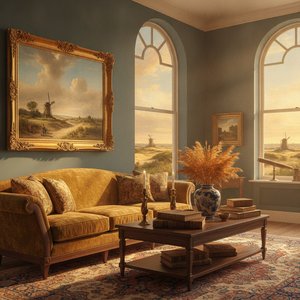
Golden Light & Dutch Skies: Bringing the Magic of Dutch Golden Age Landscapes into Your Home
Transform your home with the breathtaking light of Dutch Golden Age landscapes. Discover how hand-painted oil reproductions of masterworks like Ruisdael and Vermeer bring timeless elegance, atmosphere, and soulful texture to modern interiors. Elevate your space with museum-quality art.