 Vorschau anzeigen
 Versenden
 Teilen
 Details anzeigen

 Herunterladen
 Ähnliche Objekte
 Röntgenaufnahme
 Diashow
Miracle of St Thomas Aquinas


 Weiterlesen
Handgefertigte Ölreproduktion
Handgemaltes Ölgemälde auf Leinwand in Ihrer Wunschgröße und mit Rahmen, auf Bestellung von unseren Künstlern angefertigt. ( Druck bestellen Bild kaufen)




P118B $10

P118H $10

P118W $10

P438Z $10

P508JH $12

P508YH $12

P805H $10

P805Z $10

P919BZ $10

P919G $10

P919XJ $10

P959ZH $10

P968JZ $12

W106C $8

W218G $10

W218JH $8

W218Y $10

W307PJ $10

W316G $10

W316PJ $8

W316Y $10

W398PJ $8

W4111J $10

W500HY $15

W500JH $15

W692G $12

W849H $8

W940BG $15

W953PJ $8




Wählen Sie aus unseren vordefinierten Formaten, die den ursprünglichen Proportionen des Kunstwerks entsprechen.

Sie können Ihre eigenen Maße eingeben, um einen bestimmten Rahmen oder Platz auszufüllen. Wenn die gewählte Größe nicht den Proportionen des Originalbildes entspricht, werden wir das Kunstwerk entweder beschneiden oder das Gemälde durch zusätzliche, handgemalte Elemente erweitern. Ein digitales Mockup wird Ihnen zur Genehmigung zugesandt, bevor die Produktion beginnt.
Bitte beachten Sie, dass die Bildschirmvorschau nicht die tatsächliche Beschneidung oder Erweiterung widerspiegelt. Nur das Mockup zeigt die endgültige Komposition exakt an.
Obwohl Sondermaße verfügbar sind, empfehlen wir, eine Größe aus der vordefinierten Liste zu wählen, um die ursprünglichen Proportionen beizubehalten.
Nach der Bestellung wird das ArtsDot.com-Team dem Kunden Anweisungen per E-Mail zusenden und eine Mockup-Vorschau bereitstellen.
Weltweiter Versand () in nur 3 bis 4 Wochen statt der üblichen 5 Wochen. (20 August). Keine Kompromisse bei der Qualität.

Kostenloser weltweiter Expressversand

Hochwertige Leinenleinwand

Umfassender Versicherungsschutz beim Versand

Zollgebühren-Rückerstattungsgarantie

Garantie für exakte Farbtreue

60 Tage Rückgaberecht (nur bei Mängeln)

100% Geld-zurück-Garantie

Mengenrabatt verfügbar
 Die Glasoption ist nur für Größen unter 110 cm verfügbar.

Miracle of St Thomas Aquinas
Art der Reproduktion
Format der Reproduktion
-


Gesamtpreis
$ 263
Beschreibung des Kunstwerks
The Miracle of St. Thomas Aquinas: A Glimpse into Florentine High Renaissance Faith
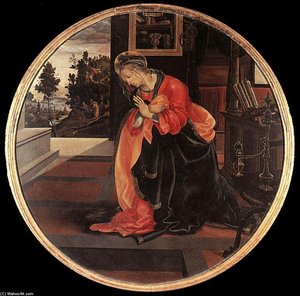
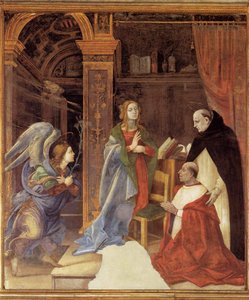
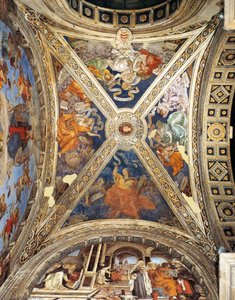
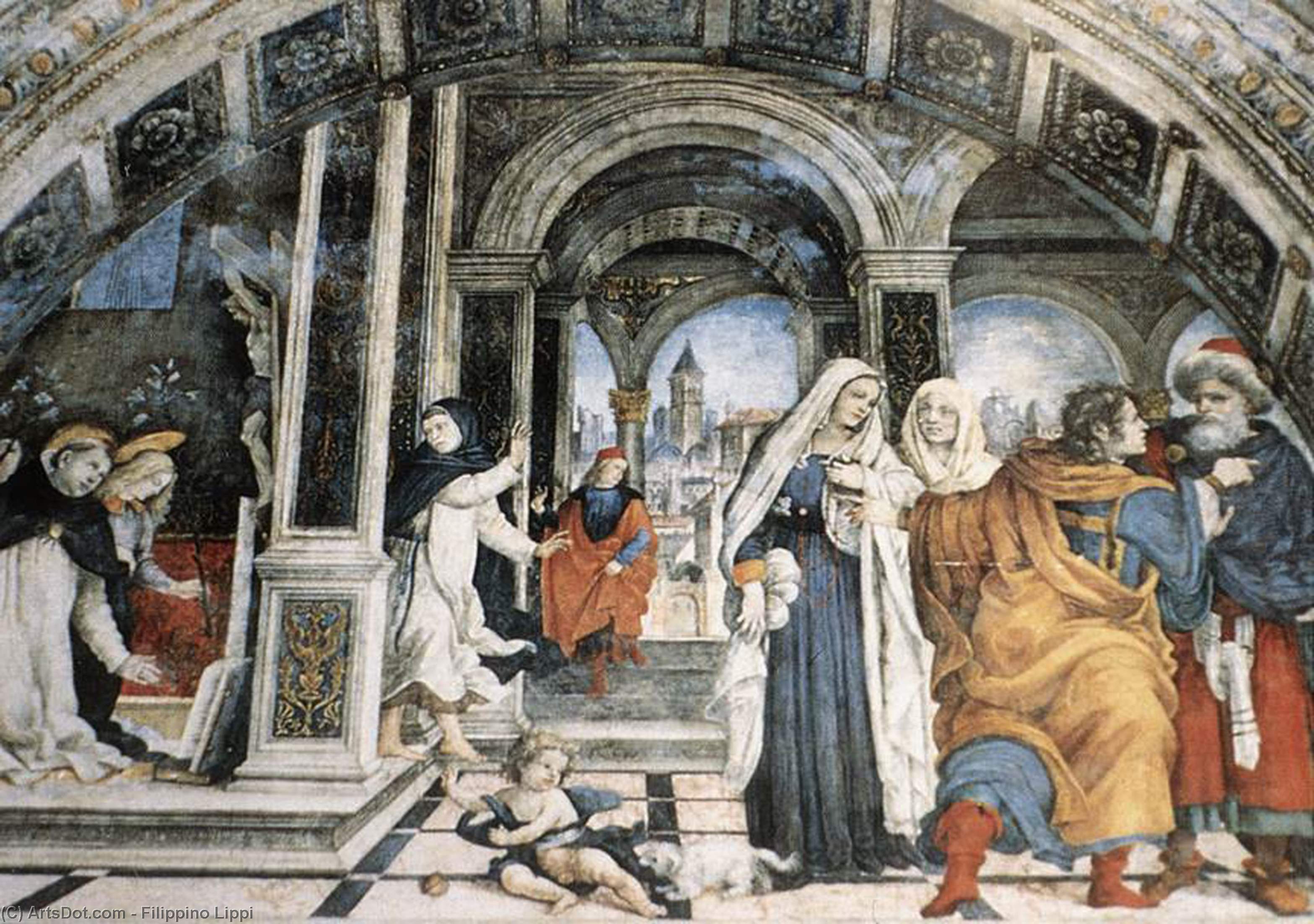
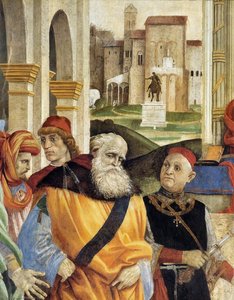
Filippino Lippi’s “Miracle of St. Thomas Aquinas” is more than just a fresco; it's a vibrant tableau vivant, a meticulously crafted window into the intellectual and spiritual heart of 15th-century Florence. Completed in 1489 for the Carafa Chapel within Santa Maria sopra Minerva, this monumental work transcends mere religious illustration, becoming a profound meditation on faith, reason, and the enduring legacy of one of history’s greatest thinkers. The scene unfolds within an intricately designed Gothic archway, immediately transporting the viewer to a space brimming with both earthly grandeur and divine illumination – a testament to Lippi's masterful command of perspective and his ability to fuse architectural ambition with human drama.
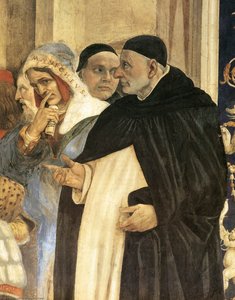
At the center of this captivating composition stands St. Thomas Aquinas himself, depicted not as a remote sage but as an active participant in a pivotal moment. He’s surrounded by a carefully chosen group of figures – women representing Philosophy, Astronomy, Theology, and Grammar, each embodying a key aspect of his intellectual pursuits. Their gestures are animated, their expressions thoughtful, suggesting a lively exchange of ideas. The surrounding crowd is equally compelling: a diverse array of individuals engaged in scholarly activities—sorting through books, debating concepts, and seemingly wrestling with the complexities of knowledge. This isn’t a static depiction of theological doctrine; it's a dynamic representation of learning, debate, and the pursuit of truth.
A Renaissance Synthesis: Style and Technique
Lippi’s style is deeply rooted in the Florentine High Renaissance, yet infused with a distinctly personal vision. He skillfully blends elements of tempera on plaster—the traditional medium for fresco painting—with oil-based pigments to achieve an astonishing level of detail and luminosity. The colors are rich and vibrant – deep reds, blues, and golds dominate, creating a dramatic visual impact that draws the eye across the expansive surface. Notice particularly the meticulous rendering of fabrics, the subtle gradations of light and shadow, and the expressive faces of the figures. Lippi’s technique is characterized by a remarkable ability to create a sense of depth and realism, while simultaneously maintaining an idealized beauty—a hallmark of Renaissance art.
The fresco's composition is carefully structured around geometric principles, reflecting the humanist interest in mathematics and proportion that flourished during this period. The archway itself serves as a visual anchor, framing the central scene and creating a sense of stability and order. Lippi’s use of perspective—particularly evident in the depiction of the cityscape visible through the arch – demonstrates his mastery of linear techniques, further enhancing the illusion of depth and realism. The overall effect is one of breathtaking grandeur and intellectual stimulation.
Symbolism and Historical Context
The “Miracle of St. Thomas Aquinas” isn’t simply a biographical portrait; it's laden with symbolic meaning. The miracle itself—depicted as Aquinas triumphing over the heretics – represents the victory of reason and faith, a central theme in his philosophical system. Each woman surrounding him embodies a key element of his intellectual framework: Philosophy guides the path to truth, Astronomy provides a cosmic perspective, Theology offers divine guidance, and Grammar ensures clarity of expression. The defeated heretics, identifiable by their distinctive attire and gestures, symbolize the errors and falsehoods that Aquinas sought to refute through rigorous scholarship.
The fresco was commissioned for the Carafa Chapel, named after the influential Caracciolo family who were patrons of the arts in Florence. The chapel itself is located within Santa Maria sopra Minerva, a church with a rich history dating back to the 6th century. The commission reflects the growing importance of humanist learning and the patronage of the arts by wealthy families like the Carafa—a period marked by intellectual ferment and artistic innovation. It’s important to note that Lippi was working during a time when the Dominican Order, to which he belonged, was actively promoting scholasticism – a method of philosophical reasoning based on logic and observation.
Emotional Resonance and Lasting Legacy
Beyond its historical and intellectual significance, “Miracle of St. Thomas Aquinas” possesses a powerful emotional resonance. The scene evokes a sense of wonder, curiosity, and the enduring quest for knowledge. The figures’ expressions—ranging from thoughtful contemplation to animated debate—suggest a vibrant intellectual community engaged in a shared pursuit of truth. The fresco invites viewers to join this conversation, prompting reflection on the nature of faith, reason, and the role of learning in shaping human understanding.
Reproductions of this masterpiece offer a remarkable opportunity to experience Lippi’s artistic genius firsthand. The intricate details, vibrant colors, and dynamic composition are faithfully captured in high-quality reproductions, allowing art lovers, collectors, and interior designers alike to bring the spirit of the High Renaissance into their homes or offices. It remains a testament to the enduring power of art to inspire, educate, and transport us across time and space.
Ähnliche Kunstwerke
Über den Künstler
Frühe Jahre und Ausbildung
- Geboren: April 1457, Prato, Italien
- Gestorben: April 1504
- Eltern: Fra Filippo Lippi (Maler) und Lucrezia Buti
- Filippino war der uneheliche Sohn eines renommierten Malers.
- Die frühe Ausbildung unter seinem Vater legte den Grundstein für seine künstlerische Karriere.
Künstlerische Laufbahn und Entwicklung
- Frühe Periode (1475-1480): Anfängliche Werke, wie Madonnen, zeigten einen weniger verfeinerten Stil. Diese wurden zunächst einem anonymen Künstler namens "amico di Sandro" zugeschrieben.
- Entwicklung (1480-1485): Entwicklung eines persönlichen und effektiven Ansatzes in Werken wie den *Reisen des Tobias*.
- Maturität (1485-1504): Beherrschung des Hochrenaissance-Stils, veranschaulicht durch die *Erscheinung Christi der Jungfrau*.
Hauptwerke und Kollaborationen
- Zusammenarbeit mit Perugino, Ghirlandaio und Botticelli an Fresken in Lorenzos de' Medicis Villa.
- Vollendung der unvollendeten Dekoration von Masaccio in der Brancacci-Kapelle zusammen mit Masolino.
- Bemerkenswerte Werke sind: *Die Krönung der Jungfrau*, *Tobias und der Engel*, *St. Hieronymus* und *Szene aus dem Leben des Heiligen Thomas*.
Einflüsse und künstlerischer Stil
- Frühe Einflüsse: Sandro Botticelli, Fra Filippo Lippi.
- Stileigenschaften: Animierte Form und Linie, warmer Kolorit, detaillierte Landschaften, ausdrucksstarke Figuren und eine Mischung aus Perspektivgeometrie mit intimen Innenräumen.
- Römische Altertümer: Studien nach römischen Altertümern während seiner Zeit in Rom beeinflussten seine Arbeit und integrierten einen antiken Wortschatz in seine Kunst.
Historische Bedeutung und Vermächtnis
- Ein führender florentinischer Vertreter der Tradition großer Freskenzyklen.
- Sein Einfluss auf die Hochrenaissance ist unbestreitbar.
- Werke sind in Museen auf der ganzen Welt zu finden, darunter in der Uffizien-Galerie in Florenz.
- Bekannt dafür, die Kluft zwischen früheren Renaissance-Stilen und der entstehenden Hochrenaissance-Ästhetik zu überbrücken.
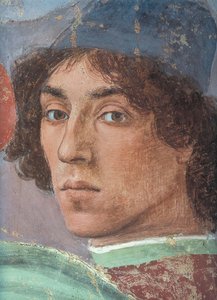
Filippino Lippi
1457 - 1504 , Italien
Kurzinfos
- Beeinflusste Künstler:
- Fra Filippo Lippi
- Sandro Botticelli
- Bemerkenswerte Werke:
- Coronation of the Virgin
- Tobias and the Angel
- St Jerome
- Geburtsdatum: April 1457
- Geburtsort: Prato, Italien
- Künstlerische Richtung: Hochrenaissance
- Nationalität: Italienisch
- Sterbedatum: April 1504
- Vollständiger Name: Filippino Lippi
- Von Künstlern Beeinflusst: ['Masaccio']
Ähnliche Artikel

Das Familienerbe an die Wand bringen: Wandgemälde als Generationenschatz
Verwandeln Sie Ihre Familiengeschichte in ein beeindruckendes Wandgemälde! Expertenrat & hochwertige Handwerkskunst für einzigartige Kunstwerke, die Generationen verbinden. Entdecken Sie jetzt!
Filippino Lippi: Renaissance-Innovation zwischen Glauben und Humanismus – Ein Meister der Florentiner Malerei
Entdecken Sie Filippino Lippi, einen Meister der Florentiner Renaissance! Erfahren Sie mehr über seinen einzigartigen Stil, monumentale Werke und seinen Einfluss auf die Kunstgeschichte. Expertenwissen & detaillierte Analysen.

The Enduring Legacy of Fresco Painting: Techniques, History & Contemporary Relevance
Explore the rich history & enduring artistry of fresco painting – from Giotto to Michelangelo! Discover techniques, conservation efforts, & modern applications. Learn how ArtsDot brings this timeless art form to your home.

The Enduring Legacy of Fresco: Technique, History & Artistic Expression Across Cultures
Explore the rich history & enduring legacy of fresco painting! Discover ancient techniques, Giotto's masterpieces, and modern applications. Expert insights for art lovers & professionals.

Kunst, die mit Ihnen lebt: Emotionale Kraft individueller Innenraumfresken
Entdecken Sie die emotionale Kraft individueller Innenraumfresken! Expertenberatung & hochwertige Wandmalerei für Hotels, Wohnräume & mehr. – Ihr Partner für einzigartige Kunst.