

 Vorschau anzeigen
 Versenden
 Teilen
 Details anzeigen

 Herunterladen
 Ähnliche Objekte
 Röntgenaufnahme
 Diashow
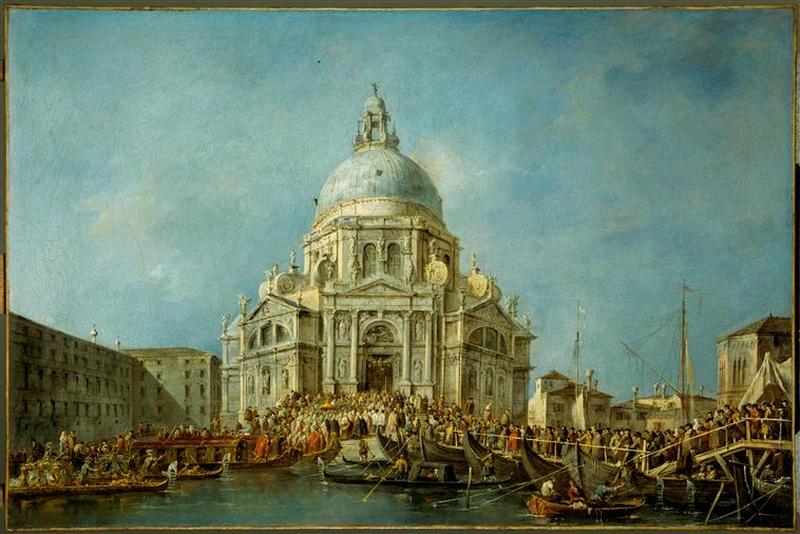
LE DOGE DE VENISE SE REND A LA SALUTE, LE 21 NOVEMBRE JOUR DE LA COMMEMORATION DE LA FIN DE LA PESTE DE 1630


 Weiterlesen
Erwerben Sie ein hochauflösendes, optimiertes digitales Bild, das der Online-Vorschau weit überlegen ist.
Jede Datei wird von unseren hauseigenen Spezialisten mit modernsten Werkzeugen und fachmännischer manueller Retusche sorgfältig vorbereitet. Wir stellen sicher, dass jedes Bild eine außergewöhnliche Klarheit, präzise Farbgenauigkeit und feinste Details aufweist.
Die endgültige Datei wird innerhalb von 72 Stunden per E-Mail zugestellt und ist für den sofortigen Einsatz in professionellen, redaktionellen und Druckumgebungen optimiert. Es handelt sich um dieselbe Qualität, der führende Designstudios, Verlage und Galerien vertrauen.
Digitales Bild
Laden Sie eine hochauflösende Datei für die persönliche Präsentation, den Druck und kreative Projekte herunter. ( Druck bestellen Handgemalte Reproduktion bestellen)
In jeder Bestellung digitaler Bilder enthalten
Professionelle digitale Bereitstellung, garantiert
Wenn Sie sich für ArtsDot.com entscheiden, erhalten Sie nicht nur ein Bild – Sie erhalten ein professionell aufbereitetes digitales Kunstwerk, das mit höchster Präzision erstellt und durch eine Zufriedenheitsgarantie abgesichert wird. Hier ist alles, was automatisch mit Ihrer Bestellung geliefert wird:

Schnelle E-Mail-Zustellung
Ihre hochauflösende digitale Bilddatei wird Ihnen innerhalb von 72 Stunden nach der Bestellung per E-Mail zugestellt – bereit zur sofortigen Verwendung.

KI-optimierte digitale Datei
Ihre Kunstwerke werden professionell mithilfe fortschrittlicher KI-Tools und manueller Bearbeitung optimiert, um maximale Detailtreue, Klarheit und Farbgenauigkeit zu gewährleisten.

Lebenslanger kostenloser Neudruckservice
Datei versehentlich gelöscht oder verloren? Keine Sorge – wir senden sie Ihnen jederzeit kostenlos erneut zu.

Keine Einfuhrgebühren – jemals
Genießen Sie Ihr Kunstwerk sofort ohne Zollgebühren, Einfuhrabgaben oder Versandkosten – digitale Downloads sind immer steuerfrei.

Garantierte Farbtreue
Wir garantieren, dass Ihr digitales Bild mithilfe professioneller Werkzeuge und Farbmanagement die Originalfarben so präzise wie möglich wiedergibt.

60-Tage-Zufriedenheitsgarantie
Sollten Sie mit Ihrem digitalen Bild nicht zufrieden sein, werden wir es überarbeiten oder Ihnen innerhalb von 60 Tagen 100% erstatten – ohne Wenn und Aber.

100% Geld-zurück-Garantie
Nicht zufrieden? Erhalten Sie innerhalb von 60 Tagen nach Erhalt Ihrer digitalen Datei eine vollständige Rückerstattung – ohne Angabe von Gründen.

Rabatte bei Großbestellungen
3 Bilder kaufen, 10% sparen – 5 Bilder kaufen, 15% sparen – Ab 10 Bildern 20% sparen. Ideal für kreative Projekte, Galerien und Agenturen.
Details zum Sammlerstück
A Venetian Twilight Captured: Francesco Guardi’s “The Doge at the Basilica of La Salute”
Francesco Lazzaro Guardi's "The Doge at the Basilica of La Salute" isn’t merely a depiction of a cityscape; it’s a poignant distillation of Venice itself – a city poised on the precipice of decline, yet stubbornly clinging to its fading grandeur. Painted around 1775-80, this oil on canvas offers a breathtakingly atmospheric glimpse into the twilight years of the Venetian Republic, a period marked by economic hardship and political instability, but also imbued with an undeniable beauty and melancholic grace. Guardi, born in 1712 and dying in 1793, wasn’t simply a painter; he was a chronicler of his era, meticulously capturing the subtle shifts in light, color, and mood that defined Venice's slow surrender to modernity.
The scene unfolds before us – a bustling canal view dominated by the imposing Basilica di Santa Maria della Salute. The Doge’s Palace, recognizable by its distinctive dome, stands proudly in the background, a testament to Venice’s former power and prestige. Yet, the overall impression isn't one of triumphant celebration; rather, it’s imbued with a quiet solemnity, a sense of reflection on the passage of time. The composition is deliberately loose and suggestive, prioritizing atmosphere over precise detail – a hallmark of Guardi’s distinctive style, heavily influenced by the Venetian colorist tradition but pushing beyond mere imitation to create something uniquely his own.
The Language of Light and Color
Guardi's mastery lies in his manipulation of light and color. He employs a technique known as “sfumato,” derived from Leonardo da Vinci’s methods, creating soft, hazy outlines that blur the edges of forms and dissolve details into an ethereal atmosphere. The colors are muted and subtly layered – ochres, browns, blues, and greys dominate, reflecting the dampness and shadows characteristic of a Venetian afternoon. Notice how the light catches on the water's surface, shimmering with reflected hues, while the buildings recede into a hazy distance, their forms softened by atmospheric perspective.
The artist’s brushstrokes are loose and expressive, conveying movement and dynamism without resorting to sharp lines or precise rendering. This deliberate lack of detail isn’t a sign of carelessness; rather, it's a conscious choice that emphasizes the *feeling* of the scene – the sense of bustling activity, the coolness of the air, the weight of history.
Symbolism and Historical Context
The painting’s title, “The Doge at the Basilica of La Salute,” provides crucial context. The Doge was Venice's elected ruler, a position symbolic of the city’s republican heritage. His presence within the Basilica, a magnificent baroque church built to commemorate the end of the plague in 1630, underscores the enduring faith and resilience of the Venetian people even as their political power waned. The event itself – the commemoration of the plague's end – is subtly referenced through the painting’s composition, suggesting a reflection on mortality and the fragility of human existence.
Furthermore, the scene captures Venice at a critical juncture in its history. The 18th century witnessed a gradual decline in Venetian trade and influence, as rival European powers asserted their dominance. Guardi's work serves as a visual elegy to this lost era, a poignant reminder of Venice’s former glory and its inevitable transformation.
A Legacy of Atmospheric Impressionism
While Guardi predates the formal emergence of Impressionism, his innovative use of light, color, and atmospheric perspective profoundly influenced later artists. His emphasis on capturing fleeting moments and subjective impressions paved the way for movements like Monet’s and Renoir’s explorations of light and atmosphere. “The Doge at the Basilica of La Salute” stands as a testament to Guardi's artistic vision – a timeless masterpiece that continues to resonate with viewers today, offering a captivating glimpse into the soul of Venice and the enduring power of art to evoke emotion and memory.
Ähnliche Kunstwerke
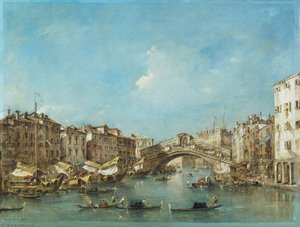
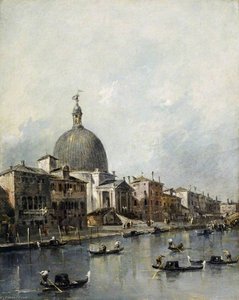
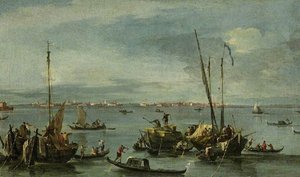
Biografie des Künstlers
Ein Leben der Kunst und des Niedergangs in Venedig
Francesco Lazzaro Guardi, ein italienischer Maler von Veduten, Adliger und Mitglied der venezianischen Schule, lebte vom 5. Oktober 1712 bis zum 1. Januar 1793. Sein Leben markierte das Ende einer Ära in der venezianischen Kunst, die durch ihre einzigartige Mischung aus Realismus und Vorstellungskraft gekennzeichnet war.Frühes Leben und Zusammenarbeit
In seiner frühen Karriere arbeitete Guardi mit seinem älteren Bruder Gian Antonio an der Herstellung religiöser Gemälde zusammen. Diese Partnerschaft dauerte bis zum Tod von Gian Antonio im Jahr 1760, woraufhin Francesco sich auf Veduten konzentrierte, einen Malstil, der die Stadtansicht betont.- Francesco Guardis frühe Werke zeigen den Einfluss von Canaletto, aber er entwickelte allmählich einen lockeren Stil, der durch energische Pinselstriche und frei erdachte Architektur gekennzeichnet ist.
- Seine Familie, darunter sein Vater Domenico (geboren 1678) und seine Brüder Niccolò und Gian Antonio, waren ebenfalls Maler und trugen nach dem Tod ihres Vaters im Jahr 1716 zur Familienwerkstatt bei.
- Maria Cecilia, Guardis Schwester, heiratete Giovanni Battista Tiepolo, einen bedeutenden veneto-europäischen Maler seiner Epoche.
Wichtige Werke und Stil
Guardis wichtigste spätere Werke umfassen die Dogenzeremonien, eine Reihe von zwölf Leinwänden, die die im Jahr 1763 für die Wahl des Dogen Alvise IV Mocenigo abgehaltenen Zeremonien feiern. Sein Stil, bekannt als Pittura di tocco (von der Berührung), ist durch kleine Punktierungen und energische Pinselstriche gekennzeichnet.- Francesco Guardis Gemälde erwecken den Beginn des Niedergangs Venedigs hervor und konzentrieren sich auf bewölkte Himmel über einer Stadt im Zwielicht.
- Seine Arbeit unterscheidet sich vom linearen und architektonisch genaueren Stil von Canalettos Malerei und zeigt oft Venedig bei sonnigem Tageslicht.
- Guardis Stil beeinflusste später die französischen Impressionisten, die seine Werke für ihre einzigartige Mischung aus Realismus und Vorstellungskraft schätzten.
Entwicklung und Vermächtnis
Francesco Lazzaro Guardi starb am 1. Januar 1793 in Campiello de la Madona in Cannaregio (Venedig). Sein Erbe als einer der letzten Vertreter der klassischen venezianischen Kunstschule lebt fort, wobei seine Werke ein Zeugnis für die einzigartige Mischung aus Realismus und Vorstellungskraft sind, die diese Ära der Kunst definierte.- Weitere Werke von Francesco Lazzaro Guardi finden Sie unter https://ArtsDot.com/@/francesco-lazzaro-guardi
- Erkunden Sie die venezianische Schule und ihren Einfluss auf die Kunst unter /de/art/list/
- Entdecken Sie mehr über das Leben und Werk von Francesco Lazzaro Guardi unter https://de.wikipedia.org/wiki/Francesco_Guard
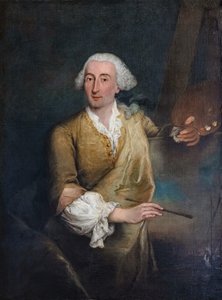
Francesco Lazzaro Guardi
1712 - 1793 , Italien
Kurzinfos
- Bemerkenswerte Werke:
- Dogenfeste
- Ansichten von Venedig
- Geburtsdatum: 05. Oktober 1712
- Geburtsort (Stadt, Land): Venedig, Italien
- Künstler Oder Bewegungen, Die Von Diesem Künstler Beeinflusst Wurden: ['Französische Impressionisten']
- Künstler, Die Diesen Künstler Beeinflussten: ['Canaletto']
- Künstlerische Bewegung/Stil: Veduta, Venezianische Schule
- Nationalität: Italienisch
- Sterbedatum: 01. Januar 1793
- Vollständiger Name: Francesco Lazzaro Guardi

