 Vorschau anzeigen
 Versenden
 Teilen
 Details anzeigen

 Herunterladen
 Ähnliche Objekte
 Röntgenaufnahme
 Diashow
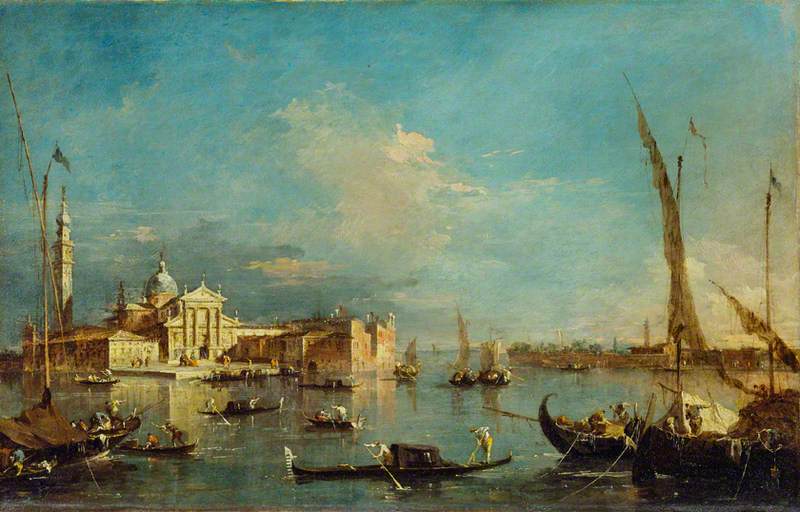
Venice San Giorgio Maggiore with the Giudecca
 Oil On Canvas
- WallArt
- Impressionistic Twilight
 1770
1770 35.0 x 55.0 cm
 Die Wallace Collection
 Weiterlesen
Handgefertigte Ölreproduktion
Handgemaltes Ölgemälde auf Leinwand in Ihrer Wunschgröße und mit Rahmen, auf Bestellung von unseren Künstlern angefertigt. ( Druck bestellen Bild kaufen)




P118B $10

P118H $10

P118W $10

P438Z $10

P508JH $12

P508YH $12

P805H $10

P805Z $10

P919BZ $10

P919G $10

P919XJ $10

P959ZH $10

P968JZ $12

W106C $8

W218G $10

W218JH $8

W218Y $10

W307PJ $10

W316G $10

W316PJ $8

W316Y $10

W398PJ $8

W4111J $10

W500HY $15

W500JH $15

W692G $12

W849H $8

W940BG $15

W953PJ $8




Wählen Sie aus unseren vordefinierten Formaten, die den ursprünglichen Proportionen des Kunstwerks entsprechen.

Sie können Ihre eigenen Maße eingeben, um einen bestimmten Rahmen oder Platz auszufüllen. Wenn die gewählte Größe nicht den Proportionen des Originalbildes entspricht, werden wir das Kunstwerk entweder beschneiden oder das Gemälde durch zusätzliche, handgemalte Elemente erweitern. Ein digitales Mockup wird Ihnen zur Genehmigung zugesandt, bevor die Produktion beginnt.
Bitte beachten Sie, dass die Bildschirmvorschau nicht die tatsächliche Beschneidung oder Erweiterung widerspiegelt. Nur das Mockup zeigt die endgültige Komposition exakt an.
Obwohl Sondermaße verfügbar sind, empfehlen wir, eine Größe aus der vordefinierten Liste zu wählen, um die ursprünglichen Proportionen beizubehalten.
Nach der Bestellung wird das ArtsDot.com-Team dem Kunden Anweisungen per E-Mail zusenden und eine Mockup-Vorschau bereitstellen.
Weltweiter Versand () in nur 3 bis 4 Wochen statt der üblichen 5 Wochen. (23 August). Keine Kompromisse bei der Qualität.

Kostenloser weltweiter Expressversand

Hochwertige Leinenleinwand

Umfassender Versicherungsschutz beim Versand

Zollgebühren-Rückerstattungsgarantie

Garantie für exakte Farbtreue

60 Tage Rückgaberecht (nur bei Mängeln)

100% Geld-zurück-Garantie

Mengenrabatt verfügbar
 Die Glasoption ist nur für Größen unter 110 cm verfügbar.

Venice San Giorgio Maggiore with the Giudecca
Art der Reproduktion
Format der Reproduktion
-


Gesamtpreis
$ 263
Beschreibung des Kunstwerks
A Venetian Twilight: Francesco Guardi’s “Venice San Giorgio Maggiore with the Giudecca”
Francesco Lazzaro Guardi's "Venice San Giorgio Maggiore with the Giudecca" isn’t merely a depiction of a cityscape; it’s a distillation of Venice itself – a city grappling with its fading glory, yet stubbornly clinging to beauty. Painted in 1770, this canvas captures a moment suspended between dusk and dawn over the Venetian Lagoon, offering an unparalleled glimpse into the soul of a bygone era. Guardi, born into a family steeped in artistic tradition on October 5, 1712, embodies the spirit of his time—a quiet dignity amidst decline, reflected in every nuanced brushstroke.The Scene: Atmosphere and Composition
The painting’s immediate impact is one of serene melancholy. Guardi masterfully employs atmospheric perspective – a technique perfected by Venetian painters – to create an illusion of depth that draws the viewer into the scene. Layers of hazy blues and greys dominate, subtly shifting hues as they recede into the distance. Boats glide silently across the lagoon’s surface, illuminated by the soft glow of twilight, their reflections mirroring the sky above. The prominent clock tower of San Giorgio Maggiore punctuates the horizon line, a symbol not just of time passing but also of Venice's steadfast endurance against the currents of history. Guardi’s careful composition guides the eye across the canvas, fostering a contemplative mood that invites reflection on the passage of time and the enduring allure of Venetian charm.Style and Technique: Impressionistic Hints
While firmly rooted in Venetian tradition—specifically influenced by Correggio and Giorgione—Guardi's approach possesses an undeniable resonance with the burgeoning Impressionist movement. Unlike his predecessors who prioritized precise detail, Guardi prioritizes capturing fleeting impressions of light and color. His brushstrokes are loose and expressive, blending seamlessly to create luminous washes that convey a sense of immediacy. The artist eschews sharp outlines, favoring soft edges that dissolve forms into hazy contours—a deliberate departure from academic conventions that foreshadowed the revolutionary aesthetic sensibilities of artists like Monet and Renoir. This subtle stylistic innovation elevates “Venice San Giorgio Maggiore” beyond mere topographical representation; it transforms it into an embodiment of mood and emotion.Historical Context: Venice at Its Zenith
The painting’s creation coincides with a period of significant political and economic upheaval for Venice. The Habsburg Empire exerted increasing pressure on the Venetian Republic, diminishing its influence in Europe and triggering internal divisions. Despite these challenges, Venice remained a bastion of artistic patronage and cultural sophistication—a testament to its enduring legacy. Guardi's depiction reflects this duality: the grandeur of San Giorgio Maggiore’s tower speaks to Venice’s past glories, while the tranquil lagoon embodies its present serenity. The painting serves as a poignant reminder that beauty can persist even amidst adversity, capturing a moment frozen in time before the irreversible march of progress irrevocably altered the Venetian landscape.Symbolism: Light and Reflection
The pervasive use of light—particularly reflected on the water—holds profound symbolic significance. Light represents enlightenment and spiritual grace, mirroring Venice’s aspiration to maintain its cultural identity amidst external pressures. The mirrored reflections emphasize the cyclical nature of time and the interconnectedness of past and present. Furthermore, the boats themselves symbolize movement and continuity, suggesting that even as Venice undergoes transformation, it retains an unwavering connection to its maritime heritage. Guardi's masterful manipulation of light elevates “Venice San Giorgio Maggiore” beyond a simple visual record—it becomes a meditation on themes of beauty, resilience, and the enduring spirit of Venetian culture.Emotional Impact: A Moment Preserved
Ultimately, "Venice San Giorgio Maggiore with the Giudecca" transcends mere artistic skill; it evokes a powerful emotional response in the viewer. The painting’s tranquil atmosphere invites contemplation—a yearning for simpler times and an appreciation for the sublime beauty of nature. Guardi's luminous brushwork captures not just what is seen but also what is felt—the quiet melancholy of twilight, the serenity of the lagoon, and the enduring spirit of Venice itself. It remains a timeless masterpiece, transporting us back to a Venetian moment exquisitely rendered, ensuring that its ethereal charm continues to inspire generations to come.Ähnliche Kunstwerke


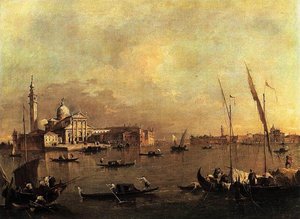

Über den Künstler
Ein Leben der Kunst und des Niedergangs in Venedig
Francesco Lazzaro Guardi, ein italienischer Maler von Veduten, Adliger und Mitglied der venezianischen Schule, lebte vom 5. Oktober 1712 bis zum 1. Januar 1793. Sein Leben markierte das Ende einer Ära in der venezianischen Kunst, die durch ihre einzigartige Mischung aus Realismus und Vorstellungskraft gekennzeichnet war.Frühes Leben und Zusammenarbeit
In seiner frühen Karriere arbeitete Guardi mit seinem älteren Bruder Gian Antonio an der Herstellung religiöser Gemälde zusammen. Diese Partnerschaft dauerte bis zum Tod von Gian Antonio im Jahr 1760, woraufhin Francesco sich auf Veduten konzentrierte, einen Malstil, der die Stadtansicht betont.- Francesco Guardis frühe Werke zeigen den Einfluss von Canaletto, aber er entwickelte allmählich einen lockeren Stil, der durch energische Pinselstriche und frei erdachte Architektur gekennzeichnet ist.
- Seine Familie, darunter sein Vater Domenico (geboren 1678) und seine Brüder Niccolò und Gian Antonio, waren ebenfalls Maler und trugen nach dem Tod ihres Vaters im Jahr 1716 zur Familienwerkstatt bei.
- Maria Cecilia, Guardis Schwester, heiratete Giovanni Battista Tiepolo, einen bedeutenden veneto-europäischen Maler seiner Epoche.
Wichtige Werke und Stil
Guardis wichtigste spätere Werke umfassen die Dogenzeremonien, eine Reihe von zwölf Leinwänden, die die im Jahr 1763 für die Wahl des Dogen Alvise IV Mocenigo abgehaltenen Zeremonien feiern. Sein Stil, bekannt als Pittura di tocco (von der Berührung), ist durch kleine Punktierungen und energische Pinselstriche gekennzeichnet.- Francesco Guardis Gemälde erwecken den Beginn des Niedergangs Venedigs hervor und konzentrieren sich auf bewölkte Himmel über einer Stadt im Zwielicht.
- Seine Arbeit unterscheidet sich vom linearen und architektonisch genaueren Stil von Canalettos Malerei und zeigt oft Venedig bei sonnigem Tageslicht.
- Guardis Stil beeinflusste später die französischen Impressionisten, die seine Werke für ihre einzigartige Mischung aus Realismus und Vorstellungskraft schätzten.
Entwicklung und Vermächtnis
Francesco Lazzaro Guardi starb am 1. Januar 1793 in Campiello de la Madona in Cannaregio (Venedig). Sein Erbe als einer der letzten Vertreter der klassischen venezianischen Kunstschule lebt fort, wobei seine Werke ein Zeugnis für die einzigartige Mischung aus Realismus und Vorstellungskraft sind, die diese Ära der Kunst definierte.- Weitere Werke von Francesco Lazzaro Guardi finden Sie unter https://ArtsDot.com/@/francesco-lazzaro-guardi
- Erkunden Sie die venezianische Schule und ihren Einfluss auf die Kunst unter /de/art/list/
- Entdecken Sie mehr über das Leben und Werk von Francesco Lazzaro Guardi unter https://de.wikipedia.org/wiki/Francesco_Guard

Francesco Lazzaro Guardi
1712 - 1793 , Italien
Kurzinfos
- Bemerkenswerte Werke:
- Dogenfeste
- Ansichten von Venedig
- Geburtsdatum: 05. Oktober 1712
- Geburtsort (Stadt, Land): Venedig, Italien
- Künstler Oder Bewegungen, Die Von Diesem Künstler Beeinflusst Wurden: ['Französische Impressionisten']
- Künstler, Die Diesen Künstler Beeinflussten: ['Canaletto']
- Künstlerische Bewegung/Stil: Veduta, Venezianische Schule
- Nationalität: Italienisch
- Sterbedatum: 01. Januar 1793
- Vollständiger Name: Francesco Lazzaro Guardi
Ähnliche Artikel

Katsushika Hokusai: Die 25 Meisterwerke des Ukiyo-e – Kunst für Ihr Zuhause | ArtsDot
Entdecken Sie die 25 Meisterwerke von Katsushika Hokusai! Tauchen Sie ein in die Welt des Ukiyo-e, berühmte Holzschnitte wie 'Die große Welle' & Fuji-Ansichten. Hochwertige Kunstdrucke für Ihr Zuhause – jetzt auf ArtsDot.com!

Romantische Landschaften: Die 10 Meisterwerke, die eine Epoche prägten | ArtsDot
Entdecken Sie die 10 Meisterwerke der Romantischen Landschaftsmalerei! Von Caspar David Friedrich bis Turner – erleben Sie die Kunst, Emotion & Natur. Hochwertige Reproduktionen auf ArtsDot.com
Francesco Guardi: Venezianisches Licht, Atmosphäre und der Übergang zum Neoklassizismus
Entdecken Sie Francesco Guardis Meisterwerke der venezianischen Vedutenmalerei! Erfahren Sie mehr über seinen einzigartigen Stil, den Übergang vom Rokoko und Investitionsmöglichkeiten für Kunstsammler. Expertenwissen auf ArtsDot.

John Constable: Die 25 Meisterwerke des englischen Landschaftsgenies – ArtsDot
Entdecken Sie die 25 Meisterwerke von John Constable! Erleben Sie englische Landschaftsmalerei vom Hay Wain bis zur Stour Valley. Hochwertige Reproduktionen & Kunst für Ihr Zuhause auf ArtsDot.com.

Jacopo Tintoretto: Die 25 Meisterwerke des venezianischen Dramatikers | ArtsDot
Entdecken Sie die 25 Meisterwerke von Jacopo Tintoretto! Tauchen Sie ein in die dramatische Welt der venezianischen Renaissance. Hochwertige Kunst-Reproduktionen & Inspiration für Ihr Zuhause – jetzt auf ArtsDot.com.