The Venetian Visionary: The Life and Art of Johann Richter
In the delicate intersection of German precision and Italian atmosphere, the life of Johann Salomon Richter unfolds as a testament to the transformative power of the Romantic era. Born in Wunsiedel, Bavaria, around 1763, Richter emerged from the heart of Germany not merely as a craftsman, but as a visual poet capable of translating the ephemeral light of the Adriatic into permanent, breathtaking form. His early years were defined by a rigorous apprenticeship under the celebrated engraver Johann Christian Dill, a period that instilled in him an uncompromising mastery of detail and a profound respect for the technical nuances of printmaking. This foundation in the meticulous art of engraving would later serve as the structural backbone for his more fluid, atmospheric explorations of landscape.
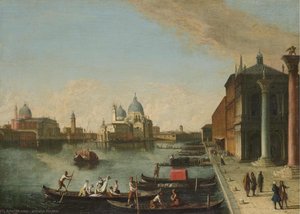
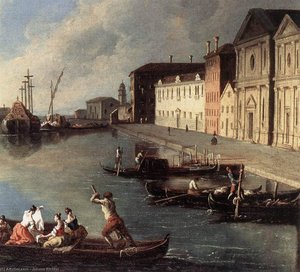
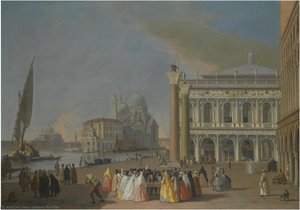
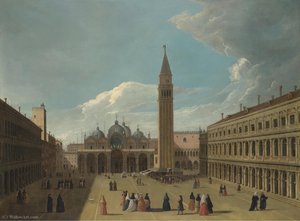
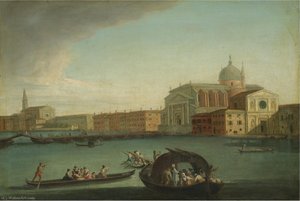
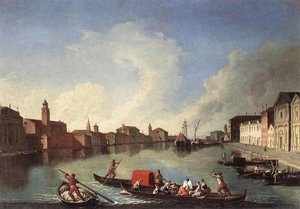
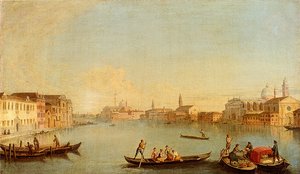
While his roots were firmly planted in German soil, Richter’s artistic soul found its true resonance within the shimmering canals and sun-drenched piazzas of Venice. As he transitioned from the disciplined world of monochromatic prints to the luminous realm of watercolor, he became a chronicler of a city caught in the tides of history. During the Napoleonic era, as Europe underwent seismic political shifts, Richter turned his gaze toward the subtle, quiet moments of Venetian life. He eschewed the grand, sweeping historical narratives favored by many of his contemporaries, choosing instead to capture the subtle atmospheric effects that define the Venetian experience: the silvered mist of a morning on the lagoon, the way sunlight dances upon rippling water, and the tranquil stillness of ancient architecture reflected in the canals.
Mastery of Light and the Grisaille Technique
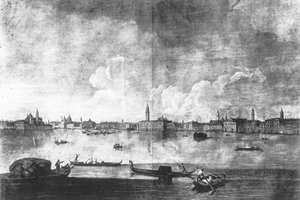
The true brilliance of Richter’s oeuvre lies in his ability to manipulate light through a sophisticated command of tone and texture. He was particularly renowned for his use of grisaille, a technique involving various shades of gray to build up depth, volume, and a sense of sculptural reality within his compositions. This method allowed him to achieve a remarkable luminosity, creating scenes that seem to glow from within. Even when working in color, his watercolors are characterized by delicate washes and incredibly subtle gradations, demonstrating an unparalleled sensitivity to the way light interacts with stone, water, and sky.
His technical prowess was not limited to landscape; Richter’s early career as an illustrator brought him into contact with some of the most significant cultural milestones of his age. He played a pivotal role in visualizing the fantastical world of Wolfgang Amadeus Mozart's operatic masterpiece, The Magic Flute. Tasked with designing the characters and costumes, Richter infused the production with a unique blend of Baroque precision and Rococo elegance. His engravings were far more than mere illustrations; they were interpretive works that captured the theatrical drama and ethereal beauty essential to the opera’s magic, proving that his eye for detail could serve both the literal and the imaginary.
A Legacy of Atmospheric Elegance
The historical significance of Johann Richter resides in his ability to bridge the gap between the rigid technicality of 18th-century engraving and the emotive, atmospheric freedom of the Romantic movement. His work serves as a vital visual record of Venice during a period of profound transition, preserving the architectural grandeur and the serene moods of a city that continues to haunt the artistic imagination. Through his meticulous observation, he elevated the landscape genre, transforming topographical views into deeply personal, emotional experiences.
Today, the legacy of this German master lives on through his celebrated works, which continue to captivate collectors and historians alike. His contributions can be seen in several key areas:
- The Documentation of Venice: His breathtaking watercolors provide an intimate look at the Venetian landscape during the Napoleonic era.
- Musical Illustration: His profound impact on the visual identity of Mozart's The Magic Flute remains a landmark in the history of operatic design.
- Technical Innovation: His mastery of the grisaille technique and delicate watercolor washes set a standard for atmospheric landscape painting.
- Cultural Synthesis: He successfully merged the disciplined German tradition of engraving with the light-filled aesthetic of Italian scenery.