

 Vorschau anzeigen
 Versenden
 Teilen
 Details anzeigen

 Herunterladen
 Ähnliche Objekte
 Röntgenaufnahme
 Diashow
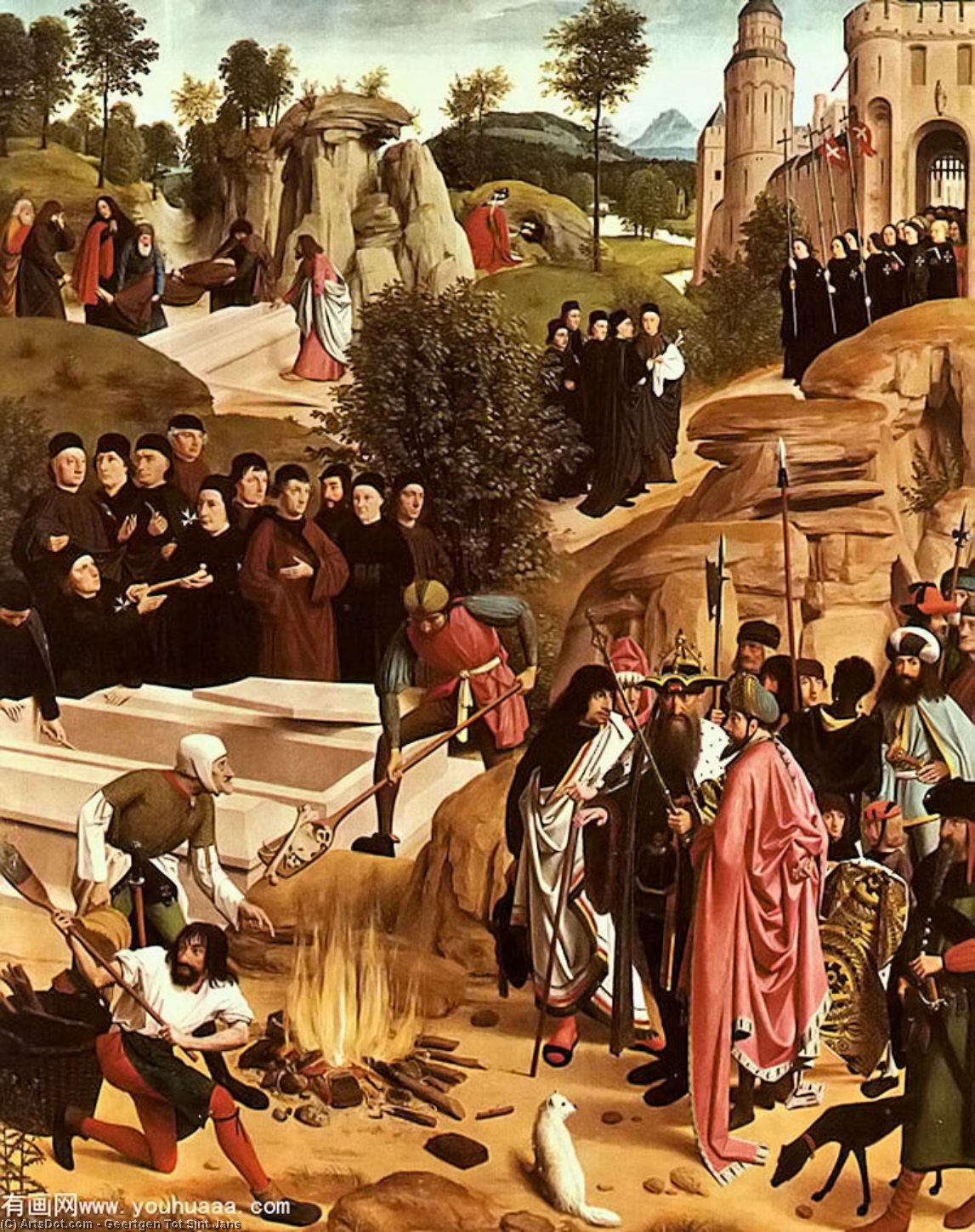
The Bones of St. John the Baptist
 Acryl auf Leinwand
- Wandkunst
- Early Netherlandish Renaissance
 1485
1485 172.0 x 139.0 cm
 Kunsthistorisches Museum
 Weiterlesen
Erwerben Sie ein hochauflösendes, optimiertes digitales Bild, das der Online-Vorschau weit überlegen ist.
Jede Datei wird von unseren hauseigenen Spezialisten mit modernsten Werkzeugen und fachmännischer manueller Retusche sorgfältig vorbereitet. Wir stellen sicher, dass jedes Bild eine außergewöhnliche Klarheit, präzise Farbgenauigkeit und feinste Details aufweist.
Die endgültige Datei wird innerhalb von 72 Stunden per E-Mail zugestellt und ist für den sofortigen Einsatz in professionellen, redaktionellen und Druckumgebungen optimiert. Es handelt sich um dieselbe Qualität, der führende Designstudios, Verlage und Galerien vertrauen.
Digitales Bild
Laden Sie eine hochauflösende Datei für die persönliche Präsentation, den Druck und kreative Projekte herunter. ( Druck bestellen Handgemalte Reproduktion bestellen)
In jeder Bestellung digitaler Bilder enthalten
Professionelle digitale Bereitstellung, garantiert
Wenn Sie sich für ArtsDot.com entscheiden, erhalten Sie nicht nur ein Bild – Sie erhalten ein professionell aufbereitetes digitales Kunstwerk, das mit höchster Präzision erstellt und durch eine Zufriedenheitsgarantie abgesichert wird. Hier ist alles, was automatisch mit Ihrer Bestellung geliefert wird:

Schnelle E-Mail-Zustellung
Ihre hochauflösende digitale Bilddatei wird Ihnen innerhalb von 72 Stunden nach der Bestellung per E-Mail zugestellt – bereit zur sofortigen Verwendung.

KI-optimierte digitale Datei
Ihre Kunstwerke werden professionell mithilfe fortschrittlicher KI-Tools und manueller Bearbeitung optimiert, um maximale Detailtreue, Klarheit und Farbgenauigkeit zu gewährleisten.

Lebenslanger kostenloser Neudruckservice
Datei versehentlich gelöscht oder verloren? Keine Sorge – wir senden sie Ihnen jederzeit kostenlos erneut zu.

Keine Einfuhrgebühren – jemals
Genießen Sie Ihr Kunstwerk sofort ohne Zollgebühren, Einfuhrabgaben oder Versandkosten – digitale Downloads sind immer steuerfrei.

Garantierte Farbtreue
Wir garantieren, dass Ihr digitales Bild mithilfe professioneller Werkzeuge und Farbmanagement die Originalfarben so präzise wie möglich wiedergibt.

60-Tage-Zufriedenheitsgarantie
Sollten Sie mit Ihrem digitalen Bild nicht zufrieden sein, werden wir es überarbeiten oder Ihnen innerhalb von 60 Tagen 100% erstatten – ohne Wenn und Aber.

100% Geld-zurück-Garantie
Nicht zufrieden? Erhalten Sie innerhalb von 60 Tagen nach Erhalt Ihrer digitalen Datei eine vollständige Rückerstattung – ohne Angabe von Gründen.

Rabatte bei Großbestellungen
3 Bilder kaufen, 10% sparen – 5 Bilder kaufen, 15% sparen – Ab 10 Bildern 20% sparen. Ideal für kreative Projekte, Galerien und Agenturen.
A Silent Testament to Faith: Exploring Geertgen tot Sint Jans’ “The Bones of St. John the Baptist”
Geertgen tot Sint Jans remains an enigma, a figure shrouded in conjecture and tantalizing fragments of biographical detail gleaned primarily from Karel van Mander's accounts—a testament to the challenges inherent in reconstructing artistic lives centuries after their demise. Yet, despite this obscurity, his output speaks volumes about the spiritual fervor of Early Netherlandish painting, specifically embodied in “The Bones of St. John the Baptist,” a monumental altarpiece commissioned around 1485 that continues to captivate viewers with its unsettling beauty and profound meditation on mortality. This artwork isn’t merely a depiction; it's an invitation into a contemplative space where symbolism intertwines seamlessly with masterful technique.The Scene Unfolds: Composition and Narrative
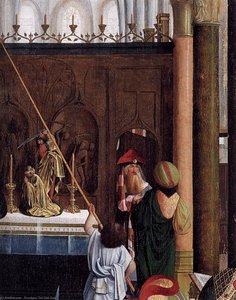
The painting presents a stark tableau against a dark, richly textured background—a deliberate choice that underscores the solemnity of the subject matter. At its core lies a man, draped in sombre robes, holding aloft a skull – undeniably St. John the Baptist’s bones – a poignant reminder of human vulnerability and the inevitability of death. Surrounding him are several individuals engaged in hushed conversation, their postures conveying both reverence and apprehension. A dog rests at his feet, symbolizing loyalty and faithfulness, while a bird perched near the center adds an element of ethereal grace to the composition. Two books positioned on the lower left corner subtly reinforce the theme of contemplation and scholarly reflection—a hallmark of humanist thought prevalent during the period. Van Mander’s description suggests that this scene was intended to evoke a sense of pilgrimage and spiritual introspection, mirroring the devotional practices of the time.Technique and Artistic Style: Detail and Atmosphere
Geertgen tot Sint Jans' skill is evident in every brushstroke—a testament to his mastery of oil paint, which allowed him to achieve an unparalleled level of luminosity and textural depth. The artist employed a technique known as sfumato – blurring edges and softening contours – creating an atmospheric haze that envelops the figures and enhances the painting’s emotional impact. Careful attention was paid to anatomical accuracy, reflecting the influence of Vesalian dissection—a burgeoning field of scientific inquiry during the Renaissance—yet this realism is tempered by a stylized approach that prioritizes expressive gesture and psychological nuance. The meticulous rendering of fabrics and textures contributes to the overall illusionistic quality of the artwork, transporting viewers into the heart of the depicted space.Symbolism: Death, Faith, and Remembrance
The skull itself serves as a central symbol—a direct reference to Christian iconography representing death and resurrection, reminding us that earthly existence is transient but spiritual life transcends mortality. The positioning of St. John’s bones elevates them beyond mere bone fragments; they become a tangible embodiment of suffering endured for the sake of faith. Furthermore, the presence of the dog and bird symbolizes virtues associated with Saint John—loyalty and divine grace respectively—underscoring the painting's moral dimension. These elements coalesce to convey a powerful message about confronting mortality with courage and maintaining unwavering devotion amidst adversity.Emotional Resonance: A Portrait of Contemplation
“The Bones of St. John the Baptist” transcends mere visual representation; it aspires to evoke an emotional response in the viewer—a feeling of solemn contemplation and profound awareness of human fragility. The subdued palette, dominated by dark browns and blacks, reinforces the atmosphere of mourning and introspection. Yet, amidst this darkness lies a glimmer of light—symbolic of hope and divine compassion—suggesting that even in the face of death, faith offers solace and eternal life. This artwork continues to resonate with audiences today because it speaks directly to universal themes of mortality, spirituality, and remembrance—a timeless masterpiece capturing the essence of humanist thought and artistic excellence.Ähnliche Kunstwerke
Biografie des Künstlers
Geertgen tot Sint Jans (c. 1460-1495) – A Life Shrouded in Mystery
Geertgen tot Sint Jans, also known as Gerrit van Haarlem, Gerrit Gerritsz, Gheertgen, Geerrit (* c. 1465; Leiden, Netherlands † before 1495; Haarlem), was a Dutch painter of the Early Netherlandish Renaissance. Despite the scarcity of contemporary documentation concerning his life, he remains one of the most enigmatic figures in Northern European art history—a testament to the challenges inherent in reconstructing artistic biographies from fragmentary evidence. Karel van Mander’s *Schilderboeck*, published over a century after Geertgen’s death, provides the primary account of his life and oeuvre, portraying him as a lay brother of Saint John’s Hospitaller Order in Haarlem—a connection that profoundly shaped his artistic output and imbued his work with spiritual significance.Early Life and Training
The precise circumstances surrounding Geertgen’s birth remain elusive, though Karel van Mander suggests Leiden as his birthplace, citing a print by Jacob Matham which refers to him as Gerardus Leydanus. This attribution is supported by scholarly research indicating that Matham’s engraving was produced around 1620—a considerable time after Geertgen’s demise. Van Mander describes Geertgen's artistic training as occurring under the tutelage of Albert van Ouwater, a pivotal figure in establishing oil painting techniques within Haarlem and arguably the most influential artist of his era. This formative relationship undoubtedly instilled in Geertgen a deep appreciation for realism and meticulous detail—characteristics that would become hallmarks of his distinctive style.The Art of Saint John’s Hospitaller Order
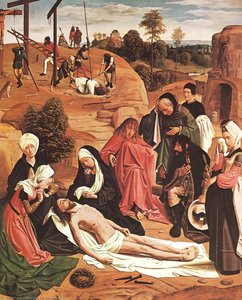
Geertgen's affiliation with Saint John’s Hospitaller Order played an instrumental role in shaping his artistic trajectory. As a lay brother, he was tasked with decorating the altar of the Order’s Haarlem chapel—a commission that resulted in two monumental paintings: *The Lamentation of Christ* and *The Legend of Saint John the Baptist*. These works exemplify Geertgen's mastery of chiaroscuro—the dramatic interplay of light and shadow—creating a palpable sense of emotional depth and conveying profound spiritual contemplation. The composition of *The Lamentation*, particularly, foreshadowed developments that would characterize Dutch painting in the decades to follow, marking him as a precursor to the artistic innovations of his successors.Stylistic Innovations and Notable Works
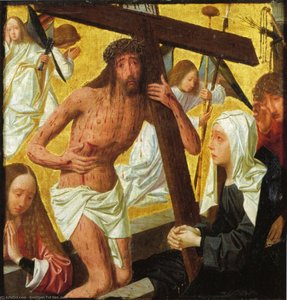
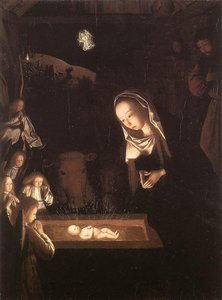
Geertgen tot Sint Jans distinguished himself through several stylistic breakthroughs—most notably his pioneering use of landscape as an integral component of narrative paintings. Unlike many artists of his time who employed landscapes merely as decorative backgrounds, Geertgen imbued them with symbolic meaning—reflecting the inner state of the figures depicted and contributing significantly to the overall artistic impact. His meticulous attention to detail—evident in every brushstroke—further solidified his reputation as a master craftsman. Among his surviving masterpieces are *John the Baptist in the Wilderness*, a serene depiction of spiritual isolation; *Man of Sorrows*, a powerfully emotive portrayal of Christ’s suffering; and *The Nativity at Night*, where Geertgen skillfully utilizes chiaroscuro to illuminate the scene—creating an atmosphere of solemn reverence.Legacy and Influence
Despite the paucity of biographical information, Geertgen tot Sint Jans occupies a significant position within the history of Early Netherlandish art. His innovative approach to landscape and his sensitive portrayal of human emotion profoundly influenced subsequent generations of Dutch painters—particularly those associated with the Haarlem school. The enduring fascination with *The Lamentation*—documented in Jacob Matham’s engraving and accompanying poetry—demonstrates Geertgen’s lasting impact on artistic sensibilities. Modern scholarship recognizes Geertgen as a crucial link between the International Gothic style and the burgeoning realism of the 16th century—a testament to his enduring legacy as one of the most remarkable artists of his time.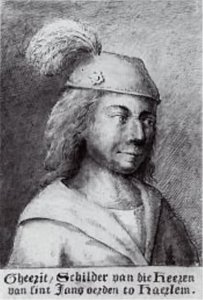
Geertgen tot Sint Jans
1460 - 1490 , Niederlande
Kurzinfos
- Artistic Movement Or Style: Early Netherlandish painting
- Artists Who Influenced This Artist: ['Albert van Ouwater']
- Date Of Birth: c. 1465
- Full Name: Geertgen tot Sint Jans
- Nationality: Dutch
- Notable Artworks:
- The Lamentation of Christ
- The Legend of St. John
- John the Baptist in Wilderness
- Man of Sorrows
- Place Of Birth: Leiden, Netherlands

