

 Vorschau anzeigen
 Versenden
 Teilen
 Details anzeigen

 Herunterladen
 Ähnliche Objekte
 Röntgenaufnahme
 Diashow
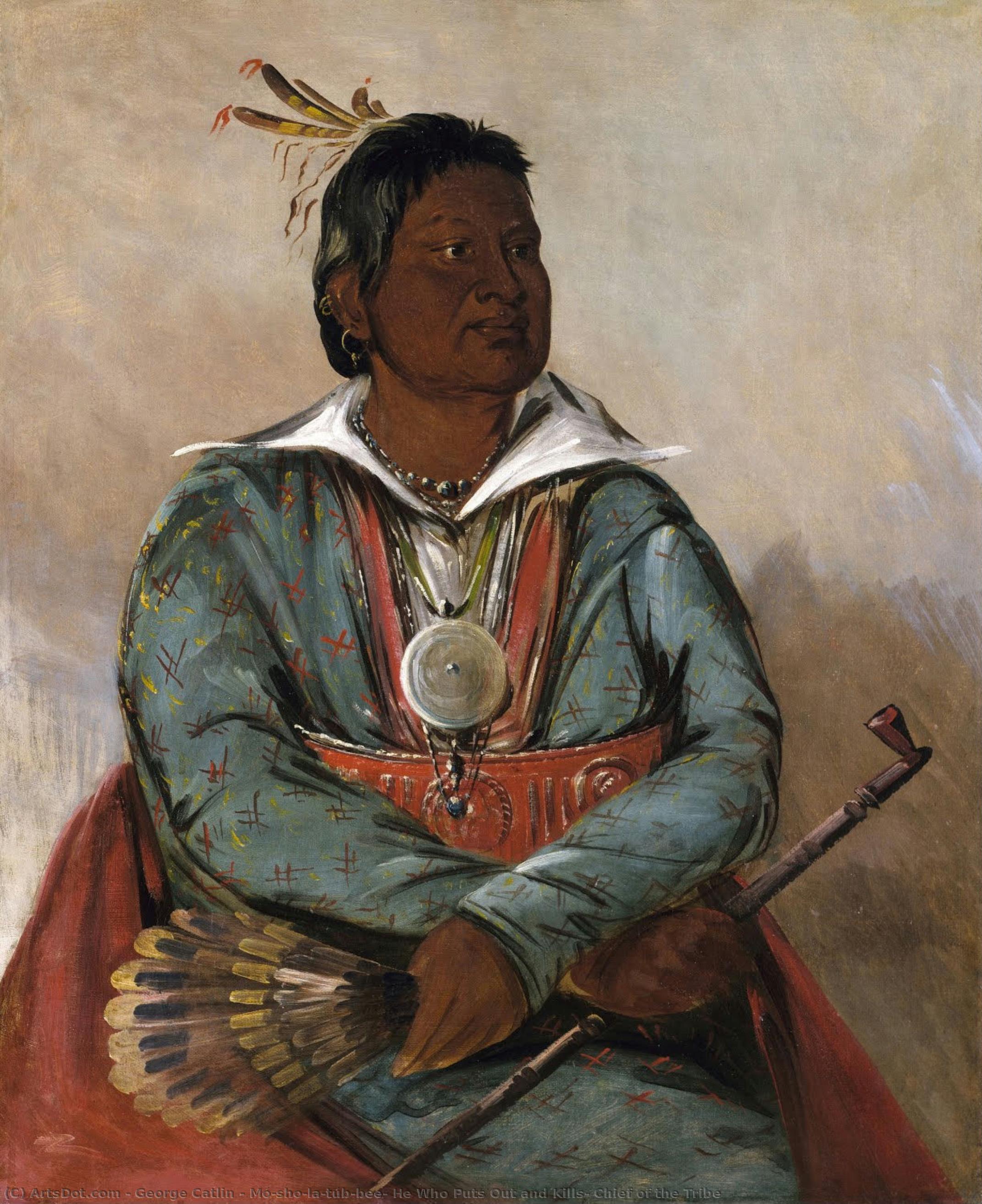
Mó-sho-la-túb-bee, He Who Puts Out and Kills, Chief of the Tribe
 Acryl auf Leinwand
- Wandkunst
- American Romanticism
 1834
1834 73.0 x 60.0 cm
 Smithsonian American Art Museum
 Weiterlesen
Erwerben Sie ein hochauflösendes, optimiertes digitales Bild, das der Online-Vorschau weit überlegen ist.
Jede Datei wird von unseren hauseigenen Spezialisten mit modernsten Werkzeugen und fachmännischer manueller Retusche sorgfältig vorbereitet. Wir stellen sicher, dass jedes Bild eine außergewöhnliche Klarheit, präzise Farbgenauigkeit und feinste Details aufweist.
Die endgültige Datei wird innerhalb von 72 Stunden per E-Mail zugestellt und ist für den sofortigen Einsatz in professionellen, redaktionellen und Druckumgebungen optimiert. Es handelt sich um dieselbe Qualität, der führende Designstudios, Verlage und Galerien vertrauen.
Digitales Bild
Laden Sie eine hochauflösende Datei für die persönliche Präsentation, den Druck und kreative Projekte herunter. ( Druck bestellen Handgemalte Reproduktion bestellen)
In jeder Bestellung digitaler Bilder enthalten
Professionelle digitale Bereitstellung, garantiert
Wenn Sie sich für ArtsDot.com entscheiden, erhalten Sie nicht nur ein Bild – Sie erhalten ein professionell aufbereitetes digitales Kunstwerk, das mit höchster Präzision erstellt und durch eine Zufriedenheitsgarantie abgesichert wird. Hier ist alles, was automatisch mit Ihrer Bestellung geliefert wird:

Schnelle E-Mail-Zustellung
Ihre hochauflösende digitale Bilddatei wird Ihnen innerhalb von 72 Stunden nach der Bestellung per E-Mail zugestellt – bereit zur sofortigen Verwendung.

KI-optimierte digitale Datei
Ihre Kunstwerke werden professionell mithilfe fortschrittlicher KI-Tools und manueller Bearbeitung optimiert, um maximale Detailtreue, Klarheit und Farbgenauigkeit zu gewährleisten.

Lebenslanger kostenloser Neudruckservice
Datei versehentlich gelöscht oder verloren? Keine Sorge – wir senden sie Ihnen jederzeit kostenlos erneut zu.

Keine Einfuhrgebühren – jemals
Genießen Sie Ihr Kunstwerk sofort ohne Zollgebühren, Einfuhrabgaben oder Versandkosten – digitale Downloads sind immer steuerfrei.

Garantierte Farbtreue
Wir garantieren, dass Ihr digitales Bild mithilfe professioneller Werkzeuge und Farbmanagement die Originalfarben so präzise wie möglich wiedergibt.

60-Tage-Zufriedenheitsgarantie
Sollten Sie mit Ihrem digitalen Bild nicht zufrieden sein, werden wir es überarbeiten oder Ihnen innerhalb von 60 Tagen 100% erstatten – ohne Wenn und Aber.

100% Geld-zurück-Garantie
Nicht zufrieden? Erhalten Sie innerhalb von 60 Tagen nach Erhalt Ihrer digitalen Datei eine vollständige Rückerstattung – ohne Angabe von Gründen.

Rabatte bei Großbestellungen
3 Bilder kaufen, 10% sparen – 5 Bilder kaufen, 15% sparen – Ab 10 Bildern 20% sparen. Ideal für kreative Projekte, Galerien und Agenturen.
Details zum Sammlerstück
A Window into the American West Through George Catlin’s Vision
George Catlin (1796-1872) stands as a singular figure in 19th-century American art—a man driven by an unwavering conviction that documenting the lives of Native Americans was paramount to preserving their cultural heritage. Born in Wilkes-Barre, Pennsylvania, his formative years were steeped in tales of the frontier recounted by his mother, Polly Sutton, who herself bore witness to the terrifying reality of Indian raids. These narratives instilled within Catlin a profound fascination for the West, perceiving it not merely as a geographical expanse but as a realm brimming with both danger and breathtaking beauty—a sentiment that would permeate his artistic endeavors throughout his life. Initially trained in law, he swiftly abandoned legal practice, recognizing an irresistible impulse to translate his passion into visual representation. This decisive shift marked the genesis of Catlin’s extraordinary career as an artist, forever altering the trajectory of American art history.The Artwork: Mó Sho La Túb Bee – He Who Puts Out and Kills
“Mó Sho La Túb Bee,” or “He Who Puts Out and Kills,” is a captivating oil painting executed by Catlin in 1834, capturing the essence of leadership within the Choctaw tribe. The artwork depicts a dignified Native American man seated calmly while holding a pipe in one hand and a staff or stick in the other—symbols deeply rooted in tribal traditions representing peace and authority respectively. Catlin’s meticulous attention to detail is evident in every brushstroke, particularly in the intricate design of the headdress adorning the subject's head. Constructed from feathers meticulously arranged in geometric patterns, it embodies spiritual significance and commemorates past achievements. The artist skillfully employs chiaroscuro—the dramatic interplay of light and shadow—to sculpt the man’s face, conveying a sense of solemn contemplation and conveying an aura of profound respect for his heritage.Style and Technique: Romantic Idealization
Catlin's artistic style aligns squarely with the tenets of Romanticism, a movement that prioritized emotion and imagination over rational observation. Unlike academic painters who adhered to strict conventions of realism, Catlin sought to portray Native Americans not as mere anthropological specimens but as complex individuals imbued with dignity and spiritual depth. He achieved this ambitious goal through a technique characterized by bold color palettes—primarily blues and reds—that evoke the vibrancy of the American landscape and imbue the painting with an emotional resonance. Furthermore, Catlin employed a flattened perspective, reminiscent of ethnographic drawings prevalent at the time, to emphasize the subject’s presence and create a sense of immediacy for the viewer. This stylistic choice underscores Catlin's commitment to conveying not just visual accuracy but also the spirit of his subjects—a testament to his artistic vision.Historical Context: Documenting Disappearing Cultures
“Mó Sho La Túb Bee” emerged during a pivotal period in American history—the era of westward expansion and increasing pressure on Native American populations. Catlin recognized that these cultures were rapidly fading away, threatened by encroaching civilization and governmental policies aimed at assimilation. Driven by a fervent desire to preserve their traditions for posterity, he embarked on an ambitious project to document the lives of various tribes across the Plains region—a mission that resulted in numerous paintings and sketches. This artwork serves as a poignant reminder of Catlin’s unwavering dedication to artistic integrity and his profound empathy for those whose voices were often silenced by dominant narratives. It stands as a powerful visual record of a bygone era, inviting viewers to contemplate the beauty and complexity of Native American culture—a legacy that continues to inspire artists and scholars alike.Symbolism: Feathered Headdress – Honor and Remembrance
The headdress itself is laden with symbolic significance within Choctaw culture. Feathers represent honor, courage, and spiritual connection—attributes revered by tribal leaders and warriors alike. Their meticulous arrangement reflects a deep understanding of geometric patterns and their association with cosmological beliefs. Catlin’s depiction of the headdress underscores his respect for Native American traditions and highlights the importance of visual representation in conveying cultural values. The pipe symbolizes peace and contemplation, representing a solemn ritual practiced by Choctaw men—a gesture of reverence for ancestors and a plea for divine guidance. Through these carefully chosen symbols, Catlin elevates “Mó Sho La Túb Bee” beyond mere portraiture, transforming it into an evocative meditation on identity, spirituality, and the enduring spirit of Native American heritage.Ähnliche Kunstwerke
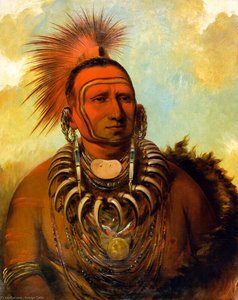
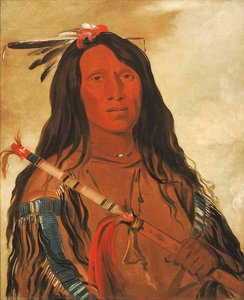
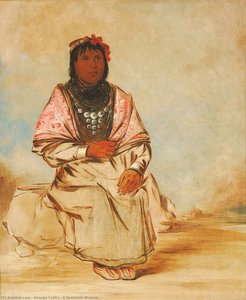
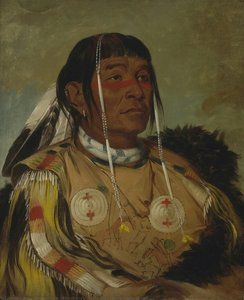
Biografie des Künstlers
Frühes Leben und Karriere
- Geboren: 26. Juli 1796, Wilkes-Barre, Luzerne County, Pennsylvania
- Gestorben: 23. Dezember 1872
- Catlins Faszination für die amerikanischen Ureinwohner wurde durch Geschichten seiner Mutter über die Westgrenze und ihre Gefangennahme durch einen Stamm geweckt.
- Frühe Arbeiten umfassten Radierungen von Sehenswürdigkeiten entlang der Route des Erie-Kanals in New York State, die in Cadwallader D. Coldens Memoiren veröffentlicht wurden.
Künstlerische Beiträge und Stil
- Catlins Hauptaugenmerk wurde die Dokumentation des Lebens und der Kultur der amerikanischen Ureinwohner durch Malerei.
- Er unternahm fünf Expeditionen in den amerikanischen Westen während der 1830er Jahre, beobachtete und dokumentierte seine Erfahrungen sorgfältig.
- Bemerkenswerte Werke:
- Ball-Play of the Choctaw – Zeigt Aufmerksamkeit für Details und die Erfassung der Kultur der amerikanischen Ureinwohner.
- Mó-sho-la-túb-bee, He Who Puts Out and Kills, Chief of the Tribe – Demonstriert Geschicklichkeit im Porträt und Engagement für die Bewahrung des kulturellen Erbes.
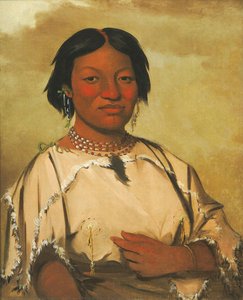
- A Seminole Woman – Hervorhebung der Fähigkeit, Schönheit und Würde einzufangen.
- Stil: Catlins Stil ist gekennzeichnet durch Realismus, lebendige Farben und den Wunsch, die Bräuche und Traditionen der amerikanischen Ureinwohner genau darzustellen. Er fügte oft detaillierte Hintergründe und Landschaften hinzu, um seinen Motiven Kontext zu geben.
Wichtige Errungenschaften & Die Indian Gallery
- Catlin schuf eine umfangreiche Sammlung von über 500 Gemälden, die verschiedene Stämme und Aspekte ihres Lebens darstellen.
- Er stellte diese Werke in das sogenannte "Indian Gallery" zusammen, ein umfassendes visuelles Dokument der Kultur der amerikanischen Ureinwohner.
- Die Indian Gallery wurde in London, Paris und Berlin ausgestellt und erlangte internationale Anerkennung für Catlins Arbeit.
- Seine Veröffentlichungen, darunter Manners, Customs, and Condition of the North American Indians (1841) und Last Rambles Amongst the Indians of the Rocky Mountains and the Andes (1868), festigten seinen Ruf als Autorität über die Kultur der amerikanischen Ureinwohner.
Späteres Leben & Vermächtnis
- Catlin verbrachte seine späteren Jahre damit, zu versuchen, seine Indian Gallery an die US-Regierung zu verkaufen und stieß dabei auf anfängliche Ablehnung.
- Er reproduzierte über 400 Gemälde in einer "Cartoon Collection".
- Trotz Herausforderungen hat Catlins Arbeit einen bleibenden Einfluss darauf gehabt, wie amerikanische Ureinwohner in der Kunst und Populärkultur dargestellt werden.
- Historische Bedeutung: Catlins sorgfältige Dokumentation liefert wertvolle Einblicke in das Leben der Stämme der amerikanischen Ureinwohner vor bedeutenden kulturellen Veränderungen aufgrund der Westexpansion. Seine Arbeit gilt als wichtige historische Aufzeichnung sowie künstlerische Leistung.
Einflüsse & Weitere Informationen
- Nützliche Links:
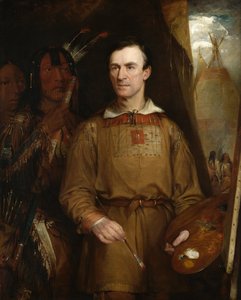
George Catlin
1796 - 1872 , Vereinigte Staaten von Amerika
Kurzinfos
- Bemerkenswerte Werke:
- Ball-Play of the Choctaw
- Mó-sho-la-túb-bee, Chief
- A Seminole Woman
- Geburtsdatum: 26. Juli 1796
- Geburtsort: Wilkes-Barre, Vereinigte Staaten
- Künstlerischer Stil: Frontier Malerei
- Nationalität: Amerikanisch
- Sterbedatum: 23. Dezember 1872
- Vollständiger Name: George Catlin

