

 Vorschau anzeigen
 Versenden
 Teilen
 Details anzeigen

 Herunterladen
 Ähnliche Objekte
 Röntgenaufnahme
 Diashow
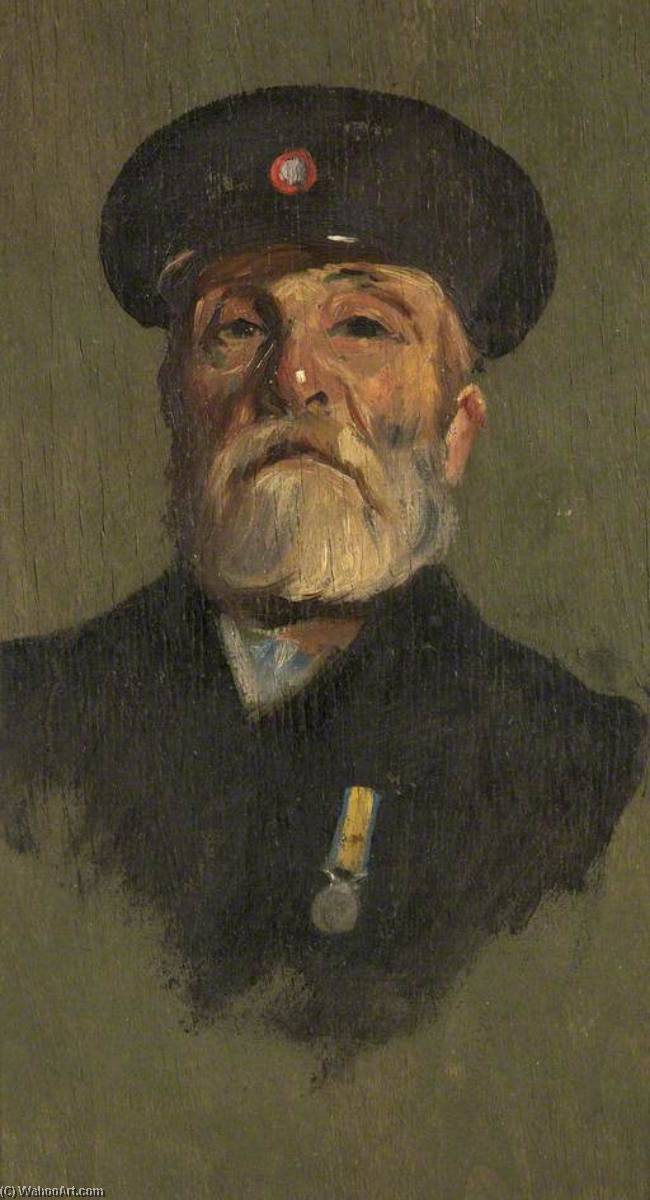
J. Lasbury, RMLI
 Acrylic On Canvas
- WallArt
- Early 20th Century
 1920
1920- 19th Century
 23.0 x 13.0 cm
 Bristol Museum – Kunstgalerie
 Weiterlesen
Handgefertigte Ölreproduktion
Handgemaltes Ölgemälde auf Leinwand in Ihrer Wunschgröße und mit Rahmen, auf Bestellung von unseren Künstlern angefertigt. ( Druck bestellen Bild kaufen)




P118B $10

P118H $10

P118W $10

P438Z $10

P508JH $12

P508YH $12

P805H $10

P805Z $10

P919BZ $10

P919G $10

P919XJ $10

P959ZH $10

P968JZ $12

W106C $8

W218G $10

W218JH $8

W218Y $10

W307PJ $10

W316G $10

W316PJ $8

W316Y $10

W398PJ $8

W4111J $10

W500HY $15

W500JH $15

W692G $12

W849H $8

W940BG $15

W953PJ $8




Wählen Sie aus unseren vordefinierten Formaten, die den ursprünglichen Proportionen des Kunstwerks entsprechen.

Sie können Ihre eigenen Maße eingeben, um einen bestimmten Rahmen oder Platz auszufüllen. Wenn die gewählte Größe nicht den Proportionen des Originalbildes entspricht, werden wir das Kunstwerk entweder beschneiden oder das Gemälde durch zusätzliche, handgemalte Elemente erweitern. Ein digitales Mockup wird Ihnen zur Genehmigung zugesandt, bevor die Produktion beginnt.
Bitte beachten Sie, dass die Bildschirmvorschau nicht die tatsächliche Beschneidung oder Erweiterung widerspiegelt. Nur das Mockup zeigt die endgültige Komposition exakt an.
Obwohl Sondermaße verfügbar sind, empfehlen wir, eine Größe aus der vordefinierten Liste zu wählen, um die ursprünglichen Proportionen beizubehalten.
Nach der Bestellung wird das ArtsDot.com-Team dem Kunden Anweisungen per E-Mail zusenden und eine Mockup-Vorschau bereitstellen.
Weltweiter Versand () in nur 3 bis 4 Wochen statt der üblichen 5 Wochen. (22 August). Keine Kompromisse bei der Qualität.

Kostenloser weltweiter Expressversand

Hochwertige Leinenleinwand

Umfassender Versicherungsschutz beim Versand

Zollgebühren-Rückerstattungsgarantie

Garantie für exakte Farbtreue

60 Tage Rückgaberecht (nur bei Mängeln)

100% Geld-zurück-Garantie

Mengenrabatt verfügbar
 Die Glasoption ist nur für Größen unter 110 cm verfügbar.

J. Lasbury, RMLI
Art der Reproduktion
Format der Reproduktion
-


Gesamtpreis
$ 263
Beschreibung des Kunstwerks
A Portrait of Resolve: George Edmund Butler’s J. Lasbury, RMLI
George Edmund Butler's 1920 painting, “Portrait of J. Lasbury, RMLI,” is more than a simple likeness; it’s a carefully constructed tableau of Victorian military decorum and understated strength. The subject, Lieutenant-Colonel John Lasbury, a Royal Military Life-Guardsman (RMLI), sits in a pose that speaks volumes about his rank and the era he represents – a testament to both duty and quiet dignity. Butler, having spent formative years in New Zealand before returning to England, masterfully blends influences from his diverse experiences, creating an artwork imbued with a subtle yet powerful sense of place.
The painting’s style leans heavily into the conventions of early 20th-century portraiture, reminiscent of the academic tradition favored by Butler's training. However, he avoids mere replication, instead imbuing Lasbury’s image with a palpable sense of presence. The composition is meticulously balanced; Lasbury occupies the central space, his gaze direct and unwavering, engaging the viewer immediately. Notice the careful attention to detail – the crisp lines of his uniform, the subtle sheen on his medals, the slight furrow in his brow that suggests both concentration and perhaps a hint of weariness. Butler’s use of light is particularly effective, highlighting Lasbury's face and chest while subtly shadowing the background, drawing our focus entirely onto the subject.
The Context of Duty: Military Life and the RMLI
To fully appreciate “Portrait of J. Lasbury, RMLI,” it’s crucial to understand the role of the Royal Military Life-Guards (RMLI) during this period. Formed in 1830, they were initially a ceremonial unit, tasked with maintaining order at public events and providing a visible symbol of British authority. By 1920, however, their duties had evolved to include active service, particularly during the First World War. Lasbury’s rank as Lieutenant-Colonel reflects this shift; he was a seasoned officer who had seen action and commanded men in the trenches.
The RMLI's distinctive scarlet uniform, rendered with remarkable accuracy by Butler, symbolized both bravery and tradition. The medals adorning Lasbury’s chest – likely representing service awards and wartime honors – speak to his dedication and sacrifice. Butler doesn’t shy away from depicting the realities of military life; there’s a quiet solemnity in Lasbury's expression that suggests the burdens he carried, the decisions he made, and the lives he influenced.
Technique and Materials: A Masterful Blend
Butler employed oil paints on panel, a technique that allowed for rich color saturation and nuanced tonal variations. The brushwork is generally smooth and controlled, indicative of his academic training, yet it’s punctuated by subtle textures – the folds in Lasbury's uniform, the sheen of his medals – that add depth and realism to the painting. The artist skillfully utilized glazing techniques to build up layers of color, creating a luminous quality that captures the light reflecting off the officer’s attire.
The choice of panel as the support is significant; it lends a sense of solidity and permanence to the portrait, mirroring the enduring nature of military service. Furthermore, the relatively small size of the painting (23 x 13 cm) encourages intimate contemplation, inviting the viewer to linger over every detail.
Symbolism and Emotional Resonance
Beyond its technical merits, “Portrait of J. Lasbury, RMLI” is rich in symbolism. The direct gaze of the subject conveys a sense of authority and confidence, while his slightly downturned mouth suggests introspection and perhaps a touch of melancholy. The medals are not merely decorative elements; they represent years of service, sacrifice, and loyalty. Butler’s careful rendering of Lasbury's uniform speaks to the importance of tradition and discipline within the military hierarchy.
Ultimately, this portrait transcends a simple depiction of an officer; it’s a poignant meditation on duty, honor, and the human cost of war. It invites us to consider the lives of those who served during a turbulent period in British history, offering a glimpse into their experiences and reminding us of the enduring values that shaped their actions.
Ähnliche Kunstwerke
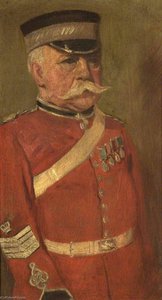
Über den Künstler
George Edmund Butler: Ein Leben in Kunst und Krieg
- Geboren: Southampton, Großbritannien (15. Januar 1872)
- Gestorben: Twickenham, England (9. August 1936)
George Edmund Butler war ein britischer Landschafts- und Porträtmaler, der für seine künstlerischen Fähigkeiten und seine einzigartige Rolle als offizieller Kriegskünstler während des Ersten Weltkriegs Anerkennung erlangte. Sein Lebensweg umfasste die Auswanderung nach Neuseeland, eine umfassende künstlerische Ausbildung in Europa, eine erfolgreiche Karriere in England und schließlich den Dienst zur Dokumentation der Erfahrungen neuseeländischer Soldaten an der Westfront.
Frühes Leben und Künstlerische Ausbildung
- Neuseeland-Jahre: Butlers Familie wanderte aus, als er elf Jahre alt war, nach Neuseeland aus. Er arbeitete für seinen Vater und studierte nebenbei Kunst unter James Nairn an der Wellington School of Design.
- Künstlerische Anfänge: 1892 trat er dem Avantgarde-Wellington Art Club bei und etablierte sich schnell als Landschaftsmaler, insbesondere von Seestücken. Eine Reise nach Sydney im Jahr 1897 ermöglichte ihm weitere Einblicke in künstlerische Stile.
- Europäische Ausbildung: Zwischen 1898 und 1900 absolvierte Butler eine bedeutende künstlerische Ausbildung im Ausland. Er heiratete Sarah Jane Popplestone in England und studierte an der Lambeth School of Art, der Académie Julian in Paris (wo er Auszeichnungen erhielt) und der Antwerp Academy, wo er eine Goldmedaille und einen Lorbeerzweig gewann.
Karriereentwicklung und Königliche Anerkennung
- Rückkehr nach Neuseeland & Dunedin: Nach seiner Rückkehr nach Wellington stellte Butler seine Werke aus, bevor er von 1901 bis 1905 in Dunedin siedelte. Trotz positiver Kritiken führten finanzielle Schwierigkeiten dazu, dass er seinen Lebensunterhalt durch Unterricht und Porträtaufträge aufbesserte.
- Bristol und die Royal West of England Academy: 1905 zog er nach Bristol, England, wo er Kunst am Clifton College unterrichtete. Sein Talent wurde schließlich bei seiner Wahl in die Royal West of England Academy im Jahr 1912 anerkannt. Er stellte auch in angesehenen Institutionen wie der Royal Academy of Arts und der Royal Scottish Academy aus.
Offizieller Kriegskünstler & Dokumentation des Konflikts
- Ernennung zum NZEF-Kriegskünstler: Aufgrund seines Rufs und seiner neuseeländischen Verbindungen wurde Butler im September 1918 zum offiziellen Kriegskünstler der New Zealand Expeditionary Force (NZEF) ernannt. Er diente mit dem Ehrentitel Captain.
- Skizzieren unter Beschuss: Während seiner Zeit bei der NZEF dokumentierte Butler akribisch militärische Operationen durch Skizzen und Gemälde, oft unter schwierigen Bedingungen. Diese Skizzen bildeten die Grundlage für spätere Werke.
- In Auftrag gegebene Porträts & Landschaften: Nach dem Waffenstillstand erhielt er private Aufträge von Robert Heaton Rhodes und Major General Sir Andrew Hamilton Russell, eine Reihe von Porträts hochrangiger Offiziere und Landschaftsbildern zu schaffen, die neuseeländische Schlachtfelder an der Westfront darstellen. Die neuseeländische Regierung kaufte diese Werke anschließend zur Archivierung.
Späteres Leben & Vermächtnis
- Nachkriegsleben: Butler kehrte nach dem Krieg nie wieder nach Neuseeland zurück. Er heiratete erneut, nachdem seine erste Frau gestorben war, und malte weiterhin in England.
- Historische Bedeutung: George Edmund Butlers Werk als offizieller Kriegskünstler bietet eine wertvolle visuelle Aufzeichnung der Erfahrungen neuseeländischer Soldaten während des Ersten Weltkriegs. Seine Gemälde und Skizzen geben Einblicke in die Landschaften, Persönlichkeiten und Ereignisse dieser Ära und tragen so zu unserem Verständnis der Beteiligung Neuseelands am Konflikt bei.
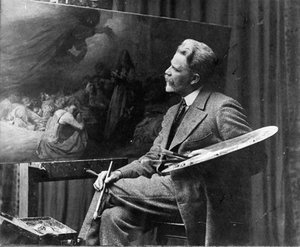
George Edmund Butler
1872 - 1936 , Vereinigtes Königreich
Kurzinfos
- Bemerkenswerte Werke: ['G. Sandford, 28th']
- Geburtsdatum: 15. Januar 1872
- Geburtsort: Southampton, Vereinigtes Königreich
- Künstlerische Richtung: Landschaft & Porträtmalerei
- Nationalität: Britisch
- Sterbedatum: 9. August 1936
- Vollständiger Name: George Edmund Butler
Ähnliche Artikel

Georges Braque: Die 25 Meisterwerke des Kubismus für Ihr Zuhause | ArtsDot
Entdecken Sie die 25 bedeutendsten Kunstwerke von Georges Braque – vom Kubismus bis zum Fauvismus. Erfahren Sie die Geschichten hinter den Meisterwerken und finden Sie hochwertige Reproduktionen für Ihr Zuhause auf ArtsDot.com.

Georges Seurat: Die 25 Meisterwerke des Pointillismus für Ihr Zuhause | ArtsDot
Entdecken Sie die 25 ikonischsten Meisterwerke von Georges Seurat! Tauchen Sie ein in die Welt des Pointillismus, der Farbtheorie und des Impressionismus. Hochwertige Kunst reproduzieren für Ihr Zuhause – jetzt auf ArtsDot.com!
Sir George Clausen: Capturing Edwardian Life & British Impressionism's Nuances
Explore the luminous world of Sir George Clausen, a leading British Impressionist painter. Discover his captivating scenes of Edwardian life, rural England & poignant war art. Learn about his legacy and find high-quality reproductions at ArtsDot.
William Owen: A Poetic Vision of War & Landscape in British Modernism
Explore the poignant war poetry of Wilfred Owen, a key figure in British Modernism. Discover his innovative style, themes of loss & camaraderie, and lasting impact on 20th-century literature. Analysis & historical context included.

The Enduring Legacy of Oil on Canvas: Technique, History & Aesthetic Impact
Explore the rich history & techniques of oil painting – from Renaissance masters to Impressionism. Discover pigments, layering methods, and why this timeless medium endures. Expert insights for artists & art enthusiasts.

