

 Vorschau anzeigen
 Versenden
 Teilen
 Details anzeigen

 Herunterladen
 Ähnliche Objekte
 Röntgenaufnahme
 Diashow
W. J. Ford, 13th, 25th 39th
 Oil
Oil- WallArt
- Early 20th Century Portraiture
 1920
1920 23.0 x 13.0 cm
 Bristol Museum – Kunstgalerie
 Weiterlesen
Handgefertigte Ölreproduktion
Handgemaltes Ölgemälde auf Leinwand in Ihrer Wunschgröße und mit Rahmen, auf Bestellung von unseren Künstlern angefertigt. ( Druck bestellen Bild kaufen)




P118B $10

P118H $10

P118W $10

P438Z $10

P508JH $12

P508YH $12

P805H $10

P805Z $10

P919BZ $10

P919G $10

P919XJ $10

P959ZH $10

P968JZ $12

W106C $8

W218G $10

W218JH $8

W218Y $10

W307PJ $10

W316G $10

W316PJ $8

W316Y $10

W398PJ $8

W4111J $10

W500HY $15

W500JH $15

W692G $12

W849H $8

W940BG $15

W953PJ $8




Wählen Sie aus unseren vordefinierten Formaten, die den ursprünglichen Proportionen des Kunstwerks entsprechen.

Sie können Ihre eigenen Maße eingeben, um einen bestimmten Rahmen oder Platz auszufüllen. Wenn die gewählte Größe nicht den Proportionen des Originalbildes entspricht, werden wir das Kunstwerk entweder beschneiden oder das Gemälde durch zusätzliche, handgemalte Elemente erweitern. Ein digitales Mockup wird Ihnen zur Genehmigung zugesandt, bevor die Produktion beginnt.
Bitte beachten Sie, dass die Bildschirmvorschau nicht die tatsächliche Beschneidung oder Erweiterung widerspiegelt. Nur das Mockup zeigt die endgültige Komposition exakt an.
Obwohl Sondermaße verfügbar sind, empfehlen wir, eine Größe aus der vordefinierten Liste zu wählen, um die ursprünglichen Proportionen beizubehalten.
Nach der Bestellung wird das ArtsDot.com-Team dem Kunden Anweisungen per E-Mail zusenden und eine Mockup-Vorschau bereitstellen.
Weltweiter Versand () in nur 3 bis 4 Wochen statt der üblichen 5 Wochen. (22 August). Keine Kompromisse bei der Qualität.

Kostenloser weltweiter Expressversand

Hochwertige Leinenleinwand

Umfassender Versicherungsschutz beim Versand

Zollgebühren-Rückerstattungsgarantie

Garantie für exakte Farbtreue

60 Tage Rückgaberecht (nur bei Mängeln)

100% Geld-zurück-Garantie

Mengenrabatt verfügbar
 Die Glasoption ist nur für Größen unter 110 cm verfügbar.

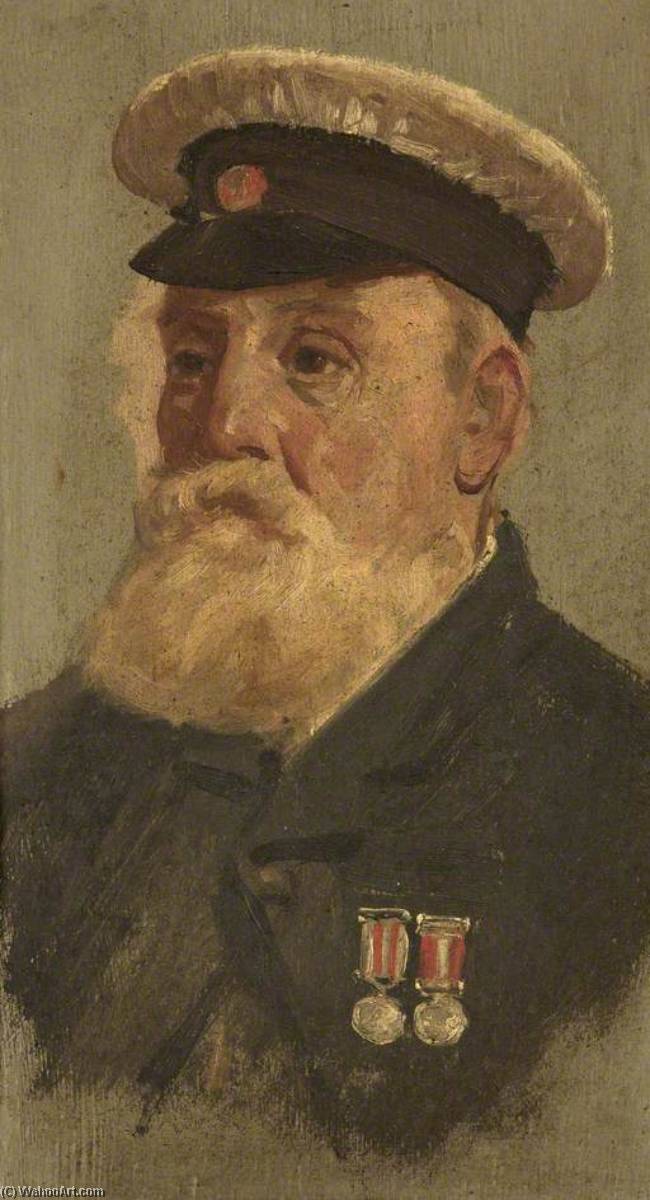
W. J. Ford, 13th, 25th 39th
Art der Reproduktion
Format der Reproduktion
-


Gesamtpreis
$ 263
Beschreibung des Kunstwerks
A Study in Dignified Resolve: Unveiling George Edmund Butler’s “Portrait of W. J. Ford”
George Edmund Butler's "Portrait of W. J. Ford, 13th, 25th & 39th," painted circa 1920, isn’t merely a likeness; it’s a carefully constructed tableau of authority, experience, and a quiet contemplation that speaks volumes about the man depicted and the era in which he lived. Born in Southampton, England, and later establishing himself as a significant figure in New Zealand's burgeoning art scene, Butler possessed an extraordinary ability to imbue his subjects with a palpable sense of presence – a skill particularly evident in this arresting portrait. The painting immediately draws the eye with its formal composition: Ford is positioned centrally, occupying a substantial portion of the canvas, lending him immediate importance and commanding attention. His posture is upright, shoulders squared, conveying an air of self-assuredness tempered by a subtle weariness, suggesting a life lived fully and perhaps with considerable responsibility.
Butler’s technique reveals a masterful understanding of light and shadow – a hallmark of his style. The lighting, originating from the left, sculpts Ford's face, highlighting the deep lines etched around his eyes and mouth, hinting at years of experience and thoughtful reflection. The subtle gradations of tone create a remarkable sense of depth, drawing the viewer into the portrait’s intimate space. Note the meticulous rendering of his facial features: the precise curve of his lips, the slight furrow in his brow, and the glint of intelligence within his eyes – all meticulously captured with a delicate hand. The dark clothing, particularly the jacket and cap, further emphasizes Ford's stature and adds to the overall sense of gravitas.
The Weight of Rank: Contextualizing the Portrait
The inclusion of the medal pinned to Ford’s left lapel is a crucial element, immediately anchoring the portrait within a specific historical context. While the exact nature of the award remains subtly obscured, it undoubtedly signifies recognition for service – likely military or perhaps civic leadership. This detail speaks volumes about the societal values of the time and the importance placed on honor and duty. The painting was created during a period of significant social and political upheaval in New Zealand, following World War I and the subsequent rise of the country’s burgeoning nationhood. Butler's role as an official war artist for the New Zealand Expeditionary Force underscores his commitment to documenting this pivotal moment in the nation’s history.
Furthermore, the painting reflects a broader trend within British art during the early 20th century – a move towards realism and portraiture that sought to capture not just physical likeness but also the inner character of the subject. Butler's work aligns with this aesthetic, offering a nuanced portrayal of Ford as an individual shaped by his experiences and responsibilities. The painting’s quiet dignity and understated elegance are particularly striking considering the often-tumultuous nature of the era.
Symbolism and Emotional Resonance
Beyond its formal elements, “Portrait of W. J. Ford” is rich in subtle symbolism. The man's gaze – direct and unwavering – invites a connection with the viewer, suggesting a willingness to share his thoughts and experiences. There’s an inherent sense of quiet strength emanating from the portrait; it isn’t a flamboyant display of power but rather a measured assertion of presence. The muted color palette—primarily dark browns, grays, and blacks—contributes to the painting's somber mood, reinforcing the themes of experience, reflection, and perhaps even a touch of melancholy.
Ultimately, Butler’s portrait transcends a simple depiction of a man; it is a powerful meditation on leadership, duty, and the enduring qualities of character. It stands as a testament to the artist's skill and his ability to capture not just outward appearance but also the essence of his subject – a dignified figure embodying the weight of responsibility and the quiet wisdom gained through a life well-lived. Reproductions of this piece offer an opportunity to bring this evocative image into any space, serving as a reminder of the enduring power of portraiture to connect us with the past.
Ähnliche Kunstwerke
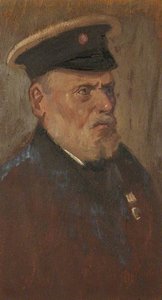
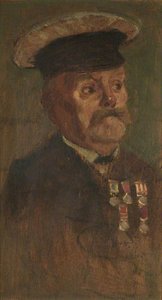
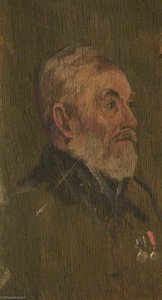
Über den Künstler
George Edmund Butler: Ein Leben in Kunst und Krieg
- Geboren: Southampton, Großbritannien (15. Januar 1872)
- Gestorben: Twickenham, England (9. August 1936)
George Edmund Butler war ein britischer Landschafts- und Porträtmaler, der für seine künstlerischen Fähigkeiten und seine einzigartige Rolle als offizieller Kriegskünstler während des Ersten Weltkriegs Anerkennung erlangte. Sein Lebensweg umfasste die Auswanderung nach Neuseeland, eine umfassende künstlerische Ausbildung in Europa, eine erfolgreiche Karriere in England und schließlich den Dienst zur Dokumentation der Erfahrungen neuseeländischer Soldaten an der Westfront.
Frühes Leben und Künstlerische Ausbildung
- Neuseeland-Jahre: Butlers Familie wanderte aus, als er elf Jahre alt war, nach Neuseeland aus. Er arbeitete für seinen Vater und studierte nebenbei Kunst unter James Nairn an der Wellington School of Design.
- Künstlerische Anfänge: 1892 trat er dem Avantgarde-Wellington Art Club bei und etablierte sich schnell als Landschaftsmaler, insbesondere von Seestücken. Eine Reise nach Sydney im Jahr 1897 ermöglichte ihm weitere Einblicke in künstlerische Stile.
- Europäische Ausbildung: Zwischen 1898 und 1900 absolvierte Butler eine bedeutende künstlerische Ausbildung im Ausland. Er heiratete Sarah Jane Popplestone in England und studierte an der Lambeth School of Art, der Académie Julian in Paris (wo er Auszeichnungen erhielt) und der Antwerp Academy, wo er eine Goldmedaille und einen Lorbeerzweig gewann.
Karriereentwicklung und Königliche Anerkennung
- Rückkehr nach Neuseeland & Dunedin: Nach seiner Rückkehr nach Wellington stellte Butler seine Werke aus, bevor er von 1901 bis 1905 in Dunedin siedelte. Trotz positiver Kritiken führten finanzielle Schwierigkeiten dazu, dass er seinen Lebensunterhalt durch Unterricht und Porträtaufträge aufbesserte.
- Bristol und die Royal West of England Academy: 1905 zog er nach Bristol, England, wo er Kunst am Clifton College unterrichtete. Sein Talent wurde schließlich bei seiner Wahl in die Royal West of England Academy im Jahr 1912 anerkannt. Er stellte auch in angesehenen Institutionen wie der Royal Academy of Arts und der Royal Scottish Academy aus.
Offizieller Kriegskünstler & Dokumentation des Konflikts
- Ernennung zum NZEF-Kriegskünstler: Aufgrund seines Rufs und seiner neuseeländischen Verbindungen wurde Butler im September 1918 zum offiziellen Kriegskünstler der New Zealand Expeditionary Force (NZEF) ernannt. Er diente mit dem Ehrentitel Captain.
- Skizzieren unter Beschuss: Während seiner Zeit bei der NZEF dokumentierte Butler akribisch militärische Operationen durch Skizzen und Gemälde, oft unter schwierigen Bedingungen. Diese Skizzen bildeten die Grundlage für spätere Werke.
- In Auftrag gegebene Porträts & Landschaften: Nach dem Waffenstillstand erhielt er private Aufträge von Robert Heaton Rhodes und Major General Sir Andrew Hamilton Russell, eine Reihe von Porträts hochrangiger Offiziere und Landschaftsbildern zu schaffen, die neuseeländische Schlachtfelder an der Westfront darstellen. Die neuseeländische Regierung kaufte diese Werke anschließend zur Archivierung.
Späteres Leben & Vermächtnis
- Nachkriegsleben: Butler kehrte nach dem Krieg nie wieder nach Neuseeland zurück. Er heiratete erneut, nachdem seine erste Frau gestorben war, und malte weiterhin in England.
- Historische Bedeutung: George Edmund Butlers Werk als offizieller Kriegskünstler bietet eine wertvolle visuelle Aufzeichnung der Erfahrungen neuseeländischer Soldaten während des Ersten Weltkriegs. Seine Gemälde und Skizzen geben Einblicke in die Landschaften, Persönlichkeiten und Ereignisse dieser Ära und tragen so zu unserem Verständnis der Beteiligung Neuseelands am Konflikt bei.
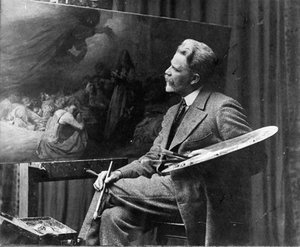
George Edmund Butler
1872 - 1936 , Vereinigtes Königreich
Kurzinfos
- Bemerkenswerte Werke: ['G. Sandford, 28th']
- Geburtsdatum: 15. Januar 1872
- Geburtsort: Southampton, Vereinigtes Königreich
- Künstlerische Richtung: Landschaft & Porträtmalerei
- Nationalität: Britisch
- Sterbedatum: 9. August 1936
- Vollständiger Name: George Edmund Butler
Ähnliche Artikel

Georges Braque: Die 25 Meisterwerke des Kubismus für Ihr Zuhause | ArtsDot
Entdecken Sie die 25 bedeutendsten Kunstwerke von Georges Braque – vom Kubismus bis zum Fauvismus. Erfahren Sie die Geschichten hinter den Meisterwerken und finden Sie hochwertige Reproduktionen für Ihr Zuhause auf ArtsDot.com.

Georges Seurat: Die 25 Meisterwerke des Pointillismus für Ihr Zuhause | ArtsDot
Entdecken Sie die 25 ikonischsten Meisterwerke von Georges Seurat! Tauchen Sie ein in die Welt des Pointillismus, der Farbtheorie und des Impressionismus. Hochwertige Kunst reproduzieren für Ihr Zuhause – jetzt auf ArtsDot.com!
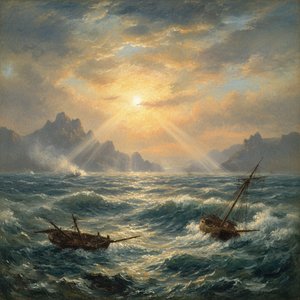
J.M.W. Turner: Licht, Atmosphäre und das Romantische Erhabene – Eine Studie zu seinem künstlerischen Vermächtnis
Entdecken Sie J.M.W. Turner und seine revolutionäre Landschaftsmalerei! Analysieren Sie Licht, Atmosphäre und das Romantische Erhabene in seinem Werk. Expertenwissen & tiefe Einblicke.
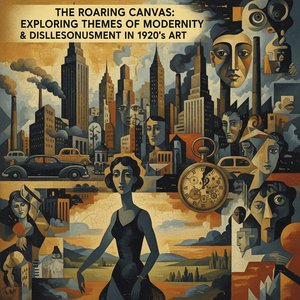
The Roaring Canvas: Exploring Themes of Modernity & Disillusionment in 1920s Art
Explore the captivating world of 1920s art! Discover Art Deco's glamour, Modernism’s impact & iconic artists like Tamara de Lempicka. Museum-quality reproductions at ArtsDot.
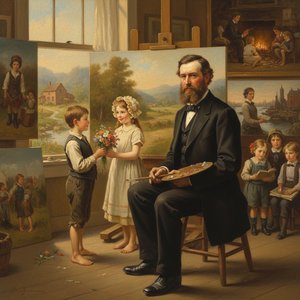
John George Brown: Die einfühlsame Darstellung amerikanischer Lebenswelt und Sentiment in der Genremalerei des 19. Jahrhunderts
Entdecken Sie die einfühlsame Genremalerei von John George Brown! Erfahren Sie mehr über seine Darstellung des amerikanischen Lebens im 19. Jahrhundert, seinen Stil und sein Vermächtnis. Hochwertige Kunstdrucke bei ArtsDot.

