

 Vorschau anzeigen
 Versenden
 Teilen
 Details anzeigen

 Herunterladen
 Ähnliche Objekte
 Röntgenaufnahme
 Diashow
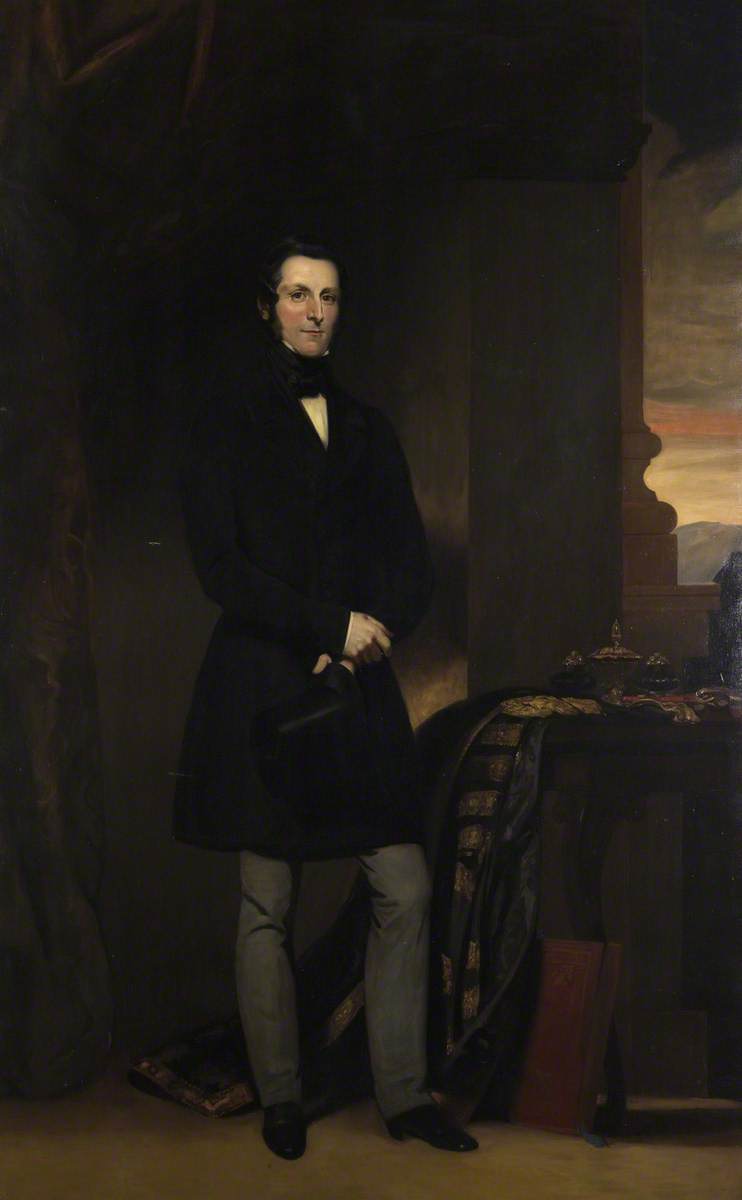
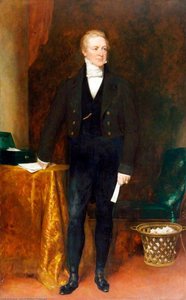
James Andrew Broun Ramsay (1812–1860), 1st Marquis of Dalhousie, Governor General of India (1848–1856) (after John Watson Gordon)
 Academic Realism
 1905
1905 240.0 x 148.0 cm
 British Library
 Weiterlesen
Handgefertigte Ölreproduktion
Handgemaltes Ölgemälde auf Leinwand in Ihrer Wunschgröße und mit Rahmen, auf Bestellung von unseren Künstlern angefertigt. ( Druck bestellen Bild kaufen)




































Wählen Sie aus unseren vordefinierten Formaten, die den ursprünglichen Proportionen des Kunstwerks entsprechen.

Sie können Ihre eigenen Maße eingeben, um einen bestimmten Rahmen oder Platz auszufüllen. Wenn die gewählte Größe nicht den Proportionen des Originalbildes entspricht, werden wir das Kunstwerk entweder beschneiden oder das Gemälde durch zusätzliche, handgemalte Elemente erweitern. Ein digitales Mockup wird Ihnen zur Genehmigung zugesandt, bevor die Produktion beginnt.
Bitte beachten Sie, dass die Bildschirmvorschau nicht die tatsächliche Beschneidung oder Erweiterung widerspiegelt. Nur das Mockup zeigt die endgültige Komposition exakt an.
Obwohl Sondermaße verfügbar sind, empfehlen wir, eine Größe aus der vordefinierten Liste zu wählen, um die ursprünglichen Proportionen beizubehalten.
Nach der Bestellung wird das ArtsDot.com-Team dem Kunden Anweisungen per E-Mail zusenden und eine Mockup-Vorschau bereitstellen.
Weltweiter Versand () in nur 3 bis 4 Wochen statt der üblichen 5 Wochen. (28 August). Keine Kompromisse bei der Qualität.

Kostenloser weltweiter Expressversand

Hochwertige Leinenleinwand

Umfassender Versicherungsschutz beim Versand

Zollgebühren-Rückerstattungsgarantie

Garantie für exakte Farbtreue

60 Tage Rückgaberecht (nur bei Mängeln)

100% Geld-zurück-Garantie

Mengenrabatt verfügbar
 Die Glasoption ist nur für Größen unter 110 cm verfügbar.

James Andrew Broun Ramsay (1812–1860), 1st Marquis of Dalhousie, Governor General of India (1848–1856) (after John Watson Gordon)
Art der Reproduktion
Format der Reproduktion
-


Gesamtpreis
$ 263
Ähnliche Kunstwerke
Über den Künstler
George Harcourt Sephton: A Portraitist of Victorian Society
George Harcourt Sephton (1868-1947) remains a quietly significant figure in late 19th and early 20th century British art, largely obscured by the grander narratives of the Royal Academy and the more flamboyant styles of his contemporaries. Born in Dumbarton, Scotland, into a family deeply rooted in shipbuilding—his father a labourer at William Denny & Brothers—Harcourt’s artistic journey began modestly, nurtured within the burgeoning art scene of the West Country. His early training at the Dumbarton School of Art provided a solid foundation, but it was his subsequent studies under Hubert von Herkomer at Bushey, Hertfordshire, that truly shaped his approach to portraiture and landscape.
Herkomer’s influence proved pivotal, instilling in Harcourt a rigorous attention to detail, a classical sensibility, and a commitment to capturing the essence of his subjects. This dedication is immediately apparent in his portraits, which eschew mere likeness for a deeper exploration of character and social standing. Harcourt wasn't simply reproducing faces; he was revealing personalities through subtle shifts in expression, posture, and attire. He possessed an uncanny ability to distill complex individuals into compelling visual narratives, often imbued with a quiet dignity or understated wit.
A Career Defined by Portraiture and Landscape
Harcourt’s career unfolded across several distinct phases. Initially, he found success as an interior decorator for ships and yachts, a skill honed during his early years in Dumbarton. However, it was his foray into portrait painting that truly established him within the art world. He quickly gained recognition for his ability to capture the nuances of Victorian society – from prominent politicians and military figures to members of the aristocracy and even humble tradesmen. His subjects included Clement Attlee, a key figure in British politics, and James Ramsay, 1st Marquis of Dalhousie, Governor General of India.
Alongside his portraiture, Harcourt maintained an active interest in landscape painting, though it’s often overshadowed by his more celebrated work with figures. His landscapes, frequently depicting rural scenes and evocative coastal vistas, demonstrate a keen eye for composition and a subtle understanding of light and atmosphere. These works offer glimpses into the artist's broader artistic sensibilities, revealing a sensitivity to both human experience and the natural world.
Royal Recognition and Artistic Leadership
Harcourt’s contributions were formally acknowledged by the Royal Academy, where he was elected an Associate Academician in 1919 and subsequently a full Academician in 1926. This elevation marked a significant milestone in his career, solidifying his position within the highest echelons of British art. He also served as Director of the Royal Academy Schools from 1927 to 1945, demonstrating his commitment to nurturing and guiding the next generation of artists.
His presidency of the Royal Society of Portrait Painters in 1945 further underscored his influence within the portraiture community. Harcourt’s tenure was marked by a dedication to upholding artistic standards and fostering a supportive environment for aspiring painters. He maintained a modest, almost retiring demeanor, yet his impact on the art world was considerable.
Legacy and Artistic Style
George Harcourt Sephton's legacy lies not in flamboyant exhibitions or revolutionary techniques, but rather in the quiet dignity and subtle brilliance of his portraits. His work embodies the spirit of late Victorian England – a period of social change, industrial progress, and enduring artistic tradition. His paintings are characterized by their meticulous detail, classical composition, and an ability to capture the essence of his subjects’ personalities. He was a master of capturing not just appearances but also the subtle nuances of character and social standing, leaving behind a collection of portraits that offer valuable insights into Victorian society.
His influence can be seen in the works of subsequent portraitists, who continued to draw inspiration from his meticulous approach and his commitment to portraying subjects with depth and sensitivity. Harcourt’s paintings remain treasured examples of British art, offering a window into a bygone era and a testament to the enduring power of portraiture.
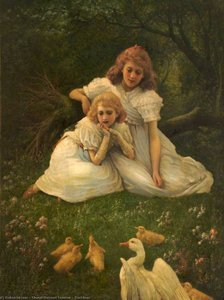
george harcourt sephton
1860 - 1923
Kurzinfos
- Artistic Movement Or Style: Portrait & Figure Painting
- Artists Or Movements Influenced By This Artist: ['Royal Academy']
- Artists Who Influenced This Artist: ['Hubert Herkomer']
- Date Of Birth: 1868-10-11
- Date Of Death: 1947-09-30
- Full Name: George Harcourt Sephton
- Nationality: British
- Notable Artworks:
- Melody
- James Ramsay
- Winifred Roberts
- Place Of Birth: Dumbarton, Scotland
Ähnliche Artikel

The Enduring Legacy of Oil on Canvas: Technique, History & Aesthetic Impact
Explore the rich history & techniques of oil painting – from Renaissance masters to Impressionism. Discover pigments, layering methods, and why this timeless medium endures. Expert insights for artists & art enthusiasts.

Öl auf Leinwand: Eine historische und technische Erkundung eines zeitlosen künstlerischen Mediums
Entdecken Sie die faszinierende Welt der Ölmalerei! Von historischen Techniken bis zur modernen Anwendung – wir bieten Expertenwissen, Restaurierungstipps und hochwertige Reproduktionen. Jetzt informieren!
Die 10 Meisterwerke des Neoklassizismus: Kunst für Ihr Zuhause |
Entdecken Sie die 10 Meisterwerke des Neoklassizismus! Von David bis Canova – erleben Sie Kunstgeschichte, elegante Ästhetik & zeitlose Schönheit. Hochwertige Reproduktionen auf .
The Digital Portrait Renaissance: Transforming Personal Photography into Timeless Oil Paintings Through Artistic Reproduction
Transform your cherished photos into timeless oil paintings with ArtsDot's expert artists. Museum-quality reproductions & custom portraits, crafted to last a lifetime. Discover the art of personal legacy.
Die bleibende Ästhetik der Porträtmalerei: Emotionale Verbindungen und das Erbe der Erinnerung auf Leinwand
Entdecken Sie die bleibende Ästhetik der Porträtmalerei! Maßgefertigte Auftragsporträts, hochwertige Reproduktionen & Kunstberatung von Experten. Erschaffen Sie zeitlose Erinnerungsstücke.

