

 Versenden
 Teilen
 Details anzeigen

 Herunterladen
 Ähnliche Objekte
 Diashow
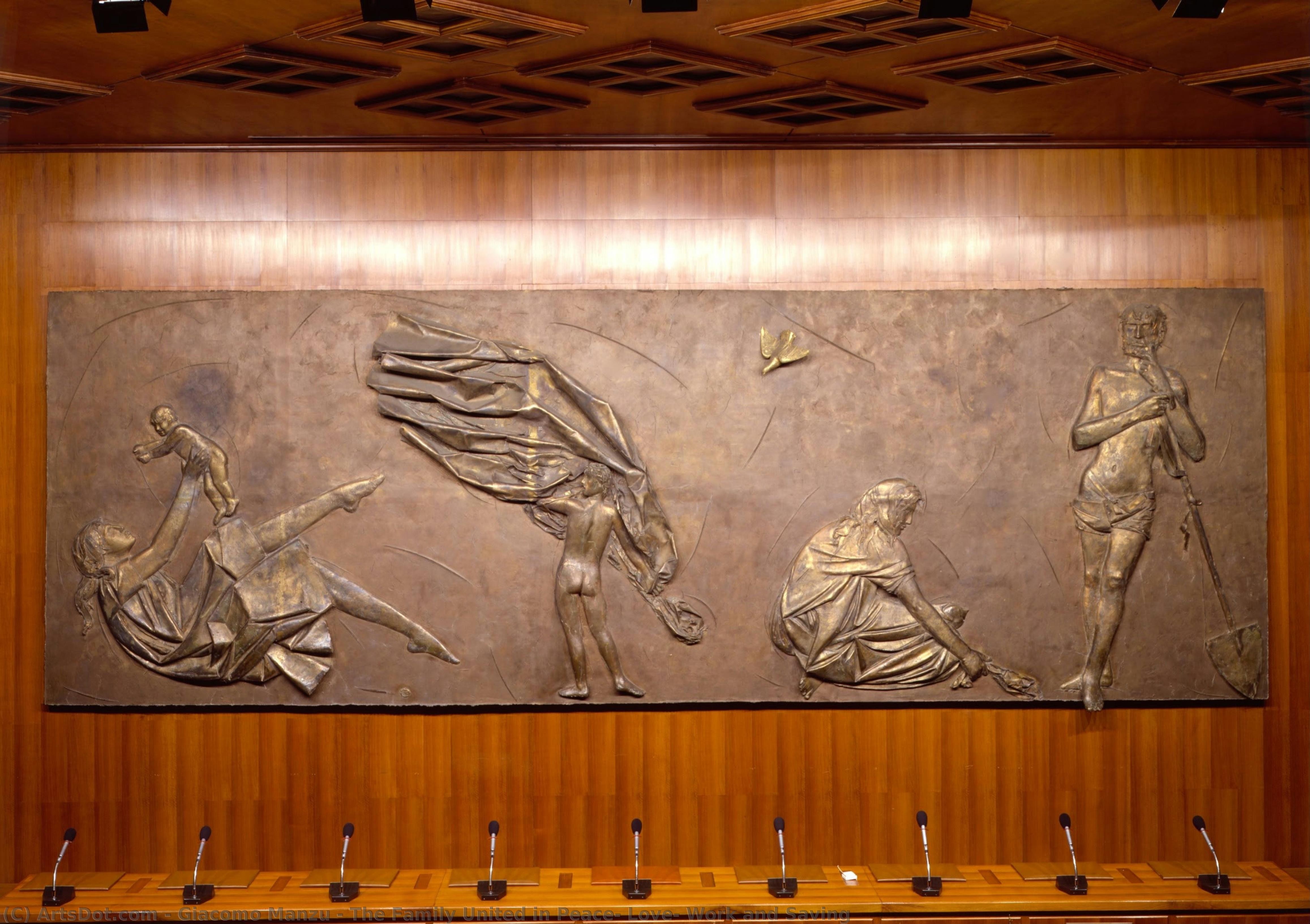
The Family United in Peace, Love, Work and Saving
 Bronze
- Sculpture
- Neoclassicism
 Modern
 789.0 x 265.0 cm
 Fondazione Cariplo
 Weiterlesen
Giclée / Kunstdruck
Giclée- oder Leinwanddruck in Museumsqualität mit schneller Produktion und flexiblen Veredelungsoptionen. ( Handgemalte Reproduktion bestellen Bild kaufen)




































Wählen Sie aus unseren vordefinierten Formaten, die den ursprünglichen Proportionen des Kunstwerks entsprechen.

Sie können Ihre eigenen Maße eingeben, um ein bestimmtes Format oder einen speziellen Platz einzupassen. Wenn das von Ihnen gewählte Format nicht den Proportionen des Originalbildes entspricht, werden wir das Kunstwerk entweder beschneiden oder das Bild mit einem gespiegelten oder einfarbigen Rand erweitern. Ein digitaler Entwurf wird Ihnen zur Genehmigung zugesandt, bevor die Produktion beginnt.
Bitte beachten Sie, dass die Vorschau auf dem Bildschirm nicht den tatsächlichen Zuschnitt oder die Erweiterung widerspiegelt. Nur der Entwurf zeigt die endgültige Komposition präzise an.
Obwohl Sondermaße verfügbar sind, empfehlen wir die Auswahl eines Maßes aus der vordefinierten Liste, um die ursprünglichen Proportionen zu bewahren.
Weltweiter Versand () innerhalb von 2 Wochen statt der üblichen 4/5 Wochen. (29 August)

Kostenloser weltweiter Expressversand

Hochwertige Leinenleinwand

Umfassender Versicherungsschutz beim Versand

Zollgebühren-Rückerstattungsgarantie

Garantie für exakte Farbtreue

60 Tage Rückgaberecht (nur bei Mängeln)

100% Geld-zurück-Garantie

Mengenrabatt verfügbar
 Die Glasoption ist nur für Größen unter 110 cm verfügbar.

The Family United in Peace, Love, Work and Saving
Giclée / Kunstdruck
Format der Reproduktion
-


Gesamtpreis
$ 62
A Monumental Vision of Human Connection
In the grand, echoing halls of the Cariplo Conference Centre, there exists a profound meditation on the essence of human existence, captured in Giacomo Manzù’s monumental bronze relief, The Family United in Peace, Love, Work and Saving. Created between January and October 1970, this breathtaking work transcends mere decoration to become a narrative epic cast in metal. The composition unfolds horizontally, a sweeping panorama that invites the viewer to journey through the various stages of life and the fundamental pillars of society. Manzù masterfully orchestrates a scene where the domestic and the elemental collide, presenting a vision of stability amidst the invisible currents of change.
The relief is structured around four poignant vignettes, each representing a facet of material and spiritual subsistence. We witness the tender intimacy of a mother playing with her child, the youthful vitality of a figure whose clothing dances in an unseen breeze alongside a symbolic dove, the quiet diligence of a veiled woman tending to her savings, and the weary but resolute strength of a father leaning upon his spade during a moment of respite from labor. These figures are not merely isolated subjects; they are woven into a singular tapestry of existence, suggesting that the strength of a civilization lies in the cultivation of both the soil and the soul.
The Mastery of Bronze and Shadow
Technically, the work is a triumph of the stiacciato—or low relief—technique, a method rooted in the Renaissance tradition that allows for incredible detail within a shallow depth. Manzù utilizes this technique to create a sense of atmospheric movement, often described as a "gust of wind" that sweeps through the background, unifying the disparate scenes. The dark, rich patina of the bronze lends a somber, timeless weight to the figures, while the interplay of light and shadow across the textured surfaces creates a dynamic energy. Each line is deliberate, each fold of drapery serves to emphasize the physical presence and emotional gravity of the subjects.
The artist’s stylistic lineage is evident in the way he balances classical poise with modern intensity. Drawing inspiration from the works of masters like Auguste Rodin and Aristide Maillol, Manzù infuses his neoclassical forms with a contemporary sense of struggle and determination. The geometric strength of the bodies provides a foundation of permanence, yet the flowing elements—the wind, the dove, the fluttering cloth—introduce a layer of ephemeral beauty that prevents the work from feeling static. It is this tension between the eternal and the fleeting that gives the relief its enduring power.
A Legacy of Spiritual and Social Depth
To understand this masterpiece, one must look to the spiritual journey of Giacomo Manzù himself. Having achieved international renown for his sacred bronze doors in Saint Peter’s Basilica, Manzù brought a profound sense of religious and humanistic gravity to his secular commissions. This relief serves as a bridge between his explorations of divine peace and the earthly realities of labor and family life. The symbolism is layered; the dove represents more than just peace—it signifies the breath of life that moves through all generations, connecting the worker to the earth and the mother to the child.
For the discerning collector or interior designer, a reproduction of such a significant work offers more than mere aesthetic appeal. It introduces a sense of historical depth and intellectual rigor into a space. The piece evokes feelings of resilience, continuity, and the quiet dignity of everyday life. Whether placed in a corporate setting to inspire stability or in a private residence to anchor a room with classical grandeur, The Family United remains a powerful testament to the enduring importance of human connection and the rhythmic beauty of work and devotion.
Ähnliche Kunstwerke
Über den Künstler
Early Life and Artistic Beginnings
Giacomo Manzù (born December 22, 1908, Bergamo, Italy—died January 17, 1991, Ardea) was an Italian sculptor who, in the mid-20th century, revived the ancient tradition of creating sculptural bronze doors for ecclesiastical buildings. His sober realism and extremely delicate modeling alternately achieved austere severity and sensuousness of form and surface, lending a new spirit of vitality to figurative bronze sculpture. He had to leave school at an early age to learn a trade, and he was apprenticed to local craftsmen who taught him to carve wood and to work in metal and stone. His father was a shoemaker and sacristan of a small parish of the Bergamo province in the North of Italy. After service in the Italian army from 1927 to 1928, Manzù went to Paris to try his luck as a sculptor, but after three weeks he collapsed from hunger and was deported back to Italy. He settled in Milan, where architect Giovanni Muzio commissioned him the decoration of the chapel of Università Cattolica del Sacro Cuore (1931–1932). This formative experience instilled in him a profound appreciation for craftsmanship and established his initial artistic vision—a fusion of classical ideals with expressive dynamism.- His father, Giuseppe Manzoni, was a shoemaker and sacristan.
- He received minimal formal education beyond evening art classes.
- Early training focused on woodworking and metalworking techniques.
Influences and Artistic Style
Manzù’s artistic journey was profoundly shaped by encounters with diverse cultural traditions. He drew inspiration from Etruscan sculpture, Egyptian art, and medieval iconography—elements that would permeate his oeuvre throughout his career. Notably, he admired the sculptures of Michelangelo Buonarroti and Auguste Rodin, whose mastery of form and emotional expression served as models for his own stylistic explorations. Initially influenced by Impressionism, Manzù swiftly embraced Futurism, spearheaded by Filippo Tommaso Marinetti, adopting its tenets of dynamism, speed, and fragmentation to convey a sense of movement and energy in his artworks. This stylistic shift reflected the broader cultural currents of the era—a rejection of academic conventions in favor of innovative visual languages.- He admired Michelangelo Buonarroti’s sculptural achievements.
- Auguste Rodin's expressive sculptures served as inspiration.
- Futurism profoundly impacted his artistic style, prioritizing dynamism and speed.
Major Works and Recognition
Manzù’s prolific output spanned sculpture, painting, printmaking, and scenography. Among his most celebrated creations are “The Family United,” a monumental bronze relief depicting a family engaged in labor—a poignant meditation on the human condition; “Cardinal,” a striking portrait of Pope John XXIII embodying solemnity and contemplation; and “Door of Death,” commissioned for St. Peter’s Basilica, representing a powerful symbol of mortality and faith. His sculptures were exhibited internationally, garnering critical acclaim and establishing him as one of Italy's foremost sculptors. He received numerous awards recognizing his artistic merit—including the Lenin Peace Prize and the Order of Merit of the Italian Republic—solidifying his legacy as a visionary artist who championed humanist values through his art.- "The Family United" exemplifies Manzù’s exploration of human dignity and labor.
- "Cardinal" captures Pope John XXIII's solemn presence and spiritual significance.
- "Door of Death" symbolizes mortality and faith, reflecting the artist's humanist convictions.
Later Life and Legacy
Manzù continued to work actively until his death in 1991. He established a studio in Salzburg, Austria, where he resided for several years, fostering collaborations with architects and fellow artists. His final masterpiece—a towering sculpture titled “Mother and Child”—was erected in New York City’s UN Plaza, commemorating the anniversary of Hiroshima and Nagasaki. Giacomo Manzù's artistic legacy extends beyond his individual artworks; it embodies a commitment to humanist ideals—faithfulness to tradition combined with boldness in experimentation—that continues to inspire artists and scholars alike. His sculptures stand as enduring monuments to human emotion and form, reflecting the profound influence of classical art alongside the dynamism of Futurism.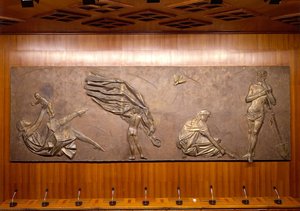
giacomo manzu
1908 - 1991
Kurzinfos
- Artistic Movement Or Style: Futurism
- Artists Or Movements Influenced By This Artist: ['Impressionism']
- Artists Who Influenced This Artist:
- Etruscan Art
- Egyptian Art
- Medieval Art
- Date Of Birth: December 22, 1908
- Date Of Death: January 17, 1991
- Full Name: Giacomo Manzù
- Nationality: Italian
- Notable Artworks:
- The Family United
- Cardinal
- Untitled (214)
- Door of Death
- Place Of Birth: Bergamo, Italy
Ähnliche Artikel

Die 10 legendärsten Bronzestatuen: Meisterwerke, die Kunstgeschichte schrieben | ArtsDot
Entdecken Sie die 10 legendärsten Bronzestatuen der Kunstgeschichte! Von Rodin bis Michelangelo – erfahren Sie die Geschichten hinter ikonischen Skulpturen und finden Sie hochwertige Reproduktionen für Ihr Zuhause. Jetzt bei ArtsDot entdecken!

Bronze-Meisterwerke: Die 10 Skulpturen, die Kunstgeschichte schrieben | ArtsDot
Entdecken Sie die 10 legendärsten Bronze Skulpturen der Kunstgeschichte! Von Michelangelo bis Rodin – erfahren Sie die Geschichten hinter den Meisterwerken und lassen Sie sich von Wanddeko-Ideen inspirieren. Hochwertige Kunstdrucke auf ArtsDot.com.

The Enduring Legacy of Bronze: A Historical & Artistic Exploration for the Collector
Explore the rich history & enduring appeal of bronze sculpture with expert insights for collectors at ArtsDot. Learn about casting techniques, iconic artists, collecting tips & contemporary interpretations.
The Enduring Legacy of Bronze: History, Technique & Artistic Expression for the Collector
Explore the rich history & enduring appeal of bronze sculpture with expert insights for collectors at ArtsDot. Learn about casting techniques, iconic artists, and collecting tips.
The Enduring Legacy of Bronze Sculpture: A Collector's Guide to Form & Cultural Significance
Explore the rich history & enduring appeal of bronze sculpture with expert insights for collectors at ArtsDot. Learn about casting techniques, iconic artists, and collecting tips to build a discerning art collection.

