 Versenden
 Teilen
 Details anzeigen

 Herunterladen
 Ähnliche Objekte
 Diashow
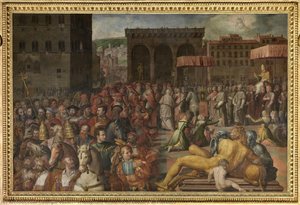
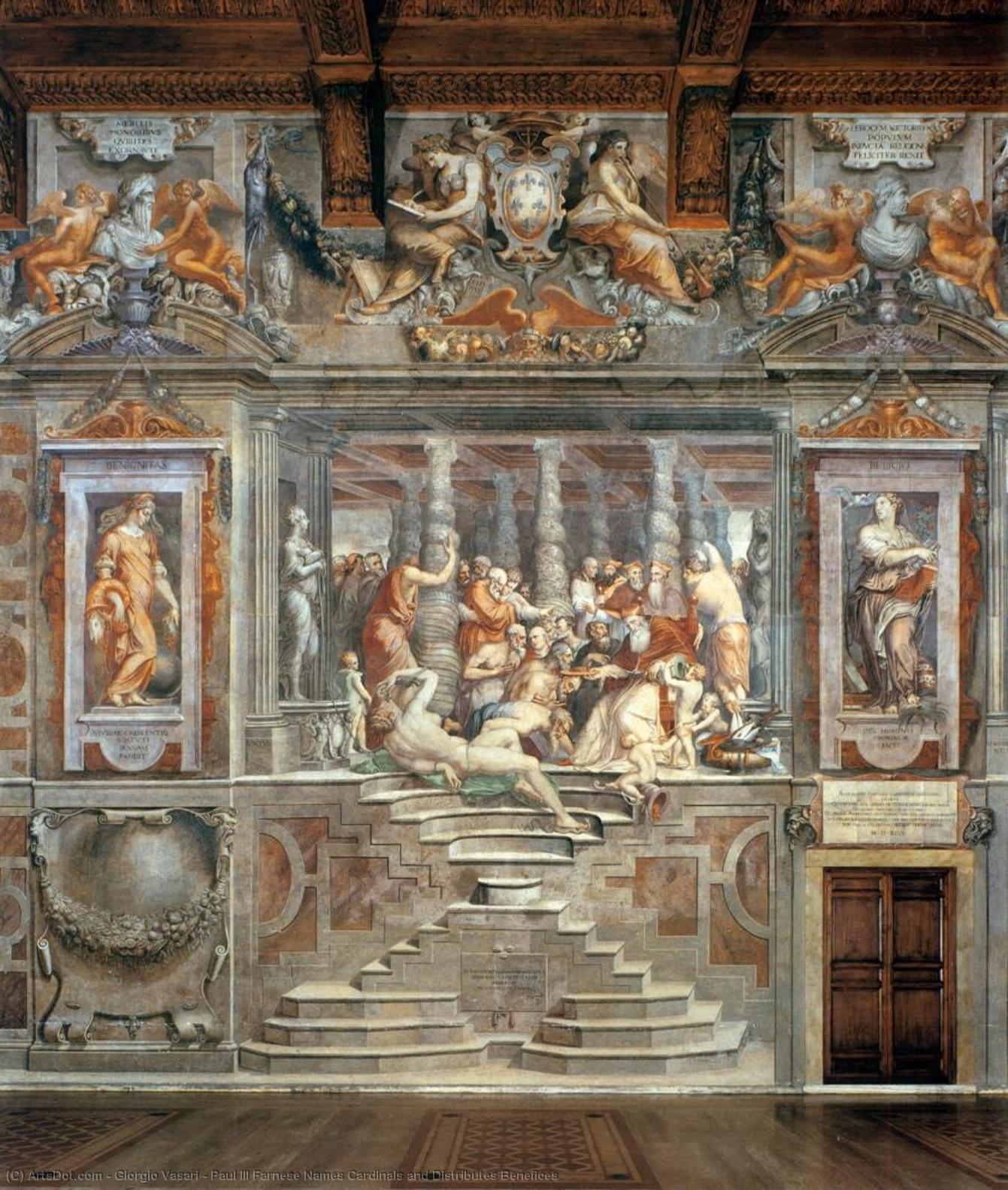
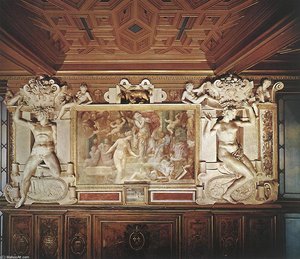
Paul III Farnese Names Cardinals and Distributes Benefices


 Weiterlesen
Giclée / Kunstdruck
Giclée- oder Leinwanddruck in Museumsqualität mit schneller Produktion und flexiblen Veredelungsoptionen. ( Handgemalte Reproduktion bestellen Bild kaufen)




































Wählen Sie aus unseren vordefinierten Formaten, die den ursprünglichen Proportionen des Kunstwerks entsprechen.

Sie können Ihre eigenen Maße eingeben, um ein bestimmtes Format oder einen speziellen Platz einzupassen. Wenn das von Ihnen gewählte Format nicht den Proportionen des Originalbildes entspricht, werden wir das Kunstwerk entweder beschneiden oder das Bild mit einem gespiegelten oder einfarbigen Rand erweitern. Ein digitaler Entwurf wird Ihnen zur Genehmigung zugesandt, bevor die Produktion beginnt.
Bitte beachten Sie, dass die Vorschau auf dem Bildschirm nicht den tatsächlichen Zuschnitt oder die Erweiterung widerspiegelt. Nur der Entwurf zeigt die endgültige Komposition präzise an.
Obwohl Sondermaße verfügbar sind, empfehlen wir die Auswahl eines Maßes aus der vordefinierten Liste, um die ursprünglichen Proportionen zu bewahren.
Weltweiter Versand () innerhalb von 2 Wochen statt der üblichen 4/5 Wochen. (3 September)

Kostenloser weltweiter Expressversand

Hochwertige Leinenleinwand

Umfassender Versicherungsschutz beim Versand

Zollgebühren-Rückerstattungsgarantie

Garantie für exakte Farbtreue

60 Tage Rückgaberecht (nur bei Mängeln)

100% Geld-zurück-Garantie

Mengenrabatt verfügbar
 Die Glasoption ist nur für Größen unter 110 cm verfügbar.

Paul III Farnese Names Cardinals and Distributes Benefices
Giclée / Kunstdruck
Format der Reproduktion
-


Gesamtpreis
$ 62
A Renaissance Echo of Power and Virtue
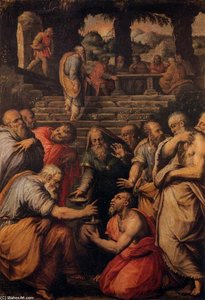
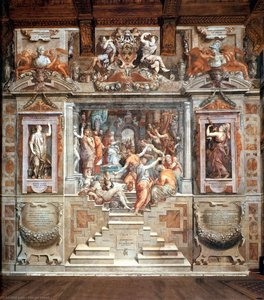
Within the hallowed, quiet halls of the Palazzo della Cancelleria in Rome, there exists a space where history breathes through pigment and plaster. Giorgio Vasari’s monumental fresco, Paul III Farnese Names Cardinals and Distributes Benefices, is far more than a mere ceiling decoration; it is a profound theatrical performance frozen in time. Created in 1546 under the ambitious patronage of Cardinal Alessandro Farnese, this masterpiece serves as a grand proclamation of papal authority and the enduring splendor of Roman civilization. To gaze upon this work is to step into the heart of the High Renaissance, where the boundaries between political reality and mythological legend blur into a single, breathtaking vision of governance and grace.
The composition unfolds with a sophisticated, layered complexity that draws the eye through an imagined architectural expanse. At its very core, Vasari places a central assembly of figures gathered around a table—a deliberate visual anchor representing the weight and solemnity of papal administration. This focal point is not solitary; it is surrounded by a swirling tapestry of smaller vignettes that whisper tales of the Trojan War. By weaving these classical myths into a contemporary scene of ecclesiastical power, Vasari achieves a brilliant synthesis of Christian allegory and Greco-Roman tradition. The result is a narrative landscape where the resilience of ancient heroes mirrors the perceived stability and triumph of the Farnese lineage.
The Mastery of Fresco and Light
The technical execution of this work reveals the disciplined hand of a master. Utilizing the venerable fresco technique, Vasari applied pigments mixed with water directly onto freshly laid, wet plaster. This demanding method requires an artist to work with incredible speed and foresight, as each stroke must be perfectly placed before the surface dries. The consequence of such labor is a luminous, enduring surface that has retained its brilliance for nearly five centuries. The palette is a warm, sophisticated symphony of earthy tones—rich ochres, deep terracottas, and muted reds—interspersed with subtle blues that provide a sense of atmospheric depth.
For the discerning collector or interior designer, this artwork offers an unparalleled sense of grandeur. The use of linear perspective guides the viewer’s gaze toward vanishing points that seem to extend the room itself, creating an illusion of infinite height and architectural majesty. The interplay of light and shadow—achieved through delicate shading on drapery and the idealized forms of human figures—imbue the scene with a palpable volume. It is a work that does not merely sit upon a wall but actively transforms the atmosphere of a space, infusing it with an aura of historical significance and intellectual depth.
A Legacy for the Modern Collector
Beyond its historical importance, Paul III Farnese Names Cardinals and Distributes Benefices resonates emotionally through its celebration of virtue and order. The figures within the fresco embody qualities such as justice, prudence, and fortitude, making the piece a timeless meditation on leadership and character. For those seeking to curate an environment of distinction, a high-quality reproduction of this Vasari masterpiece offers more than just aesthetic beauty; it provides a window into the very soul of the Renaissance.
Whether placed in a formal study, a grand library, or a sophisticated living space, this artwork serves as a conversation piece that bridges the gap between the sixteenth century and the present day. It invites contemplation of the enduring human desire to leave a legacy of beauty and strength, making it an essential acquisition for anyone dedicated to the art of fine decoration and the preservation of cultural heritage.
Ähnliche Kunstwerke
Über den Künstler
Frühes Leben und Ausbildung
Giorgio Vasari, ein renommierter italienischer Maler, Architekt, Schriftsteller und Historiker, wurde am 30. Juli 1511 in Arezzo, Toskana, geboren. Er begann seine künstlerische Reise als Schüler von Guglielmo da Marsiglia, einem erfahrenen Glasmaler. Im Alter von sechzehn Jahren trat Vasari dem Kreis von Andrea del Sarto und seinen Schülern Rosso Fiorentino und Jacopo Pontormo in Florenz bei.Künstlerische Karriere
Vasaris eigene manieristische Gemälde wurden zu Lebzeiten hoch geschätzt. 1529 besuchte er Rom, wo er die Werke Raffaels und anderer Künstler der römischen Hochrenaissance studierte. Zu seinen bemerkenswertesten Werken gehören:- Das Atelier des Malers (Fresco, 1548), in der Casa Vasari, Arezzo, Italien (siehe auf ArtsDot)
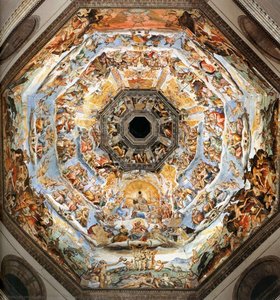
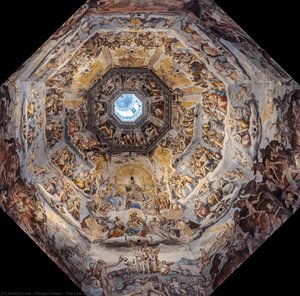
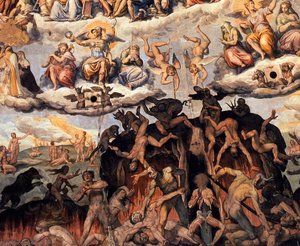
- Das Jüngste Gericht (Fresco, 1572), in der Kuppel des Dom von Florenz
- Die Anbetung der Heiligen Drei Könige (Ölgemälde, 1566), in der Kirche Santa Croce, Florenz (mehr auf ArtsDot)
Architektonische Beiträge
Vasaris architektonische Leistungen umfassen:- Die Loggia des Palazzo degli Uffizi, Florenz, die als öffentliche Piazza dient
- Der Vasari-Gang, der die Uffizien mit dem Palazzo Pitti in Florenz verbindet (entdecken Sie ihn auf ArtsDot)
- Die Renovierung mittelalterlicher Kirchen wie Santa Maria Novella und Santa Croce
Vermächtnis
Vasari wird oft als der "erste Kunsthistoriker" bezeichnet, aufgrund seines Buches Le vite de' più eccellenti pittori, scultori e architettori (Das Leben der vornehmsten Maler, Bildhauer und Architekten), das bis heute ein grundlegendes Werk in der Kunstgeschichte darstellt. Er starb am 27. Juni 1574 in Florenz, Großherzogtum Toskana, im Alter von 62 Jahren. Entdecken Sie mehr über Giorgios Vasaris Leben und Werk auf ArtsDot: Giorgio Vasari | 72 Kunstwerke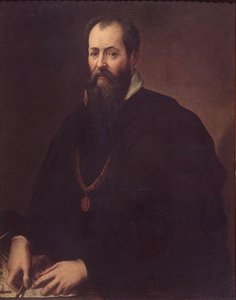
Giorgio Vasari
1511 - 1574 , Italien
Kurzinfos
- Beeinflusste Künstler/Bewegungen: ['Nachfolgende Kunsthistoriker']
- Bemerkenswerte Werke:
- Das Studio des Malers
- Das Jüngste Gericht
- Die Anbetung der Könige
- Einflussreiche Künstler:
- Andrea del Sarto
- Raphael
- Michelangelo
- Geburtsdatum: 30. Juli 1511
- Geburtsort: Arezzo, Italien
- Künstlerische Richtung: Manierismus
- Nationalität: Italiener
- Sterbedatum: 27. Juni 1574
- Vollständiger Name: Giorgio Vasari
Ähnliche Artikel

Das Familienerbe an die Wand bringen: Wandgemälde als Generationenschatz
Verwandeln Sie Ihre Familiengeschichte in ein beeindruckendes Wandgemälde! Expertenrat & hochwertige Handwerkskunst für einzigartige Kunstwerke, die Generationen verbinden. Entdecken Sie jetzt!

The Enduring Legacy of Fresco Painting: Techniques, History & Contemporary Relevance
Explore the rich history & enduring artistry of fresco painting – from Giotto to Michelangelo! Discover techniques, conservation efforts, & modern applications. Learn how ArtsDot brings this timeless art form to your home.

The Enduring Legacy of Fresco: Technique, History & Artistic Expression Across Cultures
Explore the rich history & enduring legacy of fresco painting! Discover ancient techniques, Giotto's masterpieces, and modern applications. Expert insights for art lovers & professionals.
Die bleibende Pracht der Freskomalerei: Technik, Geschichte und künstlerischer Ausdruck
Entdecken Sie die faszinierende Welt der Freskomalerei! Von den Ursprüngen bis zur Renaissance – wir beleuchten Technik, Geschichte und künstlerischen Ausdruck dieser einzigartigen Kunstform. Expertenwissen für Sammler & Liebhaber.

Kunst, die mit Ihnen lebt: Emotionale Kraft individueller Innenraumfresken
Entdecken Sie die emotionale Kraft individueller Innenraumfresken! Expertenberatung & hochwertige Wandmalerei für Hotels, Wohnräume & mehr. – Ihr Partner für einzigartige Kunst.