 Vorschau anzeigen
 Versenden
 Teilen
 Details anzeigen

 Herunterladen
 Ähnliche Objekte
 Röntgenaufnahme
 Diashow
The Ponte Solario


 Weiterlesen
Handgefertigte Ölreproduktion
Handgemaltes Ölgemälde auf Leinwand in Ihrer Wunschgröße und mit Rahmen, auf Bestellung von unseren Künstlern angefertigt. ( Druck bestellen Bild kaufen)




P118B $10

P118H $10

P118W $10

P438Z $10

P508JH $12

P508YH $12

P805H $10

P805Z $10

P919BZ $10

P919G $10

P919XJ $10

P959ZH $10

P968JZ $12

W106C $8

W218G $10

W218JH $8

W218Y $10

W307PJ $10

W316G $10

W316PJ $8

W316Y $10

W398PJ $8

W4111J $10

W500HY $15

W500JH $15

W692G $12

W849H $8

W940BG $15

W953PJ $8




Wählen Sie aus unseren vordefinierten Formaten, die den ursprünglichen Proportionen des Kunstwerks entsprechen.

Sie können Ihre eigenen Maße eingeben, um einen bestimmten Rahmen oder Platz auszufüllen. Wenn die gewählte Größe nicht den Proportionen des Originalbildes entspricht, werden wir das Kunstwerk entweder beschneiden oder das Gemälde durch zusätzliche, handgemalte Elemente erweitern. Ein digitales Mockup wird Ihnen zur Genehmigung zugesandt, bevor die Produktion beginnt.
Bitte beachten Sie, dass die Bildschirmvorschau nicht die tatsächliche Beschneidung oder Erweiterung widerspiegelt. Nur das Mockup zeigt die endgültige Komposition exakt an.
Obwohl Sondermaße verfügbar sind, empfehlen wir, eine Größe aus der vordefinierten Liste zu wählen, um die ursprünglichen Proportionen beizubehalten.
Nach der Bestellung wird das ArtsDot.com-Team dem Kunden Anweisungen per E-Mail zusenden und eine Mockup-Vorschau bereitstellen.
Weltweiter Versand () in nur 3 bis 4 Wochen statt der üblichen 5 Wochen. (22 August). Keine Kompromisse bei der Qualität.

Kostenloser weltweiter Expressversand

Hochwertige Leinenleinwand

Umfassender Versicherungsschutz beim Versand

Zollgebühren-Rückerstattungsgarantie

Garantie für exakte Farbtreue

60 Tage Rückgaberecht (nur bei Mängeln)

100% Geld-zurück-Garantie

Mengenrabatt verfügbar
 Die Glasoption ist nur für Größen unter 110 cm verfügbar.

The Ponte Solario
Art der Reproduktion
Format der Reproduktion
-


Gesamtpreis
$ 263
Beschreibung des Kunstwerks
A Silent Echo of Rome: Piranesi’s “The Ponte Solario”
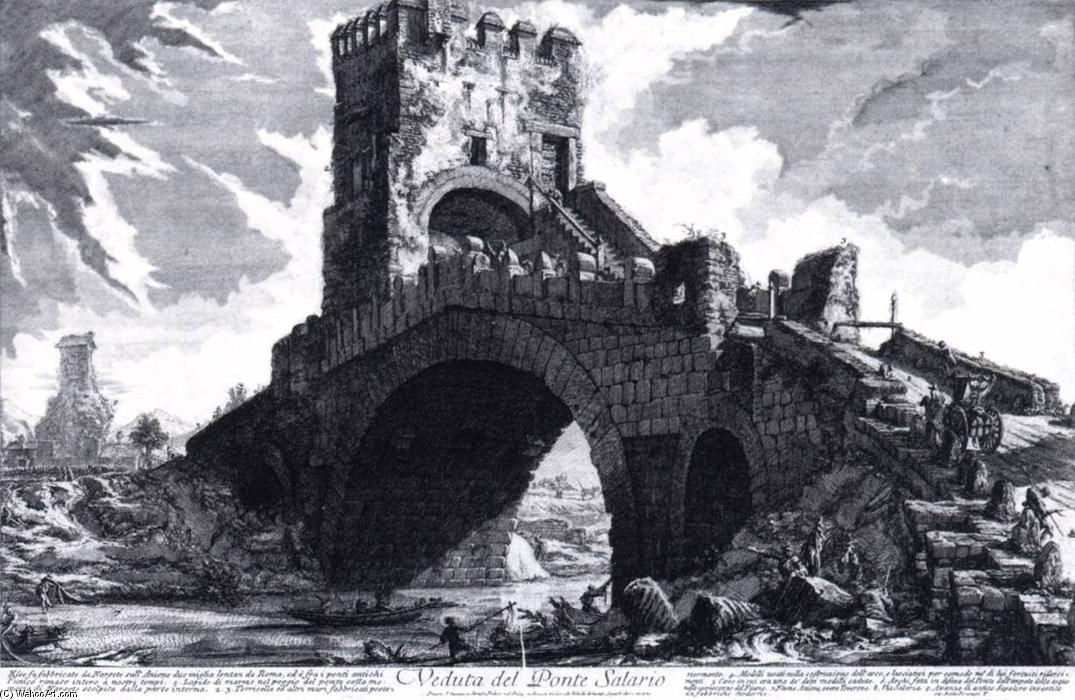
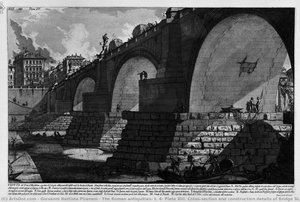
Giovanni Battista Piranesi's "The Ponte Solario," etched in 1756, isn’t merely a depiction of an old bridge; it’s a portal to a vanished world. This evocative image transcends the simple act of recording a physical space, instead offering a profound meditation on time, memory, and the enduring power of ruins. The etching, rendered in meticulous detail with characteristic Piranesi precision, captures a moment suspended between past glory and encroaching decay – a scene that resonates deeply within the viewer’s psyche long after the eye has moved on.
The subject itself is deceptively straightforward: a crumbling bridge spanning a waterway, flanked by imposing, weathered structures. Yet, Piranesi elevates this commonplace vista into something extraordinary through his masterful use of line and shadow. The bridge, the Ponte Solario, likely once connected key parts of Rome’s infrastructure, now stands as a skeletal reminder of its former importance. The surrounding ruins – towers with crenellations hinting at long-lost fortifications, crumbling walls, and stepped approaches – speak to a civilization that has slipped into the realm of legend. The artist doesn't shy away from portraying the decay; instead, he embraces it, using the textures of stone and the play of light and dark to create an atmosphere of palpable age.
The Language of Ruins: Piranesi’s Technique
Piranesi was a pioneer in etching, pushing the medium's expressive capabilities far beyond its traditional use for portraiture. He developed a unique technique – often referred to as “vedute” or ‘views’ – that prioritized atmospheric perspective and the rendering of architectural detail with unparalleled accuracy. “The Ponte Solario” exemplifies this approach perfectly. Notice how Piranesi employs hatching and cross-hatching to build up tonal values, creating a sense of depth and volume within the stone structures. The delicate lines delineate every crack, every weathered surface, every fragment of crumbling masonry. This painstaking attention to detail isn’t simply about realism; it's about conveying the *feeling* of age – the weight of centuries pressing down on these silent witnesses to history.
The use of monochrome further enhances the etching’s dramatic effect. The absence of color forces the viewer to focus entirely on texture, form, and light. Piranesi masterfully manipulates shadows to create a sense of mystery and intrigue, drawing the eye into the heart of the scene. The subtle gradations of gray suggest both the coldness of stone and the warmth of sunlight filtering through the clouds – elements that contribute to the etching’s haunting beauty.
A Historical Tapestry: Context and Symbolism
Piranesi's work emerged during a period of intense archaeological interest in Rome, fueled by the rediscovery of ancient Roman ruins. The Enlightenment fostered a fascination with classical antiquity, leading scholars and artists to meticulously document and interpret these remnants of the past. Piranesi’s etchings weren’t simply reproductions; they were carefully considered artistic statements that sought to evoke a sense of awe and wonder at the grandeur of Rome's imperial history. The presence of the tower-like structure, with its defensive features, suggests a time when Rome was a military power, constantly vigilant against external threats.
The solitary figure in the foreground adds another layer of interpretation. Often interpreted as an observer contemplating the ruins, this figure represents humanity’s relationship to history – our attempts to understand and interpret the legacies of those who came before us. The figure's smallness in comparison to the monumental structures emphasizes the insignificance of individual existence against the backdrop of vast historical time.
An Enduring Legacy: Emotional Resonance
"The Ponte Solario" is more than just a beautiful image; it’s an emotionally resonant work that speaks to our enduring fascination with ruins and the passage of time. It evokes a sense of melancholy, a quiet contemplation on loss and decay, but also a profound appreciation for the beauty and resilience of the past. The etching invites us to step into Piranesi's world – a world where stone whispers stories of forgotten empires and where the silence of ruins holds a powerful, almost palpable, presence.
Reproductions of this iconic work offer a remarkable opportunity to bring this evocative scene into your home or office. The meticulous detail and atmospheric depth of Piranesi’s original etching are faithfully captured in high-quality reproductions, allowing you to experience the full emotional impact of this timeless masterpiece.
Ähnliche Kunstwerke
Über den Künstler
Frühes Leben und Ausbildung
Giovanni Battista Piranesi, ein renommierter italienischer Künstler, wurde am 4. Oktober 1720 in Mogliano Veneto, nahe Treviso (damals Teil der Republik Venedig), geboren. Sein Vater war Steinmetz, was wahrscheinlich Piranesis Interesse an Architektur und Kunst beeinflusste. Er lernte durch seinen Bruder Andrea Latein und die antike Zivilisation kennen und wurde später von seinem Onkel, dem führenden Architekten Matteo Lucchesi, in die Lehre aufgenommen.Künstlerische Karriere
Piranesis künstlerische Karriere begann in Rom, wo er als Zeichner für Marco Foscarini, den venezianischen Botschafter bei Papst Benedikt XIV., arbeitete. Er studierte unter Giuseppe Vasi, der ihm die Kunst des Radierens und Grabierens beibrachte. Piranesis Talent reichte über das Gravieren hinaus, so dass Vasi bemerkte: „Du bist zu sehr Maler, mein Freund, um ein Graveur zu sein.“ Piranesi arbeitete mit Schülern der französischen Akademie in Rom zusammen und produzierte eine Reihe von Veduten (Ansichten) der Stadt. Seine erste Arbeit, Prima parte di architettura e prospettive (1743), wurde gefolgt von Varie vedute di Roma antica e moderna (1745).Hauptwerke und Entwicklung
Piranesis Werk lässt sich in verschiedene Phasen einteilen. Zunächst schuf er detaillierte Veduten Roms, die sowohl architektonische Präzision als auch eine romantische Verklärung der Stadt zeigten. Später wandte er sich den Carceri d'invenzione (Phantasiertempiäre) zu – eine Serie von Radierungen, die düstere, labyrinthische Gefängnisse darstellen und ein Gefühl von Isolation und existentieller Angst vermitteln. Diese Werke markieren einen Wendepunkt in seiner Karriere und zeigten eine zunehmende Hinwendung zum Fantastischen und Subjektiven. Zu seinen bedeutendsten Werken zählen:- Die Drawbridge, Platte VII aus der Serie Carceri d'invenzione
- Carceri-Serie, Platte XIV
- Plan des antiken Roms – eine monumentale Darstellung der Stadt im römischen Reich.
- Großer Plan des römischen Campo Marzio (Marsfeld) in Rom – ein detailliertes topografisches Kartenwerk.
Einflüsse, Bedeutung und Vermächtnis
Piranesi wurde von den antiken römischen Ruinen inspiriert, die er in Rom dokumentierte und interpretierte. Er war auch von der Grand Tour beeinflusst, einer Bildungsreise, die junge Adlige im 18. Jahrhundert durch Europa unternahmen, insbesondere nach Italien. Seine Werke trugen zur romantischen Wahrnehmung des antiken Roms bei und inspirierten Künstler wie Giovanni Lanfranco und Charles-Louis Clérisseau. Piranesis detaillierte Darstellungen von Architektur und seine Fähigkeit, eine Atmosphäre der Erhabenheit und Melancholie zu erzeugen, machten ihn zu einer Schlüsselfigur des Neoklassizismus und beeinflussten die Entwicklung der Landschaftsarchitektur und des Gartenbaus. Sein Werk befindet sich in verschiedenen Museen und Sammlungen, darunter die Pinacoteca di Vicenza und das Oratorio del Gonfalone in Rom. Piranesi starb 1778 und hinterließ ein Vermächtnis als einer der bedeutendsten Künstler des 18. Jahrhunderts. Seine Radierungen werden bis heute für ihre technische Brillanz, ihre atmosphärische Tiefe und ihre Fähigkeit bewundert, die Vorstellungskraft anzuregen.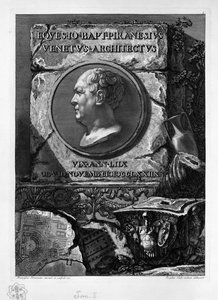
Giovanni Battista Piranesi
1720 - 1778 , Italien
Kurzinfos
- Beeinflusste Künstler:
- Charles Louis Clérisseau
- Jean-François Peyron
- Bemerkenswerte Werke:
- Carceri d'Invenzione
- Vedute di Roma Antica
- Prima Parte di Architettura
- Geburtsdatum: 04. Oktober 1720
- Geburtsort: Mogliano Veneto, Italien
- Künstlerische Bewegung: Neoklassizismus
- Nationalität: Italienisch
- Sterbedatum: 1778
- Vollständiger Name: Giovanni Battista Piranesi
- Von Künstlern Beeinflusst:
- Giuseppe Vasi
- Matteo Lucchesi
Ähnliche Artikel

Die 10 legendärsten Radierungen: Meisterwerke, die Kunstgeschichte schrieben | ArtsDot
Entdecken Sie die 10 legendärsten Radierungen von Rembrandt, Dürer & Goya! Erfahren Sie die Geschichten hinter diesen Meisterwerken der Kunstgeschichte und lassen Sie sich für Ihre Wohnräume inspirieren. Hochwertige Kunstdrucke auf ArtsDot.com.

Etching: A Historical Survey of Technique, Aesthetic Qualities & Enduring Artistic Significance
Explore the rich history of etching, from its origins to Rembrandt's masterful innovations. Discover the technique, aesthetic qualities & enduring legacy of this captivating art form. Expert insights for collectors and enthusiasts.

The Intricate World of Etching: A Historical Survey of Technique, Aesthetic Evolution, and Enduring Artistic Impact
Explore the rich history of etching, from its origins to modern practice. Discover techniques, key artists like Rembrandt, and insights for collectors. A comprehensive guide by ArtsDot.

Romantische Landschaften: Die 10 Meisterwerke, die eine Epoche prägten | ArtsDot
Entdecken Sie die 10 Meisterwerke der Romantischen Landschaftsmalerei! Von Caspar David Friedrich bis Turner – erleben Sie die Kunst, Emotion & Natur. Hochwertige Reproduktionen auf ArtsDot.com

Evocations of Place: A Historical Journey Through Landscape Art
Explore the rich history of landscape art with ArtsDot. Discover renowned artists, movements like Impressionism & Romanticism, and expert guidance for collecting timeless pieces. Find your perfect serene escape today!