 Vorschau anzeigen
 Versenden
 Teilen
 Details anzeigen

 Herunterladen
 Ähnliche Objekte
 Röntgenaufnahme
 Diashow
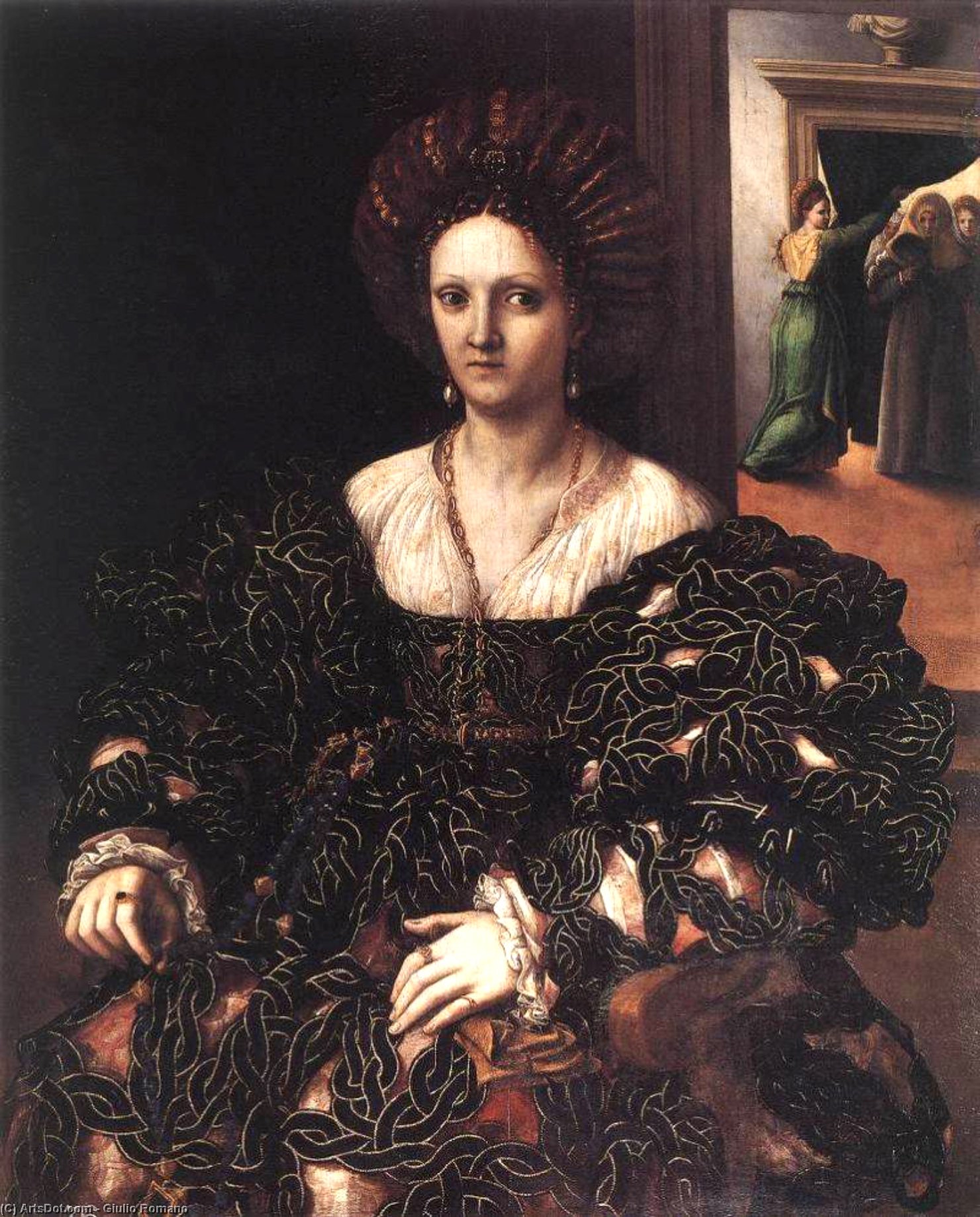
Portrait of a Woman
 Oil On Panel
- Mannerist Painting
 1531
1531 115.0 x 90.0 cm
 Royal Collection
 Weiterlesen
Handgefertigte Ölreproduktion
Handgemaltes Ölgemälde auf Leinwand in Ihrer Wunschgröße und mit Rahmen, auf Bestellung von unseren Künstlern angefertigt. ( Druck bestellen Bild kaufen)




P118B $10

P118H $10

P118W $10

P438Z $10

P508JH $12

P508YH $12

P805H $10

P805Z $10

P919BZ $10

P919G $10

P919XJ $10

P959ZH $10

P968JZ $12

W106C $8

W218G $10

W218JH $8

W218Y $10

W307PJ $10

W316G $10

W316PJ $8

W316Y $10

W398PJ $8

W4111J $10

W500HY $15

W500JH $15

W692G $12

W849H $8

W940BG $15

W953PJ $8




Wählen Sie aus unseren vordefinierten Formaten, die den ursprünglichen Proportionen des Kunstwerks entsprechen.

Sie können Ihre eigenen Maße eingeben, um einen bestimmten Rahmen oder Platz auszufüllen. Wenn die gewählte Größe nicht den Proportionen des Originalbildes entspricht, werden wir das Kunstwerk entweder beschneiden oder das Gemälde durch zusätzliche, handgemalte Elemente erweitern. Ein digitales Mockup wird Ihnen zur Genehmigung zugesandt, bevor die Produktion beginnt.
Bitte beachten Sie, dass die Bildschirmvorschau nicht die tatsächliche Beschneidung oder Erweiterung widerspiegelt. Nur das Mockup zeigt die endgültige Komposition exakt an.
Obwohl Sondermaße verfügbar sind, empfehlen wir, eine Größe aus der vordefinierten Liste zu wählen, um die ursprünglichen Proportionen beizubehalten.
Nach der Bestellung wird das ArtsDot.com-Team dem Kunden Anweisungen per E-Mail zusenden und eine Mockup-Vorschau bereitstellen.
Weltweiter Versand () in nur 3 bis 4 Wochen statt der üblichen 5 Wochen. (21 August). Keine Kompromisse bei der Qualität.

Kostenloser weltweiter Expressversand

Hochwertige Leinenleinwand

Umfassender Versicherungsschutz beim Versand

Zollgebühren-Rückerstattungsgarantie

Garantie für exakte Farbtreue

60 Tage Rückgaberecht (nur bei Mängeln)

100% Geld-zurück-Garantie

Mengenrabatt verfügbar
 Die Glasoption ist nur für Größen unter 110 cm verfügbar.

Portrait of a Woman
Art der Reproduktion
Format der Reproduktion
-


Gesamtpreis
$ 263
Beschreibung des Kunstwerks
A Portrait of Quiet Strength: Giulio Romano’s “Portrait of a Woman”
Giulio Romano's "Portrait of a Woman," painted in 1531, is not merely a depiction of an individual; it’s a carefully constructed meditation on beauty, power, and the enigmatic nature of female identity within the turbulent world of Renaissance Italy. This oil-on-panel masterpiece, currently residing as part of the Royal Collection at Windsor Castle, offers a glimpse into the sophisticated Mannerist style that defined Romano's artistic legacy – a style characterized by its deliberate distortions, heightened emotions, and intricate layering of symbolism.
The painting immediately draws the eye to the subject’s face: a woman of striking presence, her gaze direct and unwavering. Her features are rendered with an almost unsettling precision—a subtle exaggeration of bone structure, a hint of melancholy in her eyes, and a carefully sculpted mouth that suggests both intelligence and restraint. This isn't a portrait intended for simple admiration; Romano employs techniques borrowed from earlier masters like Leonardo da Vinci, particularly in the use of sfumato – a delicate blurring of lines and edges – to create an atmosphere of mystery and depth. The dark background, devoid of extraneous detail, serves to amplify the subject’s luminosity and draw attention solely to her captivating presence.
The Shadow of Raphael and the Rise of Mannerism
To fully appreciate “Portrait of a Woman,” it's crucial to understand its historical context. Romano began his artistic journey as an apprentice to the towering figure of Raphael, absorbing the High Renaissance ideals of harmony, balance, and classical beauty. However, after Raphael’s untimely death in 1520, Romano embarked on a path of stylistic divergence, embracing the principles of Mannerism – a movement that deliberately rejected the strict rules of its predecessor. Mannerist art prioritized emotional intensity, complex compositions, and an exploration of artificiality and elegance over naturalistic representation.
This shift is evident in Romano’s approach to portraiture. Unlike the idealized depictions favored by Raphael, Romano's subjects are often presented with a sense of psychological complexity. The woman in this portrait isn’t simply beautiful; she embodies a quiet strength and an underlying vulnerability – qualities that resonate deeply within the viewer. The subtle tension between her composure and the intensity of her gaze speaks to the challenges faced by women during the Renaissance, navigating societal expectations while striving for agency and self-expression.
Technique and Symbolism: A Layered Composition
Romano’s technical mastery is immediately apparent in the meticulous detail with which he renders the subject's clothing. The black dress, adorned with a delicate lace collar, is not merely decorative; it symbolizes status and refinement – hallmarks of Renaissance aristocratic life. The subtle folds and textures of the fabric are rendered with remarkable precision, demonstrating Romano’s skill as a draftsman and his deep understanding of human anatomy.
Beyond the purely visual elements, the portrait is laden with symbolic meaning. The dark background, reminiscent of a stage curtain, suggests a theatrical quality – hinting at the constructed nature of identity and the performative aspects of social interaction. The woman’s direct gaze challenges the viewer to engage with her on an emotional level, inviting contemplation about her inner life and motivations. Some art historians speculate that she may be Isabella d'Este, a prominent figure in Renaissance Italy known for her patronage of the arts and her political influence – though this remains unconfirmed.
A Timeless Portrait of Introspection
"Portrait of a Woman" is more than just a beautiful painting; it’s a profound meditation on the complexities of human experience. Through his masterful use of technique, symbolism, and emotional intensity, Giulio Romano created a portrait that continues to captivate viewers centuries after its creation. It stands as a testament to the enduring power of art to illuminate the mysteries of the human soul – a timeless reminder of beauty, strength, and the quiet dignity of introspection.
Ähnliche Kunstwerke
Über den Künstler
Frühes Leben und Ausbildung
- Geboren: Rom, Italien (ca. 1499)
- Gestorben: 1. November 1546
- Details aus dem frühen Leben sind spärlich, aber er begann seine künstlerische Karriere in Rom.
- Er war Schüler von Raphael und wurde zu einem talentierten Maler und Architekten.
- Nach Raffaels Tod im Jahr 1520 übernahm Giulio Romano viele unfertige Projekte, darunter die Dekoration der Villa Madama für Kardinal Giuliano de’ Medici.
Entwicklung des Manierismus
- Giulio Romano ist am besten bekannt für seine Beiträge zum Manierismus.
- Sein Stil wich vom Klassizismus der Hochrenaissance ab.
- Gemälde und Fresken weisen oft Asymmetrie, Spannung und Instabilität anstelle von Balance und Harmonie auf.
- Beeinflusst von Michelangelo und anderen Künstlern seiner Zeit.
- Er wurde zunehmend für Raphael unverzichtbar, modifizierte Pläne und schuf die erste Aussage des Manierismus im großen Stil in Rom.
Hauptwerke und Errungenschaften
- Das Feuer im Borgo: Ein Fresko gemalt für Raffaels Stanze Vaticane.
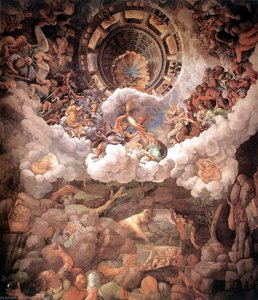
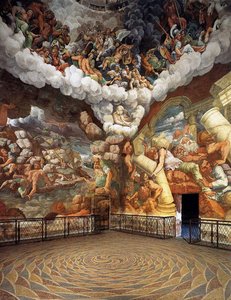
- Gewölbte Decke (Detail): Ein Fresko im Palazzo Te.
- Palazzo del Tè (Mantua): Entworfen und dekoriert mit illusionistischen Fresken, die seine architektonischen und künstlerischen Fähigkeiten zeigen. Dies gilt als sein wichtigstes Werk.
- Villa Madama: Dekorierte diese Renaissance-Villa für Kardinal Giuliano de' Medici.
- Er wurde 1524 Hofmaler und Architekt von Federigo Gonzaga und leitete praktisch alle künstlerischen Aktivitäten in Mantua.
Einflüsse und historische Bedeutung
- Raphael: Giulio Romanos frühe Ausbildung unter Raphael prägte seine künstlerische Grundlage maßgeblich.
- Michelangelo: Der Einfluss von Michelangelos Werk trug zur Entwicklung seines manieristischen Stils bei.
- Er gilt als eine Schlüsselfigur im Übergang von der Hochrenaissance zum Manierismus.
- Seine Zeichnungen wurden hoch geschätzt, und zeitgenössische Drucke, die von Marcantonio Raimondi graviert wurden, halfen dabei, italienische Kunststile in ganz Europa zu verbreiten.
- Giulio Romanos Vermächtnis kann bei späteren Künstlern gesehen werden, die seinen Stil und seine Techniken übernahmen.
Späteres Leben und Nachlass
- Nach Raffaels Tod erbte Giulio die Leitung der Werkstatt des Meisters und vollendete viele seiner Projekte.
- Er war nach seinem Tod so berühmt, dass er der einzige "moderne" Künstler ist, der von Shakespeare in einem Stück erwähnt wird.
- Seine Arbeit demonstriert einen Wandel von Renaissance-Idealen hin zu dynamischeren und ausdrucksstärkeren Formen.
- Giulio Romanos Beiträge zum Manierismus festigten seinen Platz als einflussreiche Figur in der Kunstgeschichte.
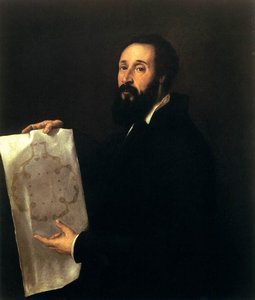
Giulio Romano
1499 - 1546 , Italien
Kurzinfos
- Beeinflusste Künstler:
- Raphael
- Michelangelo
- Bemerkenswerte Werke:
- Das Feuer im Borgo
- Deckenfresko (Detail)
- Palazzo del Tè Fresken
- Geburtsdatum: 1499
- Geburtsort: Rom, Italien
- Künstlerischer Stil: Manierismus
- Nationalität: Italienisch
- Todatum: 1546
- Vollständiger Name: Giulio Romano
- Von Künstlern Beeinflusst: ['Spätere Manieristen']
Ähnliche Artikel
Giulio Romano: A Master of Mannerism & the Palazzo Te Legacy
Explore the revolutionary art of Giulio Romano, master of Mannerism & architect of Palazzo Te. Discover his influence, investment potential, and stunning frescoes – a guide for discerning collectors.
The Enduring Legacy of Formal Portraiture: Power, Identity & Artistic Exploration
Explore the rich history of formal portraiture & its enduring power to capture identity and shape perception. Discover investment-worthy artworks, expert appraisals, and custom reproduction services at ArtsDot.
The Grandeur of Presence: Exploring Representations of Stately Bearing in Western Portraiture
Explore the art of stately bearing in Western portraiture with expert analysis of Renaissance & Baroque masterpieces. Discover symbolism, techniques, and the legacy of iconic portraits – a guide for discerning collectors.
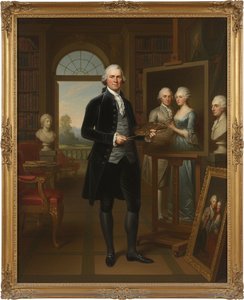
Sir Nathaniel Dance-Holland: Porträtmalerei, Mäzenatentum und die Identität des georgianischen Zeitalters
Entdecken Sie das Werk von Sir Nathaniel Dance-Holland – Meister der Porträtmalerei des georgianischen Zeitalters. Erfahren Sie mehr über sein Leben, seine Kunst und seinen Einfluss auf die britische Gesellschaft. Hochwertige Reproduktionen bei ArtsDot.
The Enduring Gaze: Portraiture's Historical & Psychological Evolution
Explore the rich history of portraiture with expert analysis from ArtsDot. Discover iconic Renaissance masterpieces, symbolism & techniques that shaped identity. Find museum-quality art for your collection.