 Vorschau anzeigen
 Versenden
 Teilen
 Details anzeigen

 Herunterladen
 Ähnliche Objekte
 Röntgenaufnahme
 Diashow
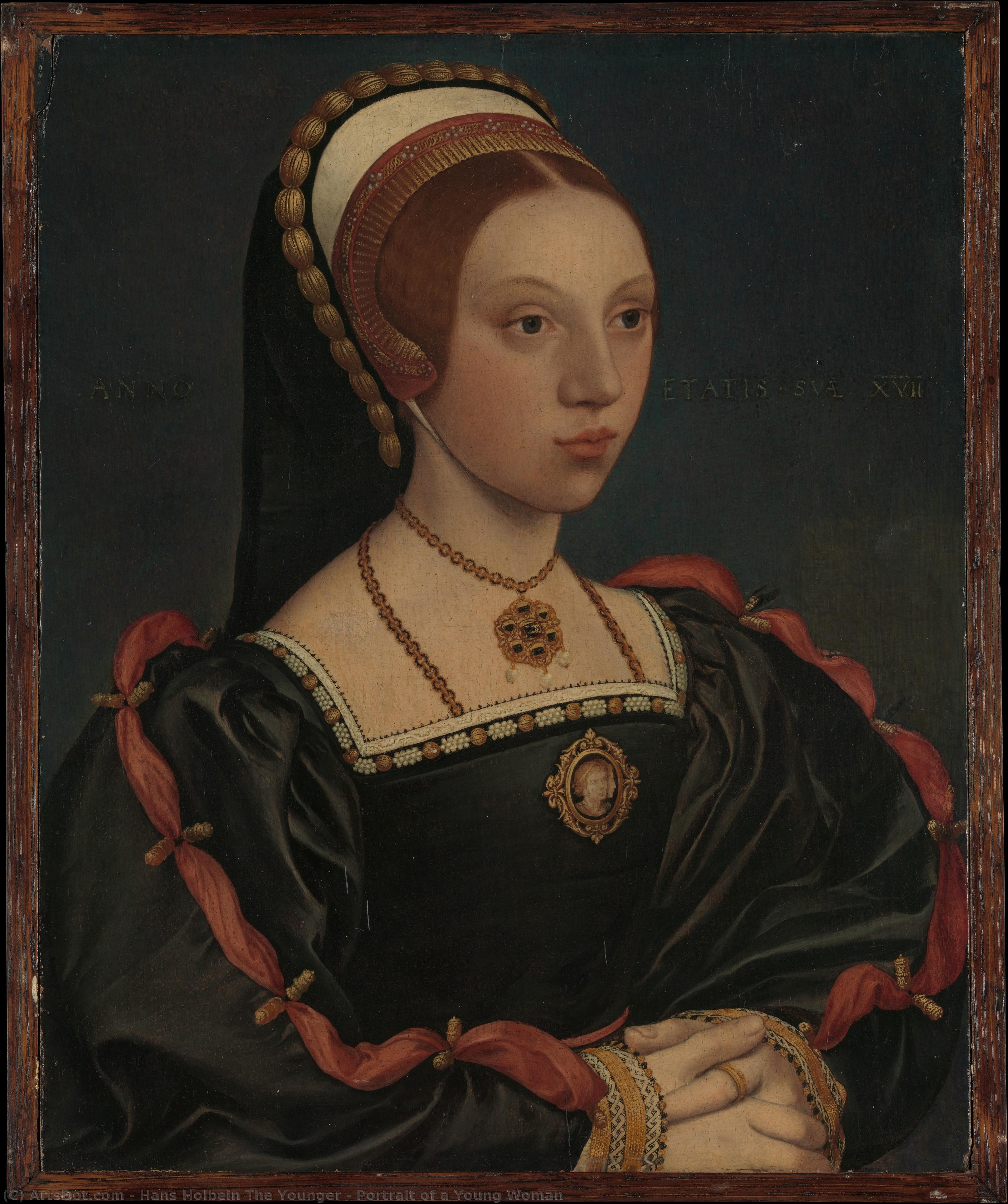
Portrait of a Young Woman
 Oil On Panel
- WallArt
- Northern Renaissance
 1540
1540- Renaissance
 28.0 x 23.0 cm
 Weiterlesen
Handgefertigte Ölreproduktion
Handgemaltes Ölgemälde auf Leinwand in Ihrer Wunschgröße und mit Rahmen, auf Bestellung von unseren Künstlern angefertigt. ( Druck bestellen Bild kaufen)




P118B $10

P118H $10

P118W $10

P438Z $10

P508JH $12

P508YH $12

P805H $10

P805Z $10

P919BZ $10

P919G $10

P919XJ $10

P959ZH $10

P968JZ $12

W106C $8

W218G $10

W218JH $8

W218Y $10

W307PJ $10

W316G $10

W316PJ $8

W316Y $10

W398PJ $8

W4111J $10

W500HY $15

W500JH $15

W692G $12

W849H $8

W940BG $15

W953PJ $8




Wählen Sie aus unseren vordefinierten Formaten, die den ursprünglichen Proportionen des Kunstwerks entsprechen.

Sie können Ihre eigenen Maße eingeben, um einen bestimmten Rahmen oder Platz auszufüllen. Wenn die gewählte Größe nicht den Proportionen des Originalbildes entspricht, werden wir das Kunstwerk entweder beschneiden oder das Gemälde durch zusätzliche, handgemalte Elemente erweitern. Ein digitales Mockup wird Ihnen zur Genehmigung zugesandt, bevor die Produktion beginnt.
Bitte beachten Sie, dass die Bildschirmvorschau nicht die tatsächliche Beschneidung oder Erweiterung widerspiegelt. Nur das Mockup zeigt die endgültige Komposition exakt an.
Obwohl Sondermaße verfügbar sind, empfehlen wir, eine Größe aus der vordefinierten Liste zu wählen, um die ursprünglichen Proportionen beizubehalten.
Nach der Bestellung wird das ArtsDot.com-Team dem Kunden Anweisungen per E-Mail zusenden und eine Mockup-Vorschau bereitstellen.
Weltweiter Versand () in nur 3 bis 4 Wochen statt der üblichen 5 Wochen. (30 August). Keine Kompromisse bei der Qualität.

Kostenloser weltweiter Expressversand

Hochwertige Leinenleinwand

Umfassender Versicherungsschutz beim Versand

Zollgebühren-Rückerstattungsgarantie

Garantie für exakte Farbtreue

60 Tage Rückgaberecht (nur bei Mängeln)

100% Geld-zurück-Garantie

Mengenrabatt verfügbar
 Die Glasoption ist nur für Größen unter 110 cm verfügbar.

Portrait of a Young Woman
Art der Reproduktion
Format der Reproduktion
-


Gesamtpreis
$ 263
A Glimpse Through the Veil of Time
In the quiet intimacy of Hans Holbein the Younger’s Portrait of a Young Woman, we find much more than a mere likeness; we encounter a profound psychological encounter that has captivated observers for nearly five centuries. Painted in 1540, during the height of the Tudor era, this masterpiece serves as a luminous window into the Northern Renaissance. The sitter, captured in a three-quarter pose, gazes outward with an unwavering intensity that bridges the gap between the sixteenth century and the modern viewer. Her eyes, rendered with startling clarity, demand an engagement that is both confrontational and deeply personal, inviting us to contemplate the silent stories held within her steady expression.
The composition is a masterclass in the use of chiaroscuro, where Holbein employs a dramatic interplay of light and shadow to sculpt the subject from the darkness. Against a void-like, somber background, the young woman’s face emerges with a pearlescent luminosity, drawing the eye immediately to the subtle nuances of her features. This technique does more than create depth; it focuses the viewer's entire emotional attention on the human spirit, stripping away the distractions of the physical world to reveal the character beneath.
The Artistry of Precision and Texture
Holbein’s technical prowess is nothing short of extraordinary, characterized by a devotion to realism that borders on the miraculous. Utilizing oil paint on panel, the artist achieved a level of textural richness that remains breathtaking even under close inspection. Every element of her attire—from the heavy, light-absorbing black fabric of her dress to the crisp, delicate white of her collar—is rendered with meticulous anatomical and material accuracy. The way the light catches the fine threads of her clothing and the subtle sheen of her jewelry speaks to a painter who did not merely paint surfaces, but understood the very weight and essence of the objects he depicted.
The adornments she wears—a delicate necklace, elegant earrings, and a single ring—are not merely decorative flourishes; they are carefully placed symbols of status and identity. In the opulent yet precarious world of the Tudor court, such details were vital markers of social standing. Holbein’s ability to render the cold hardness of precious metals against the soft warmth of human skin creates a sensory experience that is both tactile and ethereal, making this piece an ideal focal point for any collection seeking to marry historical gravity with aesthetic elegance.
A Legacy of Elegance for the Modern Interior
For the discerning collector or interior designer, a reproduction of this portrait offers more than just visual beauty; it brings a sense of historical continuity and intellectual depth to a space. The painting’s somber palette and dramatic lighting make it a versatile choice for sophisticated environments, whether placed in a contemporary gallery-style room or a classic, richly textured study. It possesses the rare ability to anchor a room, providing a conversation piece that speaks of the enduring human condition and the timeless pursuit of perfection.
Owning a high-quality reproduction of this Holbein masterpiece allows one to inhabit the atmosphere of the Northern Renaissance daily. It is an invitation to pause, to look closely, and to find inspiration in the meticulous detail and emotional resonance of a bygone era. As a work that embodies both the political anxieties of Henry VIII’s England and the transcendent beauty of Renaissance humanism, it remains a profound addition to any curated collection of fine art.
Ähnliche Kunstwerke
Über den Künstler
frühes Leben und Ausbildung
Hans Holbein der Jüngere, eine bedeutende Figur in der Nordischen Renaissance, wurde 1497 in Augsburg, Deutschland, geboren. Obwohl er oft mit seinem Vater, Hans Holbein dem Älteren, einem renommierten Künstler und Grafiker verwechselt wird, ist Holbeins Werk der Jüngeren eigenständig und herausragend.Künstlerische Karriere
Holbeins künstlerische Karriere begann unter der Anleitung seines Vaters. Später reiste er nach England, wo er Hofmaler für König Heinrich VIII. wurde. Diese Position ermöglichte es ihm, die Essenz der königlichen Familie und des aufkommenden englischen Adels einzufangen. Sein Werk ist durch folgende Merkmale gekennzeichnet:- Außergewöhnliche Realismus: Holbeins Porträts sind für ihre lebensechte Qualität bekannt, wie in Portrait einer unbekannten Dame (Nordische Renaissance).
- Innovative Komposition: Seine Verwendung von Kompositionen ist in Sir William Butts (37 x 46 cm, Nordische Renaissance, Öl auf Holzpanel) erkennbar.
- Studie für das Familienporträt von Thomas More (38 x 52 cm, Nordische Renaissance) zeigt seine Fähigkeit, die Essenz einer Familie einzufangen.
Bekannte Werke und Vermächtnis
Holbeins Werk befindet sich in verschiedenen Museen, darunter die Staatlichen Museen zu Berlin (Deutschland), wo sein unbekannter Gelehrter mit Musikbüchern und Laute (Öl auf Holzpanel) ausgestellt ist. Sein Einfluss auf die Nordische Renaissance ist unbestreitbar, und sein Werk inspiriert bis heute Künstler. Holbein der Jüngere starb 1543, aber sein Vermächtnis lebt durch seine fesselnden Porträts und detaillierten Studien weiter. Weitere Werke von Hans Holbein dem Jüngeren ansehen auf ArtsDot.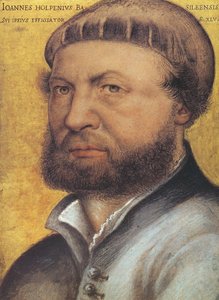
Hans Holbein der Jüngere
1497 - 1543 , Italien
Kurzinfos
- Bemerkenswerte Werke:
- Porträt einer Unbekannten
- Sir William Butts
- Studie zum Familienschloss More
- Die Familie des Bürgermeisters Meyer
- Das Grab Jesu
- Porträt Heinrichs VIII.
- Geburtsdatum: 1497
- Geburtsort: Augsburg, Italien
- Künstlerische Bewegung: Nordische Renaissance
- Künstlerische Einflüsse:
- Hans Holbein der Ältere
- Albrecht Dürer
- Nationalität: Deutsch
- Sterbedatum: 1543
- Vollständiger Name: Hans Holbein der Jüngere
Ähnliche Artikel

Die Top 10 berühmter Gemälde im Reich der dunklen Töne |
Entdecken Sie die Top 10 berühmter Gemälde, beherrscht von dunklen Tönen! Von Caravaggio bis Manet – erfahren Sie die Geschichten hinter Meisterwerken der Kunstgeschichte. Finden Sie Ihre perfekte Reproduktion auf .
Die Top 10 Gemälde der Kunstgeschichte – Dominiert von tiefem Schwarz
Entdecken Sie die Top 10 Gemälde, die von tiefem Schwarz und dramatischer Atmosphäre geprägt sind. Von Caravaggio bis Manet – Kunstgeschichte erleben & hochwertige Reproduktionen auf finden! Jetzt entdecken.
Meisterwerke der Dunkelheit: 10 berühmte Gemälde im Lampenschwarzton |
Entdecken Sie 10 berühmte Gemälde, die von Lampenschwarz und düsterer Schönheit geprägt sind. Von Rembrandt bis Caravaggio – erleben Sie Kunstgeschichte neu! Hochwertige Reproduktionen & Inspiration für Ihr Zuhause auf .
Meisterwerke in Schwarz: Die 10 berühmtesten Gemälde mit Elfenbeinsschattierungen |
Entdecken Sie die düsteren Schönheiten der Kunst! Unsere Top 10 Gemälde dominieren durch Elfenbeinschwarz – von Rembrandt bis Goya. Erfahren Sie mehr über Künstler, Techniken & Bedeutung. Hochwertige Reproduktionen auf
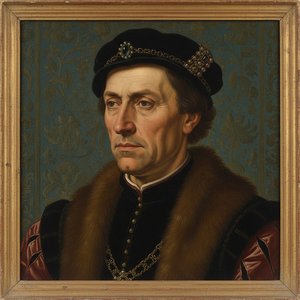
Hans Holbein der Jüngere: Realismus, Psychologie und die Meisterschaft des Renaissance-Porträts
Entdecken Sie das Werk von Hans Holbein dem Jüngeren! Erfahren Sie mehr über seinen revolutionären Realismus, die psychologische Tiefe seiner Porträts und seine Meistertechnik. Jetzt lesen!
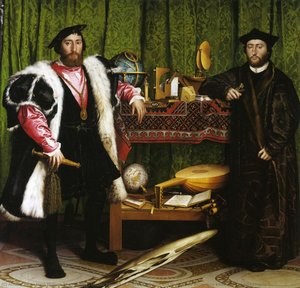

![Doppelporträt von Jean de Dinteville und Georges de Selve (auch bekannt als Die Gesandten) [Detail]](/media/artworks/images-thumb/bb/ab/bbab7ce77b7dd15d23d21114a63b51a4.jpg)