

 Vorschau anzeigen
 Versenden
 Teilen
 Details anzeigen

 Herunterladen
 Ähnliche Objekte
 Röntgenaufnahme
 Diashow
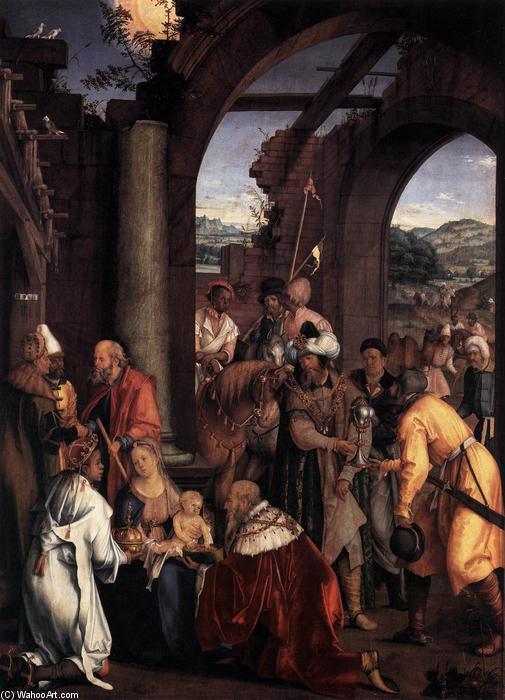
Adoration of the Magi
 Renaissance Painting
 1511
1511 153.0 x 110.0 cm
 Staatliche Museen zu Berlin
 Weiterlesen
Handgefertigte Ölreproduktion
Handgemaltes Ölgemälde auf Leinwand in Ihrer Wunschgröße und mit Rahmen, auf Bestellung von unseren Künstlern angefertigt. ( Druck bestellen Bild kaufen)




P118B $10

P118H $10

P118W $10

P438Z $10

P508JH $12

P508YH $12

P805H $10

P805Z $10

P919BZ $10

P919G $10

P919XJ $10

P959ZH $10

P968JZ $12

W106C $8

W218G $10

W218JH $8

W218Y $10

W307PJ $10

W316G $10

W316PJ $8

W316Y $10

W398PJ $8

W4111J $10

W500HY $15

W500JH $15

W692G $12

W849H $8

W940BG $15

W953PJ $8




Wählen Sie aus unseren vordefinierten Formaten, die den ursprünglichen Proportionen des Kunstwerks entsprechen.

Sie können Ihre eigenen Maße eingeben, um einen bestimmten Rahmen oder Platz auszufüllen. Wenn die gewählte Größe nicht den Proportionen des Originalbildes entspricht, werden wir das Kunstwerk entweder beschneiden oder das Gemälde durch zusätzliche, handgemalte Elemente erweitern. Ein digitales Mockup wird Ihnen zur Genehmigung zugesandt, bevor die Produktion beginnt.
Bitte beachten Sie, dass die Bildschirmvorschau nicht die tatsächliche Beschneidung oder Erweiterung widerspiegelt. Nur das Mockup zeigt die endgültige Komposition exakt an.
Obwohl Sondermaße verfügbar sind, empfehlen wir, eine Größe aus der vordefinierten Liste zu wählen, um die ursprünglichen Proportionen beizubehalten.
Nach der Bestellung wird das ArtsDot.com-Team dem Kunden Anweisungen per E-Mail zusenden und eine Mockup-Vorschau bereitstellen.
Weltweiter Versand () in nur 3 bis 4 Wochen statt der üblichen 5 Wochen. (25 August). Keine Kompromisse bei der Qualität.

Kostenloser weltweiter Expressversand

Hochwertige Leinenleinwand

Umfassender Versicherungsschutz beim Versand

Zollgebühren-Rückerstattungsgarantie

Garantie für exakte Farbtreue

60 Tage Rückgaberecht (nur bei Mängeln)

100% Geld-zurück-Garantie

Mengenrabatt verfügbar
 Die Glasoption ist nur für Größen unter 110 cm verfügbar.

Adoration of the Magi
Art der Reproduktion
Format der Reproduktion
-


Gesamtpreis
$ 263
Beschreibung des Kunstwerks
The Adoration of the Magi by Hans Süss von Kulmbach: A Renaissance Masterpiece
Within the hallowed halls of the Gemäldegalerie in Berlin resides a painting that transcends mere representation, offering instead a profound glimpse into the heart of the 16th-century Renaissance – Hans Süss von Kulmbach’s “Adoration of the Magi.” More than just a biblical scene, this monumental work is a testament to the artist's mastery of composition, color, and detail, capturing not only the event itself but also the spirit of a transformative era. Measuring an impressive 153 x 110 centimeters, rendered in rich oil on wood, it immediately commands attention with its vibrant palette and meticulously crafted figures.
Kulmbach’s style is deeply rooted in the artistic traditions of his mentor, Albrecht Dürer, yet he possesses a distinct voice. The painting showcases a harmonious balance between realism and idealized beauty – a hallmark of Renaissance art. Notice the careful attention to anatomical accuracy, particularly evident in the figures of the Magi, each rendered with individual character and gesture. The use of perspective is subtly masterful, drawing the viewer into the scene and creating a sense of depth that was revolutionary for its time. The composition itself—a carefully orchestrated circular arrangement around the central Virgin Mary – speaks to the era’s fascination with geometric harmony and divine order.
A Symphony of Color and Symbolism
The color palette is dominated by earthy tones – deep reds, ochres, and browns – punctuated by brilliant blues and shimmering golds. These colors aren't merely decorative; they are imbued with symbolic meaning. The rich reds represent royalty and divine authority, while the blues evoke the heavens and the Virgin Mary’s purity. The gold used to adorn the Magi’s gifts—gold, frankincense, and myrrh—underscores their importance as bearers of precious treasures for the newborn Christ. Beyond the obvious symbolism, observe how Kulmbach uses light and shadow to create a dramatic effect, highlighting key figures and adding depth to the scene.
The Magi themselves are not simply anonymous travelers; they are richly individualized, each reflecting a distinct cultural heritage. Their clothing, gestures, and expressions reveal their origins – one dressed in crimson robes, another in purple, suggesting royalty and power. The inclusion of angels adds to the divine presence, while the surrounding figures—including attendants and servants—create a bustling tableau of earthly activity converging with heavenly grace. The background landscape, rendered with atmospheric perspective, subtly hints at the pagan world being superseded by the Christian narrative.
Historical Context and Artistic Legacy
Created in 1511, “Adoration of the Magi” reflects the intellectual ferment of the Renaissance – a period marked by renewed interest in classical antiquity, humanism, and scientific inquiry. Kulmbach’s work stands as a bridge between the Gothic traditions of his predecessors and the emerging ideals of the High Renaissance. He was a prolific artist, renowned for his stained-glass windows and altar paintings, particularly those he created for the churches of Kraków and Nuremberg. His skill in wood panel painting was exceptional, and this piece exemplifies his mastery of the medium.
The painting’s influence extends far beyond its immediate context. It draws inspiration from earlier works, such as Leonardo da Vinci's unfinished “Adoration of the Magi,” demonstrating a dialogue between artistic traditions. Today, reproductions of Kulmbach’s masterpiece are available through platforms like ArtsDot.com, allowing art lovers to experience this iconic work firsthand and bring its beauty into their homes. Owning a reproduction is not merely acquiring an image; it's connecting with a pivotal moment in the history of Western art – a vibrant testament to human creativity and spiritual aspiration.
A Timeless Masterpiece
“Adoration of the Magi” by Hans Süss von Kulmbach remains a powerful and evocative work, captivating viewers centuries after its creation. Its masterful composition, rich symbolism, and exquisite detail continue to inspire awe and admiration. It’s a painting that invites contemplation, prompting us to reflect on the enduring themes of faith, hope, and the transformative power of art.
Ähnliche Kunstwerke


Über den Künstler
Hans von Kulmbach: A Master of Stained Glass and Altarpiece Decoration
Hans von Kulmbach (c. 1480 – December 3, 1522) stands as a pivotal figure in German Renaissance art, primarily recognized for his breathtaking stained glass windows and monumental altar paintings that adorn churches across Bavaria and Kraków. Born around 1480 in Kulmbach, Franconia—a region steeped in medieval tradition yet embracing the burgeoning humanist spirit of the era—Kulmbach’s artistic journey unfolded against a backdrop of significant cultural transformation. His formative years were spent honing his craft under the tutelage of Albrecht Dürer, arguably Germany's most celebrated artist of the time, an association that profoundly shaped his stylistic sensibilities and technical prowess. This apprenticeship instilled in him a meticulous attention to detail and a masterful command of perspective—elements characteristic of Dürer’s groundbreaking achievements.Early Influences: The Seeds of Renaissance Vision
Kulmbach's artistic vision was undeniably influenced by the prevailing aesthetic trends of the Renaissance, particularly those championed by artists like Filippo Brunelleschi and Piero della Francesca. These masters emphasized geometric precision and idealized proportions—concepts that resonated deeply within Kulmbach’s creative process. They rejected the stylized conventions of Gothic art in favor of a more rational and harmonious approach to representation, reflecting a broader intellectual shift toward humanism. Observing Dürer's innovative techniques and compositional strategies undoubtedly broadened Kulmbach’s artistic horizons and solidified his commitment to mastering the principles of classical art.Training Under Dürer: An Artistic Partnership
The collaboration with Dürer proved invaluable, extending beyond mere instruction in painting techniques. Dürer imparted a profound understanding of artistic philosophy—a belief in the power of art to elevate the human spirit and convey moral truths—which would permeate Kulmbach’s subsequent works. Furthermore, Dürer's insistence on meticulous observation and anatomical accuracy honed Kulmbach’s technical skills and instilled in him a disciplined approach to artistic practice. This mentorship fostered not only mastery of technique but also a deep appreciation for the ethical dimensions of artmaking—a legacy that would endure throughout Kulmbach’s career.Establishing His Workshop: Nuremberg's Artistic Crucible
Around 1505, Kulmbach established his workshop in Nuremberg, attracting talented assistants and fostering a vibrant artistic environment. This period witnessed a prolific output of commissions, cementing his reputation as one of the foremost artists of his generation. Nuremberg’s burgeoning merchant class—particularly Hans Boner—provided Kulmbach with crucial patronage and stimulated demand for elaborate artworks reflecting humanist ideals. The workshop became a hub of innovation, experimenting with new materials and techniques while upholding the highest standards of craftsmanship—a testament to Kulmbach's leadership and artistic vision.Notable Achievements: Stained Glass Windows – A Legacy of Light and Color
Kulmbach’s fame rests largely upon his extraordinary stained glass windows—a testament to his unparalleled skill in manipulating color and light. He achieved particular renown for the Maximilian Stained Glass at St. Sebald Cathedral in Nuremberg, a monumental undertaking that showcased his mastery of compositional design and chromatic harmony. This ambitious project involved painstaking planning and execution, reflecting Kulmbach’s dedication to artistic excellence. The resulting windows—featuring vibrant hues and intricate geometric patterns—transformed the cathedral's interior into an immersive experience of divine beauty. Similarly impressive were the Welser Stained Glass at St. Lorenz Church and the Nikolaus Altar at St. Lorenz Kirche—each window depicting biblical narratives with exquisite detail and vibrant hues. These windows weren’t merely decorative; they served as conduits for spiritual contemplation, reflecting the humanist preoccupation with moral virtue and aesthetic harmony.- The Maximilian Stained Glass: This ambitious project involved painstaking planning and execution, reflecting Kulmbach’s dedication to artistic excellence.
- St Lorenz Windows: The Welser Stained Glass at St Lorenz Church exemplifies Kulmbach’s ability to create impactful visual narratives.
The Kraków Altarpiece – A Collaborative Triumph
Perhaps Kulmbach's most celebrated achievement was the Kraków Altarpiece, a collaborative effort undertaken alongside Johann Georg Andreas Stein—a pioneering piano maker who brought his expertise in craftsmanship to bear on the project. This monumental artwork, housed in St. Catherine’s Church in Kraków, represents a pinnacle of Renaissance art and embodies the spirit of humanist patronage. The altarpiece's intricate iconography—featuring depictions of Saint Catherine and Saint John—demonstrates Kulmbach’s meticulous attention to detail and his ability to convey profound theological themes. Stein’s contribution ensured that the altar was not only aesthetically stunning but also structurally sound, a remarkable feat considering the scale of the undertaking.Historical Significance
Hans von Kulmbach died prematurely in Nuremberg in 1522, leaving behind an enduring legacy as one of Germany’s most influential artists of the Renaissance. His stylistic innovations—particularly his masterful use of stained glass and altar painting—established him as a leader among his contemporaries and continue to inspire admiration today. More importantly, Kulmbach's work embodies the humanist ideals that characterized the era—a belief in human reason and artistic creativity as instruments for spiritual enrichment. He remains an exemplar of artistic excellence and a symbol of Nuremberg’s cultural heritage.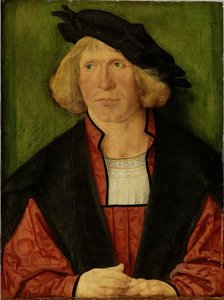
Hans von Kulmbach
1480 - 1522 , Deutschland
Kurzinfos
- Artistic Movement Or Style: Renaissance Kunst
- Artists Who Influenced This Artist: ['Albrecht Dürer']
- Date Of Birth: Um 1480
- Full Name: Hans Süß von Kulmbach
- Nationality: Deutsch
- Notable Artworks:
- Nikolaus Altar
- Maximilian Stained Glass
- Dreikönigsaltar
- Place Of Birth: Kulmbach, Deutschland
Ähnliche Artikel
Hans von Aachen: Mannerism's Courtly Visionary & Imperial Portraiture
Explore the captivating world of Hans von Aachen, a leading Mannerist painter renowned for his exquisite imperial portraits & mythological scenes. Discover his legacy and influence on 16th-century European art.
Eugen von Blaas: Capturing Alpine Life & Sentiment in 19th-Century Austrian Painting
Discover the captivating world of Eugen von Blaas! Explore his exquisite 19th-century paintings capturing Venetian life & Alpine beauty. Learn about his Academic Classicism style and find museum-quality reproductions at ArtsDot.

Hans Holbein der Jüngere: Realismus, Psychologie und die Meisterschaft des Renaissance-Porträts
Entdecken Sie das Werk von Hans Holbein dem Jüngeren! Erfahren Sie mehr über seinen revolutionären Realismus, die psychologische Tiefe seiner Porträts und seine Meistertechnik. Jetzt lesen!
Hans Makart: Opulenz, Symbolik und die Ästhetische Bewegung der Wiener Jahrhundertwende
Entdecken Sie das Leben und Werk von Hans Makart, dem prägenden Maler der Wiener Ringstraßenepoche! Erfahren Sie mehr über seine opulente Ästhetik, die Symbolik seiner Kunst und seinen Einfluss auf die österreichische Kunstgeschichte. Jetzt lesen!
Hans Baldung Grien: Allegorie, Innovation und das Groteske – Ein Renaissance-Meister zwischen Reformation und Mystik
Entdecken Sie das faszinierende Werk von Hans Baldung Grien! Analysieren Sie mit uns die allegorischen Gemälde, grotesken Motive und den einzigartigen Stil dieses Renaissance-Meisters. Expertenwissen zur deutschen Kunstgeschichte.

