

 Vorschau anzeigen
 Versenden
 Teilen
 Details anzeigen

 Herunterladen
 Ähnliche Objekte
 Röntgenaufnahme
 Diashow
 Stats
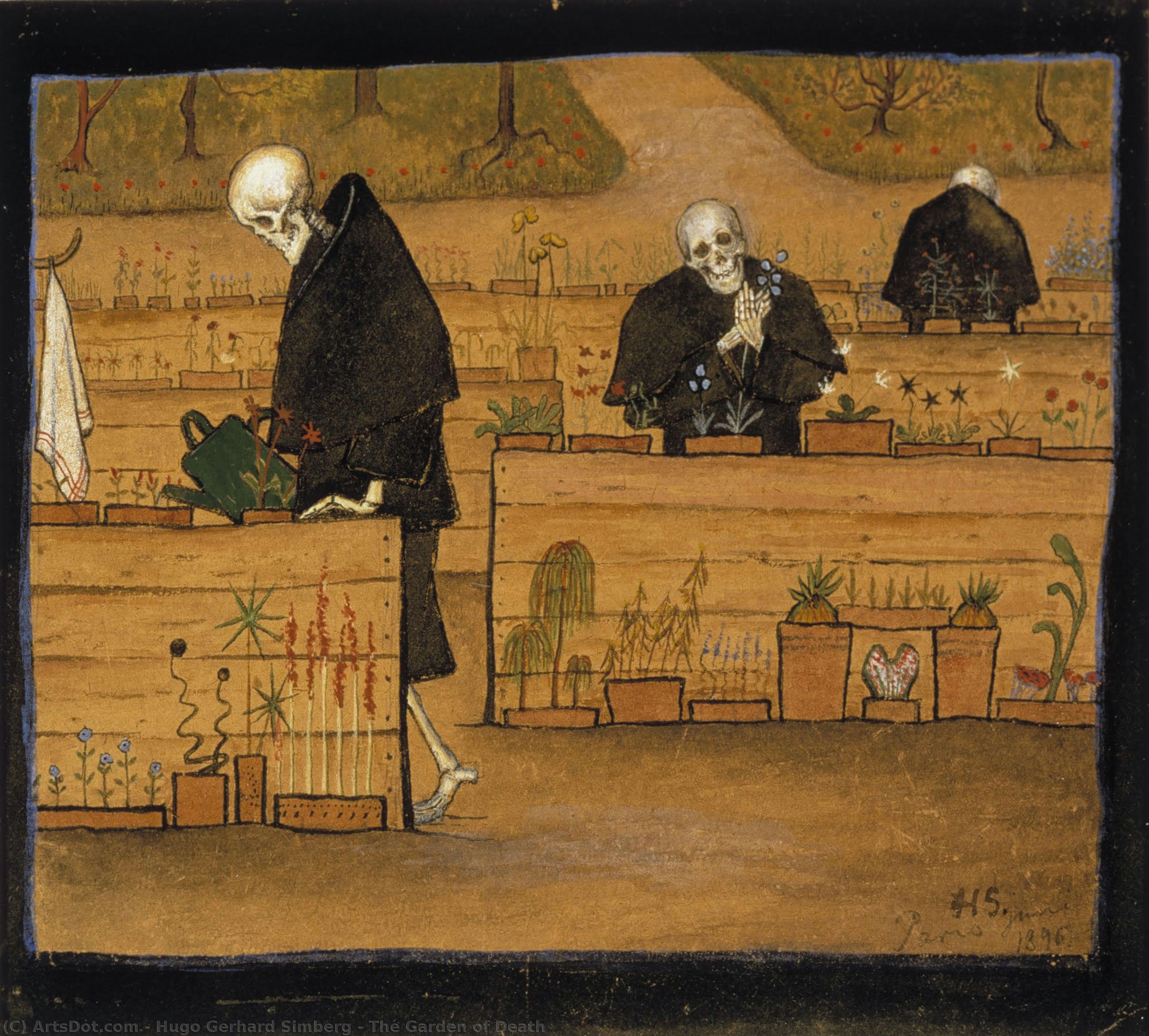
StatsThe Garden of Death
 Painting
- Symbolism
 1896
1896- 19th Century
 17.0 x 16.0 cm
 Ateneum Kunstmuseum
 Weiterlesen
Giclée / Kunstdruck
Giclée- oder Leinwanddruck in Museumsqualität mit schneller Produktion und flexiblen Veredelungsoptionen. ( Handgemalte Reproduktion bestellen Switch to Digital Image)




P118B $10

P118H $10

P118W $10

P438Z $10

P508JH $12

P508YH $12

P805H $10

P805Z $10

P919BZ $10

P919G $10

P919XJ $10

P959ZH $10

P968JZ $12

W106C $8

W218G $10

W218JH $8

W218Y $10

W307PJ $10

W316G $10

W316PJ $8

W316Y $10

W398PJ $8

W4111J $10

W500HY $15

W500JH $15

W692G $12

W849H $8

W940BG $15

W953PJ $8




Wählen Sie aus unseren vordefinierten Formaten, die den ursprünglichen Proportionen des Kunstwerks entsprechen.

Sie können Ihre eigenen Maße eingeben, um ein bestimmtes Format oder einen speziellen Platz einzupassen. Wenn das von Ihnen gewählte Format nicht den Proportionen des Originalbildes entspricht, werden wir das Kunstwerk entweder beschneiden oder das Bild mit einem gespiegelten oder einfarbigen Rand erweitern. Ein digitaler Entwurf wird Ihnen zur Genehmigung zugesandt, bevor die Produktion beginnt.
Bitte beachten Sie, dass die Vorschau auf dem Bildschirm nicht den tatsächlichen Zuschnitt oder die Erweiterung widerspiegelt. Nur der Entwurf zeigt die endgültige Komposition präzise an.
Obwohl Sondermaße verfügbar sind, empfehlen wir die Auswahl eines Maßes aus der vordefinierten Liste, um die ursprünglichen Proportionen zu bewahren.
Weltweiter Versand () innerhalb von 2 Wochen statt der üblichen 4/5 Wochen. (8 September)

Kostenloser weltweiter Expressversand

Hochwertige Leinenleinwand

Umfassender Versicherungsschutz beim Versand

Zollgebühren-Rückerstattungsgarantie

Garantie für exakte Farbtreue

100-Tage-Rückgaberecht (nur bei Mängeln)

100% Geld-zurück-Garantie

Mengenrabatt verfügbar
 Die Glasoption ist nur für Größen unter 110 cm verfügbar.

The Garden of Death
Giclée / Kunstdruck
Format der Reproduktion
-


Gesamtpreis
$ 62
A Gentle Embrace of Mortality: Exploring The Garden of Death
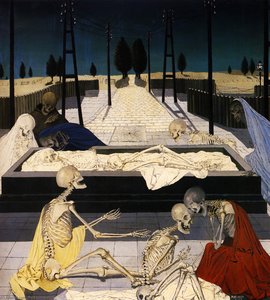
To gaze upon Hugo Gerhard Simberg's "The Garden of Death" is to encounter a vision that defies the expected solemnity associated with themes of mortality. Far from being a bleak tableau, this painting possesses an almost whimsical charm, largely due to Simberg’s masterful depiction of Death itself. Here, the inevitable passage of time and decay are not presented as terrifying specters, but rather as gentle companions tending to life in miniature. The scene unfolds like a secret, overgrown sanctuary, populated by two skeletal figures who seem more like devoted gardeners than harbingers of doom.
Symbolism Woven into Flora and Bone
The core fascination of this piece lies in its delicate balance between the macabre and the pastoral. The skeletons, each holding a skull—a universal memento mori—are engaged in the nurturing act of tending potted plants. This juxtaposition is profoundly symbolic; it suggests that even within the framework of ultimate endings, there persists an enduring cycle of growth and care. The garden itself becomes a metaphor for life's continuous cycle: death feeds new beginnings. Simberg invites us to reconsider our relationship with impermanence, suggesting that remembrance and beauty can bloom even where decay is present.
Simberg’s Symbolist Dreamscape
As a leading figure in Finnish Symbolism, Simberg imbued his work with the ethereal quality characteristic of the movement. His art often drifts between myth, fairy tale, and deep introspection. "The Garden of Death" exemplifies this perfectly; it feels less like a scene from reality and more like a beautiful, poignant dream recalled at dawn. The soft handling of paint and the slightly muted palette contribute to an atmosphere that is both melancholic and deeply serene. For collectors and those seeking art with narrative depth, this piece offers a window into the mystical undercurrents of turn-of-the-century European thought.
A Touch of Timeless Elegance for Your Space
With its intimate scale (17 x 16 cm), "The Garden of Death" possesses an immediate presence, making it ideal for placement in a parlor, study, or gallery setting where thoughtful conversation is encouraged. Whether you are curating a space that speaks to romanticism, intellectual depth, or quiet contemplation, this reproduction captures the original's delicate balance. It serves not as mere decoration, but as a philosophical anchor—a beautiful reminder that life’s most profound truths can be found in the gentlest of settings.
Ähnliche Kunstwerke

Über den Künstler
Early Life and Artistic Beginnings
Hugo Gerhard Simberg, a pivotal figure in Finnish Symbolism, was born on June 24th, 1873, in Hämeenlinna, Finland – a region steeped in folklore and mythology that would profoundly influence his artistic vision. His early life unfolded amidst the backdrop of a rapidly changing nation, navigating the complexities of a burgeoning identity as Finland sought independence from Russia. Simberg’s artistic journey commenced at the Drawing School of the Viipuri Friends of Art in 1891, an institution dedicated to nurturing young talent and fostering a deep appreciation for Finnish art history and tradition. Here, he diligently honed his foundational skills under the guidance of various instructors, laying the groundwork for his distinctive style. His family background, rooted in the military aristocracy, provided him with a certain social standing but also instilled within him a quiet introspection – a characteristic that would later manifest powerfully in his evocative imagery.Artistic Style and Influences
Simberg’s artistic language is immediately recognizable by its dreamlike quality, often infused with elements drawn from Finnish myths, fairy tales, and the realm of imagination. He wasn't simply depicting reality; he was translating inner experiences and subconscious narratives onto canvas. This approach firmly established him as a key representative of Finnish Symbolism – an artistic movement characterized by its exploration of subjective emotions, spiritual themes, and a fascination with the unseen. His work is deeply rooted in the late 19th-century European Symbolist tradition, yet he uniquely blended this influence with his own distinctly Nordic sensibility. The muted color palettes, often dominated by blues, greens, and browns, contribute to an atmosphere of melancholy and mystery. He frequently employed a technique of layering and blurring forms, creating a sense of depth and ambiguity that invites the viewer into a world beyond the literal. A significant influence on Simberg’s work was undoubtedly Akseli Gallen-Kallela, the celebrated Finnish painter known for his depictions of Finnish mythology. Simberg spent several formative years studying under Gallen-Kallela at his secluded studio in Ruovesi, absorbing the master's techniques and philosophical approach to art.Notable Works
Simberg’s oeuvre is punctuated by a series of iconic paintings that continue to captivate audiences today. *The Garden of Death* (1896), perhaps his most famous work, stands as a testament to his ability to balance the macabre with an underlying sense of serenity. The painting depicts a desolate landscape populated by skeletal figures and decaying flora – a potent allegory for mortality and the transience of life. *The Wounded Angel* (1903) is another powerful example of Simberg’s symbolic approach, portraying an angel in a state of profound suffering, evoking themes of loss, regret, and spiritual anguish. The painting's somber colors and expressive brushstrokes amplify its emotional impact. *King Hobgoblin Sleeping*, a watercolor piece from 1902, offers a glimpse into the whimsical and unsettling world of Finnish folklore, depicting a grotesque hobgoblin in a state of slumber – a scene brimming with both humor and unease. These works, alongside numerous others, showcase Simberg’s mastery of color, composition, and symbolism.Museum Collections and Legacy
Simberg's artistic legacy is profoundly interwoven with the cultural fabric of Finland. His paintings are proudly displayed in several prominent museums, most notably the Ateneumin taidemuseo (Ateneum Art Museum) in Helsinki – a cornerstone of Finnish art history. The Ateneum’s collection provides an invaluable opportunity to experience the breadth and depth of Simberg's artistic output. Beyond Finland, his works are also found in collections across Europe and beyond, testament to their enduring appeal. Hugo Gerhard Simberg died on July 12th, 1917, in Ähtäri, leaving behind a body of work that continues to inspire artists and art enthusiasts alike. His unique vision—a synthesis of Finnish folklore, Symbolist aesthetics, and deeply personal emotion—solidifies his place as one of the most significant figures in Finnish art history. His influence can be seen in subsequent generations of Finnish artists who continue to explore themes of mythology, spirituality, and the human condition.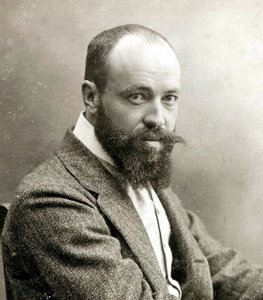
Hugo Gerhard Simberg
1873 - 1917 , Finnland
Kurzinfos
- Artistic Movement Or Style: Symbolismus
- Artists Or Movements Influenced By This Artist: ['Nightwish']
- Artists Who Influenced This Artist: ['Akseli Gallen-Kallela']
- Date Of Birth: 24. Juni 1873
- Date Of Death: 12. Juli 1917
- Full Name: Hugo Gerhard Simberg
- Nationality: Finnisch
- Notable Artworks:
- Garten des Todes
- Wundengel
- Place Of Birth: Hämeenlinna, Finnland
Ähnliche Artikel

The Enduring Legacy of Fine Art Prints: Technique, History & Aesthetic Impact
Explore the rich history & techniques of fine art prints. Discover investment potential, assess authenticity, and learn how to preserve your collection with expert guidance. Trusted insights for discerning collectors.

Echoes of Time: Exploring the Enduring Appeal & Historical Context of Vintage Art Prints
Explore the captivating world of vintage art prints! Discover their history, collecting tips & enduring appeal. Expert insights on chromolithography and building a legacy collection with ArtsDot.
Paul Klee: Die 25 Meisterwerke des Abstrakten – Kunst für Ihr Zuhause | ArtsDot
Entdecken Sie die 25 Meisterwerke von Paul Klee! Tauchen Sie ein in seine abstrakte Welt, voller Expressionismus und Bauhaus-Einflüsse. Hochwertige Kunst für Ihr Zuhause – jetzt bei ArtsDot entdecken!
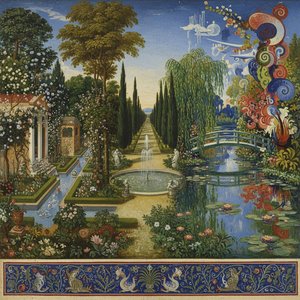
Cultivating Paradise: A Historical & Artistic Exploration of Gardens in Painting
Explore the rich history of gardens in painting! Discover masterpieces from Renaissance to Impressionism & beyond. Learn about symbolism, artists like Monet & Klimt, and find your perfect artwork at ArtsDot.

Giclée Prints: Archival Quality & Aesthetic Nuances for the Discerning Collector
Explore the world of giclée prints with ArtsDot. Learn about archival quality, aesthetic nuances & investment potential. Expert guidance for discerning art collectors seeking museum-quality reproductions and lasting value.