 Vorschau anzeigen
 Versenden
 Teilen
 Details anzeigen

 Herunterladen
 Ähnliche Objekte
 Röntgenaufnahme
 Diashow
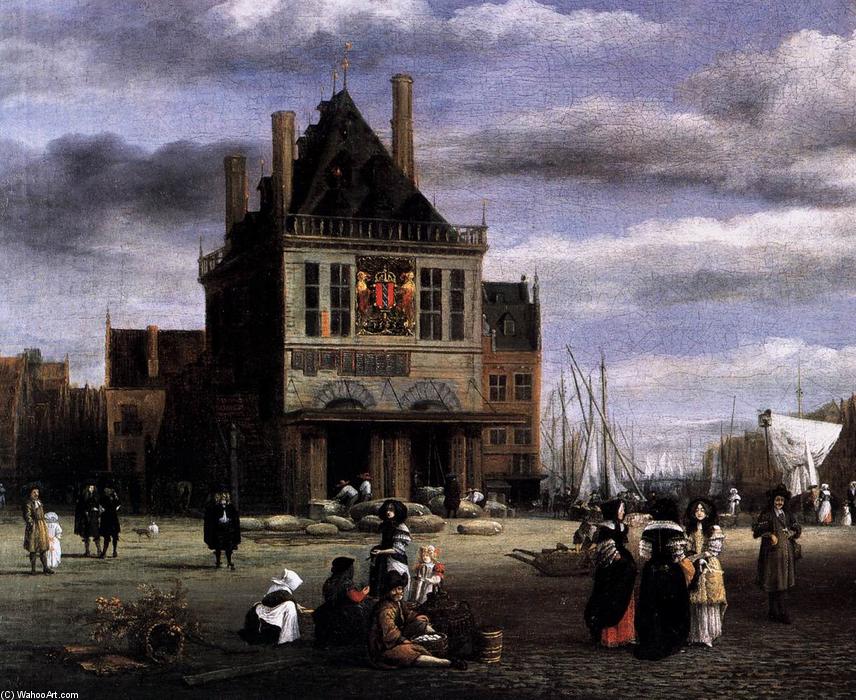
The Dam Square in Amsterdam (detail)


 Weiterlesen
Giclée / Kunstdruck
Giclée- oder Leinwanddruck in Museumsqualität mit schneller Produktion und flexiblen Veredelungsoptionen. ( Handgemalte Reproduktion bestellen Bild kaufen)




P118B $10

P118H $10

P118W $10

P438Z $10

P508JH $12

P508YH $12

P805H $10

P805Z $10

P919BZ $10

P919G $10

P919XJ $10

P959ZH $10

P968JZ $12

W106C $8

W218G $10

W218JH $8

W218Y $10

W307PJ $10

W316G $10

W316PJ $8

W316Y $10

W398PJ $8

W4111J $10

W500HY $15

W500JH $15

W692G $12

W849H $8

W940BG $15

W953PJ $8




Wählen Sie aus unseren vordefinierten Formaten, die den ursprünglichen Proportionen des Kunstwerks entsprechen.

Sie können Ihre eigenen Maße eingeben, um ein bestimmtes Format oder einen speziellen Platz einzupassen. Wenn das von Ihnen gewählte Format nicht den Proportionen des Originalbildes entspricht, werden wir das Kunstwerk entweder beschneiden oder das Bild mit einem gespiegelten oder einfarbigen Rand erweitern. Ein digitaler Entwurf wird Ihnen zur Genehmigung zugesandt, bevor die Produktion beginnt.
Bitte beachten Sie, dass die Vorschau auf dem Bildschirm nicht den tatsächlichen Zuschnitt oder die Erweiterung widerspiegelt. Nur der Entwurf zeigt die endgültige Komposition präzise an.
Obwohl Sondermaße verfügbar sind, empfehlen wir die Auswahl eines Maßes aus der vordefinierten Liste, um die ursprünglichen Proportionen zu bewahren.
Weltweiter Versand () innerhalb von 2 Wochen statt der üblichen 4/5 Wochen. (24 August)

Kostenloser weltweiter Expressversand

Hochwertige Leinenleinwand

Umfassender Versicherungsschutz beim Versand

Zollgebühren-Rückerstattungsgarantie

Garantie für exakte Farbtreue

60 Tage Rückgaberecht (nur bei Mängeln)

100% Geld-zurück-Garantie

Mengenrabatt verfügbar
 Die Glasoption ist nur für Größen unter 110 cm verfügbar.

The Dam Square in Amsterdam (detail)
Giclée / Kunstdruck
Format der Reproduktion
-


Gesamtpreis
$ 62
Sammlerstück-Beschreibung
A Window into the Golden Age: The Soul of Amsterdam
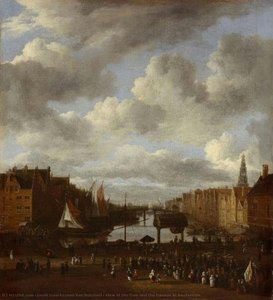
In the heart of the Dutch Golden Age, few images capture the rhythmic pulse of urban life as profoundly as Jacob Isaackszoon van Ruisdael’s The Dam Square in Amsterdam. Painted around 1670, this masterful work is far more than a mere topographical record of a city square; it is a living, breathing meditation on the grandeur and the quiet gravity of 17th-century Dutch civilization. As the eye wanders across the canvas, one is immediately struck by the monumental presence of the guildhall—likely the Sint Jacobskerk—which anchors the composition with an architectural stability that seems to defy time itself. Ruisdael does not simply present a scene; he invites the viewer to step into a moment frozen in history, where the bustling commerce of a global maritime power meets the contemplative stillness of an overcast afternoon.
The square serves as a stage for a meticulously choreographed ballet of everyday existence. Within this frame, we witness the vibrant energy of Amsterdam’s commercial heart: merchants engaged in the serious business of trade, citizens strolling through the plaza, and the humble presence of livestock tending to the needs of the city. There is a palpable sense of purpose in every figure, yet Ruisdael balances this activity with a profound atmospheric depth. The sky, which commands nearly two-thirds of the canvas, is rendered in a sophisticated palette of muted greys and ochres. This expansive, heavy atmosphere imbues the entire work with a certain melancholic beauty, suggesting that even amidst the height of prosperity, there exists a reflective, almost spiritual, layer to the human experience.
Mastery of Light and Texture
Technically, this piece stands as a testament to Ruisdael’s unparalleled command over the medium of oil on canvas. The artist employs a sophisticated layering technique, utilizing glazes to achieve a remarkable luminosity that makes the architectural details appear almost tactile. One can sense the weight of the stone and the rough texture of the building's facade through his expert use of hatching and cross-hatching. This precision allows the light—diffused and soft, as if filtered through a typical North Sea mist—to dance across the surfaces, creating a sense of three-dimensional reality that is both breathtaking and incredibly lifelike.
For the discerning collector or interior designer, the painting offers a masterclass in tonal harmony. The color palette, rooted in earthy, organic tones, provides a sophisticated foundation that complements a wide variety of high-end decor styles, from classical European aesthetics to more contemporary, minimalist settings. The way Ruisdael manipulates light and shadow creates a natural focal point that draws the eye inward, making it an ideal centerpiece for a room designed for contemplation or intellectual engagement.
Symbolism and Lasting Legacy
Beyond its aesthetic brilliance, The Dam Square in Amsterdam is rich with the symbolic language of the Dutch Republic. The imposing guildhall and the inclusion of heraldic emblems are not merely decorative; they are potent symbols of civic authority, stability, and the immense wealth that defined Amsterdam during this era. Ruisdael captures a period when the city was the epicenter of global trade, and every element of the painting—from the sturdy architecture to the industrious figures—reinforces the narrative of a society built on tradition, resilience, and prosperity.
To possess a reproduction of such a work is to bring a piece of history into the modern home. It offers more than just visual beauty; it provides an emotional connection to a vanished world of maritime glory and civic pride. Whether viewed as a historical document or a triumph of Baroque realism, Ruisdael’s vision continues to inspire awe, offering a timeless window into the spirit of one of history's most remarkable urban landscapes.
Ähnliche Kunstwerke

Über den Künstler
early life and career
Jacob Isaackszoon van Ruisdael, eine herausragende Figur der niederländischen Malerei des 17. Jahrhunderts, erblickte das Licht der Welt um 1628 in Haarlem. Seine künstlerische Ausbildung erhielt er vermutlich im Schatten seines Vaters, Isaak van Ruisdael, ein Maler und Rahmenbauer, sowie seines Onkels, dem ebenfalls bekannten Landschaftsmaler Salomon van Ruysdael – eine Verbindung, die sich in seinem Künstlernamen widerspiegelt. Haarlem, eine florierende Stadt des 17. Jahrhunderts mit einer blühenden Bier- und Textilindustrie, bot damals ideale Voraussetzungen für junge Künstler. Ruisdaels frühe Werke, die bereits ab 1646 datiert sind, zeugen von einem beeindruckenden Talent und legen den Grundstein für seine spätere Entwicklung.
In dieser Zeit begann er, die Landschaftsmalerei zu entwickeln, eine Gattung, die sich unter Einflüssen von Künstlern wie Adam Elsheimer und Paul Bril etabliert hatte. Die niederländische Malerei zeichnete sich durch ihre Detailgenauigkeit und ihren Fokus auf die Natur aus. Ruisdael verbrachte seine Jugend in Haarlem und lernte das Handwerk seines Vaters, wobei er sich jedoch schnell von dessen Stil abgrenzte und seinen eigenen Weg suchte.
artistic style and contributions
Ruisdaels künstlerischer Stil ist geprägt von einer bemerkenswerten Vielseitigkeit und einer enormen Produktivität. Er schuf eine breite Palette an Landschaftsstudien, die von idyllischen Dörfern bis hin zu dramatischen Waldlandschaften reichten. Nach seiner Reise nach Deutschland im Jahr 1650 erweiterte er sein Repertoire um heroische Darstellungen der niederländischen Landschaft. Besonders hervorzuheben ist seine spätere Arbeit in Amsterdam, wo er Stadtpanoramen und Seelandschafen schuf – oft mit dem Himmel, der den Großteil des Bildraumes einnimmt.
Ein zentrales Element seines Stils ist die meisterhafte Lichtführung, die er einsetzte, um eine dramatische Atmosphäre zu schaffen. Seine Werke sind bekannt für ihre kraftvollen Motive und die differenzierte Wiedergabe von Naturformen. Ruisdael beobachtete die Natur genau und versuchte, sie in ihren vielfältigen Facetten einzufangen. Er war ein Pionier der atmosphärischen Perspektive und nutzte oft verschwommene Hintergründe, um Tiefe und Raumillusion zu erzeugen.
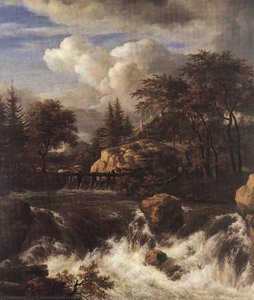
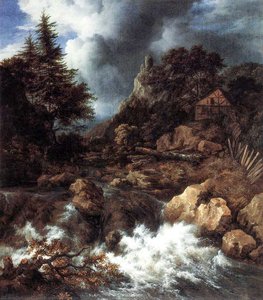
- Wasserfälle in einer felsigen und bergigen Landschaft, die seine meisterhafte Lichtführung und Komposition demonstrieren.
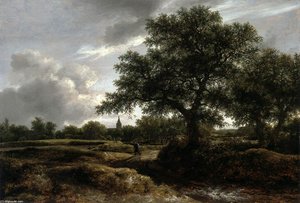
- Ansichten von Haarlem mit Bleichgründen, die seine Fähigkeit zur Erfassung der Essenz der niederländischen Landschaft veranschaulichen.
- Ansichten von Dam und Damrak in Amsterdam, die seine Fähigkeiten im Stadtlandschaftsbildnerhand hervorheben.
museums and collections
Ruisdaels Werke befinden sich heute in bedeutenden Museen und privaten Sammlungen auf der ganzen Welt. Zu den wichtigsten Ansammlungen gehören:
- Die Nationalgalerie in London
- Das Rijksmuseum in Amsterdam
- Das Hermitage Museum in St. Petersburg
influence and legacy
Ruisdaels Einfluss auf die Traditionen der Landschaftsmalerei ist immens. Er prägte die englische Romantik, die Barbizon-Schule in Frankreich und die Hudson River School in den USA. Seine Werke dienten als Inspiration für zahlreiche nachfolgende niederländische Landschaftsgestalter. Seine Fähigkeit, Dramatik und Atmosphäre in seine Landschaften zu bringen, hat Generationen von Künstlern beeinflusst.
Bekannte Werke:
- Ansichten von Haarlem mit Bleichgründen
- Wasserfälle in einer felsigen und bergigen Landschaft
- Ansichten von Dam und Damrak in Amsterdam
artist's profile on ArtsDot
Jacob Isaackszoon van Ruisdael – ein Meister der niederländischen Landschaftsmalerei. Entdecken Sie seine beeindruckende Sammlung von Gemälden, darunter dramatische Landschaften, ruhige Dörfer und atemberaubende Seeweisen. Ein wichtiger Einfluss auf die Kunstgeschichte.
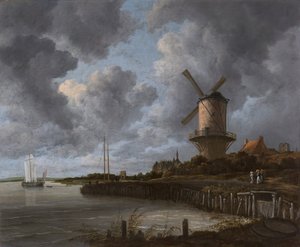
Jacob van Ruisdael
1628 - 1682 , Niederlande
Kurzinfos
- Artistic Movement Or Style: Niederländische Barockzeit
- Artists Or Movements Influenced By This Artist:
- Englische Romantik
- Barbizon Schule
- Artists Who Influenced This Artist: ['Hendrik Vroom']
- Date Of Birth: c. 1628/29, Haarlem
- Date Of Death: 1682, Amsterdam
- Full Name: Jacob Isaackszoon van Ruisdael
- Nationality: Niederländer
- Notable Artworks:
- Ansicht von Haarlem
- Wasserfalllandschaft
- Ansicht der Dam und Damrak
- Place Of Birth: Haarlem, Niederlande
Ähnliche Artikel

Die 10 Meisterwerke des Goldenen Zeitalters der niederländischen Malerei |
Entdecken Sie die 10 Meisterwerke des Niederländischen Goldenen Zeitalters! Von Rembrandt bis Vermeer – erleben Sie Kunstgeschichte, Techniken & Emotionen. Hochwertige Gemäldereproduktionen für Ihr Zuhause auf .
Jacob van Ruisdael: Meister der niederländischen Landschaft und die Evokation nationaler Identität
Entdecken Sie Jacob van Ruisdaels Meisterwerke der niederländischen Landschaftsmalerei! Erfahren Sie mehr über sein Leben, Werk und den Einfluss auf die Kunst des Goldenen Zeitalters. Expertenwissen & Sammlungsübersicht.

Rembrandts Meisterwerke: Die Top 25 Kunstwerke für Ihr Zuhause | ArtsDot
Entdecken Sie Rembrandts 25 berühmteste Kunstwerke! Tauchen Sie ein in die Welt des Barock, Licht und Schatten & historischer Porträts. Hochwertige Reproduktionen für Ihr Zuhause – jetzt auf ArtsDot.com!

Golden Age Reflections: Dutch Baroque Painting & Cultural Innovation
Explore the Dutch Golden Age of painting! Discover key artists like Vermeer & ter Borch, their innovative techniques, and the rich cultural context behind these Baroque masterpieces. Learn about collecting & appreciating this iconic art period.
Willem van de Velde der Ältere: Meister der Seemalererei und Chronist des Niederländischen Goldenen Zeitalters
Entdecken Sie das Werk von Willem van de Velde der Ältere, dem Meister der Seemalerei des Niederländischen Goldenen Zeitalters. Erfahren Sie mehr über sein Leben, seine Techniken und seinen Einfluss auf die Kunstgeschichte – jetzt bei ArtsDot!