 Vorschau anzeigen
 Versenden
 Teilen
 Details anzeigen

 Herunterladen
 Ähnliche Objekte
 Röntgenaufnahme
 Diashow
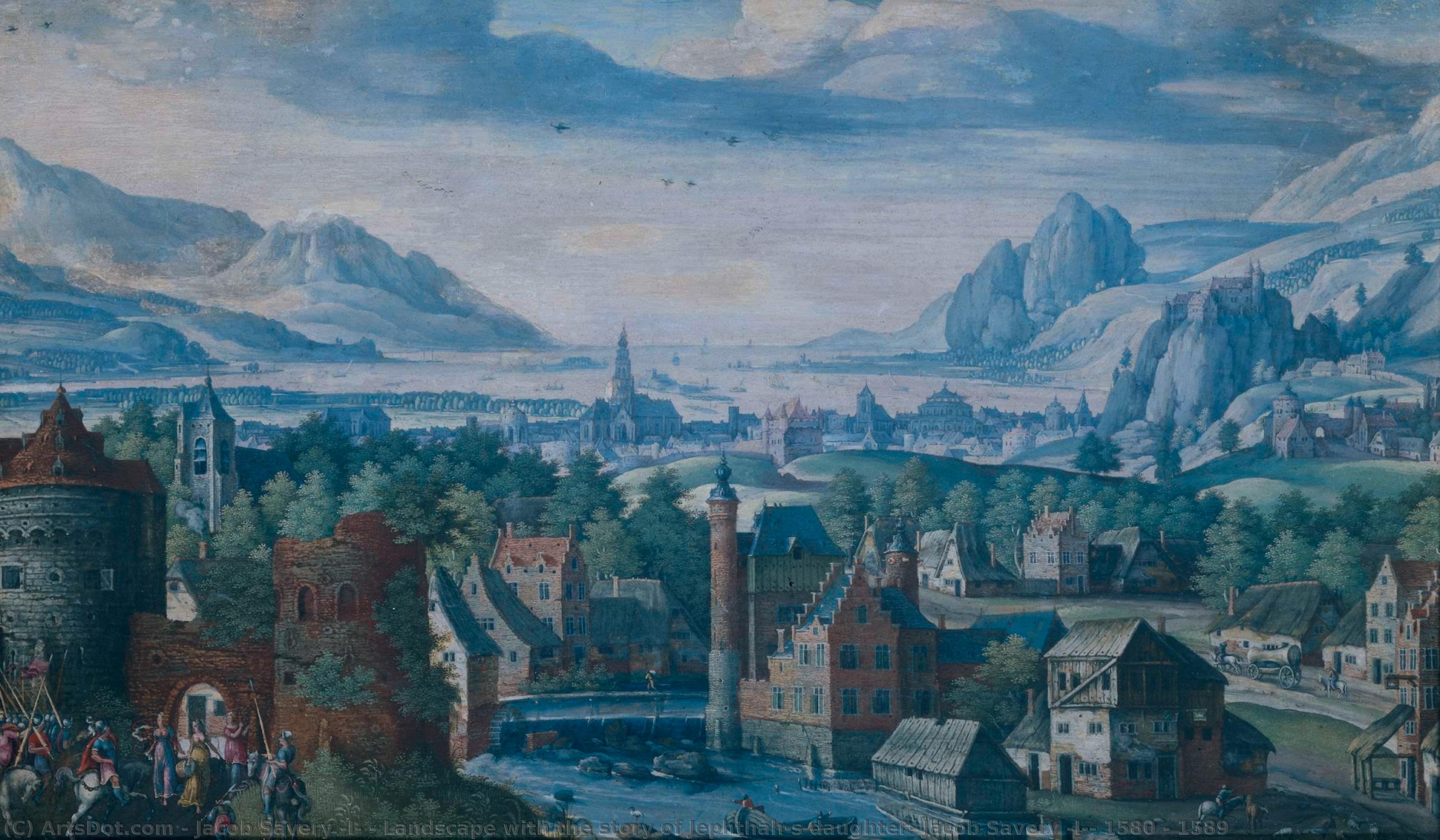
Landscape with the story of Jephthah"s daughter, Jacob Savery (I), 1580 - 1589
 1589
1589 19.0 x 31.0 cm
 Weiterlesen
Giclée / Kunstdruck
Giclée- oder Leinwanddruck in Museumsqualität mit schneller Produktion und flexiblen Veredelungsoptionen. ( Handgemalte Reproduktion bestellen Bild kaufen)




































Wählen Sie aus unseren vordefinierten Formaten, die den ursprünglichen Proportionen des Kunstwerks entsprechen.

Sie können Ihre eigenen Maße eingeben, um ein bestimmtes Format oder einen speziellen Platz einzupassen. Wenn das von Ihnen gewählte Format nicht den Proportionen des Originalbildes entspricht, werden wir das Kunstwerk entweder beschneiden oder das Bild mit einem gespiegelten oder einfarbigen Rand erweitern. Ein digitaler Entwurf wird Ihnen zur Genehmigung zugesandt, bevor die Produktion beginnt.
Bitte beachten Sie, dass die Vorschau auf dem Bildschirm nicht den tatsächlichen Zuschnitt oder die Erweiterung widerspiegelt. Nur der Entwurf zeigt die endgültige Komposition präzise an.
Obwohl Sondermaße verfügbar sind, empfehlen wir die Auswahl eines Maßes aus der vordefinierten Liste, um die ursprünglichen Proportionen zu bewahren.
Weltweiter Versand () innerhalb von 2 Wochen statt der üblichen 4/5 Wochen. (1 September)

Kostenloser weltweiter Expressversand

Hochwertige Leinenleinwand

Umfassender Versicherungsschutz beim Versand

Zollgebühren-Rückerstattungsgarantie

Garantie für exakte Farbtreue

60 Tage Rückgaberecht (nur bei Mängeln)

100% Geld-zurück-Garantie

Mengenrabatt verfügbar
 Die Glasoption ist nur für Größen unter 110 cm verfügbar.

Landscape with the story of Jephthah"s daughter, Jacob Savery (I), 1580 - 1589
Giclée / Kunstdruck
Format der Reproduktion
-


Gesamtpreis
$ 62
Ähnliche Kunstwerke








Über den Künstler
Early Life and Artistic Beginnings
The story of Hans Heys, a name increasingly resonant in contemporary landscape painting, is one rooted deeply in the Dutch tradition yet blossoming into a uniquely personal vision. Born in 1974 in the Netherlands, Heys’s early life was steeped in the visual language of his surroundings – the expansive skies, the intricate network of waterways, and the flat, fertile polders that define much of the country's character. While not formally trained in a classical sense initially, Heys developed an acute observational skill through countless hours spent sketching *en plein air*, capturing the fleeting effects of light and atmosphere. This self-directed education fostered a direct connection to his subject matter, one that would become a hallmark of his mature work. His initial artistic explorations were modest, focusing on local scenes – windmills silhouetted against dramatic sunsets, fields of tulips ablaze with color, and the quiet dignity of traditional Dutch farmhouses. These early paintings, though relatively unassuming, reveal a nascent talent for capturing mood and an instinctive understanding of composition. Heys wasn’t immediately drawn to grand narratives or historical themes; instead, he found beauty in the everyday, imbuing ordinary landscapes with a sense of poetic stillness.Influences and Development
Heys's artistic journey was significantly shaped by his immersion in the Dutch Masters, particularly the 17th-century landscape painters like Jacob van Ruisdael and Aert van der Neer. He admired their masterful rendering of light, their ability to convey depth and atmosphere, and their subtle psychological portrayal of nature. However, Heys wasn’t content with mere imitation. He sought to move beyond the meticulous realism of his predecessors, incorporating elements of Impressionism and Post-Impressionism into his evolving style. The broken brushwork and vibrant color palettes of artists like Monet and Van Gogh resonated deeply with him, inspiring him to experiment with more expressive techniques.- Jacob van Ruisdael: Influenced Heys’s understanding of atmospheric perspective and the depiction of cloud formations.
- Aert van der Neer: Provided a model for capturing the subtle nuances of light in nocturnal scenes and winter landscapes.
- Claude Monet: Inspired Heys’s exploration of broken color and *plein air* painting techniques.
- Vincent van Gogh: Contributed to Heys’s expressive use of brushwork and emotional intensity.