

 Vorschau anzeigen
 Versenden
 Teilen
 Details anzeigen

 Herunterladen
 Ähnliche Objekte
 Röntgenaufnahme
 Diashow
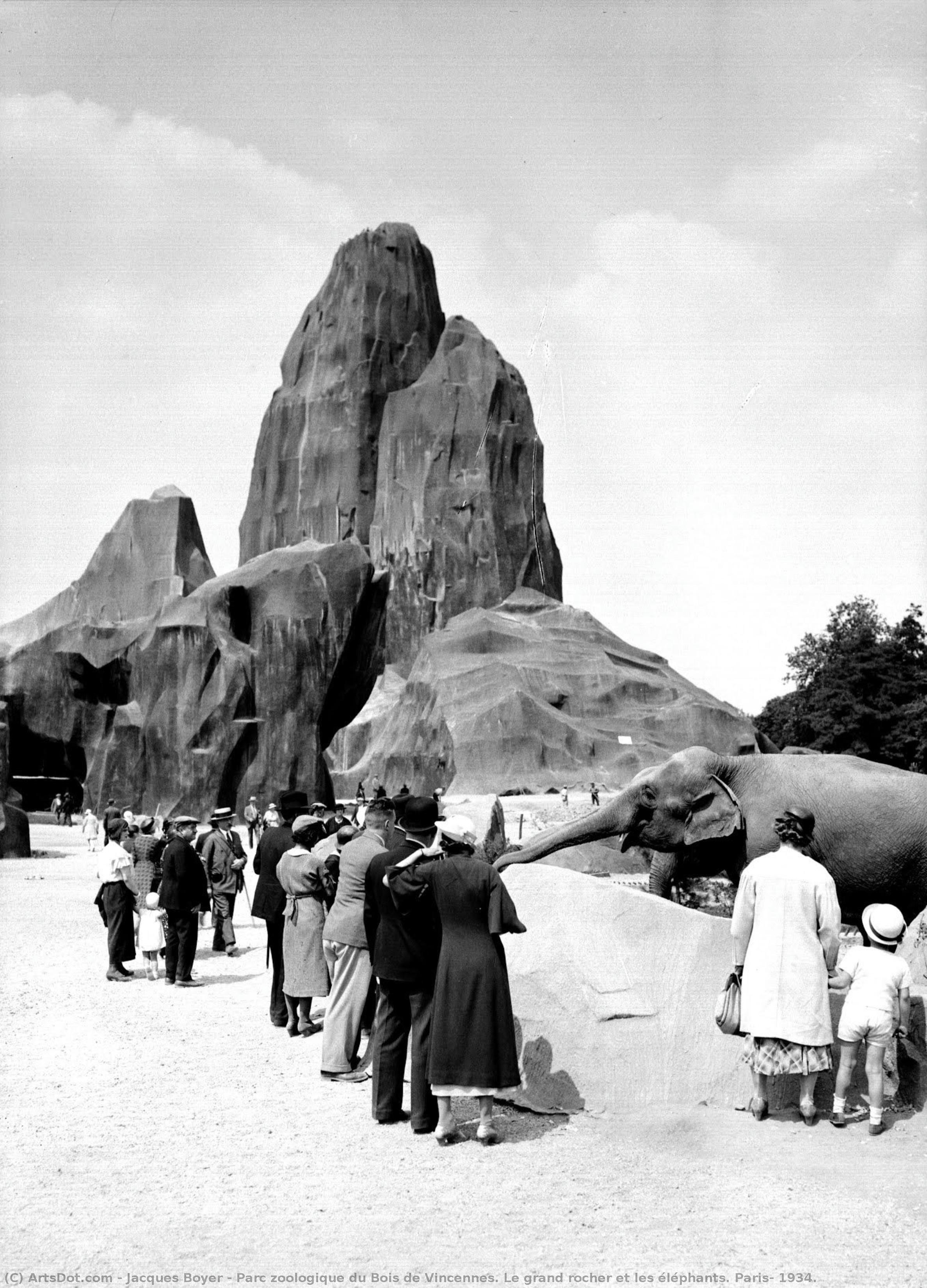
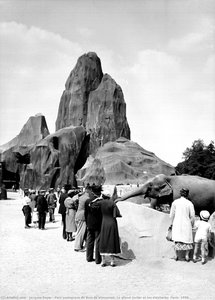
Parc zoologique du Bois de Vincennes. Le grand rocher et les éléphants. Paris, 1934.


 Weiterlesen
Erwerben Sie ein hochauflösendes, optimiertes digitales Bild, das der Online-Vorschau weit überlegen ist.
Jede Datei wird von unseren hauseigenen Spezialisten mit modernsten Werkzeugen und fachmännischer manueller Retusche sorgfältig vorbereitet. Wir stellen sicher, dass jedes Bild eine außergewöhnliche Klarheit, präzise Farbgenauigkeit und feinste Details aufweist.
Die endgültige Datei wird innerhalb von 72 Stunden per E-Mail zugestellt und ist für den sofortigen Einsatz in professionellen, redaktionellen und Druckumgebungen optimiert. Es handelt sich um dieselbe Qualität, der führende Designstudios, Verlage und Galerien vertrauen.
Digitales Bild
Laden Sie eine hochauflösende Datei für die persönliche Präsentation, den Druck und kreative Projekte herunter. ( Druck bestellen Handgemalte Reproduktion bestellen)
In jeder Bestellung digitaler Bilder enthalten
Professionelle digitale Bereitstellung, garantiert
Wenn Sie sich für ArtsDot.com entscheiden, erhalten Sie nicht nur ein Bild – Sie erhalten ein professionell aufbereitetes digitales Kunstwerk, das mit höchster Präzision erstellt und durch eine Zufriedenheitsgarantie abgesichert wird. Hier ist alles, was automatisch mit Ihrer Bestellung geliefert wird:

Schnelle E-Mail-Zustellung
Ihre hochauflösende digitale Bilddatei wird Ihnen innerhalb von 72 Stunden nach der Bestellung per E-Mail zugestellt – bereit zur sofortigen Verwendung.

KI-optimierte digitale Datei
Ihre Kunstwerke werden professionell mithilfe fortschrittlicher KI-Tools und manueller Bearbeitung optimiert, um maximale Detailtreue, Klarheit und Farbgenauigkeit zu gewährleisten.

Lebenslanger kostenloser Neudruckservice
Datei versehentlich gelöscht oder verloren? Keine Sorge – wir senden sie Ihnen jederzeit kostenlos erneut zu.

Keine Einfuhrgebühren – jemals
Genießen Sie Ihr Kunstwerk sofort ohne Zollgebühren, Einfuhrabgaben oder Versandkosten – digitale Downloads sind immer steuerfrei.

Garantierte Farbtreue
Wir garantieren, dass Ihr digitales Bild mithilfe professioneller Werkzeuge und Farbmanagement die Originalfarben so präzise wie möglich wiedergibt.

60-Tage-Zufriedenheitsgarantie
Sollten Sie mit Ihrem digitalen Bild nicht zufrieden sein, werden wir es überarbeiten oder Ihnen innerhalb von 60 Tagen 100% erstatten – ohne Wenn und Aber.

100% Geld-zurück-Garantie
Nicht zufrieden? Erhalten Sie innerhalb von 60 Tagen nach Erhalt Ihrer digitalen Datei eine vollständige Rückerstattung – ohne Angabe von Gründen.

Rabatte bei Großbestellungen
3 Bilder kaufen, 10% sparen – 5 Bilder kaufen, 15% sparen – Ab 10 Bildern 20% sparen. Ideal für kreative Projekte, Galerien und Agenturen.
Ähnliche Kunstwerke





![[ibsamboul. Speos Von Phre] — John Beasley Greene, Romantik](/media/artworks/images-thumb/4f/d0/4fd07465fdfae392a7dc1f60ce3242d5.jpg)

Biografie des Künstlers
Jacques Boyer: A Painter of the Wild Heart
Jacques Boyer (1918 – 1990) wasn’t a name that immediately resonates within the grand halls of the art world, yet his canvases hold a quiet intensity—a deep connection to the natural world and a remarkable ability to capture fleeting moments of wildlife. Born in Saint-Pey-de-Castets, a small village in southwestern France, Boyer's artistic journey began not with formal training but with an innate fascination for the landscapes and creatures surrounding him. He wasn’t striving for grand pronouncements or revolutionary styles; instead, he quietly built a body of work characterized by meticulous detail, a profound respect for his subjects, and a subtle, almost melancholic beauty.
Boyer's early life was deeply intertwined with the rhythms of rural France. He served as a municipal mayor for many years, demonstrating a practical engagement with his community – an experience that undoubtedly informed his later artistic perspective. This grounding in everyday life seems to have fostered a sensitivity to the nuances of observation, translating into a remarkable ability to render textures and forms with astonishing accuracy. His subjects weren’t posed or idealized; they were animals in their natural habitats, engaged in their daily routines—a fox hunting for prey, a deer pausing by a stream, birds soaring through the sky. These scenes aren't dramatic narratives but rather intimate glimpses into the lives of wild creatures.
The Language of Observation
Boyer’s technique is remarkably understated. He rarely employed bold brushstrokes or vibrant colors; instead, he favored a muted palette—earthy browns, greens, and greys—that perfectly complemented the natural tones of his subjects. His approach was rooted in careful observation and patient rendering. He meticulously studied the anatomy of animals, capturing their musculature, posture, and movement with an almost scientific precision. This dedication to detail is evident in the way he portrays the texture of fur, feathers, and scales—each element rendered with a level of realism that borders on photographic.
Interestingly, Boyer’s work was largely self-taught. He didn't attend art academies or participate in formal artistic circles. This independent path allowed him to develop his own unique style, one that prioritized direct observation and personal expression over adherence to established conventions. His paintings aren’t simply representations of animals; they are imbued with a sense of empathy—a feeling for the creatures he depicted and their place within the natural world.
A Focus on Wildlife and the Vincennes Zoo
Boyer's most celebrated works depict wildlife, particularly those found in the vicinity of his home. He spent considerable time observing animals at the Vincennes Zoo in Paris, documenting their behavior and capturing their essence on canvas. These zoo paintings are particularly noteworthy for their ability to convey a sense of both familiarity and wildness—the animals appear comfortable within their enclosures, yet retain an undeniable aura of freedom. His work from the Vincennes Zoo is especially poignant, offering viewers a rare opportunity to connect with these creatures in a deeply intimate way.
Beyond the zoo, Boyer’s paintings also showcase a wide range of wildlife—deer, foxes, birds, and other animals that inhabit the French countryside. His depictions are not merely illustrations; they are imbued with a sense of atmosphere and emotion. He captured the golden light of dawn filtering through the trees, the cool shade of a forest floor, and the quiet dignity of an animal in its natural habitat.
Legacy and Historical Context
Jacques Boyer’s work represents a subtle yet significant contribution to the world of wildlife art. While he didn't achieve widespread fame during his lifetime, his paintings have gained increasing recognition in recent years for their remarkable detail, emotional depth, and quiet beauty. He stands as an example of an artist who found inspiration in the everyday—in the simple act of observing the natural world and translating those observations onto canvas.
His work reflects a broader trend in 20th-century art—a growing interest in nature and a desire to reconnect with the rhythms of the natural world. Boyer’s paintings offer a valuable reminder of the beauty and wonder that can be found in even the most humble of subjects, and his legacy continues to inspire artists and viewers alike.
jacques boyer
France
Kurzinfos
- Artistic Movement Or Style: Landscape painting
- Artists Who Influenced This Artist: ['None],\n "Artists or movements influenced by this artist": [None']
- Date Of Birth: February 21, 1918
- Date Of Death: June 8, 1990
- Full Name: Jacques Boyer-Andrivet
- Nationality: French
- Notable Artworks:
- Singes au zoo de Vincennes
- Parc zoologique du Bois de Vincennes
- Place Of Birth: Saint-Pey-de-Castets, France

