 Vorschau anzeigen
 Versenden
 Teilen
 Details anzeigen

 Herunterladen
 Ähnliche Objekte
 Röntgenaufnahme
 Diashow
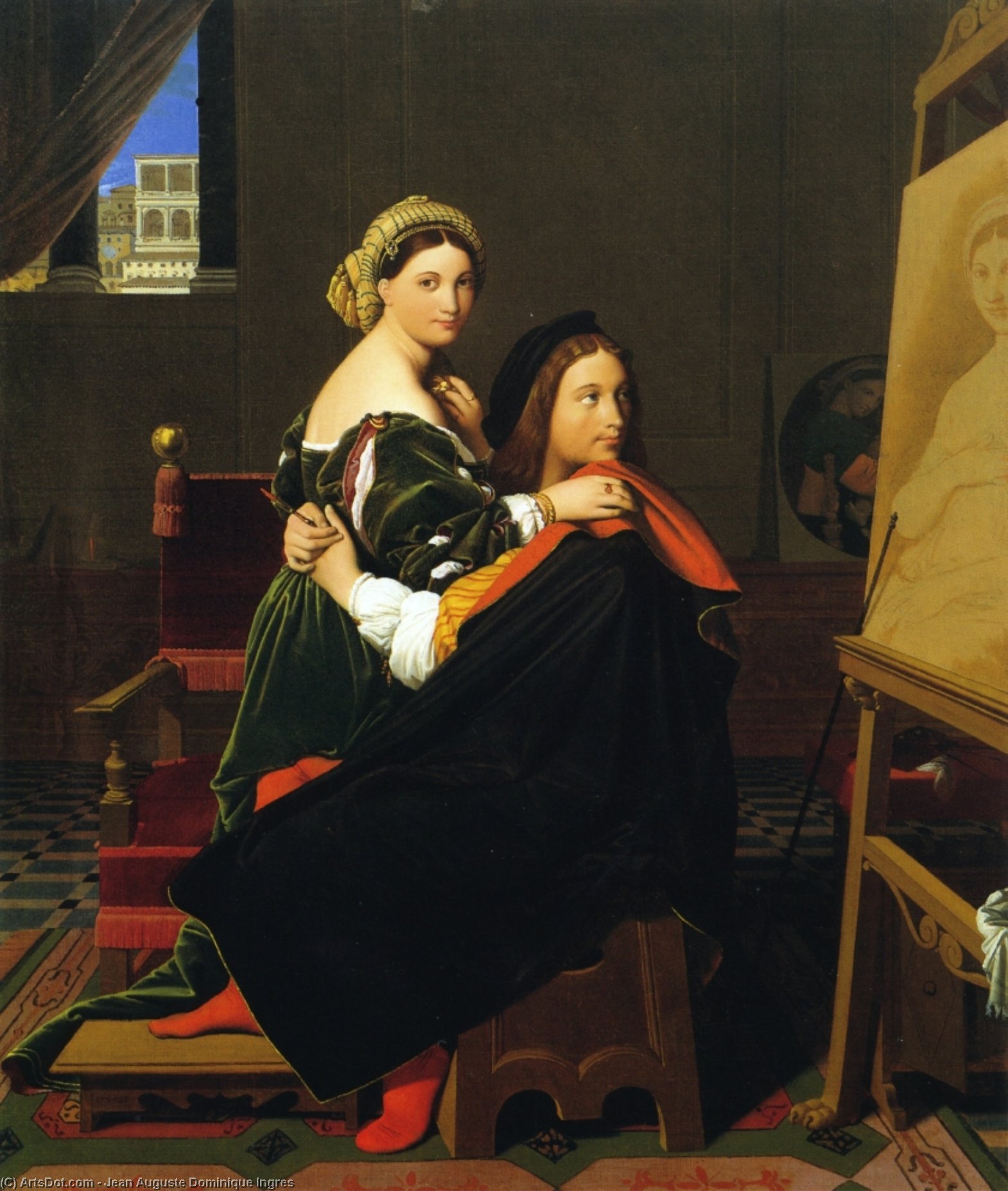
Raphael and La Fornarina


 Weiterlesen
Handgefertigte Ölreproduktion
Handgemaltes Ölgemälde auf Leinwand in Ihrer Wunschgröße und mit Rahmen, auf Bestellung von unseren Künstlern angefertigt. ( Druck bestellen Bild kaufen)




P118B $10

P118H $10

P118W $10

P438Z $10

P508JH $12

P508YH $12

P805H $10

P805Z $10

P919BZ $10

P919G $10

P919XJ $10

P959ZH $10

P968JZ $12

W106C $8

W218G $10

W218JH $8

W218Y $10

W307PJ $10

W316G $10

W316PJ $8

W316Y $10

W398PJ $8

W4111J $10

W500HY $15

W500JH $15

W692G $12

W849H $8

W940BG $15

W953PJ $8




Wählen Sie aus unseren vordefinierten Formaten, die den ursprünglichen Proportionen des Kunstwerks entsprechen.

Sie können Ihre eigenen Maße eingeben, um einen bestimmten Rahmen oder Platz auszufüllen. Wenn die gewählte Größe nicht den Proportionen des Originalbildes entspricht, werden wir das Kunstwerk entweder beschneiden oder das Gemälde durch zusätzliche, handgemalte Elemente erweitern. Ein digitales Mockup wird Ihnen zur Genehmigung zugesandt, bevor die Produktion beginnt.
Bitte beachten Sie, dass die Bildschirmvorschau nicht die tatsächliche Beschneidung oder Erweiterung widerspiegelt. Nur das Mockup zeigt die endgültige Komposition exakt an.
Obwohl Sondermaße verfügbar sind, empfehlen wir, eine Größe aus der vordefinierten Liste zu wählen, um die ursprünglichen Proportionen beizubehalten.
Nach der Bestellung wird das ArtsDot.com-Team dem Kunden Anweisungen per E-Mail zusenden und eine Mockup-Vorschau bereitstellen.
Weltweiter Versand () in nur 3 bis 4 Wochen statt der üblichen 5 Wochen. (25 August). Keine Kompromisse bei der Qualität.

Kostenloser weltweiter Expressversand

Hochwertige Leinenleinwand

Umfassender Versicherungsschutz beim Versand

Zollgebühren-Rückerstattungsgarantie

Garantie für exakte Farbtreue

60 Tage Rückgaberecht (nur bei Mängeln)

100% Geld-zurück-Garantie

Mengenrabatt verfügbar
 Die Glasoption ist nur für Größen unter 110 cm verfügbar.

Raphael and La Fornarina
Art der Reproduktion
Format der Reproduktion
-


Gesamtpreis
$ 263
Beschreibung des Kunstwerks
A Dance of Desire and Artistic Reverence: Ingres’s “Raphael and La Fornarina”
Jean-Auguste-Dominique Ingres's "Raphael and La Fornarina," painted in 1814, is more than a mere portrait; it’s a carefully constructed dialogue between the artist, his subject, and the legacy of Raphael himself. This captivating oil on canvas, currently residing within the hallowed halls of the Fogg Art Museum in Cambridge, unfolds as an intimate tableau brimming with subtle gestures, evocative lighting, and a profound sense of artistic yearning. The painting immediately draws the viewer into a dimly lit studio space – a haven for creativity and contemplation – where the renowned Renaissance painter, Raphael, is depicted seated on the lap of his mistress, La Fornarina. This isn’t a straightforward depiction of love; rather, it's a layered exploration of desire, artistic inspiration, and the complex relationship between creator and muse.Composition and Technique: A Neoclassical Masterclass
Ingres’s mastery lies in his meticulous attention to detail and his unwavering commitment to Neoclassical principles. The composition is characterized by a remarkable sense of fluidity and grace, achieved through the artist's masterful use of soft, curving lines that guide the eye across the canvas. Notice how the figures are rendered with an almost sculptural quality – their forms subtly defined yet imbued with a delicate softness. The warm palette—dominated by ochres, browns, and subtle greens—creates an atmosphere of quiet intimacy, while the diffused lighting casts gentle shadows, enhancing the sense of depth and realism. Ingres’s technique is particularly evident in his rendering of La Fornarina's face – her features are exquisitely detailed, capturing a fleeting expression of both vulnerability and knowing sensuality. The subtle variations in tone and texture contribute to the overall illusion of three-dimensionality, drawing the viewer into the scene. The inclusion of the Raphael portrait hanging on the wall behind them is not merely decorative; it’s a deliberate reference to the artist's own artistic lineage and his deep admiration for the master.Symbolism and Narrative: Beyond the Surface
“Raphael and La Fornarina” transcends a simple depiction of a painter and his model. It’s rich with symbolic meaning, inviting multiple interpretations. The most compelling is arguably the contrast between Raphael's gaze – fixed on his own portrait of La Fornarina – and her direct, almost challenging, look towards the viewer. This suggests that she possesses an awareness of her role as a subject, a muse, and perhaps even a rival to the very artwork he creates. The positioning of La Fornarina on Raphael’s lap can be interpreted as a representation of his creative process—her presence fueling his artistic inspiration. Furthermore, the inclusion of the Madonna della seggiola in the background subtly references Raphael's own masterpiece, creating a visual dialogue between the past and present, between the idealized beauty of Renaissance art and the sensual allure of the contemporary subject. The subtle suggestion of a shared gaze between La Fornarina and the viewer invites us to consider our own role as witnesses to this intimate scene.Historical Context and Artistic Influence
Painted in the aftermath of the Napoleonic Wars, “Raphael and La Fornarina” reflects a renewed interest in classical art and ideals within French society. The painting aligns with the Neoclassical movement’s emphasis on order, reason, and harmony—qualities that Ingres sought to emulate in his own work. Ingres's deep study of Raphael’s life and artistic output is evident throughout the composition, particularly in the careful attention to detail and the idealized portrayal of beauty. The painting also anticipates the rise of the “Orientalist” genre, with its focus on exotic subjects and sensuous female figures—a trend that would become increasingly prominent in 19th-century art. The work’s popularity at the Salon of 1814 demonstrated Ingres's growing influence as a leading figure in the French artistic establishment, solidifying his reputation as a master of line and form.For exquisite, hand-painted reproductions of this masterpiece, please visit ArtsDot.com.
Ähnliche Kunstwerke
Über den Künstler
Jean-Auguste-Dominique Ingres: Ein Meister des Neoklassizismus
- Geboren: 29. August 1780, Montauban, Frankreich
- Gestorben: 14. Januar 1867, Paris
Frühes Leben und Ausbildung
Jean-Auguste-Dominique Ingres wurde in eine bescheidene Familie in Montauban geboren. Sein Vater, Jean-Marie-Joseph Ingres, war Maler und Bildhauer und vermittelte ihm so ein frühes künstlerisches Fundament. Ingres erhielt zunächst Unterricht von seinem Vater, bevor er an der Académie Royale de Peinture, Sculpture et Architecture in Toulouse unter Guillaume-Joseph Roques eingeschrieben wurde. 1797 zog er nach Paris, um bei Jacques-Louis David zu studieren, einer führenden Figur des Neoklassizismus. Diese Mentorschaft erwies sich als entscheidend für Ingres' künstlerische Entwicklung.
Künstlerische Entwicklung und Einflüsse
Ingres’ Stil war tief in den Traditionen der italienischen Renaissance und flämischer Meister wie Raffael und Nicolas Poussin verwurzelt. Er studierte ihre Werke akribisch und bemühte sich, deren Klarheit, Eleganz und idealisierte Formen nachzuahmen. Der Einfluss von Jacques-Louis David zeigt sich auch in Ingres' anfänglicher Einhaltung neoklassizistischer Prinzipien – einem Fokus auf Linie, Form und historische oder mythologische Themen. Allerdings entwickelte Ingres allmählich seinen eigenen unverwechselbaren Stil, der durch eine einzigartige Mischung aus Präzision und Sinnlichkeit gekennzeichnet ist.
Wichtige Werke und Stil
Ingres erlangte bedeutende Anerkennung durch mehrere bemerkenswerte Werke:
- Die Boten des Agamemnon in Achills Zelt (1801): Dieses Gemälde brachte ihm den Prix de Rome ein, was einen Wendepunkt in seiner Karriere markierte.
- Der Eid Ludwigs XIII. (1827): Ein Werk, das seinen raffaelesken Stil demonstriert und ihm weitreichenden Ruhm einbrachte.
- Porträt von Monsieur Bertin (1833-1834): Dieses Porträt markierte eine Zeit des großen Erfolgs und zeigte seine Fähigkeit, den individuellen Charakter einzufangen.
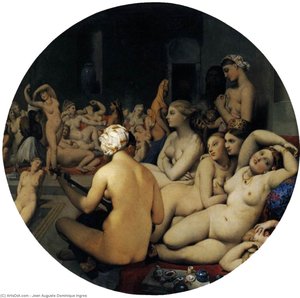
- Das türkische Bad (1862): Eines seiner späteren Werke und ein Beispiel für seine Orientalistenmalerei mit Aktendarstellungen, fertiggestellt als er 83 Jahre alt war.
Ingres' Porträts werden besonders für ihre ausdrucksstarke Verzerrung von Form und Raum gefeiert – eine Abweichung von streng neoklassizistischen Konventionen, die moderne Kunstrichtungen vorwegnahm. Er verwendete einen linearen Stil mit präzisen Konturen und lebendigen Farben und erzeugte oft eine Illusion der Tiefe durch subtile Schattierungen.
Vermächtnis und historische Bedeutung
Ingres’ Vermächtnis reicht weit über seine eigene umfangreiche Produktion hinaus. Er hatte einen tiefgreifenden Einfluss auf nachfolgende Generationen von Künstlern, darunter Henri Matisse und Pablo Picasso, die seinen innovativen Ansatz in Bezug auf Form und Komposition bewunderten. Sein Engagement für klassische Ideale bei gleichzeitiger Überschreitung der Grenzen künstlerischen Ausdrucks festigte seine Position als Brücke zwischen Neoklassizismus und Moderne. Ingres’ Werke werden weiterhin in wichtigen Museen weltweit ausgestellt, was Zeugnis von ihrer bleibenden Schönheit und historischen Bedeutung ist.
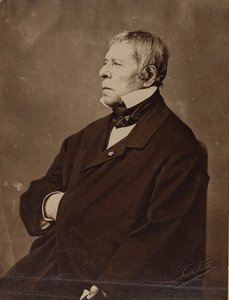
Jean-Auguste-Dominique Ingres
1780 - 1867 , Frankreich
Kurzinfos
- Beeinflusste Künstler:
- Raphael
- Nicolas Poussin
- Jacques-Louis David
- Bemerkenswerte Werke:
- Die Botschafter Agamemnons
- Der Eid Ludwigs XIII.
- Porträt von Monsieur Bertin
- Das türkische Bad
- Geburtsdatum: 29. August 1780
- Geburtsort: Montauban, Frankreich
- Künstlerische Richtung: Neoklassizismus
- Nationalität: Französisch
- Sterbedatum: 14. Januar 1867
- Vollständiger Name: Jean-Auguste-Dominique Ingres
- Von Ihm Beeinflusste Künstler:
- Henri Matisse
- Pablo Picasso
Ähnliche Artikel
Raphael: Die 25 Meisterwerke des Renaissance-Genies – Kunst für Ihr Zuhause
Entdecken Sie die 25 schönsten Meisterwerke von Raphael! Tauchen Sie ein in die Welt der Renaissance-Kunst, erfahren Sie faszinierende Geschichten und lassen Sie sich von den Farben und Kompositionen inspirieren. Hochwertige Reproduktionen auf ArtsDot.com.
Top 25 Kunstwerke der Biennale Venedig: Meisterwerke für Ihr Zuhause | ArtsDot
Entdecken Sie die 25 bedeutendsten Kunstwerke der Biennale Venedig! Erfahren Sie die Geschichten hinter berühmten Gemälden, Künstlern und Stilen. Hochwertige Kunstdrucke & Reproduktionen für Ihr Zuhause – jetzt auf ArtsDot.com!
The Enduring Legacy of Formal Portraiture: Power, Identity & Artistic Exploration
Explore the rich history of formal portraiture & its enduring power to capture identity and shape perception. Discover investment-worthy artworks, expert appraisals, and custom reproduction services at ArtsDot.
Maurice Quentin de La Tour: Licht, Schatten und die Intimität des Rokoko-Porträts
Entdecken Sie das Werk von Maurice Quentin de La Tour! Erfahren Sie mehr über seine innovative Pastelltechnik, die psychologische Tiefe seiner Porträts und seinen Einfluss auf die Rokoko-Malerei. Einblick in königliche Aufträge & sein Vermächtnis.
The Enduring Gaze: Classical Portraiture & Societal Values
Explore the rich history of classical portraiture & its reflection of societal values. Discover artistic techniques, symbolism, and enduring influence on art collecting with ArtsDot.