 Vorschau anzeigen
 Versenden
 Teilen
 Details anzeigen

 Herunterladen
 Ähnliche Objekte
 Röntgenaufnahme
 Diashow
 Stats
StatsRoman Countryside


 Weiterlesen
Giclée / Kunstdruck
Giclée- oder Leinwanddruck in Museumsqualität mit schneller Produktion und flexiblen Veredelungsoptionen. ( Handgemalte Reproduktion bestellen Switch to Digital Image)




P118B $10

P118H $10

P118W $10

P438Z $10

P508JH $12

P508YH $12

P805H $10

P805Z $10

P919BZ $10

P919G $10

P919XJ $10

P959ZH $10

P968JZ $12

W106C $8

W218G $10

W218JH $8

W218Y $10

W307PJ $10

W316G $10

W316PJ $8

W316Y $10

W398PJ $8

W4111J $10

W500HY $15

W500JH $15

W692G $12

W849H $8

W940BG $15

W953PJ $8




Wählen Sie aus unseren vordefinierten Formaten, die den ursprünglichen Proportionen des Kunstwerks entsprechen.

Sie können Ihre eigenen Maße eingeben, um ein bestimmtes Format oder einen speziellen Platz einzupassen. Wenn das von Ihnen gewählte Format nicht den Proportionen des Originalbildes entspricht, werden wir das Kunstwerk entweder beschneiden oder das Bild mit einem gespiegelten oder einfarbigen Rand erweitern. Ein digitaler Entwurf wird Ihnen zur Genehmigung zugesandt, bevor die Produktion beginnt.
Bitte beachten Sie, dass die Vorschau auf dem Bildschirm nicht den tatsächlichen Zuschnitt oder die Erweiterung widerspiegelt. Nur der Entwurf zeigt die endgültige Komposition präzise an.
Obwohl Sondermaße verfügbar sind, empfehlen wir die Auswahl eines Maßes aus der vordefinierten Liste, um die ursprünglichen Proportionen zu bewahren.
Weltweiter Versand () innerhalb von 2 Wochen statt der üblichen 4/5 Wochen. (8 September)

Kostenloser weltweiter Expressversand

Hochwertige Leinenleinwand

Umfassender Versicherungsschutz beim Versand

Zollgebühren-Rückerstattungsgarantie

Garantie für exakte Farbtreue

100-Tage-Rückgaberecht (nur bei Mängeln)

100% Geld-zurück-Garantie

Mengenrabatt verfügbar
 Die Glasoption ist nur für Größen unter 110 cm verfügbar.

Roman Countryside
Giclée / Kunstdruck
Format der Reproduktion
-


Gesamtpreis
$ 62
A Moment Frozen in Pastoral Beauty: Jean-Baptiste-Corot’s *Roman Countryside*
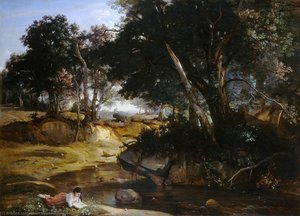
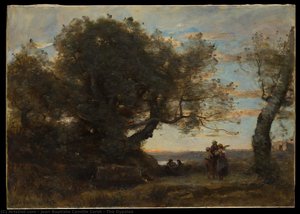
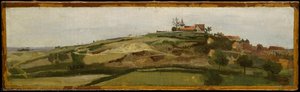
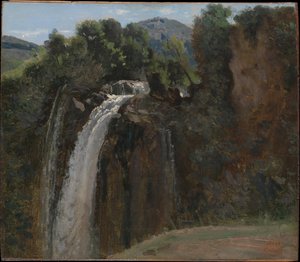
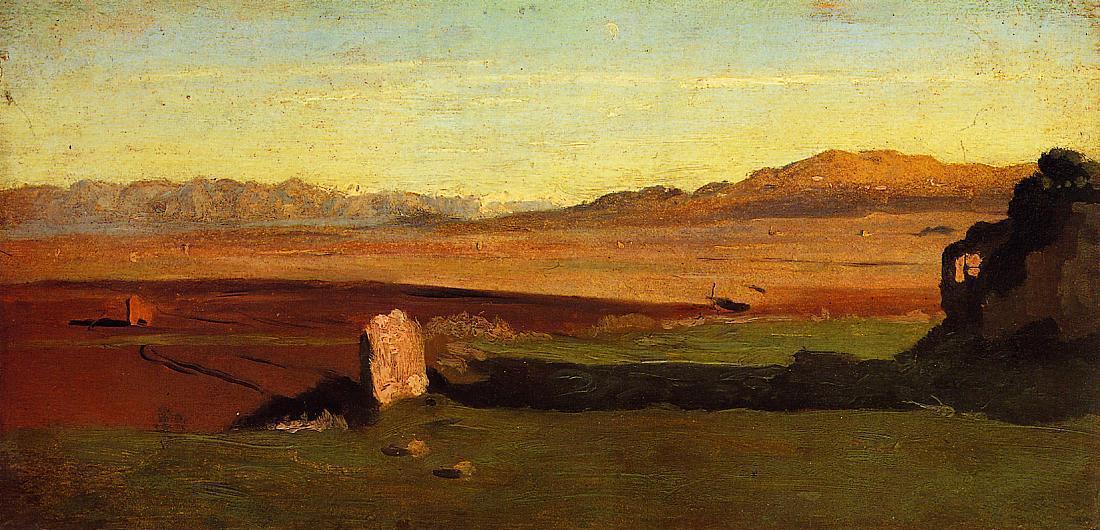
Jean-Baptiste-Camille Corot's *Roman Countryside*, painted circa 1830-1831, isn’t merely a depiction of a rural landscape; it’s an embodiment of the Romantic sensibility – a profound meditation on light, atmosphere, and the sublime power of nature. This painting, now meticulously recreated through hand-painted reproduction, offers a glimpse into a world where observation and feeling coalesce to create a truly evocative image. Corot, a pivotal figure in the transition from Neoclassicism to Impressionism, sought not to represent reality with photographic precision but rather to capture its fleeting essence – the way sunlight filters through foliage, the subtle shifts in color as clouds drift across the sky, and the quiet dignity of the natural world.
The Language of Light and Texture
Corot’s technique is characterized by a remarkable sensitivity to light. Notice how he employs broken brushstrokes – small, delicate dabs of paint rather than broad sweeps – to build up form and texture. This method, perfected through years of observation in the fields around L'Isle-Adam, allows him to render the ruggedness of the rocks, the softness of the vegetation, and the hazy distance with astonishing realism. The dominant palette is muted, dominated by earthy greens, browns, and greys, punctuated by subtle highlights that suggest the warmth of the sun. This restrained color scheme contributes significantly to the painting’s serene mood, inviting contemplation rather than demanding immediate attention.
A Scene of Quiet Contemplation
The composition itself is deceptively simple. The prominent boulder in the foreground immediately draws the viewer's eye, grounding the scene and providing a sense of scale. The two figures – likely laborers or shepherds – are integrated seamlessly into the landscape, adding a human element without disrupting the overall harmony. Their presence suggests a timelessness, an enduring connection between humanity and nature. Corot’s deliberate choice to depict this quiet moment, devoid of dramatic action, speaks volumes about his artistic philosophy: beauty lies not in grand gestures but in the subtle details of everyday life.
Symbolism and the Romantic Ideal
*Roman Countryside* resonates deeply with the Romantic movement's fascination with the unspoiled wilderness. The landscape represents a refuge from the burgeoning industrialization and social upheaval of 19th-century Europe. It embodies an idealized vision of rural life – a place of peace, simplicity, and spiritual connection. Corot’s work reflects a broader yearning for authenticity and a return to nature's restorative power. The painting isn’t just a beautiful image; it’s a powerful statement about the importance of preserving the natural world and finding solace in its enduring beauty.
Bringing *Roman Countryside* Home
ArtsDot offers meticulously hand-painted reproductions of this iconic Corot masterpiece, allowing you to experience its profound beauty firsthand. Each reproduction is created by skilled artisans using traditional oil painting techniques, ensuring that the texture, color depth, and overall atmosphere faithfully capture the spirit of the original. Whether for a grand salon or a cozy study, *Roman Countryside* will undoubtedly become a focal point, inspiring contemplation and adding a touch of timeless elegance to your space.
Ähnliche Kunstwerke
Über den Künstler
Frühe Jahre und Ausbildung
Jean-Baptiste-Camille Corot, ein renommierter französischer Landschafts- und Porträtmaler, wurde am 16. Juli 1796 in Paris geboren. Seine Familie, die zum Bürgertum gehörte, bot ihm eine Umgebung, die seine künstlerischen Neigungen förderte. Anfänglich lagen Corots Interessen woanders, doch er entdeckte um 1821 seine Leidenschaft für das Malen. Dies markierte den Beginn seiner produktiven Karriere, die später die Entwicklung des Impressionismus beeinflussen sollte.Künstlerische Laufbahn und bedeutende Werke
Corots künstlerischer Weg ist geprägt von einer Mischung aus neoklassischer Tradition und plein-air Innovationen. Er kombinierte sorgfältige Kompositionen mit der direkten Beobachtung der Natur im Freien, was zu einer einzigartigen Atmosphäre in seinen Werken führte. Zu seinen bemerkenswertesten Arbeiten zählen:- Die Ruhe (La Repose) (Öl auf Leinwand, ca. 1860er Jahre), ein fesselndes Werk, das Corots Meisterschaft in der Darstellung von Gelassenheit zeigt.
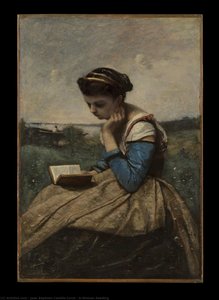
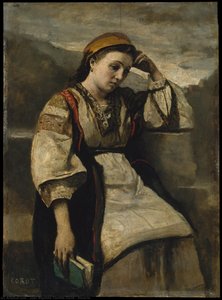
- Unterbrochenes Lesen (Lecture Interrompue) (Realismus, Öl, ca. 1850er Jahre), ein ergreifendes Beispiel für Corots Fähigkeit, den Alltag mit Tiefe und Emotion darzustellen.
- Agostina (Realismus, Öl, ca. 1860er Jahre), ein beeindruckendes Porträt, das Corots Geschicklichkeit in der Darstellung des Wesens seiner Motive veranschaulicht.
Einflüsse und Entwicklung
Corots künstlerische Entwicklung wurde von verschiedenen Einflüssen geprägt. Er studierte zunächst bei den neoklassizistischen Malern Jacques-Louis David und Jean-Antoine Houdon, was seine frühen Werke beeinflusste. Später fand er Inspiration in der Landschaftsmalerei des 17. Jahrhunderts, insbesondere bei Meistern wie Claude Lorrain und Nicolas Poussin. Corot entwickelte jedoch seinen eigenen Stil, indem er die klassische Komposition mit den direkten Beobachtungen der Natur im Freien verband. Er gilt als Brücke zwischen dem Klassizismus und dem Impressionismus. Seine Plein-Air-Malerei war revolutionär für seine Zeit und ebnete den Weg für zukünftige Generationen von Künstlern, darunter die Impressionisten.Vermächtnis und Bedeutung
Corots umfangreicher Output hatte einen nachhaltigen Einfluss auf die Entwicklung der Landschaftsmalerei. Sein innovativer Ansatz, traditionelle Techniken mit plein-air Innovationen zu verbinden, ebnete den Weg für zukünftige Generationen von Künstlern. Obwohl er zu Lebzeiten nicht immer Anerkennung fand, wurde Corot nach seinem Tod als einer der wichtigsten französischen Maler des 19. Jahrhunderts anerkannt. Seine Werke werden heute in bedeutenden Museen auf der ganzen Welt ausgestellt und seine Bedeutung für die Kunstgeschichte ist unbestreitbar. Entdecken Sie mehr über Jean-Baptiste-Camille Corots Gemälde auf ArtsDot.com: https://ArtsDot.com/@/jean-baptiste-camille-corot Erfahren Sie mehr über das Musée Courbet auf Wikipedia: https://en.wikipedia.org/wiki/mus%c3%a9e_courbet_(ornans,_france)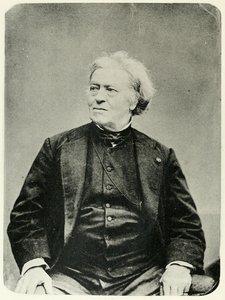
Jean-Baptiste-Camille Corot
1796 - 1875 , Frankreich
Kurzinfos
- Beeinflusste Künstler: ['Gustave Courbet']
- Bemerkenswerte Werke:
- Die Ruhe
- Unterbrochenes Lesen
- Agostina
- Geburtsdatum: 16. Juli 1796
- Geburtsort: Paris, Frankreich
- Künstlerische Richtung: Neoklassizismus, Pleinair
- Nationalität: Französisch
- Sterbedatum: 1875
- Vollständiger Name: Jean-Baptiste-Camille Corot
- Von Künstlern Beeinflusst: ['Keine Angaben']