 Vorschau anzeigen
 Versenden
 Teilen
 Details anzeigen

 Herunterladen
 Ähnliche Objekte
 Röntgenaufnahme
 Diashow
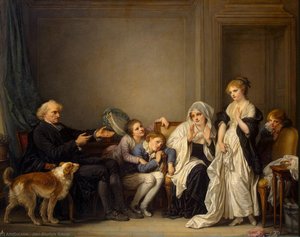
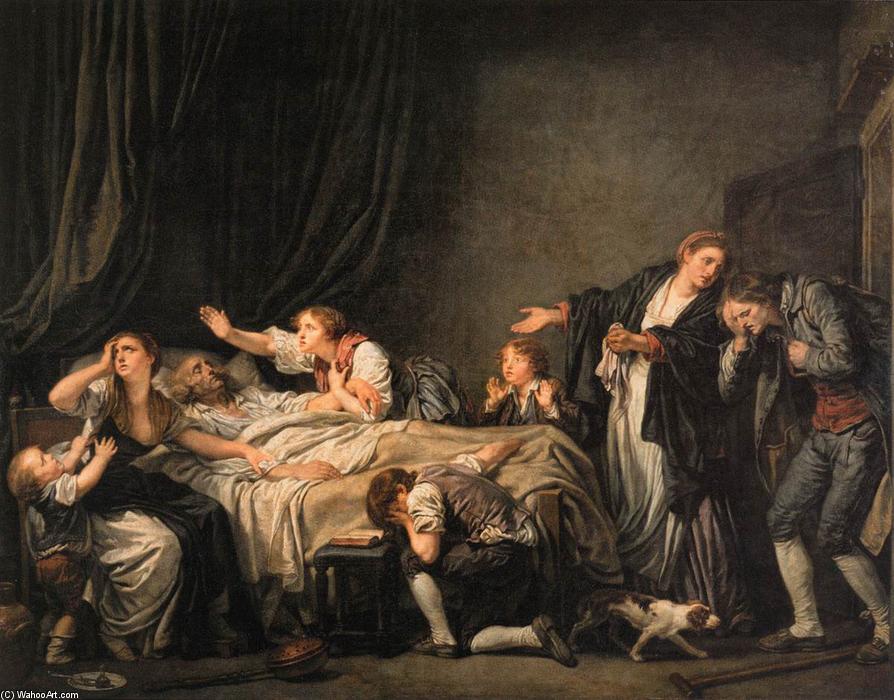
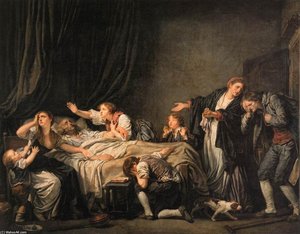
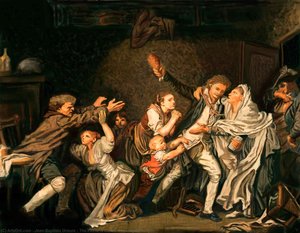
The Father's Curse: The Son Punished
 Acrylic On Canvas
- WallArt
- Rococo Sentimentality
 1777
1777 130.0 x 163.0 cm
 Louvre
 Weiterlesen
Handgefertigte Ölreproduktion
Handgemaltes Ölgemälde auf Leinwand in Ihrer Wunschgröße und mit Rahmen, auf Bestellung von unseren Künstlern angefertigt. ( Druck bestellen Bild kaufen)




P118B $10

P118H $10

P118W $10

P438Z $10

P508JH $12

P508YH $12

P805H $10

P805Z $10

P919BZ $10

P919G $10

P919XJ $10

P959ZH $10

P968JZ $12

W106C $8

W218G $10

W218JH $8

W218Y $10

W307PJ $10

W316G $10

W316PJ $8

W316Y $10

W398PJ $8

W4111J $10

W500HY $15

W500JH $15

W692G $12

W849H $8

W940BG $15

W953PJ $8




Wählen Sie aus unseren vordefinierten Formaten, die den ursprünglichen Proportionen des Kunstwerks entsprechen.

Sie können Ihre eigenen Maße eingeben, um einen bestimmten Rahmen oder Platz auszufüllen. Wenn die gewählte Größe nicht den Proportionen des Originalbildes entspricht, werden wir das Kunstwerk entweder beschneiden oder das Gemälde durch zusätzliche, handgemalte Elemente erweitern. Ein digitales Mockup wird Ihnen zur Genehmigung zugesandt, bevor die Produktion beginnt.
Bitte beachten Sie, dass die Bildschirmvorschau nicht die tatsächliche Beschneidung oder Erweiterung widerspiegelt. Nur das Mockup zeigt die endgültige Komposition exakt an.
Obwohl Sondermaße verfügbar sind, empfehlen wir, eine Größe aus der vordefinierten Liste zu wählen, um die ursprünglichen Proportionen beizubehalten.
Nach der Bestellung wird das ArtsDot.com-Team dem Kunden Anweisungen per E-Mail zusenden und eine Mockup-Vorschau bereitstellen.
Weltweiter Versand () in nur 3 bis 4 Wochen statt der üblichen 5 Wochen. (23 August). Keine Kompromisse bei der Qualität.

Kostenloser weltweiter Expressversand

Hochwertige Leinenleinwand

Umfassender Versicherungsschutz beim Versand

Zollgebühren-Rückerstattungsgarantie

Garantie für exakte Farbtreue

60 Tage Rückgaberecht (nur bei Mängeln)

100% Geld-zurück-Garantie

Mengenrabatt verfügbar
 Die Glasoption ist nur für Größen unter 110 cm verfügbar.

The Father's Curse: The Son Punished
Art der Reproduktion
Format der Reproduktion
-


Gesamtpreis
$ 263
Beschreibung des Kunstwerks
A Descent into Sorrow and Moral Judgment
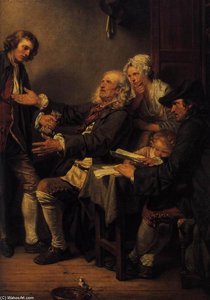
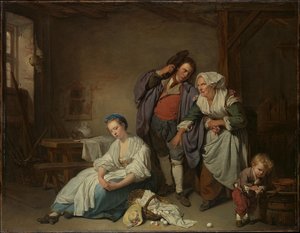
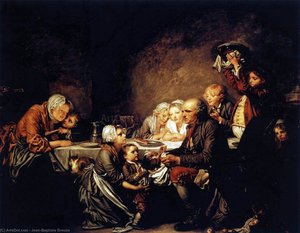
Jean-Baptiste Greuze's "The Father’s Curse: The Son Punished," painted in 1777, isn’t merely a depiction of a family scene; it’s a profound exploration of familial duty, transgression, and the weighty consequences of youthful rebellion. This oil on canvas, now residing within the hallowed halls of the Louvre, immediately draws the viewer into a tableau of palpable grief and simmering resentment. The composition is meticulously crafted – a frieze-like arrangement that unfolds with dramatic precision, mirroring the narrative’s emotional intensity. Greuze masterfully employs a muted palette dominated by somber browns, grays, and deep blues, creating an atmosphere thick with melancholy and foreboding. The figures are rendered with a remarkable degree of realism, yet imbued with an almost theatrical quality, as if caught in a moment frozen for eternity.
The Roots of Sentimentality and Moralizing Genre
Greuze, a pivotal figure in the transition from Rococo to Neoclassicism, carved out his unique niche within the burgeoning genre painting scene of 18th-century France. He wasn’t interested in grand historical narratives or mythological allegories; instead, he focused on capturing the raw emotions and moral dilemmas of everyday life – a trend known as “sentimentality.” “The Father’s Curse” exemplifies this approach perfectly. It's rooted in a biblical parable—the story of the prodigal son—but Greuze doesn’t simply retell it; he amplifies its emotional core, emphasizing the father’s anguish and the son’s profound regret. This focus on moral instruction was a hallmark of his work, reflecting the prevailing social values of the time, where art was often seen as a tool for shaping virtuous behavior.
A Study in Gesture and Dramatic Lighting
Greuze's technical skill is evident in every brushstroke. He utilizes dramatic chiaroscuro – the stark contrast between light and shadow – to heighten the emotional impact of the scene. The father, a towering figure consumed by grief, dominates the left side of the canvas, his outstretched hand conveying an overwhelming sense of condemnation. The son, hunched over and bearing the weight of his transgression, is rendered with a heartbreaking vulnerability. Notice how Greuze captures the subtle nuances of their gestures – the furrowed brows, the slumped shoulders, the averted gazes – each detail contributing to the overall narrative of despair and regret. The careful attention to anatomical accuracy, combined with an expressive use of color and light, elevates this painting beyond mere illustration; it’s a powerful work of art that speaks directly to the viewer's emotions.
Symbolism and the Weight of Inheritance
Beyond its immediate narrative, “The Father’s Curse” is rich in symbolic meaning. The setting – a dimly lit interior with a single window offering a glimpse of the outside world – suggests confinement and isolation. The dog lying at the bottom right corner could represent loyalty or perhaps even complicity in the family's discord. More profoundly, the painting explores the theme of inherited guilt and responsibility. The father’s curse isn’t simply a punishment for the son’s actions; it’s a legacy passed down through generations, a constant reminder of past transgressions. The image powerfully suggests that choices have consequences, and that familial bonds can be both a source of strength and a burden.
A Timeless Exploration of Human Emotion
“The Father’s Curse: The Son Punished” remains a compelling work of art centuries after its creation. Its exploration of universal themes – guilt, forgiveness, family loyalty, and the consequences of disobedience – continues to resonate with audiences today. Reproductions of this iconic painting offer a window into the emotional landscape of 18th-century France, while also serving as a poignant reminder of the enduring complexities of human relationships. It’s a testament to Greuze's ability to capture the raw essence of human experience and translate it onto canvas with remarkable skill and sensitivity.
Ähnliche Kunstwerke
Über den Künstler
Frühe Jahre und Ausbildung
Jean-Baptiste Greuze, ein französischer Maler, wurde am 21. August 1725 in Tournus, Burgund, geboren. Sein Vater, ein Dachdeckermeister, ermutigte seinen Sohn zunächst nicht zu künstlerischen Neigungen, aber schließlich förderte Grandon, ein lyonesischer Künstler, Greuze, seine Leidenschaft zu verfolgen. Im Jahr 1750 zog Greuze nach Paris, um unter Charles-Joseph Natoire an der Königlichen Akademie für Malerei und Bildhauerei zu studieren.Aufstieg zum Ruhm
Greuzes Durchbruch kam 1755 mit seinem Gemälde „Le Père de famille expliquant la bible à ses enfants“, das von einem wohlhabenden Kunstliebhaber, Ange-Laurent Lalive de Jully, erworben wurde. Dies führte zu Greuzes Anerkennung in der philosophischen und Kunstgemeinschaft. Er reiste daraufhin mit Abbé Gougenot nach Italien, wo er etwa ein Jahr verbrachte und seine zukünftigen Werke inspirierte.Künstlerischer Stil und bemerkenswerte Werke
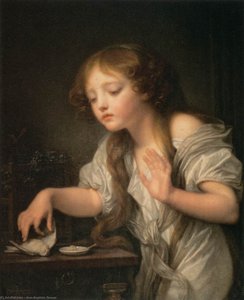
Greuzes Stil ist durch seinen Fokus auf Genreszenen gekennzeichnet, die das Wesen des täglichen Lebens einfangen. Einige bemerkenswerte Werke sind:- „A Girl with a Dead Canary“ (Scottish National Gallery, Edinburgh), das Greuzes Fähigkeit zeigt, Emotionen hervorzurufen.
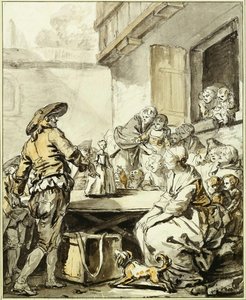
- „Savoyard with a Dancing Doll“ (Albertina, Wien), das seine Fähigkeit hervorhebt, den Geist seiner Sujets einzufangen.
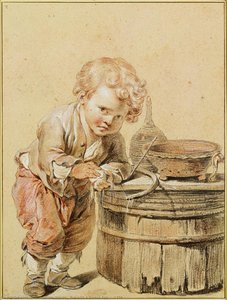
- „Boy with a Broken Egg“, um 1756 (Albertina, Wien), das Greuzes frühes Können in der Genresmalerei demonstriert.
Vermächtnis und spätere Jahre
Greuzes Erfolg gipfelte 1765 mit dreizehn Werken, die im Salon ausgestellt wurden, darunter „La jeune fille qui pleure son oiseau mort“, „La bonne mère“ und „Le mauvais fils puni“ (Louvre). Sein Versuch, in die historische Malerei überzugehen, wurde jedoch kritisiert. Greuze verstarb am 4. März 1805 im Louvre, nach einem Leben, das von sowohl künstlerischen Triumphen als auch finanziellen Schwierigkeiten geprägt war.Einflüsse und Entwicklung
Greuzes Werk zeigt Einflüsse der niederländischen Genresmalerei des 17. Jahrhunderts, insbesondere in seiner Darstellung alltäglicher Szenen und seinem Fokus auf Details. Er kombinierte Elemente des Rokoko-Stils mit realistischen Elementen, was zu einem einzigartigen Stil führte, der sowohl sentimental als auch moralisierend war. Seine frühen Werke wie „Boy with a Broken Egg“ zeigen bereits seine Fähigkeit, Emotionen durch subtile Gesichtsausdrücke und Gesten darzustellen. Im Laufe seiner Karriere versuchte Greuze sich auch historischen Themen zuzuwenden, was jedoch weniger erfolgreich war und von Kritik begleitet wurde. Trotzdem bleibt er als einer der bedeutendsten Vertreter der Genresmalerei des 18. Jahrhunderts in Frankreich anerkannt.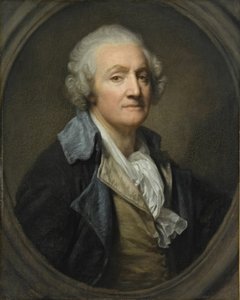
Jean-Baptiste Greuze
1725 - 1805 , Frankreich
Kurzinfos
- Bemerkenswerte Werke:
- Le Père de Famille expliquant la Bible
- A Girl with a Dead Canary
- Savoyard mit einer Tanzpuppe
- Boy with a Broken Egg
- Einflussreiche Künstler: ['Charles-Joseph Natoire']
- Geburtsdatum: 21. August 1725
- Geburtsort: Tournus, Frankreich
- Künstlerische Bewegung: Rokoko
- Nationalität: Französisch
- Sterbedatum: 4. März 1805
- Vollständiger Name: Jean-Baptiste Greuze
Ähnliche Artikel
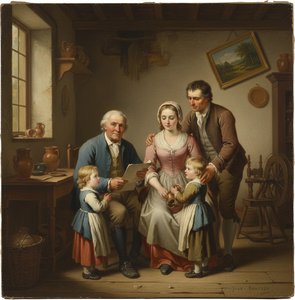
Jean-Baptiste Greuze: Moral, Gefühl und der Aufstieg der Genremalerei
Entdecken Sie das Werk von Jean-Baptiste Greuze – dem Meister der Genremalerei! Erfahren Sie mehr über seine moralischen Botschaften, den Einfluss der Aufklärung und sein bleibendes Vermächtnis in der Kunstgeschichte.
The Enduring Legacy of Family Portraiture: A Historical & Artistic Exploration
Explore the rich history of family portraiture with ArtsDot. Discover artistic styles, symbolism & collecting insights. Commission a custom oil painting or appraise your existing artwork today!
Entwicklung von Familienporträts: Personalisierte Kunst als Chronik des Lebens über Generationen hinweg
Entdecken Sie die faszinierende Welt der Familienporträts! Von historischen Meisterwerken bis zu personalisierten Auftragsgemälden – wir bieten Kunst für Generationen. Expertenberatung & höchste Qualität.

Depicting Kinship: Family Values Across Artistic Movements & Historical Contexts
Explore the rich history of depicting kinship in art! From Dutch Masters to contemporary artists, discover how family values have been represented across movements & time. Expert insights for collectors at ArtsDot.

Das Echo der Ahnen: Familienporträts im Laufe der Geschichte
Entdecken Sie die Geschichte der Familienporträts! Von Renaissance bis Moderne – fertigt hochwertige Reproduktionen & Auftragsgemälde an. Expertenberatung inklusive!