 Vorschau anzeigen
 Versenden
 Teilen
 Details anzeigen

 Herunterladen
 Ähnliche Objekte
 Röntgenaufnahme
 Diashow
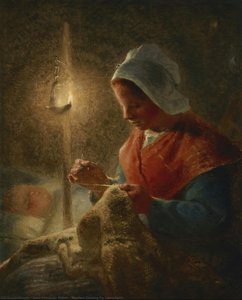
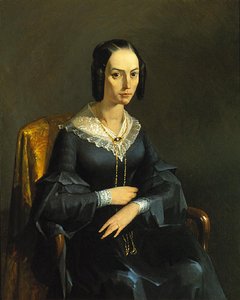
Madame Eugène Canoville


 Weiterlesen
Handgefertigte Ölreproduktion
Handgemaltes Ölgemälde auf Leinwand in Ihrer Wunschgröße und mit Rahmen, auf Bestellung von unseren Künstlern angefertigt. ( Druck bestellen Bild kaufen)




P118B $10

P118H $10

P118W $10

P438Z $10

P508JH $12

P508YH $12

P805H $10

P805Z $10

P919BZ $10

P919G $10

P919XJ $10

P959ZH $10

P968JZ $12

W106C $8

W218G $10

W218JH $8

W218Y $10

W307PJ $10

W316G $10

W316PJ $8

W316Y $10

W398PJ $8

W4111J $10

W500HY $15

W500JH $15

W692G $12

W849H $8

W940BG $15

W953PJ $8




Wählen Sie aus unseren vordefinierten Formaten, die den ursprünglichen Proportionen des Kunstwerks entsprechen.

Sie können Ihre eigenen Maße eingeben, um einen bestimmten Rahmen oder Platz auszufüllen. Wenn die gewählte Größe nicht den Proportionen des Originalbildes entspricht, werden wir das Kunstwerk entweder beschneiden oder das Gemälde durch zusätzliche, handgemalte Elemente erweitern. Ein digitales Mockup wird Ihnen zur Genehmigung zugesandt, bevor die Produktion beginnt.
Bitte beachten Sie, dass die Bildschirmvorschau nicht die tatsächliche Beschneidung oder Erweiterung widerspiegelt. Nur das Mockup zeigt die endgültige Komposition exakt an.
Obwohl Sondermaße verfügbar sind, empfehlen wir, eine Größe aus der vordefinierten Liste zu wählen, um die ursprünglichen Proportionen beizubehalten.
Nach der Bestellung wird das ArtsDot.com-Team dem Kunden Anweisungen per E-Mail zusenden und eine Mockup-Vorschau bereitstellen.
Weltweiter Versand () in nur 3 bis 4 Wochen statt der üblichen 5 Wochen. (28 August). Keine Kompromisse bei der Qualität.

Kostenloser weltweiter Expressversand

Hochwertige Leinenleinwand

Umfassender Versicherungsschutz beim Versand

Zollgebühren-Rückerstattungsgarantie

Garantie für exakte Farbtreue

60 Tage Rückgaberecht (nur bei Mängeln)

100% Geld-zurück-Garantie

Mengenrabatt verfügbar
 Die Glasoption ist nur für Größen unter 110 cm verfügbar.

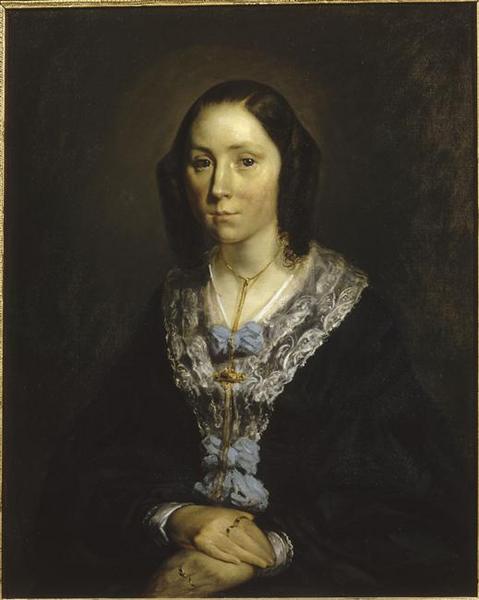
Madame Eugène Canoville
Art der Reproduktion
Format der Reproduktion
-


Gesamtpreis
$ 263
A Portrait Steeped in Rural Dignity
In the quiet, commanding presence of Jean-François Millet’s Madame Eugène Canoville, one finds much more than a mere formal depiction of a wealthy Parisian socialite. This masterpiece serves as a profound testament to the enduring spirit of rural France and stands as a pivotal achievement within the Realist movement. Painted during the transformative years between 1867 and 1870, the portrait transcends its subject matter to convey a deeper, more universal message about human dignity and our intrinsic connection to the natural world. Millet, an artist whose soul was deeply rooted in the agricultural rhythms of Normandy, brings a unique gravity to this work, capturing a sense of truthfulness that avoids the pitfalls of sentimentality.
The composition is masterfully balanced, with the central figure dominating the canvas. Positioned squarely within the frame, Madame Canoville sits with her hands gracefully resting in her lap—a gesture that suggests a moment of quiet contemplation and inner peace. Her gaze, slightly averted from the viewer, invites us into her private world of reflection rather than demanding attention through outward vanity. The background, a dark and muted brown, acts as a somber anchor for the image, creating a sense of immense depth and ensuring that the luminosity of the subject’s skin and the intricate details of her attire remain the focal point of the viewer's experience.
Mastery of Realism and Technique
Millet adheres rigorously to the tenets of Realism, rejecting the idealized flourishes of Romanticism in favor of meticulous observation. His technique is a triumph of oil painting, characterized by subtle blending and sophisticated layering that echoes the grandeur of Baroque portraiture while embracing the raw honesty of his era. Every brushstroke serves a purpose; notice how the artist painstakingly renders the heavy folds of the dark fabric and the delicate, translucent sheen of the subject's skin. This dedication to textural detail creates a tactile quality that makes the painting feel alive, as if one could reach out and feel the weight of the silk or the softness of the lace.
The lighting within the piece is soft and diffused, appearing to emanate from an unseen source above and slightly to the side. This gentle illumination casts subtle shadows across the contours of Madame Canoville’s face and clothing, enhancing the three-dimensionality of the portrait and imbuing it with a lifelike presence. Through this careful manipulation of light and shadow, Millet achieves an atmospheric perspective that draws the eye inward, making the dark, receding background feel like a vast, silent space surrounding the subject.
Historical Resonance and Emotional Impact
To understand this portrait is to understand the tension of 19th-century France. Emerging during the Second Industrial Revolution, a period of significant social upheaval and urban expansion, the painting subtly bridges the gap between two worlds. By portraying a member of the upper class with the same grounded, unpretentious dignity that he famously bestowed upon his peasant subjects, Millet suggests that true nobility is found in character rather than circumstance. There is a profound, quiet power in this work—a sense that beauty and strength are universal, regardless of one's station in life.
For the discerning collector or interior designer, Madame Eugène Canoville offers an unparalleled sense of timelessness and refined elegance. The subtle symbolism of her jewelry—the delicate necklace and rings—hints at her social status, yet these elements never overshadow the painting's core emotional resonance: a sense of composure, grace, and enduring strength. Whether placed in a grand gallery or a sophisticated private study, this reproduction brings with it an aura of historical depth and a quiet, commanding beauty that continues to inspire awe more than a century after its creation.
Ähnliche Kunstwerke



Über den Künstler
frühes Leben und Ausbildung
Jean-François Millet, geboren am 4. Oktober 1814 in der Normandie, Frankreich, etablierte sich als eine Schlüsselgestalt der Barbizon-Schule und war ein Verfechter des Realismus. Er wuchs in einer Bauerngemeinschaft auf, und sein frühes Leben war von ländlichen Erfahrungen geprägt, die seine künstlerischen Themen maßgeblich beeinflussten.Künstlerische Reise
Millets formale Kunstausbildung begann 1833 unter der Anleitung des Porträtmalers Bon du Mouchel in Cherbourg. Später studierte er bei Théophile Langlois de Chèvreville, einem Schüler von Baron Gros. Mit einer Stipendiumunterstützung zog er 1837 nach Paris, um an der École des Beaux-Arts zu studieren und unter Paul Delaroche zu lernen. Seine Reise war jedoch nicht ohne Rückschläge; 1839 verlor er sein Stipendium und wurde von der Salon-Ausstellung abgelehnt.Bekannte Werke und Realismusbewegung
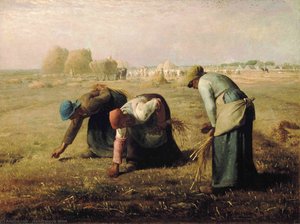
Millets künstlerische Reise spiegelt seine tiefe Verbindung zu seinen ländlichen Wurzeln und seine Hingabe wider, das Leben der Bauern mit Würde und Realismus darzustellen. Zu seinen bekanntesten Werken gehören:- Die Ernte (1855), eine eindringliche Darstellung von Bauernernnten, die Millets Meisterschaft des Realismus demonstriert.
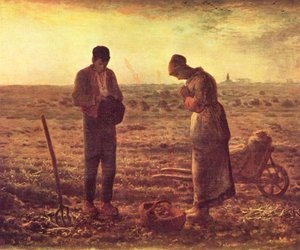
- Das Angelus (1850-1861), eine Reihe von Gemälden, die die täglichen Kämpfe des ländlichen Lebens hervorheben.
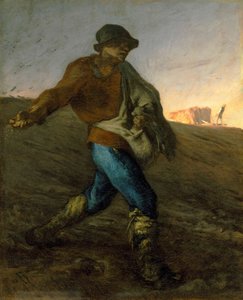
- Der Sämaschine (1850), eine ikonische Darstellung der Schwierigkeiten, mit denen Bauern konfrontiert sind, und die heute im Musée d'Orsay in Paris ausgestellt ist.
Vermächtnis und Einfluss
Millets Vermächtnis als Begründer der Barbizon-Schule macht ihn zu einer zentralen Figur bei der Übergangsbewegung zum Realismus in der Kunst. Sein Einfluss ist in den Werken nachfolgender Künstler wie Correa Benito Rebolledo erkennbar, die die Grenzen des Realismus weiter verschoben haben. Erfahren Sie mehr über Millets Werke und die Realismusbewegung auf ArtsDot: Jean François Millet der Ältere | ArtsDot Die Nouvelle Réalisme Kunstbewegung | ArtsDot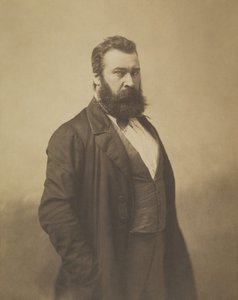
Jean-François Millet
1814 - 1875 , Frankreich
Kurzinfos
- Artistic Movement Or Style: Realismus, Barbizon-Schule
- Artists Or Movements Influenced By This Artist: ['Correa Benito Rebolledo']
- Artists Who Influenced This Artist:
- Bon du Mouchel
- Théophile Langlois
- Paul Delaroche
- Date Of Birth: 4. Oktober 1814
- Date Of Death: 1875
- Full Name: Jean-François Millet
- Nationality: Französisch
- Notable Artworks:
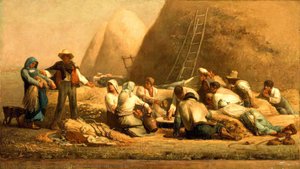
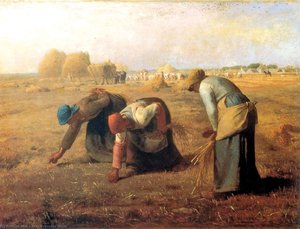
- Die Erntehelfer
- Das Angelus
- Der Sämann
- Place Of Birth (City And Country): Gruchy, Frankreich
Ähnliche Artikel

Romantic Realism's Finest: 10 Masterpieces for Your Home | ArtsDot
Explore 10 defining masterpieces of Romantic Realism! Discover Courbet, Millet & Daumier's powerful paintings—capturing emotion and social realities. Find museum-quality reproductions for your home at ArtsDot.com.
Charles Le Brun: Master of French Baroque Classicism & His Enduring Legacy
Explore the life & art of Charles Le Brun, master of French Baroque Classicism. Discover his royal commissions, influence on Versailles, and enduring legacy through detailed analysis & stunning artworks.

Simon Vouet: Vom italienischen Barock zum französischen Klassizismus – Eine künstlerische Reise
Entdecken Sie das Leben und Werk von Simon Vouet, dem Pionier des italienischen Barock in Frankreich! Erfahren Sie mehr über seinen künstlerischen Werdegang, seine wichtigsten Gemälde und seinen nachhaltigen Einfluss auf die französische Malerei. Jetzt lesen!

Baroque Classicism: Reconciling Drama & Order in 17th-Century Art
Explore the captivating world of Baroque Classicism! Discover its history, key artists like Caravaggio & Rubens, and defining characteristics. Expert insights & high-quality reproductions at ArtsDot.
The Poetic Truth of Observation: Exploring 19th-Century Realism in Painting
Explore the captivating world of 19th-century Realism! Discover key artists like Courbet & Millet, masterpieces, and the powerful social commentary behind this influential art movement. Expert insights at ArtsDot.