 Vorschau anzeigen
 Versenden
 Teilen
 Details anzeigen

 Herunterladen
 Ähnliche Objekte
 Röntgenaufnahme
 Diashow
Portrait of Emily

 Weiterlesen
Handgefertigte Ölreproduktion
Handgemaltes Ölgemälde auf Leinwand in Ihrer Wunschgröße und mit Rahmen, auf Bestellung von unseren Künstlern angefertigt. ( Druck bestellen Bild kaufen)




P118B $10

P118H $10

P118W $10

P438Z $10

P508JH $12

P508YH $12

P805H $10

P805Z $10

P919BZ $10

P919G $10

P919XJ $10

P959ZH $10

P968JZ $12

W106C $8

W218G $10

W218JH $8

W218Y $10

W307PJ $10

W316G $10

W316PJ $8

W316Y $10

W398PJ $8

W4111J $10

W500HY $15

W500JH $15

W692G $12

W849H $8

W940BG $15

W953PJ $8




Wählen Sie aus unseren vordefinierten Formaten, die den ursprünglichen Proportionen des Kunstwerks entsprechen.

Sie können Ihre eigenen Maße eingeben, um einen bestimmten Rahmen oder Platz auszufüllen. Wenn die gewählte Größe nicht den Proportionen des Originalbildes entspricht, werden wir das Kunstwerk entweder beschneiden oder das Gemälde durch zusätzliche, handgemalte Elemente erweitern. Ein digitales Mockup wird Ihnen zur Genehmigung zugesandt, bevor die Produktion beginnt.
Bitte beachten Sie, dass die Bildschirmvorschau nicht die tatsächliche Beschneidung oder Erweiterung widerspiegelt. Nur das Mockup zeigt die endgültige Komposition exakt an.
Obwohl Sondermaße verfügbar sind, empfehlen wir, eine Größe aus der vordefinierten Liste zu wählen, um die ursprünglichen Proportionen beizubehalten.
Nach der Bestellung wird das ArtsDot.com-Team dem Kunden Anweisungen per E-Mail zusenden und eine Mockup-Vorschau bereitstellen.
Weltweiter Versand () in nur 3 bis 4 Wochen statt der üblichen 5 Wochen. (27 August). Keine Kompromisse bei der Qualität.

Kostenloser weltweiter Expressversand

Hochwertige Leinenleinwand

Umfassender Versicherungsschutz beim Versand

Zollgebühren-Rückerstattungsgarantie

Garantie für exakte Farbtreue

60 Tage Rückgaberecht (nur bei Mängeln)

100% Geld-zurück-Garantie

Mengenrabatt verfügbar
 Die Glasoption ist nur für Größen unter 110 cm verfügbar.

Portrait of Emily
Art der Reproduktion
Format der Reproduktion
-


Gesamtpreis
$ 263
Beschreibung des Kunstwerks
The Weight of Labor and a Glimpse of the Soul
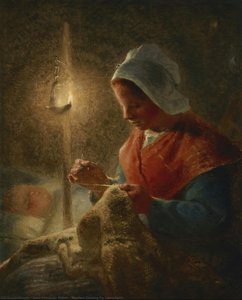
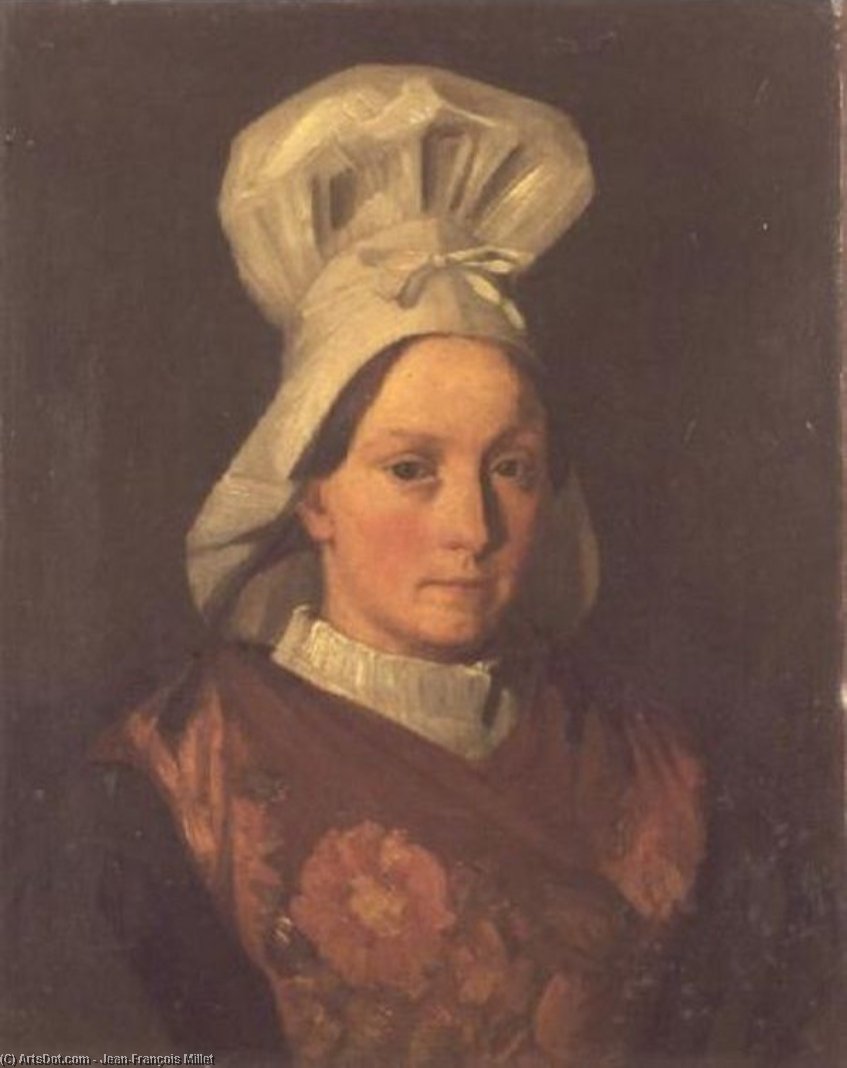
Jean-François Millet’s “Portrait of Emily” (a work often associated with, though not definitively confirmed as, a portrait of his sister) is more than just a depiction of a woman in an apron; it's a profound meditation on rural life, dignity, and the quiet strength found within the commonplace. Painted between 1841 and 1845, during Millet’s formative years grappling with the burgeoning Realist movement in France, this oil painting captures a moment of intense focus – Emily’s gaze fixed directly upon the viewer, conveying an almost unsettling directness. The scene unfolds within a modestly furnished interior, suggesting a domestic space dedicated to essential tasks. The presence of the bowl hints at recent labor, perhaps the preparation or completion of a meal, grounding the portrait in the rhythms of daily life.
(Image: Portrait of the artist's sister, Emily, c.1841-45 - Jean-Francois Millet)
A Realist Vision Rooted in the Soil
Millet’s artistic journey was inextricably linked to his upbringing in Gruchy, a small Norman village where he witnessed firsthand the arduous realities of peasant life. Unlike many artists of his time who sought inspiration in grand historical narratives or idealized landscapes, Millet chose to depict the lives of ordinary people – farmers, laborers, and their families – with unflinching honesty. This commitment to realism was revolutionary at the time, challenging the prevailing artistic conventions that prioritized beauty and elegance over social commentary. The painting’s muted palette—earthy browns, ochres, and greys—mirrors the landscape Millet knew so intimately, creating a sense of authenticity and immediacy. The brushwork is deliberately rough and textured, reflecting the physicality of labor and conveying a feeling of unvarnished truth.
Further research reveals that Millet’s work was often met with skepticism by the Parisian art establishment, who found his subjects – particularly their perceived “ugliness” – distasteful. Critics questioned his motives, accusing him of exploiting the poor for artistic gain. However, Millet remained steadfast in his commitment to portraying the dignity and resilience of rural communities, a stance that ultimately cemented his place as a pivotal figure in the Realist movement.
Symbolism and the Language of Labor
Beyond its straightforward depiction of a woman at work, “Portrait of Emily” is rich with symbolic meaning. The stern expression on her face suggests a quiet determination and perhaps even a hint of weariness – the accumulated weight of daily toil. The chef’s hat isn't merely an identifier; it represents a specific role within the agricultural cycle, highlighting the interconnectedness of labor and sustenance. The bowl is not just a vessel for food but also a symbol of provision and care. Even the positioning of the figures—Emily centered, with the other individuals subtly placed in the periphery—contributes to the painting’s overall composition, drawing our attention to her central role within this domestic scene.
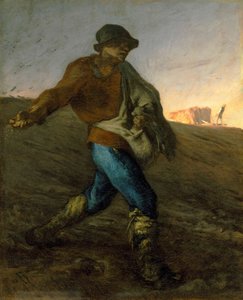
Interestingly, Millet's own “The Sower” (1850), a work depicting a peasant sowing seeds, shares many of the same compositional elements and thematic concerns. Both paintings explore the dignity of manual labor and the connection between humanity and the land, offering a poignant commentary on the social realities of 19th-century France.
A Legacy of Dignity and Authenticity
“Portrait of Emily” stands as a testament to Jean-François Millet’s artistic vision – a powerful reminder that beauty can be found in the simplest of subjects, and that art has the potential to illuminate the lives of those often overlooked. Reproductions of this evocative painting offer a unique opportunity to bring Millet's profound insights into your home or office, serving as a constant source of contemplation on themes of labor, dignity, and the enduring spirit of rural life. ArtsDot offers meticulously crafted hand-painted reproductions that capture the essence of this iconic work, ensuring its legacy continues to resonate for generations to come.
Ähnliche Kunstwerke
Über den Künstler
frühes Leben und Ausbildung
Jean-François Millet, geboren am 4. Oktober 1814 in der Normandie, Frankreich, etablierte sich als eine Schlüsselgestalt der Barbizon-Schule und war ein Verfechter des Realismus. Er wuchs in einer Bauerngemeinschaft auf, und sein frühes Leben war von ländlichen Erfahrungen geprägt, die seine künstlerischen Themen maßgeblich beeinflussten.Künstlerische Reise
Millets formale Kunstausbildung begann 1833 unter der Anleitung des Porträtmalers Bon du Mouchel in Cherbourg. Später studierte er bei Théophile Langlois de Chèvreville, einem Schüler von Baron Gros. Mit einer Stipendiumunterstützung zog er 1837 nach Paris, um an der École des Beaux-Arts zu studieren und unter Paul Delaroche zu lernen. Seine Reise war jedoch nicht ohne Rückschläge; 1839 verlor er sein Stipendium und wurde von der Salon-Ausstellung abgelehnt.Bekannte Werke und Realismusbewegung
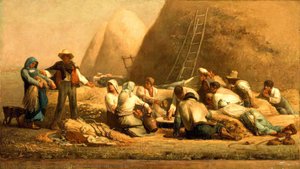
Millets künstlerische Reise spiegelt seine tiefe Verbindung zu seinen ländlichen Wurzeln und seine Hingabe wider, das Leben der Bauern mit Würde und Realismus darzustellen. Zu seinen bekanntesten Werken gehören:- Die Ernte (1855), eine eindringliche Darstellung von Bauernernnten, die Millets Meisterschaft des Realismus demonstriert.
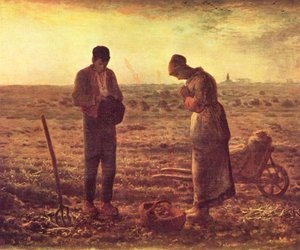
- Das Angelus (1850-1861), eine Reihe von Gemälden, die die täglichen Kämpfe des ländlichen Lebens hervorheben.
- Der Sämaschine (1850), eine ikonische Darstellung der Schwierigkeiten, mit denen Bauern konfrontiert sind, und die heute im Musée d'Orsay in Paris ausgestellt ist.
Vermächtnis und Einfluss
Millets Vermächtnis als Begründer der Barbizon-Schule macht ihn zu einer zentralen Figur bei der Übergangsbewegung zum Realismus in der Kunst. Sein Einfluss ist in den Werken nachfolgender Künstler wie Correa Benito Rebolledo erkennbar, die die Grenzen des Realismus weiter verschoben haben. Erfahren Sie mehr über Millets Werke und die Realismusbewegung auf ArtsDot: Jean François Millet der Ältere | ArtsDot Die Nouvelle Réalisme Kunstbewegung | ArtsDot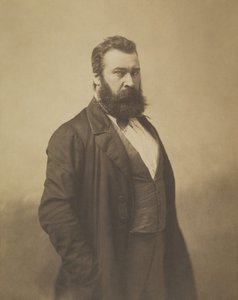
Jean-François Millet
1814 - 1875 , Frankreich
Kurzinfos
- Artistic Movement Or Style: Realismus, Barbizon-Schule
- Artists Or Movements Influenced By This Artist: ['Correa Benito Rebolledo']
- Artists Who Influenced This Artist:
- Bon du Mouchel
- Théophile Langlois
- Paul Delaroche
- Date Of Birth: 4. Oktober 1814
- Date Of Death: 1875
- Full Name: Jean-François Millet
- Nationality: Französisch
- Notable Artworks:
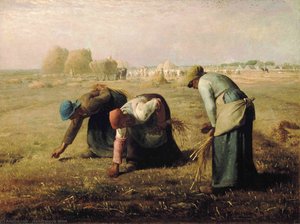
- Die Erntehelfer
- Das Angelus
- Der Sämann
- Place Of Birth (City And Country): Gruchy, Frankreich
Ähnliche Artikel
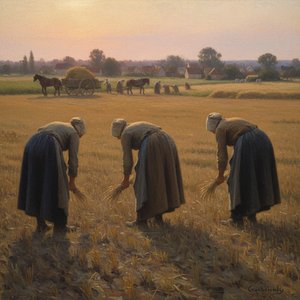
Jean-François Millet: Realismus, ländliche Poesie und die Würde der Arbeit
Entdecken Sie das Werk von Jean-François Millet! Erfahren Sie mehr über den Realismus, seine bahnbrechende Darstellung des bäuerlichen Lebens und seinen Einfluss auf die Kunstgeschichte. Jetzt bei ArtsDot!
Romantic Realism's Finest: 10 Masterpieces for Your Home | ArtsDot
Explore 10 defining masterpieces of Romantic Realism! Discover Courbet, Millet & Daumier's powerful paintings—capturing emotion and social realities. Find museum-quality reproductions for your home at ArtsDot.com.
Echoes of Rural Life: Nostalgia, Labor & Identity in Art History
Explore the rich history of rural life in art! Discover how Realism captured labor & identity through masterpieces by Van Gogh, Millet & more. Expert analysis for collectors and enthusiasts.
Realismus in der Kunst: Die 10 Meisterwerke, die eine Ära prägten |
Entdecken Sie die 10 Meisterwerke des Realismus! Courbet, Millet & Daumier prägten eine Ära. Erfahren Sie die Geschichten hinter ikonischen Gemälden und finden Sie hochwertige Art Reproduktionen für Ihr Zuhause auf
Cultivating Visions: Rural Life & Social Commentary in Art History
Explore the rich history of rural life in art! Discover masterpieces from Dutch Masters to Van Gogh & Courbet. Uncover artistic movements, social significance & expert collecting insights at ArtsDot.