 Vorschau anzeigen
 Versenden
 Teilen
 Details anzeigen

 Herunterladen
 Ähnliche Objekte
 Röntgenaufnahme
 Diashow
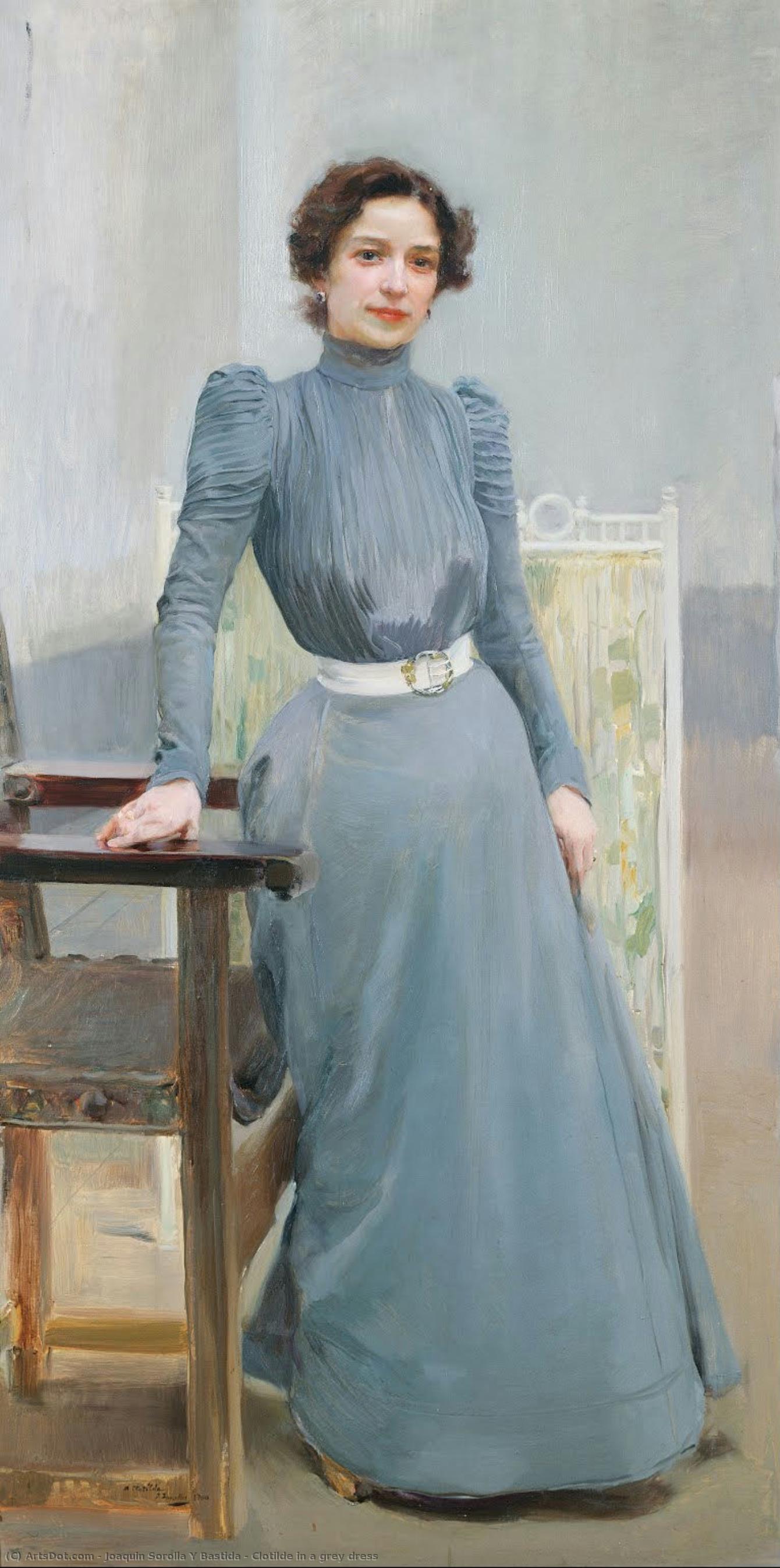
Clotilde in a grey dress


 Weiterlesen
Handgefertigte Ölreproduktion
Handgemaltes Ölgemälde auf Leinwand in Ihrer Wunschgröße und mit Rahmen, auf Bestellung von unseren Künstlern angefertigt. ( Druck bestellen Bild kaufen)




P118B $10

P118H $10

P118W $10

P438Z $10

P508JH $12

P508YH $12

P805H $10

P805Z $10

P919BZ $10

P919G $10

P919XJ $10

P959ZH $10

P968JZ $12

W106C $8

W218G $10

W218JH $8

W218Y $10

W307PJ $10

W316G $10

W316PJ $8

W316Y $10

W398PJ $8

W4111J $10

W500HY $15

W500JH $15

W692G $12

W849H $8

W940BG $15

W953PJ $8




Wählen Sie aus unseren vordefinierten Formaten, die den ursprünglichen Proportionen des Kunstwerks entsprechen.

Sie können Ihre eigenen Maße eingeben, um einen bestimmten Rahmen oder Platz auszufüllen. Wenn die gewählte Größe nicht den Proportionen des Originalbildes entspricht, werden wir das Kunstwerk entweder beschneiden oder das Gemälde durch zusätzliche, handgemalte Elemente erweitern. Ein digitales Mockup wird Ihnen zur Genehmigung zugesandt, bevor die Produktion beginnt.
Bitte beachten Sie, dass die Bildschirmvorschau nicht die tatsächliche Beschneidung oder Erweiterung widerspiegelt. Nur das Mockup zeigt die endgültige Komposition exakt an.
Obwohl Sondermaße verfügbar sind, empfehlen wir, eine Größe aus der vordefinierten Liste zu wählen, um die ursprünglichen Proportionen beizubehalten.
Nach der Bestellung wird das ArtsDot.com-Team dem Kunden Anweisungen per E-Mail zusenden und eine Mockup-Vorschau bereitstellen.
Weltweiter Versand () in nur 3 bis 4 Wochen statt der üblichen 5 Wochen. (22 August). Keine Kompromisse bei der Qualität.

Kostenloser weltweiter Expressversand

Hochwertige Leinenleinwand

Umfassender Versicherungsschutz beim Versand

Zollgebühren-Rückerstattungsgarantie

Garantie für exakte Farbtreue

60 Tage Rückgaberecht (nur bei Mängeln)

100% Geld-zurück-Garantie

Mengenrabatt verfügbar
 Die Glasoption ist nur für Größen unter 110 cm verfügbar.

Clotilde in a grey dress
Art der Reproduktion
Format der Reproduktion
-


Gesamtpreis
$ 263
Beschreibung des Kunstwerks
Joaquin Sorolla y Bastida: Capturing Sunlight’s Embrace
Joaquin Sorolla y Bastida (1863 – 1923) stands as one of Spain's most luminous figures in the Impressionist movement, a painter who achieved unparalleled renown for his ability to translate the vibrant essence of Mediterranean life onto canvas. More than simply depicting landscapes or portraits; Sorolla sought to embody the very spirit of his era—a time marked by optimism and fascination with scientific advancements, particularly microscopy. His work is instantly recognizable for its characteristic use of light – a technique he honed relentlessly throughout his prolific career, transforming ordinary scenes into shimmering visions of beauty. This dedication to capturing the fleeting brilliance of sunlight distinguishes Sorolla from many of his contemporaries and cemented his place as an icon of Spanish artistic heritage.- Subject Matter: Sorolla’s oeuvre is remarkably diverse, encompassing landscapes—particularly coastal vistas bathed in golden light—portraits of individuals—often depicting family members—and monumental canvases celebrating historical events. However, he consistently prioritized scenes that conveyed a sense of immediacy and spontaneity, reflecting the artist's belief in portraying life as it unfolded.
- Style: Sorolla’s style is undeniably Impressionistic, albeit infused with a distinctly Spanish sensibility. He eschewed academic conventions, favoring loose brushstrokes and vibrant color palettes to convey atmosphere and emotion rather than precise representation. His canvases pulsate with energy, capturing the dynamism of movement and the subtle nuances of light and shadow.
- Technique: Sorolla’s mastery lay in his innovative use of glazing—a layering technique that allowed him to achieve remarkable luminosity and depth. He meticulously applied thin washes of color over subsequent layers, building up tonal variations and creating an illusion of shimmering surface texture. This painstaking process demanded considerable patience and precision, resulting in paintings that possess a breathtaking quality of realism combined with ethereal beauty.
“Clotilde in a Grey Dress”: A Portrait Steeped in Tranquility
“Clotilde in a Grey Dress,” completed in 1900, exemplifies Sorolla’s signature style and represents one of his most beloved works. The painting portrays Mariana de Pontejos—Sorolla's wife—seated gracefully on a chair against a backdrop of a partially visible wall and drapery. Sorolla skillfully captures her serene expression and understated elegance, conveying a palpable sense of calm and contentment. Notably, the composition mirrors that of a studio photograph taken by Antonio García del Castillo—Mariana’s father—demonstrating Sorolla's keen observation of his surroundings and his desire to capture authentic human emotion.- Composition: The central figure dominates the vertical space of the canvas, emphasizing her presence and conveying a feeling of dignified repose. Sorolla employs subtle perspective techniques to create depth, subtly blurring the background elements—a chair and drapery—to draw attention to Mariana’s face.
- Color Palette: Sorolla utilizes a muted palette dominated by blues and grays—reflecting the diffused light characteristic of coastal landscapes—creating an atmosphere of tranquility and sophistication. The delicate shades of mauve and light brown contribute to the overall tonal harmony, enhancing the painting's visual impact.
- Symbolism: Beyond its aesthetic beauty, “Clotilde in a Grey Dress” speaks to Sorolla’s fascination with capturing the everyday moments of domestic life—a theme recurrent throughout his artistic output. The pose itself embodies grace and composure, reflecting Sorolla’s idealized vision of feminine beauty and conveying a profound appreciation for familial bonds.
Legacy and Influence
Joaquin Sorolla's influence extends far beyond the confines of the Spanish Impressionist movement. His pioneering use of glazing and his unwavering commitment to capturing natural light established him as a pivotal figure in artistic innovation. Artists across Europe admired Sorolla’s technique and sought inspiration from his luminous canvases—a testament to his enduring legacy as one of Spain's greatest painters. Today, reproductions of “Clotilde in a Grey Dress” continue to captivate audiences worldwide, serving as reminders of Sorolla’s unparalleled ability to transform ordinary scenes into extraordinary expressions of beauty and emotion. His work remains an emblem of Spanish artistic excellence and continues to inspire artists and collectors alike.Ähnliche Kunstwerke
Über den Künstler
Frühes Leben und Ausbildung
Joaquín Sorolla y Bastida, ein renommierter spanischer Maler, wurde am 27. Februar 1863 in Valencia, Spanien, geboren. Er war der älteste Sohn von Joaquín Sorolla, einem Kaufmann, und Concepción Bastida. Nach dem frühen Verlust seiner Eltern im Alter von zwei Jahren wuchs er bei seiner Tante und ihrem Ehemann auf. Seine künstlerische Reise begann in seiner Heimatstadt, wo er bereits mit neun Jahren eine erste Kunstausbildung erhielt. Später studierte er unter der Leitung von Cayetano Capuz, Salustiano Asenjo und José Benlliure in Rom. Ein viereinhalbjähriges Stipendium ermöglichte ihm ein Studium des Malens in Rom, Italien, wo er stark von Francisco Pradilla beeinflusst wurde.Künstlerische Entwicklung und Stil
Sorollas Werk zeichnet sich durch einen einzigartigen Realismus aus, der Elemente des Impressionismus aufgreift. Er war bekannt für seine Fähigkeit, Licht und Farbe meisterhaft einzusetzen, um lebendige und atmosphärische Szenen zu schaffen. Seine frühen Werke zeigten Einflüsse des etablierten spanischen Malstils, während er später seinen eigenen unverwechselbaren Stil entwickelte, der sich durch eine lockere Pinselführung und eine strahlende Farbpalette auszeichnete. Er bevorzugte das Malen im Freien (plein air), um die natürlichen Lichtverhältnisse optimal zu nutzen. Sein Fokus lag oft auf Alltagsszenen, Porträts und insbesondere Strandbildern, die er mit großer Detailtreue und Lebendigkeit festhielt.Wichtige Werke und Errungenschaften
Sorolla schuf eine beeindruckende Anzahl von Werken, die seine künstlerische Meisterschaft demonstrieren. Zu seinen bekanntesten Gemälden gehören:- Italienisches Mädchen mit Blumen (Öl auf Leinwand), das Sorollas Fähigkeit zeigt, die Essenz seiner Motive einzufangen.
- Badezeit (Realismus, Öl), ein Beispiel für seine Balance aus Licht und Farbe.
- Der Sklavenhandel (Sorolla Museum, Madrid, Spanien, Öl auf Leinwand), ein seltenes Beispiel für sozialrealistische Kunst in Sorollas Werk.
Einfluss und Vermächtnis
Joaquín Sorolla gilt als einer der bedeutendsten spanischen Maler des 19. und frühen 20. Jahrhunderts. Sein Werk trug maßgeblich zur Entwicklung des spanischen Realismus und Impressionismus bei. Seine Fähigkeit, das Licht der mediterranen Sonne einzufangen und in seinen Gemälden wiederzugeben, machte ihn zu einem international gefeierten Künstler. Sorolla beeinflusste zahlreiche nachfolgende Maler und seine Werke werden heute in renommierten Museen auf der ganzen Welt ausgestellt. Das Sorolla Museum in Madrid, das sein ehemaliges Haus und Atelier beherbergt, ist ein zentraler Ort für die Bewahrung und Präsentation seines Werkes. Sein Vermächtnis lebt fort als Inspiration für Künstler und Kunstliebhaber gleichermaßen.Spätere Jahre und Tod
Obwohl Sorolla im Alter von 60 Jahren am 23. August 1923 in Cercedilla, Spanien, verstarb, hinterließ er ein beeindruckendes Œuvre und einen bleibenden Eindruck in der Kunstgeschichte. Seine Werke werden bis heute für ihre Lebendigkeit, Detailtreue und die meisterhafte Darstellung des Lichts geschätzt.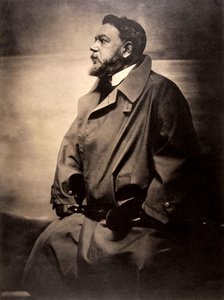
Joaquín Sorolla y Bastida
1863 - 1923 , Spanien
Kurzinfos
- Bemerkenswerte Werke:
- Italienisches Mädchen mit Blumen
- Badezeit (Realismus)
- Der weiße Sklavenhandel
- Strand bei Biarritz
- Das Gelbe Rosenbusch
- Einflussreiche Künstler: ['Francisco Pradilla']
- Geburtsdatum: 27. Februar 1863
- Geburtsort: Valencia, Spanien
- Künstlerische Richtung: Realismus, Luminismus
- Nationalität: Spanisch
- Sterbedatum: 1923
- Vollständiger Name: Joaquín Sorolla y Bastida
Ähnliche Artikel
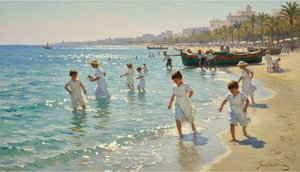
Joaquín Sorolla y Bastida: Meister des Lichts – Ein spanischer Impressionist im Fokus
Entdecken Sie das faszinierende Werk von Joaquín Sorolla y Bastida, dem Meister des spanischen Impressionismus! Erfahren Sie mehr über seine Technik, sein Leben und seine ikonischen Gemälde. Jetzt lesen!

The Enduring Legacy of Oil on Canvas: Technique, History & Aesthetic Impact
Explore the rich history & techniques of oil painting – from Renaissance masters to Impressionism. Discover pigments, layering methods, and why this timeless medium endures. Expert insights for artists & art enthusiasts.

Öl auf Leinwand: Eine historische und technische Erkundung eines zeitlosen künstlerischen Mediums
Entdecken Sie die faszinierende Welt der Ölmalerei! Von historischen Techniken bis zur modernen Anwendung – wir bieten Expertenwissen, Restaurierungstipps und hochwertige Reproduktionen. Jetzt informieren!

The Enduring Power of Painting: A Historical & Contemporary Exploration of Form and Emotion
Explore the rich history & enduring techniques of oil painting with ArtsDot. Discover masterpieces, learn about art collecting, and find authentic handmade reproductions crafted by skilled artists.

Das bleibende Erbe der Ölmalerei: Technik, Geschichte und zeitgenössische Praxis
Entdecken Sie die faszinierende Geschichte der Ölmalerei – von den frühen Techniken bis zur modernen Kunst. Expertenwissen, detaillierte Analysen und Inspiration für Sammler & Kunstliebhaber.