

 Vorschau anzeigen
 Versenden
 Teilen
 Details anzeigen

 Herunterladen
 Ähnliche Objekte
 Röntgenaufnahme
 Diashow
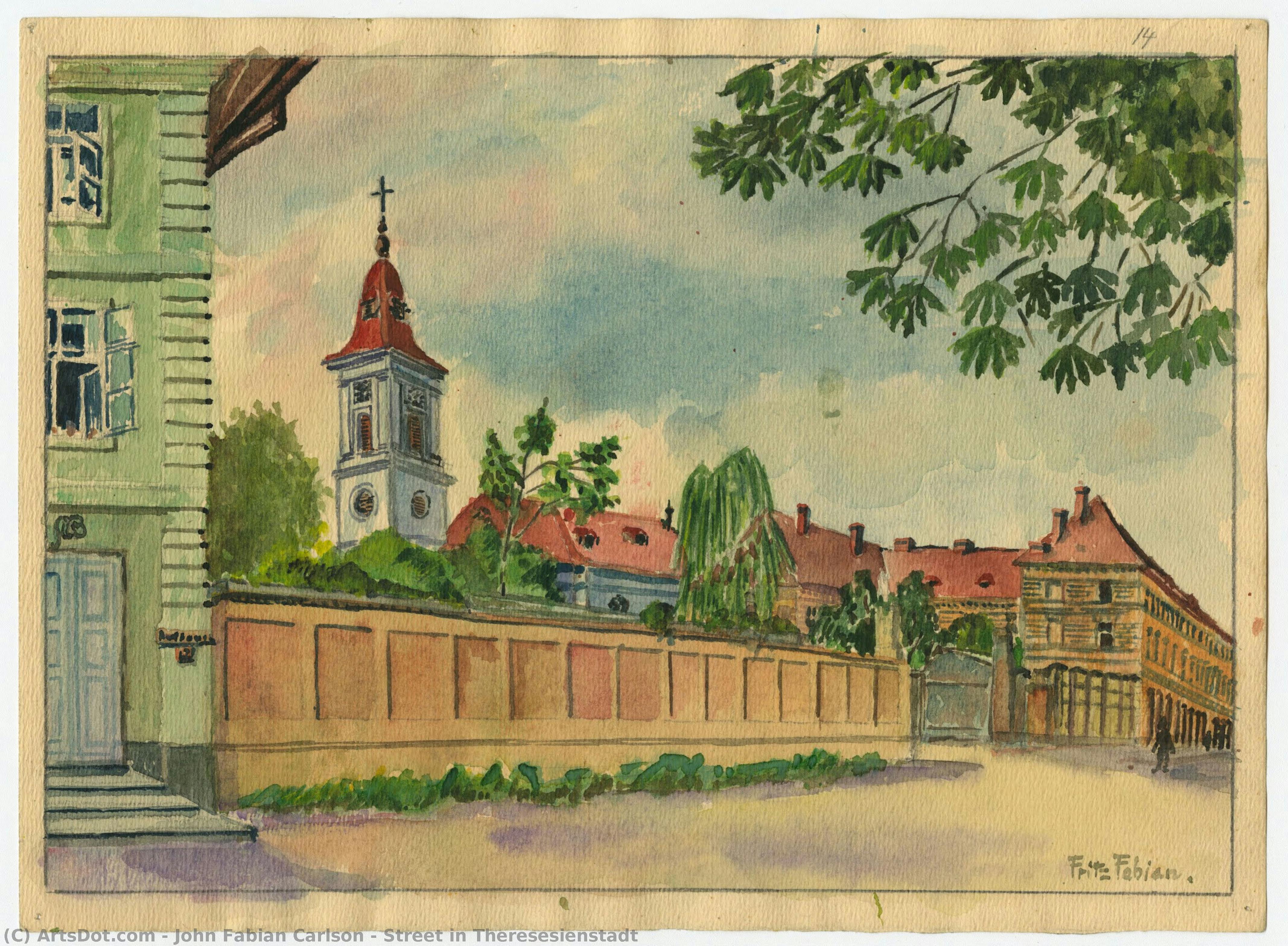
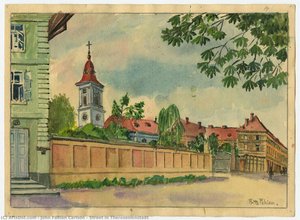
Street in Theresesienstadt
 Watercolor
- WallArt
- Impressionism
 1944
1944- Modern
 30.0 x 22.0 cm
 Leo Baeck Institut
 Weiterlesen
Erwerben Sie ein hochauflösendes, optimiertes digitales Bild, das der Online-Vorschau weit überlegen ist.
Jede Datei wird von unseren hauseigenen Spezialisten mit modernsten Werkzeugen und fachmännischer manueller Retusche sorgfältig vorbereitet. Wir stellen sicher, dass jedes Bild eine außergewöhnliche Klarheit, präzise Farbgenauigkeit und feinste Details aufweist.
Die endgültige Datei wird innerhalb von 72 Stunden per E-Mail zugestellt und ist für den sofortigen Einsatz in professionellen, redaktionellen und Druckumgebungen optimiert. Es handelt sich um dieselbe Qualität, der führende Designstudios, Verlage und Galerien vertrauen.
Digitales Bild
Laden Sie eine hochauflösende Datei für die persönliche Präsentation, den Druck und kreative Projekte herunter. ( Druck bestellen Handgemalte Reproduktion bestellen)
In jeder Bestellung digitaler Bilder enthalten
Professionelle digitale Bereitstellung, garantiert
Wenn Sie sich für ArtsDot.com entscheiden, erhalten Sie nicht nur ein Bild – Sie erhalten ein professionell aufbereitetes digitales Kunstwerk, das mit höchster Präzision erstellt und durch eine Zufriedenheitsgarantie abgesichert wird. Hier ist alles, was automatisch mit Ihrer Bestellung geliefert wird:

Schnelle E-Mail-Zustellung
Ihre hochauflösende digitale Bilddatei wird Ihnen innerhalb von 72 Stunden nach der Bestellung per E-Mail zugestellt – bereit zur sofortigen Verwendung.

KI-optimierte digitale Datei
Ihre Kunstwerke werden professionell mithilfe fortschrittlicher KI-Tools und manueller Bearbeitung optimiert, um maximale Detailtreue, Klarheit und Farbgenauigkeit zu gewährleisten.

Lebenslanger kostenloser Neudruckservice
Datei versehentlich gelöscht oder verloren? Keine Sorge – wir senden sie Ihnen jederzeit kostenlos erneut zu.

Keine Einfuhrgebühren – jemals
Genießen Sie Ihr Kunstwerk sofort ohne Zollgebühren, Einfuhrabgaben oder Versandkosten – digitale Downloads sind immer steuerfrei.

Garantierte Farbtreue
Wir garantieren, dass Ihr digitales Bild mithilfe professioneller Werkzeuge und Farbmanagement die Originalfarben so präzise wie möglich wiedergibt.

60-Tage-Zufriedenheitsgarantie
Sollten Sie mit Ihrem digitalen Bild nicht zufrieden sein, werden wir es überarbeiten oder Ihnen innerhalb von 60 Tagen 100% erstatten – ohne Wenn und Aber.

100% Geld-zurück-Garantie
Nicht zufrieden? Erhalten Sie innerhalb von 60 Tagen nach Erhalt Ihrer digitalen Datei eine vollständige Rückerstattung – ohne Angabe von Gründen.

Rabatte bei Großbestellungen
3 Bilder kaufen, 10% sparen – 5 Bilder kaufen, 15% sparen – Ab 10 Bildern 20% sparen. Ideal für kreative Projekte, Galerien und Agenturen.
Details zum Sammlerstück
A Somber Glimpse into History: Street in Theresesienstadt
In the delicate, translucent layers of John Fabian Carlson’s 1944 watercolor, Street in Theresesienstadt, we encounter a scene that transcends mere landscape painting to become a profound historical witness. While Carlson is celebrated as a master of luminous winter landscapes and the ethereal glow of American Impressionism, this particular work carries a weight far heavier than the soft snowfall of his more famous compositions. The watercolor captures a street scene within the confines of the Theresienstadt concentration camp, presenting a view that is simultaneously mundane and hauntingly significant. Through his expert command of the medium, Carlson invites the viewer to walk alongside the figures in the street, navigating a world defined by both architectural permanence and human fragility.
The composition is structured around the stark reality of enclosure, where a formidable brick wall serves as a boundary between the town and the unknown. A church rises above the skyline, its presence offering a silent, spiritual sentinel over the inhabitants below. Carlson utilizes the fluid nature of watercolor to create a sense of atmosphere that feels both airy and oppressive. The light, though captured with his signature impressionistic touch, does not merely illuminate; it exposes the quiet movement of people traversing the cobblestones. Small details, such as the two birds caught in flight and the subtle presence of a clock in the lower corner, ground the piece in a fleeting moment of time, reminding us that even within the most harrowing historical contexts, life continues its rhythmic, albeit shadowed, progression.
Technically, the painting showcases Carlson’s ability to balance fine detail with broad, emotive washes. The way the pigment settles into the paper creates a textured depth that mimics the grit of the street and the weathered surfaces of the architecture. For the collector or interior designer, this piece offers more than just aesthetic beauty; it provides a conversational centerpiece that demands reflection. It is an artwork of immense emotional gravity, suitable for spaces dedicated to contemplation, history, or the preservation of memory. To possess a reproduction of this work is to hold a fragment of a difficult truth, rendered with the grace and technical mastery of a pioneer of the American Impressionist movement.
Ähnliche Kunstwerke
Biografie des Künstlers
John Fabian Carlson (1874 – 1945): A Pioneer of Winter Landscapes
John Fabian Carlson was a Swedish-born American Impressionist painter whose distinctive style—characterized by luminous color palettes and textured brushwork—captured the ethereal beauty of winter landscapes. Born in Kolsebo, Västergötland, Sweden, on May 5, 1874, Carlson’s artistic journey began with formative years spent immersed in Swedish folklore and landscape traditions before he emigrated to the United States in 1884, establishing a home in Buffalo, New York. His exposure to European art movements, particularly Impressionism fostered by luminaries like Claude Monet and Camille Pissarro, profoundly shaped his artistic vision.- Early Influences: Carlson’s initial artistic inclinations were nurtured at the Art Students League of Buffalo where he studied under Lucius Wolcott Hitchcock, a former pupil of Auguste Renoir and Edgar Degas. Hitchcock instilled in Carlson a meticulous approach to observation and a dedication to capturing fleeting moments of light and color—principles that would become hallmarks of his oeuvre.
- The Byrdcliffe Colony & Landscape Studies: A pivotal moment arrived when Carlson secured a scholarship to the Byrdcliffe Colony in Woodstock, New York (1903-1904), where he honed his skills alongside fellow artists like Robert Henri and George Ives Shepard. This experience solidified his fascination with capturing the grandeur of nature, specifically winter vistas—a subject that would occupy him for decades.
- Notable Works: Among Carlson’s most celebrated paintings are “Winter, Woodstock” (1906), a breathtaking depiction of Mount Tomhannock bathed in winter sunlight; “Snowy Waters” (1912), showcasing the tranquil beauty of Lake George under a blanket of snow; and “Street in Theresienstadt,” which captures the poignant atmosphere of Prague’s Jewish Quarter during World War II.
- Recognition & Legacy: Carlson's artistic achievements garnered significant recognition, culminating in membership of the National Academy of Design (1911) and prestigious awards from organizations like the Carnegie Prize and the Altman First Prize (1918). He continued to teach landscape painting at Woodstock School of Landscape Painting until 1922, fostering a new generation of artists dedicated to capturing the sublime qualities of winter landscapes.
Kurzinfos
- Artistic Movement Or Style: Impressionism
- Artists Or Movements Influenced By This Artist: ['American Impressionism']
- Artists Who Influenced This Artist: ['Lucius Wolcott Hitchcock']
- Date Of Birth: May 5, 1874
- Date Of Death: May 19, 1945
- Full Name: John Fabian Carlson
- Nationality: Swedish-American
- Notable Artworks:
- Winter, Woodstock
- Snowy Waters
- Street in Theresesienstadt
- Place Of Birth: Kolsebo, Sweden

