

 Vorschau anzeigen
 Versenden
 Teilen
 Details anzeigen

 Herunterladen
 Ähnliche Objekte
 Röntgenaufnahme
 Diashow
 Statistiken
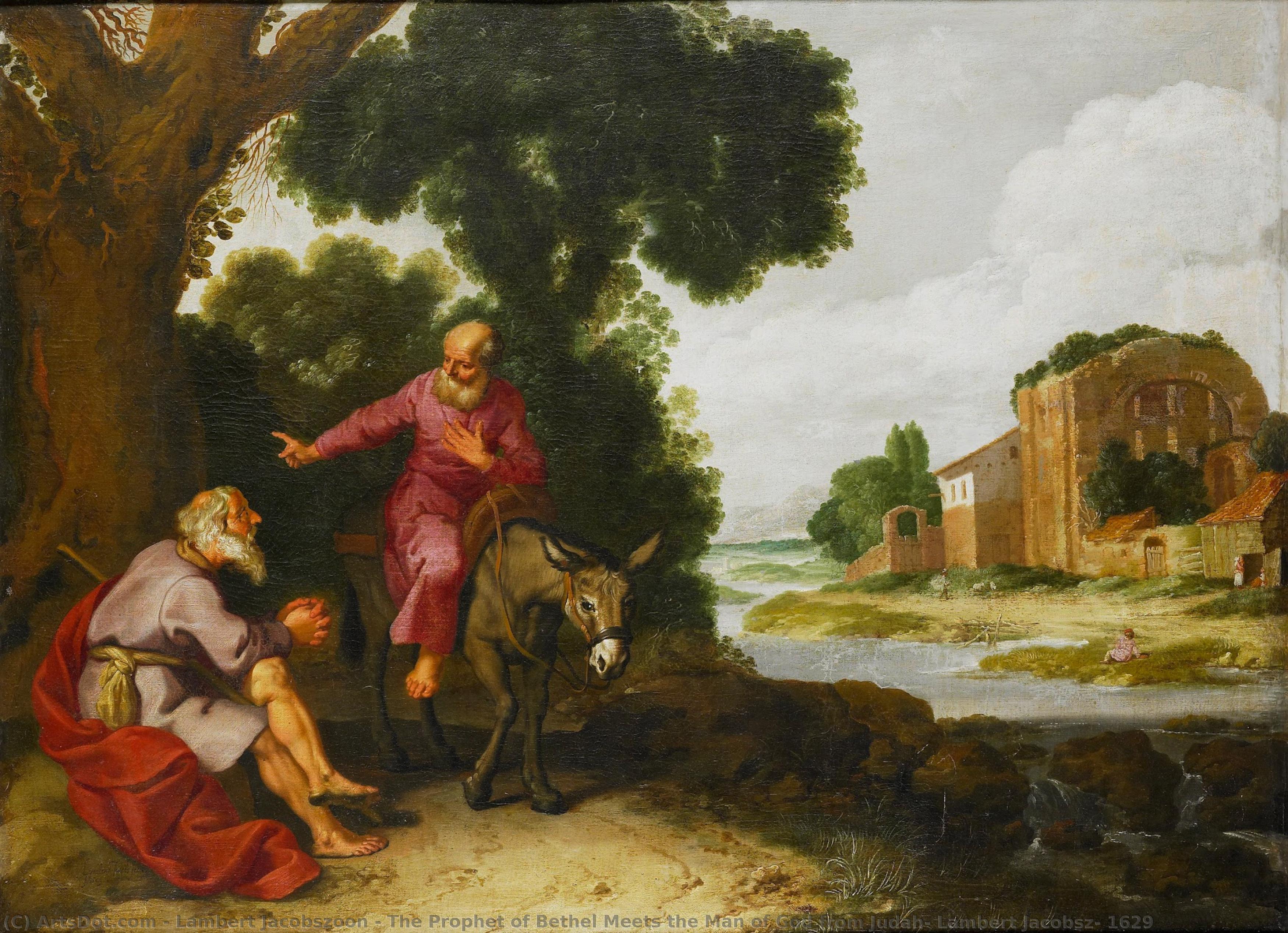
The Prophet of Bethel Meets the Man of God from Judah, Lambert Jacobsz, 1629
 1629
1629 83.0 x 111.0 cm
 Weiterlesen
Erwerben Sie ein hochauflösendes, optimiertes digitales Bild, das der Online-Vorschau weit überlegen ist.
Jede Datei wird von unseren hauseigenen Spezialisten mit modernsten Werkzeugen und fachmännischer manueller Retusche sorgfältig vorbereitet. Wir stellen sicher, dass jedes Bild eine außergewöhnliche Klarheit, präzise Farbgenauigkeit und feinste Details aufweist.
Die endgültige Datei wird innerhalb von 72 Stunden per E-Mail zugestellt und ist für den sofortigen Einsatz in professionellen, redaktionellen und Druckumgebungen optimiert. Es handelt sich um dieselbe Qualität, der führende Designstudios, Verlage und Galerien vertrauen.
Digitales Bild
Laden Sie eine hochauflösende Datei für die persönliche Präsentation, den Druck und kreative Projekte herunter. ( Zu Druck wechseln Handgemalte Reproduktion bestellen)
In jeder Bestellung digitaler Bilder enthalten
Professionelle digitale Bereitstellung, garantiert
Wenn Sie sich für ArtsDot.com entscheiden, erhalten Sie nicht nur ein Bild – Sie erhalten ein professionell aufbereitetes digitales Kunstwerk, das mit höchster Präzision erstellt und durch eine Zufriedenheitsgarantie abgesichert wird. Hier ist alles, was automatisch mit Ihrer Bestellung geliefert wird:

Schnelle E-Mail-Zustellung
Ihre hochauflösende digitale Bilddatei wird Ihnen innerhalb von 72 Stunden nach der Bestellung per E-Mail zugestellt – bereit zur sofortigen Verwendung.

KI-optimierte digitale Datei
Ihre Kunstwerke werden professionell mithilfe fortschrittlicher KI-Tools und manueller Bearbeitung optimiert, um maximale Detailtreue, Klarheit und Farbgenauigkeit zu gewährleisten.

Lebenslanger kostenloser Neudruckservice
Datei versehentlich gelöscht oder verloren? Keine Sorge – wir senden sie Ihnen jederzeit kostenlos erneut zu.

Keine Einfuhrgebühren – jemals
Genießen Sie Ihr Kunstwerk sofort ohne Zollgebühren, Einfuhrabgaben oder Versandkosten – digitale Downloads sind immer steuerfrei.

Garantierte Farbtreue
Wir garantieren, dass Ihr digitales Bild mithilfe professioneller Werkzeuge und Farbmanagement die Originalfarben so präzise wie möglich wiedergibt.

100-Tage-Zufriedenheitsgarantie
Wenn Sie mit Ihrem digitalen Bild nicht zufrieden sind, werden wir es überarbeiten oder 100% innerhalb von 100 Tagen erstatten – ohne Wenn und Aber.

100% Geld-zurück-Garantie
Nicht zufrieden? Erhalten Sie innerhalb von 100 Tagen nach Erhalt Ihrer digitalen Datei eine vollständige Rückerstattung – ohne Wenn und Aber.

Rabatte bei Großbestellungen
3 Bilder kaufen, 10% sparen – 5 Bilder kaufen, 15% sparen – Ab 10 Bildern 20% sparen. Ideal für kreative Projekte, Galerien und Agenturen.
Ähnliche Kunstwerke








Biografie des Künstlers
A Life Defined by Faith and the Golden Age
Born around 1598 in the bustling, maritime atmosphere of Amsterdam, Lambert Jacobszon lived a life that was as much defined by spiritual devotion as it was by artistic pursuit. Growing up within the vibrant tapestry of the Dutch Mennonite community, his early years were shaped by the profound religious shifts of the Protestant Reformation. This dual identity—as both a painter and a preacher—infused his work with a unique gravity, where every brushstroke served to illuminate the sacred narratives of the Old Testament. His existence was a delicate balance between the earthly pursuit of aesthetic mastery and an unwavering commitment to the tenets of his faith, a tension that would eventually manifest in the dramatic emotional depth of his canvases.
The trajectory of Jacobszon’s career was marked by significant connections to some of the most influential figures of the Dutch Golden Age. His formative training under Jan Pynas provided him with a foundation in the humanist ideals and Renaissance spirit that were sweeping through the Netherlands. However, it was his role as a mentor and contemporary to rising stars like Govaert Flinck and Jacob Adriaensz Backer that cemented his place within the artistic lineage of his era. These relationships were not merely professional; they represented a shared movement toward a more expressive, character-driven style of painting that would come to define the century.
The Shadow of Rembrandt and the Mastery of Light
To understand the soul of Jacobszon’s technique, one must look toward the towering presence of Rembrandt Harmenszoon van Rijn. While their relationship was complex—alternating between that of mentor and rival—the influence of Rembrandt is unmistakable within Jacobszon’s oeuvre. The master’s use of chiaroscuro, that breathtaking interplay of profound shadow and piercing light, became a cornerstone of Jacobszon’s visual language. He adopted this method not merely as a technical trick, but as an emotional tool to heighten the drama of his biblical subjects, allowing light to act as a divine messenger within the darkness of his compositions.
His ability to manipulate texture and atmosphere allowed him to breathe life into historical figures, transforming static religious icons into palpable, breathing entities. In works such as “The Prophet of Bethel Meets the Man of God from Judah,” Jacobszon demonstrates a remarkable command over narrative tension. He captures the precise moment of deception and vulnerability, using the landscape and the positioning of his protagonists to guide the viewer’s eye through a story of disobedience and consequence. His style was characterized by this very dynamism—a refusal to let the sacred remain distant, choosing instead to bring the weight of scripture into the immediate, visceral reality of the viewer.
Legacy and the End of an Era
The later years of Jacobszon’s life took him to Leeuwarden, a city that would become both a sanctuary for his remaining works and the site of his untimely passing. In 1636, during a devastating outbreak of the plague, the artist’s life was cut short, leaving behind a legacy that was deeply intertwined with the local community he served as a preacher. Though his life ended abruptly, his influence rippled through the next generation of Dutch masters, most notably through his son, Abraham Lambertsz van den Tempel, who would carry forward the traditions of the Golden Age.
Today, the historical significance of Lambert Jacobszon lies in his ability to bridge the gap between the spiritual and the theatrical. His paintings remain vital testaments to a period when art was used to explore the deepest recesses of human morality and divine intervention. Through his meticulous attention to detail and his mastery of light, he ensured that the stories of the past would continue to resonate with a haunting, eternal beauty, preserving the flickering candlelight of the Dutch Golden Age for all time.
lambert jacobszoon
1598 - 1636
Kurzinfos
- Artistic Movement Or Style: Dutch Golden Age
- Artists Or Movements Influenced By This Artist: ['Rembrandt']
- Artists Who Influenced This Artist: ['Jan Pynas']
- Date Of Birth: ca. 1598
- Full Name: Lambert Jacobsz.
- Nationality: Dutch
- Notable Artworks:
- The Prophet of Bethel Meets the Man of God from Judah
- Joseph's Brothers On The Road From Egypt
- Place Of Birth: Amsterdam, Netherlands