

 Vorschau anzeigen
 Versenden
 Teilen
 Details anzeigen

 Herunterladen
 Ähnliche Objekte
 Röntgenaufnahme
 Diashow
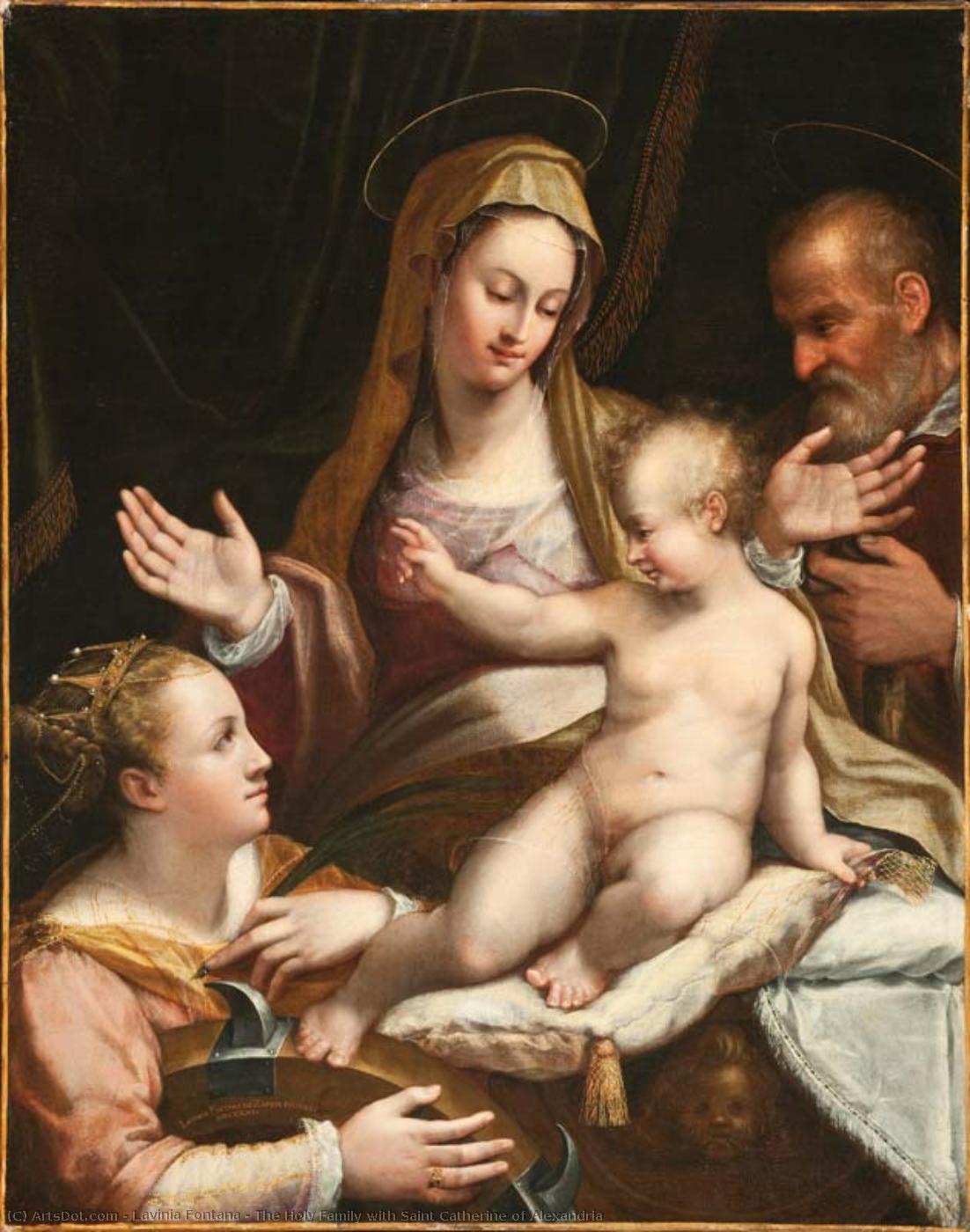
The Holy Family with Saint Catherine of Alexandria
 Oil On Canvas
- WallArt
- Venetian Renaissance
 1581
1581 130.0 x 112.0 cm
 Los Angeles County Museum of Art
 Weiterlesen
Erwerben Sie ein hochauflösendes, optimiertes digitales Bild, das der Online-Vorschau weit überlegen ist.
Jede Datei wird von unseren hauseigenen Spezialisten mit modernsten Werkzeugen und fachmännischer manueller Retusche sorgfältig vorbereitet. Wir stellen sicher, dass jedes Bild eine außergewöhnliche Klarheit, präzise Farbgenauigkeit und feinste Details aufweist.
Die endgültige Datei wird innerhalb von 72 Stunden per E-Mail zugestellt und ist für den sofortigen Einsatz in professionellen, redaktionellen und Druckumgebungen optimiert. Es handelt sich um dieselbe Qualität, der führende Designstudios, Verlage und Galerien vertrauen.
Digitales Bild
Laden Sie eine hochauflösende Datei für die persönliche Präsentation, den Druck und kreative Projekte herunter. ( Druck bestellen Handgemalte Reproduktion bestellen)
In jeder Bestellung digitaler Bilder enthalten
Professionelle digitale Bereitstellung, garantiert
Wenn Sie sich für ArtsDot.com entscheiden, erhalten Sie nicht nur ein Bild – Sie erhalten ein professionell aufbereitetes digitales Kunstwerk, das mit höchster Präzision erstellt und durch eine Zufriedenheitsgarantie abgesichert wird. Hier ist alles, was automatisch mit Ihrer Bestellung geliefert wird:

Schnelle E-Mail-Zustellung
Ihre hochauflösende digitale Bilddatei wird Ihnen innerhalb von 72 Stunden nach der Bestellung per E-Mail zugestellt – bereit zur sofortigen Verwendung.

KI-optimierte digitale Datei
Ihre Kunstwerke werden professionell mithilfe fortschrittlicher KI-Tools und manueller Bearbeitung optimiert, um maximale Detailtreue, Klarheit und Farbgenauigkeit zu gewährleisten.

Lebenslanger kostenloser Neudruckservice
Datei versehentlich gelöscht oder verloren? Keine Sorge – wir senden sie Ihnen jederzeit kostenlos erneut zu.

Keine Einfuhrgebühren – jemals
Genießen Sie Ihr Kunstwerk sofort ohne Zollgebühren, Einfuhrabgaben oder Versandkosten – digitale Downloads sind immer steuerfrei.

Garantierte Farbtreue
Wir garantieren, dass Ihr digitales Bild mithilfe professioneller Werkzeuge und Farbmanagement die Originalfarben so präzise wie möglich wiedergibt.

60-Tage-Zufriedenheitsgarantie
Sollten Sie mit Ihrem digitalen Bild nicht zufrieden sein, werden wir es überarbeiten oder Ihnen innerhalb von 60 Tagen 100% erstatten – ohne Wenn und Aber.

100% Geld-zurück-Garantie
Nicht zufrieden? Erhalten Sie innerhalb von 60 Tagen nach Erhalt Ihrer digitalen Datei eine vollständige Rückerstattung – ohne Angabe von Gründen.

Rabatte bei Großbestellungen
3 Bilder kaufen, 10% sparen – 5 Bilder kaufen, 15% sparen – Ab 10 Bildern 20% sparen. Ideal für kreative Projekte, Galerien und Agenturen.
Lavinia Fontana’s Venetian Renaissance Masterpiece: The Holy Family with Saint Catherine of Alexandria
Within the hallowed halls of the Los Angeles County Museum of Art resides a painting that whispers tales of resilience, artistic innovation, and profound devotion – Lavinia Fontana's “The Holy Family with Saint Catherine of Alexandria,” completed in 1581. More than just a depiction of Mary, Jesus, and Joseph, this work stands as a testament to the extraordinary journey of one of Europe’s first professional female artists, a woman who defied societal constraints and carved her own path within the fiercely competitive world of Renaissance art. The painting immediately draws the eye with its rich palette – deep reds, blues, and golds—a hallmark of Venetian artistic style, where luminosity and vibrant color were prized above all else. Yet, it’s not merely a feast for the eyes; Fontana masterfully employs chiaroscuro lighting, dramatically contrasting areas of light and shadow to sculpt the figures and imbue the scene with an almost palpable sense of intimacy and serenity.
Fontana's composition is rooted in classical principles, notably the pyramidal structure—a technique borrowed from Raphael and Correggio—that lends stability and harmony to the arrangement. Mary, positioned at the apex, cradles the infant Jesus, while Joseph stands protectively beside them. The inclusion of Saint Catherine of Alexandria, a prominent early Christian martyr known for her wisdom and virtue, adds another layer of symbolic depth. Catherine’s presence elevates the scene beyond a simple domestic portrait, transforming it into a meditation on faith, family, and divine grace. The architectural setting, though somewhat flattened in perspective—a characteristic of Renaissance painting—suggests a richly decorated interior space, hinting at the sanctity and importance of the family within.
A Pioneer’s Path: Lavinia Fontana and the Counter-Reformation
Understanding “The Holy Family” requires acknowledging the remarkable circumstances surrounding its creation. Lavinia Fontana was not simply an artist; she was a trailblazer in a period when women were largely excluded from formal artistic training and professional opportunities. Born into a family of artists in Bologna, Italy, she received her initial education from her father, Prospero Fontana, a respected painter known for his Mannerist style. However, it was through her marriage to Gian Paolo Zappi, one of her father’s pupils, that Fontana secured the freedom and resources necessary to pursue her artistic career with genuine dedication. This unique arrangement—a husband who supported her work rather than hindering it—was unprecedented at the time, allowing her to establish herself as a professional artist.
Fontana's work during this period was deeply influenced by the Counter-Reformation, the Catholic Church’s response to the Protestant Reformation. Cardinal Gabriele Paleotti, a key figure in shaping artistic theory during this era, advocated for art that would inspire piety and emotional engagement. Fontana embraced these principles, striving to create images that moved viewers spiritually rather than merely depicting religious subjects with detached accuracy. Her attention to detail, particularly in rendering the expressions of the figures—a subtle hint of tenderness in Mary’s gaze, a protective warmth in Joseph's posture—reflects this commitment to conveying emotion and fostering a connection between the viewer and the sacred narrative.
Technique and Materials: A Masterful Oil Painting
The painting itself is executed with meticulous skill using oil paints on canvas – a technique that allowed for layering, glazing, and subtle tonal variations, creating an astonishingly rich and luminous surface. Fontana’s brushwork is remarkably refined, particularly in the rendering of drapery, which flows with graceful curves and folds, adding depth and texture to the scene. The smooth surfaces of the figures' faces contrast subtly with the tactile quality of the fabric, further enhancing the sense of realism. Close examination reveals a careful attention to detail—the delicate folds of Mary’s robes, the intricate patterns on the architectural elements, and the subtle nuances in the expressions of each figure.
The use of color is particularly noteworthy. Fontana employs a vibrant palette of reds, blues, and golds, creating a sense of warmth and opulence that reflects the Venetian artistic tradition. The lighting—a dramatic chiaroscuro effect—casts strong shadows, highlighting the forms of the figures and adding depth to the composition. This masterful manipulation of light and shadow not only enhances the visual impact of the painting but also contributes to its emotional resonance.
A Legacy of Innovation: Beyond the Canvas
Lavinia Fontana’s “The Holy Family with Saint Catherine of Alexandria” is more than just a beautiful artwork; it's a symbol of artistic courage and perseverance. It represents the triumph of talent over adversity, the breaking down of societal barriers, and the assertion of a woman’s right to pursue her creative passions. Her story continues to inspire artists and art lovers alike, reminding us that innovation often emerges from unexpected places and that true artistry knows no gender.
Ähnliche Kunstwerke
Biografie des Künstlers
Frühes Leben und Ausbildung
- Geboren: 24. August 1552, Bologna, Italien
- Gestorben: 1614
- Lavinia Fontana wurde in einer Künstlerfamilie geboren. Ihr Vater, Prospero Fontana, war ein bekannter Maler der Bologneser Schule.
- Sie erhielt ihre Ausbildung von ihrem Vater und setzte das Familienunternehmen fort, was zu dieser Zeit üblich war.
- Ihr früheste bekannte Arbeit, "Affenkind", wurde 1575 gemalt, als sie 23 Jahre alt war.
Künstlerischer Stil und bemerkenswerte Werke
- Anfänglich ähnelte Lavinia Fontanas künstlerischer Stil der ihres Vaters. Sie übernahm allmählich den Carracciesken Stil mit starker, fast venezianischer Farbgebung.
- Sie war bekannt für das Malen von Angehörigen der oberen Gesellschaftsschichten Bolognas, insbesondere adeliger Frauen. Ihre Beziehungen zu weiblichen Klientinnen waren oft ungewöhnlich herzlich.
- Bemerkenswerte Werke:
- Doppelporträt einer Hochzeit (auch bekannt als Selbstbildnis von Lavinia Fontana): Ein Meisterwerk, das Eleganz und Raffinesse der Kunst des 16. Jahrhunderts zeigt, befindet sich im Museo de Zaragoza.
- Venus und Amor (1592): Ein Barockporträt mit reichen Details und symbolischer Schönheit.
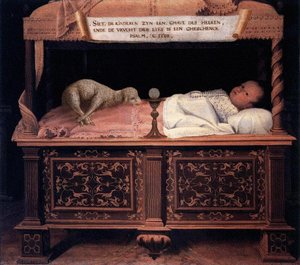
- Neugeborenes Baby in einer Wiege (1583): Ein manieristisches Porträt, das Reichtum und Zärtlichkeit zeigt.
- Judith mit dem Kopf Holofernes’ (1600): Ein dramatisches Renaissance-Meisterwerk.
- Porträt eines Neugeborenen in einer Wiege (1583): Ein ergreifendes nordeuropäisches Renaissance-Ölgemälde.
Entwicklung und Einflüsse
- Einflüsse: Denis Calvaert, ein niederländischer Künstler, der eine einflussreiche Malerschule in Bologna leitete, beeinflusste ebenfalls ihre Ausbildung.
- Der künstlerische Stil ihres Vaters prägte anfänglich ihre Arbeit, aber sie entwickelte sich hin zum Carracciesken Stil weiter.
- Die Förderung durch Papst Gregor XIII. und seine Familie hatte einen bedeutenden Einfluss auf ihre Karriere und führte zu Aufträgen für Porträts von prominenten Persönlichkeiten.
Wichtige Errungenschaften und historische Bedeutung
- Erste professionelle weibliche Künstlerin: Lavinia Fontana gilt als die erste Frau, die außerhalb eines Hofes oder Klosters in derselben Sphäre wie ihre männlichen Kollegen arbeitete.
- Pionierin des Porträts: Sie wurde zu einer der wichtigsten Porträtmalerinnen Bolognas im späten 16. Jahrhundert.
- Erste Frau, die Aktzeichnungen malte: Fontana war eine der ersten Frauen, die weibliche Akte malte, obwohl dies unter Kunsthistorikern umstritten ist.
- Anerkennung und Ehrungen: Sie wurde in die Accademia di San Luca in Rom gewählt und erhielt zahlreiche Auszeichnungen, darunter eine Bronzemedaille im Jahr 1611.
Vermächtnis
- Lavinia Fontanas Vermächtnis inspiriert weiterhin Künstler und Kunstliebhaber gleichermaßen.
- Ihre Werke sind in verschiedenen Museen und Sammlungen auf der ganzen Welt zu finden, darunter im Museo de Zaragoza und der Accademia di San Luca in Rom.
- Sie vereinte eine erfolgreiche künstlerische Karriere mit der Erziehung von elf Kindern und bewies so bemerkenswerte Widerstandsfähigkeit und Hingabe.
- Fontanas Fähigkeit, Aufträge und Unterstützung von prominenten Förderern zu sichern, ebnete den Weg für zukünftige Generationen weiblicher Künstlerinnen.
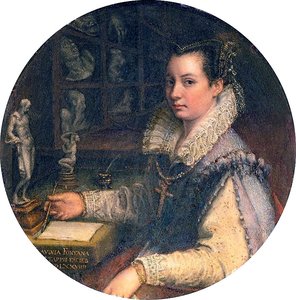
Lavinia Fontana
1552 - 1614 , Italien
Kurzinfos
- Bemerkenswerte Werke:
- Doppelporträt der Hochzeit
- Venus und Amor
- Neugeborenes im Wiege
- Judith mit Holofernes Kopf
- Porträt eines Neugeborenen
- Einflussreiche Künstler:
- Prospero Fontana
- Denis Calvaert
- Geburtsdatum: 24. August 1552
- Geburtsort: Bologna, Italien
- Künstlerische Richtung: Manierismus
- Nationalität: Italienerin
- Sterbedatum: 1614
- Vollständiger Name: Lavinia Fontana

