

 Vorschau anzeigen
 Versenden
 Teilen
 Details anzeigen

 Herunterladen
 Ähnliche Objekte
 Röntgenaufnahme
 Diashow
 Stats
StatsUnique album of Le Mystère Jazz de Tombouctou


 Weiterlesen
Giclée / Kunstdruck
Giclée- oder Leinwanddruck in Museumsqualität mit schneller Produktion und flexiblen Veredelungsoptionen. ( Handgemalte Reproduktion bestellen Switch to Digital Image)




P118B $10

P118H $10

P118W $10

P438Z $10

P508JH $12

P508YH $12

P805H $10

P805Z $10

P919BZ $10

P919G $10

P919XJ $10

P959ZH $10

P968JZ $12

W106C $8

W218G $10

W218JH $8

W218Y $10

W307PJ $10

W316G $10

W316PJ $8

W316Y $10

W398PJ $8

W4111J $10

W500HY $15

W500JH $15

W692G $12

W849H $8

W940BG $15

W953PJ $8




Wählen Sie aus unseren vordefinierten Formaten, die den ursprünglichen Proportionen des Kunstwerks entsprechen.

Sie können Ihre eigenen Maße eingeben, um ein bestimmtes Format oder einen speziellen Platz einzupassen. Wenn das von Ihnen gewählte Format nicht den Proportionen des Originalbildes entspricht, werden wir das Kunstwerk entweder beschneiden oder das Bild mit einem gespiegelten oder einfarbigen Rand erweitern. Ein digitaler Entwurf wird Ihnen zur Genehmigung zugesandt, bevor die Produktion beginnt.
Bitte beachten Sie, dass die Vorschau auf dem Bildschirm nicht den tatsächlichen Zuschnitt oder die Erweiterung widerspiegelt. Nur der Entwurf zeigt die endgültige Komposition präzise an.
Obwohl Sondermaße verfügbar sind, empfehlen wir die Auswahl eines Maßes aus der vordefinierten Liste, um die ursprünglichen Proportionen zu bewahren.
Weltweiter Versand () innerhalb von 2 Wochen statt der üblichen 4/5 Wochen. (8 September)

Kostenloser weltweiter Expressversand

Hochwertige Leinenleinwand

Umfassender Versicherungsschutz beim Versand

Zollgebühren-Rückerstattungsgarantie

Garantie für exakte Farbtreue

100-Tage-Rückgaberecht (nur bei Mängeln)

100% Geld-zurück-Garantie

Mengenrabatt verfügbar
 Die Glasoption ist nur für Größen unter 110 cm verfügbar.

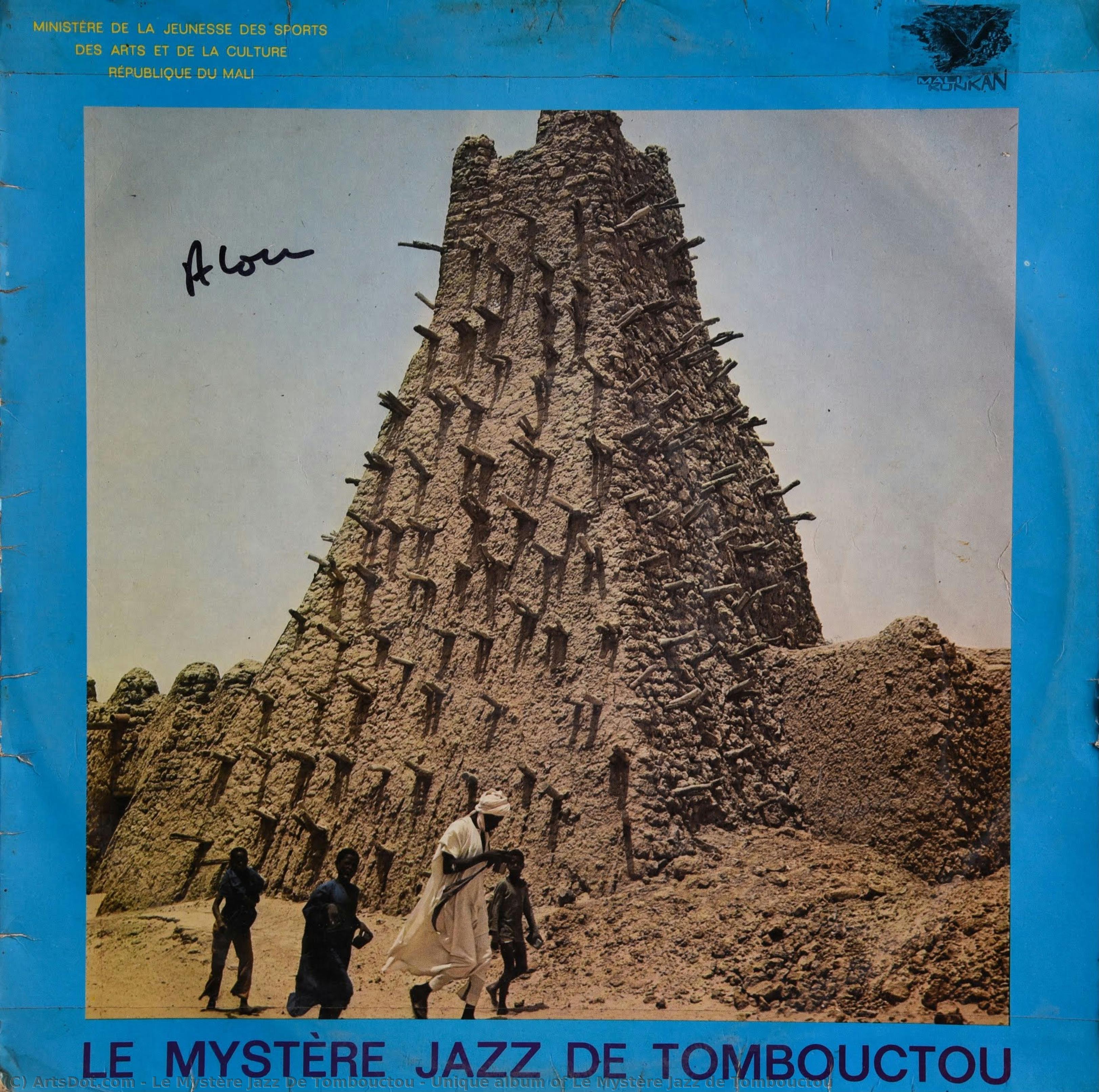
Unique album of Le Mystère Jazz de Tombouctou
Giclée / Kunstdruck
Format der Reproduktion
-


Gesamtpreis
$ 62
The Architectural Soul of Mali
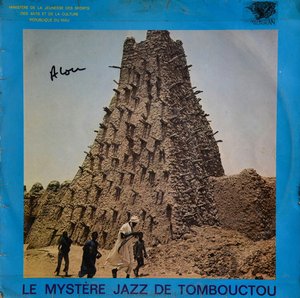
In the evocative visual landscape of Le Mystère Jazz de Tombouctou, we encounter more than just an album cover; we find a profound meditation on heritage and structure. The painting centers upon a monumental tower, a masterwork of masonry that rises with a rhythmic complexity. Each brick and stone appears meticulously placed, creating a mosaic of varying shapes and sizes that suggests both the permanence of history and the organic growth of a civilization. This architectural marvel serves as the anchor for the entire composition, its textured surface catching the light in a way that invites the viewer to trace the lineage of every hand-laid stone. The tower stands not merely as a building, but as a silent sentinel of West African identity, embodying the strength and intricate beauty of Malian craftsmanship.
The scene is brought to life by the presence of three figures, positioned with a deliberate, almost theatrical spacing near the base of the structure. One figure stands to the left, another occupies the central foreground, while a third rests on the right, creating a balanced triangular composition that guides the eye across the canvas. These individuals are not merely spectators; they are integral components of the narrative, their small scale in relation to the tower emphasizing the grandeur of the architecture and the timelessness of the setting. Their presence introduces a human element to the monumental scene, suggesting a lived connection between the people and the ancient, enduring monuments of their land.
A Symphony of Color and Texture
The technique employed in this piece is nothing short of mesmerizing, characterized by a rich, tactile quality that makes the painting feel as though it could be touched. The artist utilizes a palette that honors the earthy tones of the Sahel, blending warm ochres, deep umbers, and sun-drenched creams to replicate the weathered texture of sun-baked clay and stone. This interplay of light and shadow creates a sense of depth that is particularly striking in the depiction of the tower's uneven surfaces. For collectors and interior designers, this piece offers a sophisticated textural element that can serve as a focal point in any room, providing a sense of groundedness and organic warmth to modern or classical decor.
Beyond its physical beauty, the artwork carries a deep emotional resonance, bridging the gap between the musical innovation of the 1970s Malian orchestra and the ancient traditions of Timbuktu. There is a palpable sense of mystery—a "mystère"—that lingers in the atmosphere, much like the enigmatic sounds of the jazz-infused Afro-blues that the album represents. To possess a reproduction of this work is to hold a fragment of cultural history; it is an invitation to contemplate the intersection of human creativity, musical evolution, and the enduring spirit of African architectural legacy. It is a piece designed for those who appreciate art that tells a story of resilience, beauty, and the profound connection between man and his environment.
Ähnliche Kunstwerke





Über den Künstler
The Enigmatic Sound of Tombouctou: Unveiling Le Mystère Jazz de Tombouctou
Le Mystère Jazz de Tombouctou remains one of the most captivating and elusive figures in the landscape of Malian music. More than a band, it represents a specific moment—a government-sponsored burst of creativity aimed at defining a national sonic identity during the 1970s. The story of Le Mystère Jazz is inextricably linked to Mali’s post-independence ambitions and its desire to cultivate a unique cultural voice on the world stage. Unlike many artists whose biographies are filled with personal anecdotes, details surrounding the formation and members of this orchestra are scarce, adding to their mystique. What *is* known paints a picture of a collective effort born from a deliberate national project.
Inspired by the success of similar initiatives in neighboring Guinea, the Malian government, through its Ministry of Information, partnered with German label Bärenreiter Musicaphon in 1970 to produce a series of vinyl records. The goal was ambitious: to document and promote the diverse musical traditions across Mali’s regions, establishing local orchestras and providing them with resources to record and distribute their work. This wasn't simply about preservation; it was about creation—fostering new sounds that blended traditional rhythms with modern instrumentation, particularly the electric guitar which was rapidly gaining popularity.
A Product of National Ambition
Le Mystère Jazz de Tombouctou emerged from this fertile ground. The orchestra itself wasn’t a long-standing ensemble with a fixed lineup; rather, it appears to have been assembled specifically for the purpose of recording an album under the Mali Kunkan label. This explains the relative lack of biographical information about individual members—they were musicians drawn from various regional groups, brought together for this singular project. The album, released in 1977, is a testament to this collaborative spirit. It’s characterized by extended instrumental passages, hypnotic grooves, and a distinctive use of guitar that weaves intricate melodies around traditional vocal styles.
The music reflects the cultural crossroads of Tombouctou—a historic trading center with deep roots in both Arab and African traditions. While definitively jazz-influenced, it’s not jazz as understood in the Western sense. It's a uniquely Malian interpretation, infused with local scales, rhythms, and instrumentation. The extended song lengths – many exceeding ten minutes – allowed for improvisation and exploration, creating a sound that is both captivatingly hypnotic and deeply rooted in its cultural context.
Rediscovery and Lasting Influence
For decades, the original pressing of Le Mystère Jazz de Tombouctou remained incredibly rare, sought after by collectors specializing in African music. Its rediscovery in recent years has been nothing short of a revelation. Reissues by labels like Kindred Spirits have brought this forgotten gem to a wider audience, introducing a new generation to its captivating sound.
The album’s influence can be heard in the work of contemporary Malian artists who are exploring similar territory—blending traditional sounds with modern instrumentation and pushing the boundaries of genre. It serves as a powerful reminder of the creative energy that flourished during this period, fueled by government support and a collective desire to define a national musical identity. The music is not merely a historical artifact; it’s a living testament to the power of collaboration, cultural exchange, and the enduring legacy of Mali's golden age of vinyl.
The Sound of a Renaissance
Le Mystère Jazz de Tombouctou exists within a broader context of government-funded musical projects in Mali during the 1970s. Albums by other regional orchestras—such as L’Orchestre National Badéma and L'Ensemble Instrumental National du Mali—were also released under the Mali Kunkan label, each showcasing the unique sounds of their respective regions. These recordings collectively represent a remarkable period of artistic innovation and cultural preservation.
The significance of these albums extends beyond their musical merit. They played a crucial role in establishing Mali’s reputation as a vibrant center for African music, fostering a sense of national pride and identity. While the government funding eventually ceased, the legacy of this era continues to inspire musicians today. Le Mystère Jazz de Tombouctou, with its enigmatic sound and captivating grooves, remains a powerful symbol of that renaissance—a testament to the enduring power of music to transcend boundaries and connect cultures.
Kurzinfos
- Artistic Movement Or Style: West African jazz, Afro-blues
- Full Name: Le Mystère Jazz de Tombouctou
- Nationality: Malian
- Notable Artworks: ['Le Mystère Jazz de Tombouctou']
Ähnliche Artikel

Die Top 10 Gemälde in Sandtönen: Meisterwerke für Ihr Zuhause |
Entdecken Sie die Top 10 Gemälde in faszinierenden Sandtönen! Von Van Gogh bis Monet – erleben Sie Meisterwerke des Impressionismus & mehr. Finden Sie hochwertige Reproduktionen für Ihr Zuhause auf

Die Top 10 berühmter Gemälde in Pilztönen – Kunst für Ihr Zuhause |
Entdecken Sie die Top 10 berühmter Gemälde in faszinierenden Pilztönen! Von Van Gogh bis Monet – erleben Sie Kunstgeschichte und lassen Sie sich von warmen Farben inspirieren. Hochwertige Kunstdrucke auf

Romantische Landschaften: Die 10 Meisterwerke, die eine Epoche prägten | ArtsDot
Entdecken Sie die 10 Meisterwerke der Romantischen Landschaftsmalerei! Von Caspar David Friedrich bis Turner – erleben Sie die Kunst, Emotion & Natur. Hochwertige Reproduktionen auf ArtsDot.com
Die Top 10 berühmter Gemälde in Erdtönen – Kunst für Ihr Zuhause |
Entdecken Sie die Top 10 berühmter Gemälde in warmen Erdtönen! Von Van Gogh bis Monet – erleben Sie Meisterwerke der Kunstgeschichte. Finden Sie hochwertige Reproduktionen & Inspiration für Ihr Zuhause auf

Evocations of Place: A Historical Journey Through Landscape Art
Explore the rich history of landscape art with ArtsDot. Discover renowned artists, movements like Impressionism & Romanticism, and expert guidance for collecting timeless pieces. Find your perfect serene escape today!