 Vorschau anzeigen
 Versenden
 Teilen
 Details anzeigen

 Herunterladen
 Ähnliche Objekte
 Röntgenaufnahme
 Diashow
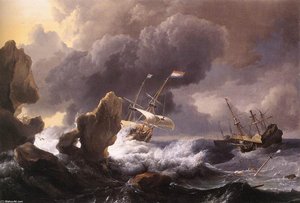
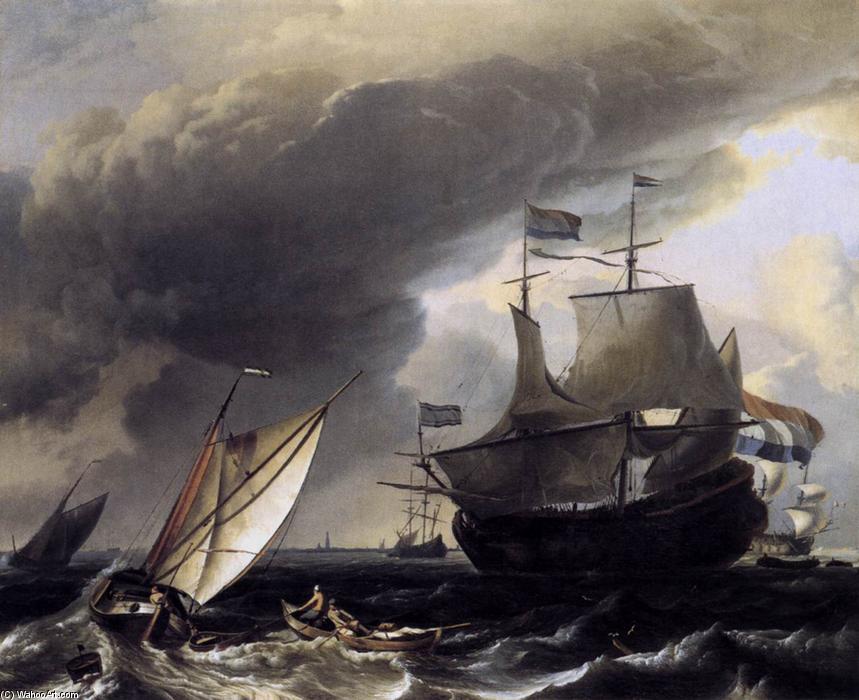
Dutch Vessels on the Sea at Amsterdam
 Acrylic On Canvas
- WallArt
- Dutch Golden Age Maritime
 1708
1708 66.0 x 80.0 cm
 Louvre
 Weiterlesen
Giclée / Kunstdruck
Giclée- oder Leinwanddruck in Museumsqualität mit schneller Produktion und flexiblen Veredelungsoptionen. ( Handgemalte Reproduktion bestellen Bild kaufen)




P118B $10

P118H $10

P118W $10

P438Z $10

P508JH $12

P508YH $12

P805H $10

P805Z $10

P919BZ $10

P919G $10

P919XJ $10

P959ZH $10

P968JZ $12

W106C $8

W218G $10

W218JH $8

W218Y $10

W307PJ $10

W316G $10

W316PJ $8

W316Y $10

W398PJ $8

W4111J $10

W500HY $15

W500JH $15

W692G $12

W849H $8

W940BG $15

W953PJ $8




Wählen Sie aus unseren vordefinierten Formaten, die den ursprünglichen Proportionen des Kunstwerks entsprechen.

Sie können Ihre eigenen Maße eingeben, um ein bestimmtes Format oder einen speziellen Platz einzupassen. Wenn das von Ihnen gewählte Format nicht den Proportionen des Originalbildes entspricht, werden wir das Kunstwerk entweder beschneiden oder das Bild mit einem gespiegelten oder einfarbigen Rand erweitern. Ein digitaler Entwurf wird Ihnen zur Genehmigung zugesandt, bevor die Produktion beginnt.
Bitte beachten Sie, dass die Vorschau auf dem Bildschirm nicht den tatsächlichen Zuschnitt oder die Erweiterung widerspiegelt. Nur der Entwurf zeigt die endgültige Komposition präzise an.
Obwohl Sondermaße verfügbar sind, empfehlen wir die Auswahl eines Maßes aus der vordefinierten Liste, um die ursprünglichen Proportionen zu bewahren.
Weltweiter Versand () innerhalb von 2 Wochen statt der üblichen 4/5 Wochen. (26 August)

Kostenloser weltweiter Expressversand

Hochwertige Leinenleinwand

Umfassender Versicherungsschutz beim Versand

Zollgebühren-Rückerstattungsgarantie

Garantie für exakte Farbtreue

60 Tage Rückgaberecht (nur bei Mängeln)

100% Geld-zurück-Garantie

Mengenrabatt verfügbar
 Die Glasoption ist nur für Größen unter 110 cm verfügbar.

Dutch Vessels on the Sea at Amsterdam
Giclée / Kunstdruck
Format der Reproduktion
-


Gesamtpreis
$ 62
Sammlerstück-Beschreibung
The Storm’s Embrace: Ludolf Backhuysen and the Majesty of the North Sea
Ludolf Backhuysen's “Dutch Vessels on the Sea at Amsterdam,” painted in 1708, isn’t merely a seascape; it’s a visceral experience. Born in Emden, Germany, during a period of intense artistic exchange between the Netherlands and its northern neighbors, Backhuysen dedicated his life to capturing the raw power and unpredictable beauty of the North Sea. This particular work, rendered in oil on panel, transports us directly into the heart of a turbulent maritime scene – a moment suspended between serene observation and imminent chaos.
The composition immediately commands attention. A cluster of Dutch merchant vessels, identifiable by their distinctive hulls and billowing sails, are caught amidst a dramatic swell. These aren’t idealized depictions of seafaring; Backhuysen presents them as vulnerable participants in nature's grand design. The ships, varying in size and orientation, are not uniformly heroic – some appear to be struggling against the waves, while others seem momentarily poised for survival. The artist masterfully utilizes a limited palette of deep blues, greens, and grays, punctuated by flashes of white foam and the ominous dark clouds gathering overhead. This restrained color scheme amplifies the drama, creating an atmosphere thick with tension and anticipation.
A Master of Atmospheric Realism
Backhuysen’s genius lay in his ability to translate the fleeting effects of weather onto canvas. He wasn't interested in static representations; instead, he sought to capture the *feeling* of a storm at sea – the relentless assault of wind and water, the shifting light, and the inherent danger. His technique is characterized by loose, expressive brushstrokes that convey movement and turbulence. Notice how the waves are not rendered with smooth, predictable lines but rather as dynamic, swirling masses of paint. The artist’s use of *sfumato*, a subtle blurring of edges, further enhances this sense of atmospheric depth and uncertainty.
Crucially, Backhuysen was an innovator in his approach to depicting the sea. He famously ventured out onto the open water himself, often in a small boat, to study the conditions firsthand. This dedication to observation is evident in every detail – from the precise rendering of the foam crests to the subtle shifts in color that suggest changing light and wind direction. He was deeply influenced by Willem van de Velde the Elder and Younger, who pioneered similar dramatic seascapes, but Backhuysen developed a uniquely powerful style, prioritizing emotional impact over strict topographical accuracy.
Symbolism of Commerce and Courage
Beyond its immediate visual appeal, “Dutch Vessels on the Sea at Amsterdam” carries symbolic weight. The Dutch Republic’s burgeoning maritime trade was the engine driving its prosperity in the 17th century, and these ships represent the nation's ambition and economic power. However, Backhuysen doesn’t shy away from portraying the inherent risks involved in this pursuit. The precarious position of the vessels underscores the vulnerability of human endeavors against the forces of nature – a potent reminder of mortality and the humbling reality of our place within the wider world.
Furthermore, the scene speaks to the courage and resilience of the Dutch sailors who braved these treacherous waters. Their determination to navigate through the storm is mirrored in Backhuysen’s bold brushstrokes and dramatic composition. The painting serves as a testament to their skill, bravery, and unwavering spirit.
A Timeless Reflection on Human Endeavor
“Dutch Vessels on the Sea at Amsterdam” remains a profoundly moving work of art. It's more than just a depiction of a storm; it’s an exploration of human ambition, vulnerability, and our enduring fascination with the sea. Reproductions capture much of this power, offering a window into Backhuysen’s masterful artistry and his profound understanding of the relationship between humanity and nature. This piece is not simply a painting—it's an experience.
Ähnliche Kunstwerke
Über den Künstler
Frühe Jahre und Ausbildung
Ludolf Backhuysen I, ein in Deutschland gebürtiger niederländischer Maler, wurde am 28. Dezember 1630 in Emden in Ostfriesland geboren. Um etwa 1650 zog er nach Amsterdam, wo er zunächst als Kaufmannsgehilfe und Kalligraph arbeitete. Doch seine wahre Leidenschaft galt der Kunst, und bald widmete er sich dem Malen und studierte bei den angesehenen Meistern Allart van Everdingen und Hendrik Dubbels.Aufstieg zur Berühmtheit
Backhuysens künstlerisches Talent erlangte schnell Anerkennung, besonders in seinen maritimen Motiven. Nachdem Willem van de Velde der Ältere und der Jüngere 1672 nach England gingen, wurde Backhuysen zum führenden niederländischen Maler der Seemalerkunst. Seine Kompositionen, geprägt von intensivem Realismus, zeigten oft stürmische Meere. Um die Auswirkungen von Stürmen einzufangen, unternahm er häufig Ausflüge auf das offene Meer in einem kleinen Boot.Bekannte Werke und Vermächtnis
Zu den bemerkenswerten Werken Backhuysens zählen:- Schiffe im Sturm (1670er-1690er Jahre)
- Seelandschaft und Fischerboote (1708)
- Schlacht von Vigo Bay (1702)
- Ein Holländer steigt auf ein Yacht (1670-1679)
- Johan de Liefde, Vizeadmiral
Spätere Jahre und Tod
Im Jahr 1699 eröffnete Backhuysen eine Galerie im obersten Stockwerk des berühmten Amsterdamer Rathauses. Nach einem Besuch in England verstarb er am 17. November 1708 in Amsterdam. Sehen Sie mehr Werke von Ludolf Backhuysen I auf ArtsDot.com: [https://ArtsDot.com/@/ludolf%20backhuysen%20i]Entdecken Sie die Kunstbewegung der niederländischen Goldenen Zeit auf ArtsDot.com: /de/art/show/art-d3cph3-de/
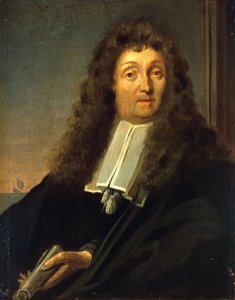
Ludolf Backhuysen I
1630 - 1708 , Deutschland
Kurzinfos
- Artistic Movement Or Style: Dutch Baroque
- Artists Who Influenced This Artist:
- Allart van Everdingen
- Hendrik Dubbels
- Date Of Birth: December 28, 1630
- Full Name: Ludolf Bakhuysen I
- Nationality: Dutch
- Notable Artworks:
- Ships in a Storm
- Seascape and Fishing Boats
- Battle of Vigo Bay
- Place Of Birth: Emden, Germany
Ähnliche Artikel
Versand und Rückgabe
APS bietet weltweiten Kunstversand auf Expertenniveau mit museumsgerechter Sorgfalt, vollständiger Sendungsverfolgung und einer 30-tägigen Geld-zurück-Garantie. Von Zollabwicklung bis Priority Production vertrauen Sie auf transparenten Service, sichere Verpackung und zuverlässige Lieferung für Sammler, Designer und Galerien.
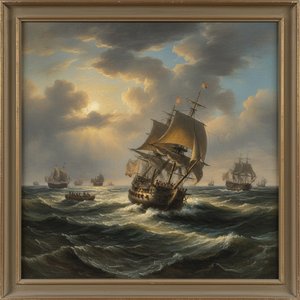
Ludolf Backhuysen I: Master of Dutch Marine Painting & Atmospheric Realism
Explore the captivating world of Ludolf Backhuysen I, a master of Dutch marine painting. Discover his signature realism, atmospheric seascapes & lasting influence on art history. Learn about collecting and appreciating this Golden Age artist.
The Allure of the Horizon: A Comprehensive Exploration of Seascape Art Through History & Emotion
Explore the captivating world of seascape art! Discover its history, key artists & movements – from Dutch Masters to Impressionism. Expert insights for collectors and enthusiasts at ArtsDot.
Abraham Hulk Senior und die maritime Topographie des niederländischen Goldenen Zeitalters: Eine Pionierleistung
Entdecken Sie das Werk von Abraham Hulk Senior, einem Pionier der niederländischen Marinemalerei des Goldenen Zeitalters. Erfahren Sie mehr über seine einzigartige Topographie und seinen Einfluss auf nachfolgende Künstler – mit Expertenwissen von ArtsDot.
Willem van de Velde der Ältere: Meister der Seemalererei und Chronist des Niederländischen Goldenen Zeitalters
Entdecken Sie das Werk von Willem van de Velde der Ältere, dem Meister der Seemalerei des Niederländischen Goldenen Zeitalters. Erfahren Sie mehr über sein Leben, seine Techniken und seinen Einfluss auf die Kunstgeschichte – jetzt bei ArtsDot!