

 Vorschau anzeigen
 Versenden
 Teilen
 Details anzeigen

 Herunterladen
 Ähnliche Objekte
 Röntgenaufnahme
 Diashow
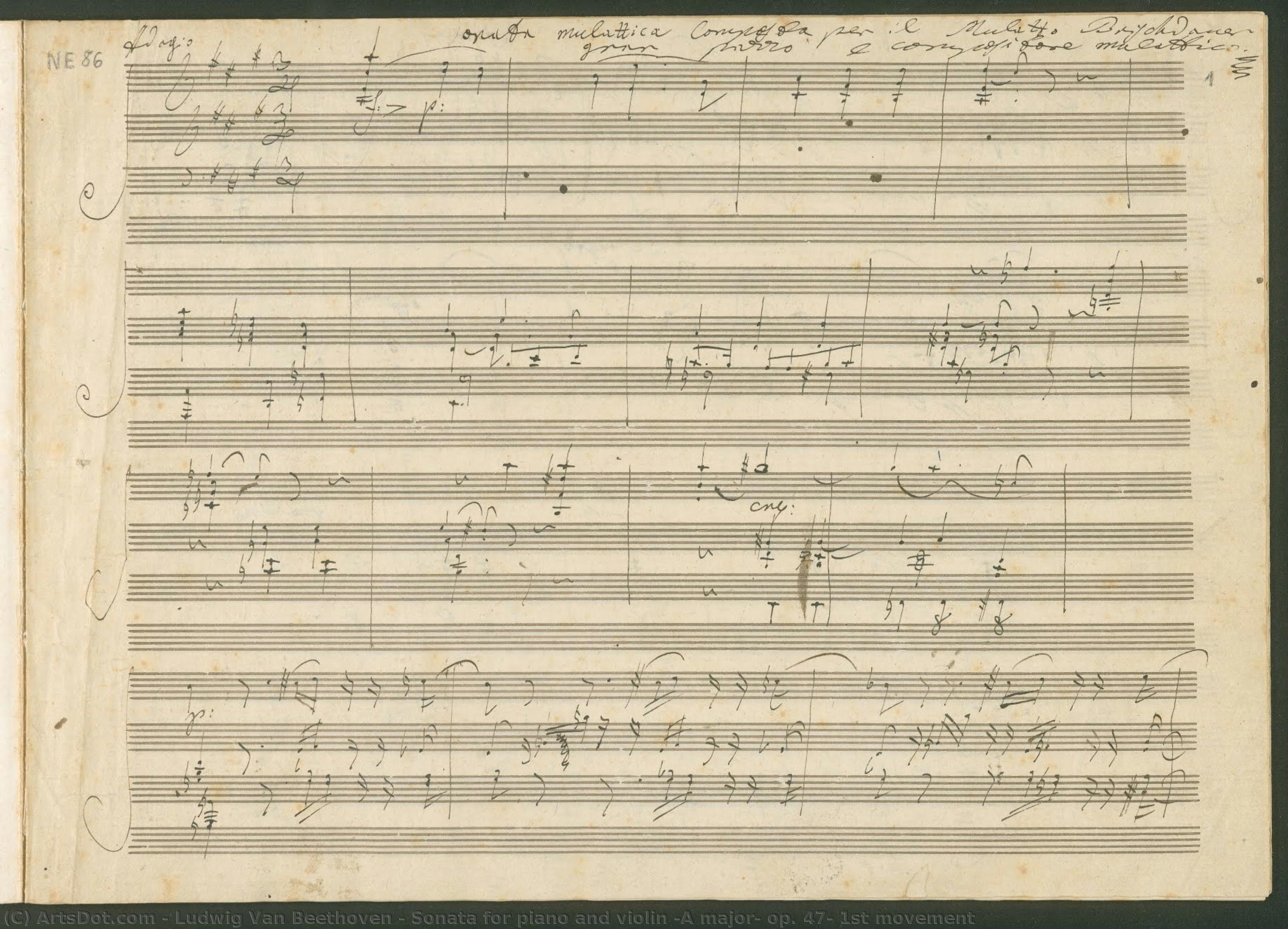
Sonata for piano and violin (A major) op. 47, 1st movement


 Weiterlesen
Erwerben Sie ein hochauflösendes, optimiertes digitales Bild, das der Online-Vorschau weit überlegen ist.
Jede Datei wird von unseren hauseigenen Spezialisten mit modernsten Werkzeugen und fachmännischer manueller Retusche sorgfältig vorbereitet. Wir stellen sicher, dass jedes Bild eine außergewöhnliche Klarheit, präzise Farbgenauigkeit und feinste Details aufweist.
Die endgültige Datei wird innerhalb von 72 Stunden per E-Mail zugestellt und ist für den sofortigen Einsatz in professionellen, redaktionellen und Druckumgebungen optimiert. Es handelt sich um dieselbe Qualität, der führende Designstudios, Verlage und Galerien vertrauen.
Digitales Bild
Laden Sie eine hochauflösende Datei für die persönliche Präsentation, den Druck und kreative Projekte herunter. ( Druck bestellen Handgemalte Reproduktion bestellen)
In jeder Bestellung digitaler Bilder enthalten
Professionelle digitale Bereitstellung, garantiert
Wenn Sie sich für ArtsDot.com entscheiden, erhalten Sie nicht nur ein Bild – Sie erhalten ein professionell aufbereitetes digitales Kunstwerk, das mit höchster Präzision erstellt und durch eine Zufriedenheitsgarantie abgesichert wird. Hier ist alles, was automatisch mit Ihrer Bestellung geliefert wird:

Schnelle E-Mail-Zustellung
Ihre hochauflösende digitale Bilddatei wird Ihnen innerhalb von 72 Stunden nach der Bestellung per E-Mail zugestellt – bereit zur sofortigen Verwendung.

KI-optimierte digitale Datei
Ihre Kunstwerke werden professionell mithilfe fortschrittlicher KI-Tools und manueller Bearbeitung optimiert, um maximale Detailtreue, Klarheit und Farbgenauigkeit zu gewährleisten.

Lebenslanger kostenloser Neudruckservice
Datei versehentlich gelöscht oder verloren? Keine Sorge – wir senden sie Ihnen jederzeit kostenlos erneut zu.

Keine Einfuhrgebühren – jemals
Genießen Sie Ihr Kunstwerk sofort ohne Zollgebühren, Einfuhrabgaben oder Versandkosten – digitale Downloads sind immer steuerfrei.

Garantierte Farbtreue
Wir garantieren, dass Ihr digitales Bild mithilfe professioneller Werkzeuge und Farbmanagement die Originalfarben so präzise wie möglich wiedergibt.

100-Tage-Zufriedenheitsgarantie
Sollten Sie mit Ihrem digitalen Bild nicht zufrieden sein, werden wir es überarbeiten oder Ihnen innerhalb von 100 Tagen 100% erstatten – ohne Wenn und Aber.

100% Geld-zurück-Garantie
Nicht zufrieden? Erhalten Sie innerhalb von 100 Tagen nach Erhalt Ihrer digitalen Datei eine vollständige Rückerstattung – ohne Angabe von Gründen.

Rabatte bei Großbestellungen
3 Bilder kaufen, 10% sparen – 5 Bilder kaufen, 15% sparen – Ab 10 Bildern 20% sparen. Ideal für kreative Projekte, Galerien und Agenturen.
Beethoven’s Sonata for Piano and Violin: A Journey Through Passion and Innovation
Ludwig van Beethoven's "Sonata for Piano and Violin in A major, Op. 47," often known as the “Kreutzer Sonata,” isn’t merely a musical composition; it’s a visceral experience, a window into the turbulent soul of one of history’s most transformative composers. Completed in 1803 during a period of intense personal and professional upheaval for Beethoven – marked by increasing deafness and shifting patronage – this sonata stands as a testament to his unwavering artistic vision and his ability to translate profound emotion into sound.
The piece immediately captivates with its dramatic opening, eschewing the typical elegance of early Classical sonatas. Instead, it plunges directly into a chromatic introduction in D minor, a stark departure that establishes an atmosphere of brooding intensity. This initial darkness serves as a powerful counterpoint to the subsequent movements, creating a dynamic tension that defines the entire work. The first movement, marked “Adagio sostenuto – Presto,” unfolds with a deliberate slowness, building gradually towards a frenzied climax—a whirlwind of notes and rhythms that mirrors the composer’s own inner turmoil. The interplay between the piano and violin is not one of simple accompaniment; rather, it's a passionate dialogue, a push and pull of ideas and emotions.
A Tale of Rivalry and Dedication
The story behind the “Kreutzer Sonata” is as compelling as the music itself. Initially dedicated to the celebrated violinist George Bridgetower, the sonata’s creation was intertwined with a scandalous affair and a bitter dispute. Beethoven, deeply attached to a woman, became embroiled in a quarrel with Bridgetower, fueled by jealousy and resentment. The resulting estrangement led Beethoven to ultimately dedicate the work to Rodolphe Kreutzer, a fellow violinist known for his virtuosity and connections within the Viennese musical circles. This act of dedication, born from conflict, adds another layer of intrigue to the sonata’s narrative.
Interestingly, Kreutzer himself reportedly found the piece baffling and refused to perform it, suggesting that its complexity and emotional intensity were beyond his capabilities. This reluctance further cemented the “Kreutzer Sonata”’s reputation as a challenging and demanding work—a testament to Beethoven's willingness to push the boundaries of musical expression.
Form and Technique: A Masterclass in Duo Performance
Structurally, the sonata is divided into three distinct movements. The second movement, an “Andante,” offers a brief respite from the intensity of the first, presenting a more lyrical and contemplative theme. However, even here, Beethoven employs unexpected harmonic shifts and rhythmic irregularities, preventing it from becoming overly sentimental. The final movement, a spirited “Presto” in A major, is a whirlwind of energy and virtuosity—a dazzling display of technical skill and compositional ingenuity.
Beethoven’s use of dynamics and orchestration is particularly noteworthy. He masterfully employs contrasting levels of volume to heighten the emotional impact of each movement, creating moments of overwhelming power and delicate beauty. The interplay between the piano and violin is meticulously crafted, with each instrument taking turns to dominate the texture—a testament to Beethoven's understanding of duo performance.
Symbolism and Emotional Resonance
Beyond its technical brilliance, the “Kreutzer Sonata” resonates deeply with listeners due to its profound emotional content. The sonata’s turbulent energy reflects the composer’s own struggles with deafness and his personal relationships—a poignant exploration of love, loss, jealousy, and ambition. The story of the sonata's dedication is itself imbued with symbolism, representing not only a musical work but also a complex human drama.
Listening to the “Kreutzer Sonata” is akin to embarking on a journey through the depths of the human psyche—a powerful reminder of the enduring capacity for both beauty and suffering within the creative spirit. It remains a cornerstone of the classical repertoire, captivating audiences with its dramatic intensity and timeless emotional resonance.
Ähnliche Kunstwerke
Biografie des Künstlers
early life and musical beginnings
Ludwig van Beethoven, a renowned German composer and pianist, was born in Bonn, Germany, in 1770. Displaying his musical talent at a young age, he began studying music under various teachers before moving to Vienna, where he would spend most of his life. Despite suffering from deafness for much of his career, Beethoven continued to compose some of the most iconic pieces of classical music, including Symphony No. 9 and Moonlight Sonata. His innovative compositions combined vocals and instruments, creating a unique sound that has influenced countless musicians over the centuries. Some of Beethoven’s notable works include:- Sonata for Piano and Violoncello (A Major) Op. 69, 1st Movement (available at ArtsDot.com)
- Beethoven's Manuscript of the Missa Solemnis (viewable at Wikipedia)
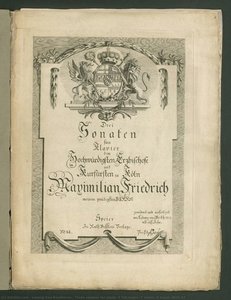
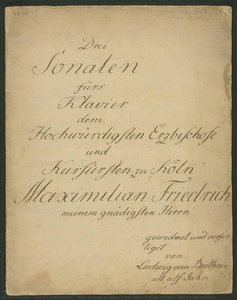
- Three Opus 1 Piano Sonatas, Patronized by Karl Alois, Prince Lichnowsky
musical development and influences
Beethoven’s formative years were marked by exposure to influential composers such as Franz Joseph Haydn and Christian Gottlob Schulze, who instilled in him a deep understanding of classical musical traditions. These mentors nurtured his prodigious talent and shaped his artistic vision—a vision that would ultimately transcend the boundaries of its time. His early compositions demonstrated remarkable technical skill and melodic beauty, foreshadowing the grandeur and emotional depth characteristic of his later masterpieces. Beethoven’s dedication to mastering the piano was unwavering, honing his craft through rigorous practice and experimentation.key achievements and iconic works
Beethoven's legacy rests upon a monumental body of work that revolutionized musical thought and expression. Symphony No. 9, with its choral finale celebrating Schiller’s Ode to Joy, stands as an unparalleled testament to human aspiration and unity—a cornerstone of Romantic idealism. Moonlight Sonata captivated audiences worldwide with its haunting melody and evocative harmonies, establishing Beethoven as a pioneer in instrumental piano music. Furthermore, his Piano Sonatas Op. 27 No. 1 and Op. 53 ("Pathétique") are considered among the most emotionally resonant compositions ever conceived, exploring themes of despair, resilience, and transcendence.Vienna and artistic legacy
Beethoven established himself as a celebrated composer in Vienna, Austria, where he cultivated relationships with prominent patrons and fellow artists—a milieu that fostered creativity and intellectual exchange. Despite facing increasing deafness throughout his later years, Beethoven persevered in composing some of his most profound works, demonstrating an unwavering commitment to artistic excellence. His music continues to inspire generations of musicians and listeners alike, cementing his position as one of the greatest figures in Western musical history. Ludwig van Beethoven | 30 artworks Learn more about Beethoven’s life and music at Wikipedia: Ludwig van Beethoven - Wikipedia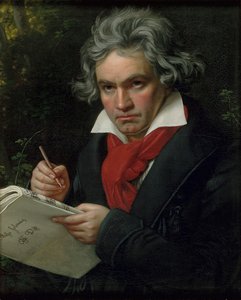
Ludwig Van Beethoven
1770 - 1827 , Deutschland
Kurzinfos
- Artistic Movement Or Style: Klassisch Romantik
- Artists Or Movements Influenced By This Artist: ['Johannes Brahms']
- Artists Who Influenced This Artist:
- Franz Joseph Haydn
- Christian Gottlob Schulze
- Date Of Birth: 1770 Bonn Deutschland
- Date Of Death: 1827 Wien Österreich
- Full Name: Ludwig van Beethoven
- Nationality: Deutsch
- Notable Artworks:
- Mondscheinsonate
- Symfonie Nr. 9
- Place Of Birth: Bonn Deutschland