 Versenden
 Teilen
 Details anzeigen

 Herunterladen
 Ähnliche Objekte
 Diashow
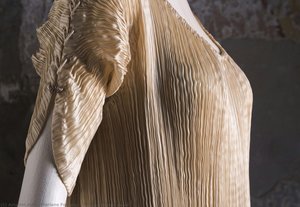
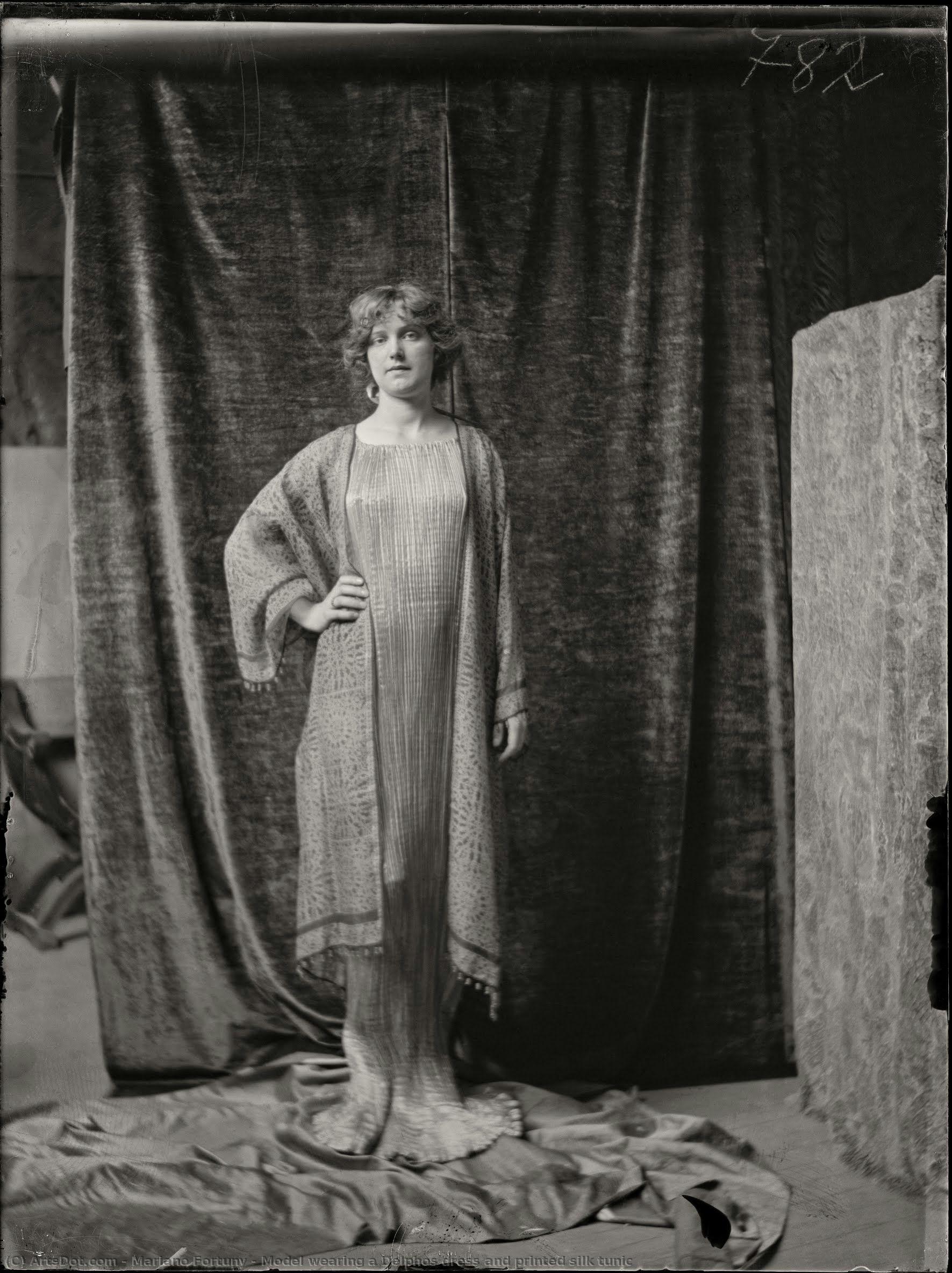
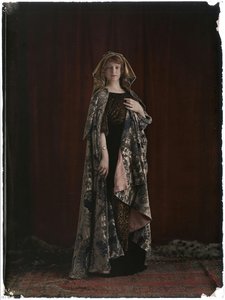
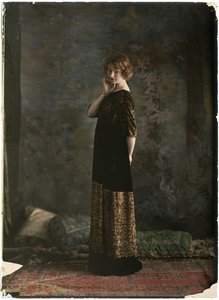
Model wearing a Delphos dress and printed silk tunic
 Giclée Print
- Digital
- Orientalist Painting
 1920
1920- 19th Century
 12.0 x 9.0 cm
 Palazzo Fortuny
 Weiterlesen
Handgefertigte Ölreproduktion
Handgemaltes Ölgemälde auf Leinwand in Ihrer Wunschgröße und mit Rahmen, auf Bestellung von unseren Künstlern angefertigt. ( Druck bestellen Bild kaufen)




































Wählen Sie aus unseren vordefinierten Formaten, die den ursprünglichen Proportionen des Kunstwerks entsprechen.

Sie können Ihre eigenen Maße eingeben, um einen bestimmten Rahmen oder Platz auszufüllen. Wenn die gewählte Größe nicht den Proportionen des Originalbildes entspricht, werden wir das Kunstwerk entweder beschneiden oder das Gemälde durch zusätzliche, handgemalte Elemente erweitern. Ein digitales Mockup wird Ihnen zur Genehmigung zugesandt, bevor die Produktion beginnt.
Bitte beachten Sie, dass die Bildschirmvorschau nicht die tatsächliche Beschneidung oder Erweiterung widerspiegelt. Nur das Mockup zeigt die endgültige Komposition exakt an.
Obwohl Sondermaße verfügbar sind, empfehlen wir, eine Größe aus der vordefinierten Liste zu wählen, um die ursprünglichen Proportionen beizubehalten.
Nach der Bestellung wird das ArtsDot.com-Team dem Kunden Anweisungen per E-Mail zusenden und eine Mockup-Vorschau bereitstellen.
Weltweiter Versand () in nur 3 bis 4 Wochen statt der üblichen 5 Wochen. (28 August). Keine Kompromisse bei der Qualität.

Kostenloser weltweiter Expressversand

Hochwertige Leinenleinwand

Umfassender Versicherungsschutz beim Versand

Zollgebühren-Rückerstattungsgarantie

Garantie für exakte Farbtreue

60 Tage Rückgaberecht (nur bei Mängeln)

100% Geld-zurück-Garantie

Mengenrabatt verfügbar
 Die Glasoption ist nur für Größen unter 110 cm verfügbar.

Model wearing a Delphos dress and printed silk tunic
Art der Reproduktion
Format der Reproduktion
-


Gesamtpreis
$ 263
Mariano Fortuny: A Pioneer of Textile Art and Dramatic Lighting
Mariano Fortuny y Marsal (1871–1949) stands as an extraordinary figure in the annals of Spanish art, transcending mere painterly skill to become a visionary innovator who reshaped both fashion and theatrical design. Born in Reus, Catalonia, his formative years were marked by profound loss – the untimely death of his father instilled within him a resilience that would fuel his lifelong pursuit of artistic excellence. This early hardship propelled him toward Paris, where he encountered the stimulating environment of bohemian culture and established crucial connections with influential figures who nurtured his burgeoning talent. Fortuny’s artistic journey began with a fervent fascination for Romanticism's Orientalist fervor, mirroring the broader European trend towards exploring distant lands and cultures. However, it was his groundbreaking experimentation with textiles—specifically the creation of the Delphos dress—that cemented his place as a true revolutionary.- The Birth of Delphos: Fortuny’s obsession with Grecian aesthetics drove him to conceive of a garment that embodied elegance and fluidity, mirroring the draped robes of ancient Greece. He meticulously crafted this dress using pleated silk, employing a novel technique—the “pleating system”—that revolutionized textile production and captivated Parisian society.
- Technique & Innovation: Fortuny’s ingenious pleating method involved applying pressure to fabric rolls while they rotated on a lathe, resulting in remarkably consistent folds that achieved unparalleled drape and comfort. This innovation wasn't merely about aesthetics; it represented a fundamental shift in manufacturing processes, anticipating advancements in textile technology decades later.
- A Stage for Dreams: Beyond fashion, Fortuny revolutionized theatrical lighting design with his “cyclorama dome,” a semi-spherical structure that utilized indirect illumination to create immersive environments—a technique that dramatically enhanced the visual impact of performances and profoundly influenced stagecraft worldwide.
Orientalism & Artistic Inspiration: Echoes of the East in Fortuny’s Palette
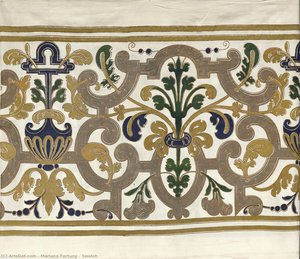
Fortuny's artistic vision was deeply rooted in his fascination with the Orient, particularly Morocco. His travels to North Africa provided him with unparalleled inspiration for his paintings and textile designs—a stylistic influence that is palpable throughout his oeuvre. The vibrant hues of Moroccan landscapes—deep reds, ochres, blues—found their way into Fortuny’s canvases, reflecting a desire to capture the exotic beauty of distant cultures. This preoccupation with the East wasn't simply decorative; it represented a broader intellectual engagement with philosophical concepts and artistic traditions that challenged conventional European perspectives.Symbolism & Emotional Resonance: The Delphos Dress as Embodiment of Grace
The Delphos dress transcends its material form to become an emblem of grace, sophistication, and feminine liberation—a testament to Fortuny’s ability to infuse his creations with profound symbolic meaning. Its flowing silhouette evoked the idealized beauty of ancient Greece, symbolizing harmony, balance, and intellectual refinement. More importantly, it represented a rejection of restrictive corsets and societal conventions, empowering women to express their individuality while embracing elegance and comfort. The dress's enduring appeal speaks to Fortuny’s astute understanding of human psychology—his conviction that art could elevate the spirit and inspire transformative change.Legacy & Enduring Influence: Mariano Fortuny's Place in Art History
Mariano Fortuny y Marsal’s legacy extends far beyond his individual artistic achievements; he fundamentally altered the landscape of both fashion and theater, establishing precedents that continue to resonate today. His pioneering innovations—the pleating system and the cyclorama dome—remain influential benchmarks for designers and artists alike. Moreover, Fortuny's unwavering commitment to blending art and science—his belief in the power of observation and experimentation—served as an inspiration for generations of creatives who sought to push boundaries and redefine artistic expression. He remains a beacon of creativity and innovation—a true visionary whose contributions endure as timeless symbols of artistic excellence.Ähnliche Kunstwerke
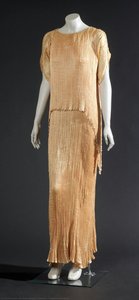
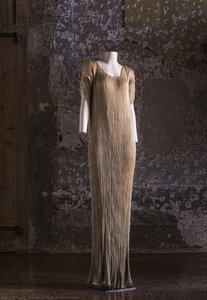
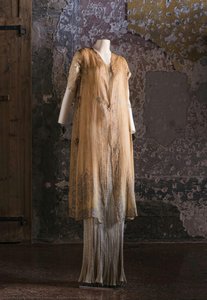
Über den Künstler
Frühe Jahre und Inspiration
Mariano Fortuny, ein spanischer Modeschöpfer, wurde am 11. Mai 1871 in Granada, Spanien, geboren. Sein Vater, Mariano Fortuny y Marsal, war ein Maler des Genrebildes, der verstarb, als Mariano erst drei Jahre alt war. Dieses tragische Ereignis führte dazu, dass die Familie nach Paris, Frankreich, zog, wo die Mutter von Mariano ihn mit verschiedensten Textilien und Stoffen vertraut machte, die später seine schöpferische Kraft maßgeblich beeinflussen sollten.Künstlerische Talente und Erfindungen
Schon in jungen Jahren offenbarte Mariano Fortuny sein außergewöhnliches künstlerisches Talent und bewies meisterhafte Fähigkeiten in der Malerei, Fotografie, Bildhauerei, Architektur, Radierung sowie in der theatralischen Bühnenbeleuchtung. Seine Erfindungen, darunter über zwanzig Patente, die zwischen 1901 und 1934 angemeldet wurden, revolutionierten die Welt des Bühnendesigns grundlegend.- Er entwickelte das Fortuny-Cyclorama-Dome, eine halbkuppelförmige Struktur aus Gips oder Stoff, die indirektes Licht nutzte, um einen nahtlosen Übergang zwischen den Szenen zu schaffen.
- In seiner Abhandlung „Eclairage Scénique“ (1904) beschrieb er seine Entdeckung, wie Licht von verschiedenen Oberflächen reflektiert werden kann, wodurch sich dessen Farbe, Intensität und Eigenschaften verändern lassen.
Bemerkenswerte Beiträge und Kollaborationen
Die Arbeit von Mariano Fortuny erlangte in den 1920er Jahren weltweite Anerkennung. Er arbeitete mit bedeutenden Persönlichkeiten zusammen, darunter:- Richard Wagner, ein deutscher Komponist, dessen Opern Mariano dazu inspirierten, ganze Szenen zu malen.
- Das berühmte Opernhaus La Scala in Mailand, in dem er seine Kuppel installierte, wobei er sie für das größere Theater anpasste und einen Saugventilator erfand, um die straffe Struktur aufrechtzuerhalten.
Vermächtnis und spätes Leben
Mariano Fortuny verstarb am 3. Mai 1949 in Venedig, Italien. Sein Werk inspirierte den französischen Schriftsteller Marcel Proust, und sein Leben fand in Pere Gimferrer's Roman „Fortuny“ Niederschlag. Das Erbe von Mariano beeinflusst die Welt des Bühnendesigns bis heute nachhaltig.- Erforschen Sie mehr über die Erfindungen und Entwürfe von Mariano Fortuny in der Sammlung von ArtsDot.
- Entdecken Sie die Auswirkungen seines Werkes auf die Theaterbeleuchtung in The Museum Destroyed by Fire (USA), einer Erzählung über ein unglückliches Ereignis, das die amerikanische Kunstgeschichte prägte, verfügbar im Blog von ArtsDot.
Ausgewählte Gemälde von Mariano Fortuny und anderen Künstlern
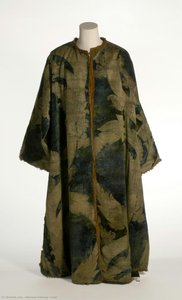
- Mariano Fortuny: Teagown (Museum of Fine Arts, Boston, USA), verfügbar in der Sammlung von ArtsDot.
- Marc Chagall: Studie zu 'Hohelied IV' (Naive Kunst / Primitivismus), verfügbar in der Sammlung von ArtsDot.
- Pablo Picasso: Klarinette (Analytischer Kubismus, Öl auf Leinwand), verfügbar in der Sammlung von ArtsDot.
- Vincent van Gogh: Baumwurzeln (50 x 100 cm, Post-Impressionismus, Öl auf Leinwand), verfügbar in der Sammlung von ArtsDot.
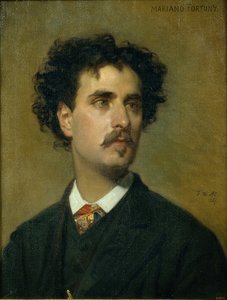
Mariano Fortuny
1871 - 1949 , Spanien
Kurzinfos
- Artistic Movement Or Style: Orientalism art
- Artists Or Movements Influenced By This Artist: ['Marcel Proust']
- Artists Who Influenced This Artist: ['Richard Wagner']
- Date Of Birth: 11. Juni 1838
- Date Of Death: 21. November 1949
- Full Name: Mariano Fortuny y Marsal
- Nationality: Spanisch
- Notable Artworks:
- Teagown
- Portrait of Henriette Fortuny
- Place Of Birth: Granada, Spanien
Ähnliche Artikel
Mariano Fortuny: Ein Synthese aus Kunst, Mode und Design – Das Erbe eines venezianischen Innovators
Entdecken Sie das faszinierende Erbe von Mariano Fortuny, dem venezianischen Künstler und Innovator! Erfahren Sie mehr über seine bahnbrechenden Stoffe, seinen Einfluss auf Mode & Design und die Bewahrung seines Schaffens im Museo Fortuny.

Woven Wonders: A Beginner's Guide to Elevating Your New Home with Timeless Textile Art
Discover how to transform your new home with the warmth of textile art. Our expert guide for newlyweds explores handwoven tapestries, tactile fibers, and timeless ways to curate a soulful, sophisticated interior through beautiful woven wonders.

The Golden Age Reforged: Dramatic Realism & Religious Zeal in Spanish Baroque Art
Explore the dramatic world of Spanish Baroque art! Discover masters like Zurbarán & the powerful influence of religious zeal on painting techniques – a guide for collectors and enthusiasts.
Rafael de Penagos: A Study in Spanish Portraiture & Artistic Identity
Explore the life & art of Rafael de Penagos, a leading Spanish Art Deco illustrator. Discover his iconic 'Penagos Woman', commercial work, and lasting legacy. Learn about this pivotal figure in 20th-century Spanish art history.

Crimson Threads of Narrative: Exploring Symbolism & Representation in Artworks Featuring the Red Dress
Explore the rich symbolism of the red dress in art history! From ancient power displays to iconic portraits like Cézanne’s 'Madame Cezanne', discover the cultural and artistic significance behind this captivating color. Expert analysis & insights.