

 Versenden
 Teilen
 Details anzeigen

 Herunterladen
 Ähnliche Objekte
 Diashow
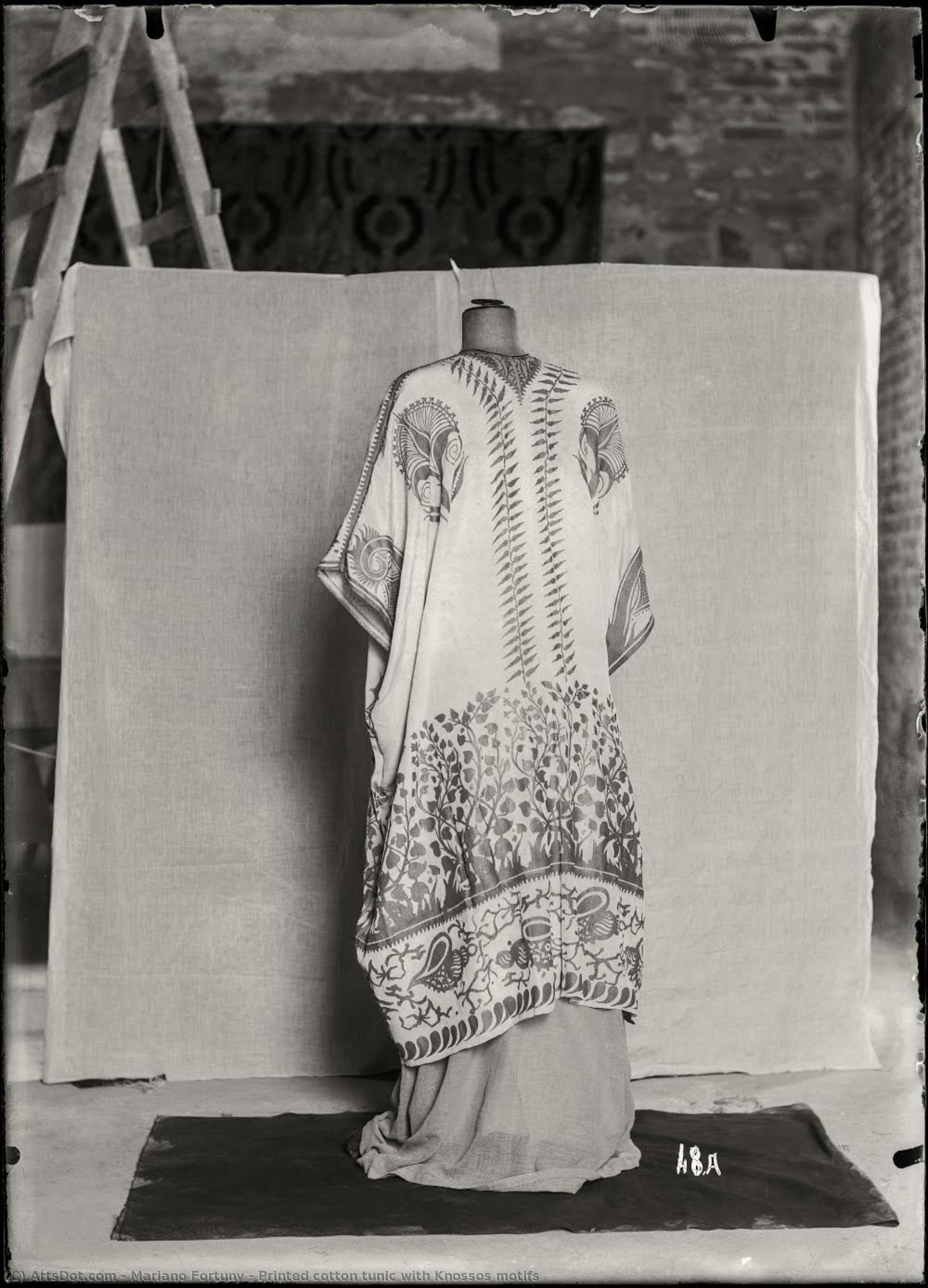
Printed cotton tunic with Knossos motifs
 Textile
- Textile
- Orientalism
 1915
1915 18.0 x 13.0 cm
 Palazzo Fortuny
 Weiterlesen
Erwerben Sie ein hochauflösendes, optimiertes digitales Bild, das der Online-Vorschau weit überlegen ist.
Jede Datei wird von unseren hauseigenen Spezialisten mit modernsten Werkzeugen und fachmännischer manueller Retusche sorgfältig vorbereitet. Wir stellen sicher, dass jedes Bild eine außergewöhnliche Klarheit, präzise Farbgenauigkeit und feinste Details aufweist.
Die endgültige Datei wird innerhalb von 72 Stunden per E-Mail zugestellt und ist für den sofortigen Einsatz in professionellen, redaktionellen und Druckumgebungen optimiert. Es handelt sich um dieselbe Qualität, der führende Designstudios, Verlage und Galerien vertrauen.
Digitales Bild
Laden Sie eine hochauflösende Datei für die persönliche Präsentation, den Druck und kreative Projekte herunter. ( Druck bestellen Handgemalte Reproduktion bestellen)
In jeder Bestellung digitaler Bilder enthalten
Professionelle digitale Bereitstellung, garantiert
Wenn Sie sich für ArtsDot.com entscheiden, erhalten Sie nicht nur ein Bild – Sie erhalten ein professionell aufbereitetes digitales Kunstwerk, das mit höchster Präzision erstellt und durch eine Zufriedenheitsgarantie abgesichert wird. Hier ist alles, was automatisch mit Ihrer Bestellung geliefert wird:

Schnelle E-Mail-Zustellung
Ihre hochauflösende digitale Bilddatei wird Ihnen innerhalb von 72 Stunden nach der Bestellung per E-Mail zugestellt – bereit zur sofortigen Verwendung.

KI-optimierte digitale Datei
Ihre Kunstwerke werden professionell mithilfe fortschrittlicher KI-Tools und manueller Bearbeitung optimiert, um maximale Detailtreue, Klarheit und Farbgenauigkeit zu gewährleisten.

Lebenslanger kostenloser Neudruckservice
Datei versehentlich gelöscht oder verloren? Keine Sorge – wir senden sie Ihnen jederzeit kostenlos erneut zu.

Keine Einfuhrgebühren – jemals
Genießen Sie Ihr Kunstwerk sofort ohne Zollgebühren, Einfuhrabgaben oder Versandkosten – digitale Downloads sind immer steuerfrei.

Garantierte Farbtreue
Wir garantieren, dass Ihr digitales Bild mithilfe professioneller Werkzeuge und Farbmanagement die Originalfarben so präzise wie möglich wiedergibt.

60-Tage-Zufriedenheitsgarantie
Sollten Sie mit Ihrem digitalen Bild nicht zufrieden sein, werden wir es überarbeiten oder Ihnen innerhalb von 60 Tagen 100% erstatten – ohne Wenn und Aber.

100% Geld-zurück-Garantie
Nicht zufrieden? Erhalten Sie innerhalb von 60 Tagen nach Erhalt Ihrer digitalen Datei eine vollständige Rückerstattung – ohne Angabe von Gründen.

Rabatte bei Großbestellungen
3 Bilder kaufen, 10% sparen – 5 Bilder kaufen, 15% sparen – Ab 10 Bildern 20% sparen. Ideal für kreative Projekte, Galerien und Agenturen.
Details zum Sammlerstück
A Glimpse into Ottoman Echoes: Mariano Fortuny’s “Printed Cotton Tunic with Knossos Motifs”
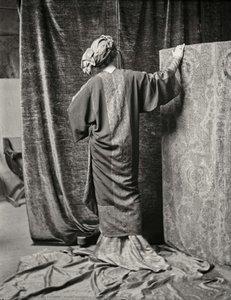
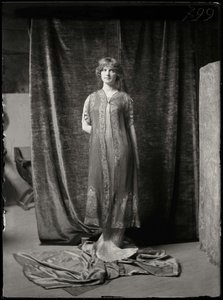
The year is 1915, and within the bustling atelier of Mariano Fortuny y Marsal in Venice, a textile masterpiece emerges – “Printed Cotton Tunic with Knossos Motifs.” More than just a garment, this piece represents a pivotal moment in the artist’s career, embodying his revolutionary approach to design and his deep fascination with ancient cultures. Captured through a remarkably detailed black-and-white photograph by Fortuny himself, the image offers a window into a world of intricate patterns, luxurious fabrics, and a distinctly Orientalist aesthetic that would define his legacy.
The photograph’s strength lies in its documentary quality – it feels less like a polished advertisement and more like a captured moment. The stark backdrop of a weathered brick wall, punctuated by the scaffolding hinting at the workshop's industrious activity, provides an intriguing contrast to the vibrant textile dominating the frame. The mannequin, a simple yet effective device, allows the viewer to fully appreciate the garment’s design without distraction. Notice the careful lighting, diffusing shadows and highlighting the texture of both the fabric and the wall – a testament to Fortuny's meticulous attention to detail.
A Tapestry of Influences: The Knossos Motif and Ottoman Design
The central element of this tunic is undoubtedly its captivating design. The intricate floral motif, reminiscent of ancient Greek pottery found at Knossos, immediately draws the eye. Stylized birds and other creatures are interwoven within the blossoms, creating a complex and visually rich composition. However, the influence extends far beyond classical Greece; subtle echoes of Ottoman designs – particularly in the geometric patterns and use of color (though rendered in monochrome here) – can be discerned. Fortuny was deeply inspired by the exotic textiles he encountered during his travels to North Africa and the Middle East, skillfully blending these influences into a uniquely personal style.
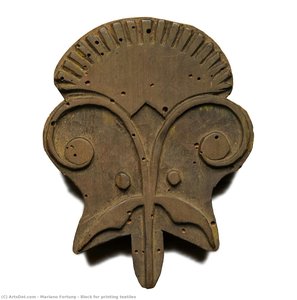
The choice of cotton as the primary fabric speaks volumes about Fortuny’s commitment to innovation. He wasn't simply replicating existing patterns; he was pioneering new printing techniques that allowed for incredibly detailed and nuanced designs on textiles. This photograph offers a rare glimpse into this process, hinting at the painstaking labor involved in creating such a complex piece.
The Legacy of Palazzo Fortuny: Innovation and Artistic Vision
“Printed Cotton Tunic with Knossos Motifs” is inextricably linked to the story of Palazzo Fortuny, the artist’s workshop and home in Venice. Established in 1907 alongside his wife, Cecilia de Madrazo, this space became a crucible for artistic experimentation and textile production. Fortuny's inventions – including the “fortuny cyclorama dome” which revolutionized theatrical lighting – were born within these walls, and countless designs emerged from its workshops.
The photograph’s date of 1915 places it firmly within this period of intense creativity. It reflects a time when Fortuny was pushing the boundaries of textile design, challenging conventional notions of pattern and color, and establishing himself as a leading figure in the international fashion world. The image serves as a powerful reminder of his pioneering spirit and his ability to seamlessly blend historical references with contemporary aesthetics.
A Timeless Masterpiece: Reproduction and Artistic Appreciation
Today, ArtsDot offers high-quality reproductions of “Printed Cotton Tunic with Knossos Motifs,” allowing art lovers worldwide to experience the beauty and complexity of this iconic textile. The original’s meticulous detail and evocative atmosphere are faithfully captured in these reproductions, making them ideal additions to any collection or interior design scheme. More than just a print, it's an invitation to step back in time and appreciate the genius of Mariano Fortuny – a true visionary who transformed textiles into works of art.
Ähnliche Kunstwerke
Biografie des Künstlers
Frühe Jahre und Inspiration
Mariano Fortuny, ein spanischer Modeschöpfer, wurde am 11. Mai 1871 in Granada, Spanien, geboren. Sein Vater, Mariano Fortuny y Marsal, war ein Maler des Genrebildes, der verstarb, als Mariano erst drei Jahre alt war. Dieses tragische Ereignis führte dazu, dass die Familie nach Paris, Frankreich, zog, wo die Mutter von Mariano ihn mit verschiedensten Textilien und Stoffen vertraut machte, die später seine schöpferische Kraft maßgeblich beeinflussen sollten.Künstlerische Talente und Erfindungen
Schon in jungen Jahren offenbarte Mariano Fortuny sein außergewöhnliches künstlerisches Talent und bewies meisterhafte Fähigkeiten in der Malerei, Fotografie, Bildhauerei, Architektur, Radierung sowie in der theatralischen Bühnenbeleuchtung. Seine Erfindungen, darunter über zwanzig Patente, die zwischen 1901 und 1934 angemeldet wurden, revolutionierten die Welt des Bühnendesigns grundlegend.- Er entwickelte das Fortuny-Cyclorama-Dome, eine halbkuppelförmige Struktur aus Gips oder Stoff, die indirektes Licht nutzte, um einen nahtlosen Übergang zwischen den Szenen zu schaffen.
- In seiner Abhandlung „Eclairage Scénique“ (1904) beschrieb er seine Entdeckung, wie Licht von verschiedenen Oberflächen reflektiert werden kann, wodurch sich dessen Farbe, Intensität und Eigenschaften verändern lassen.
Bemerkenswerte Beiträge und Kollaborationen
Die Arbeit von Mariano Fortuny erlangte in den 1920er Jahren weltweite Anerkennung. Er arbeitete mit bedeutenden Persönlichkeiten zusammen, darunter:- Richard Wagner, ein deutscher Komponist, dessen Opern Mariano dazu inspirierten, ganze Szenen zu malen.
- Das berühmte Opernhaus La Scala in Mailand, in dem er seine Kuppel installierte, wobei er sie für das größere Theater anpasste und einen Saugventilator erfand, um die straffe Struktur aufrechtzuerhalten.
Vermächtnis und spätes Leben
Mariano Fortuny verstarb am 3. Mai 1949 in Venedig, Italien. Sein Werk inspirierte den französischen Schriftsteller Marcel Proust, und sein Leben fand in Pere Gimferrer's Roman „Fortuny“ Niederschlag. Das Erbe von Mariano beeinflusst die Welt des Bühnendesigns bis heute nachhaltig.- Erforschen Sie mehr über die Erfindungen und Entwürfe von Mariano Fortuny in der Sammlung von ArtsDot.
- Entdecken Sie die Auswirkungen seines Werkes auf die Theaterbeleuchtung in The Museum Destroyed by Fire (USA), einer Erzählung über ein unglückliches Ereignis, das die amerikanische Kunstgeschichte prägte, verfügbar im Blog von ArtsDot.
Ausgewählte Gemälde von Mariano Fortuny und anderen Künstlern
- Mariano Fortuny: Teagown (Museum of Fine Arts, Boston, USA), verfügbar in der Sammlung von ArtsDot.
- Marc Chagall: Studie zu 'Hohelied IV' (Naive Kunst / Primitivismus), verfügbar in der Sammlung von ArtsDot.
- Pablo Picasso: Klarinette (Analytischer Kubismus, Öl auf Leinwand), verfügbar in der Sammlung von ArtsDot.
- Vincent van Gogh: Baumwurzeln (50 x 100 cm, Post-Impressionismus, Öl auf Leinwand), verfügbar in der Sammlung von ArtsDot.
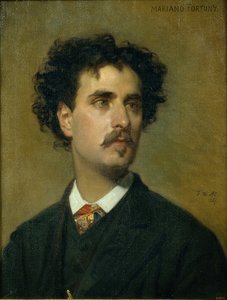
Mariano Fortuny
1871 - 1949 , Spanien
Kurzinfos
- Artistic Movement Or Style: Orientalism art
- Artists Or Movements Influenced By This Artist: ['Marcel Proust']
- Artists Who Influenced This Artist: ['Richard Wagner']
- Date Of Birth: 11. Juni 1838
- Date Of Death: 21. November 1949
- Full Name: Mariano Fortuny y Marsal
- Nationality: Spanisch
- Notable Artworks:
- Teagown
- Portrait of Henriette Fortuny
- Place Of Birth: Granada, Spanien

