 Vorschau anzeigen
 Versenden
 Teilen
 Details anzeigen

 Herunterladen
 Ähnliche Objekte
 Röntgenaufnahme
 Diashow
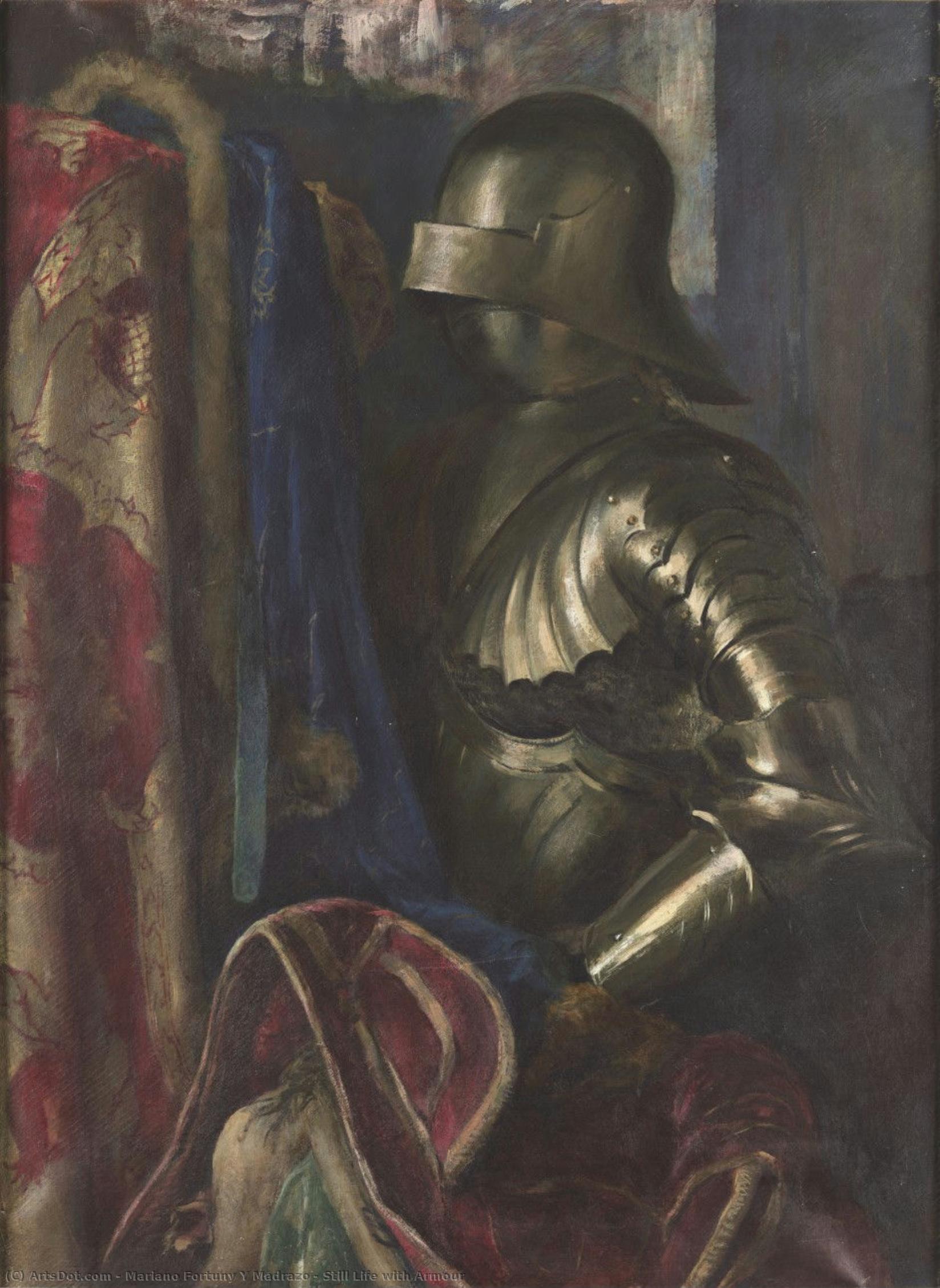
Still Life with Armour
 Oil On Canvas
- WallArt
- Academic Realism
 19th Century
 5.0 x 92.0 cm
 Palazzo Fortuny
 Weiterlesen
Giclée / Kunstdruck
Giclée- oder Leinwanddruck in Museumsqualität mit schneller Produktion und flexiblen Veredelungsoptionen. ( Handgemalte Reproduktion bestellen Bild kaufen)




P118B $10

P118H $10

P118W $10

P438Z $10

P508JH $12

P508YH $12

P805H $10

P805Z $10

P919BZ $10

P919G $10

P919XJ $10

P959ZH $10

P968JZ $12

W106C $8

W218G $10

W218JH $8

W218Y $10

W307PJ $10

W316G $10

W316PJ $8

W316Y $10

W398PJ $8

W4111J $10

W500HY $15

W500JH $15

W692G $12

W849H $8

W940BG $15

W953PJ $8




Wählen Sie aus unseren vordefinierten Formaten, die den ursprünglichen Proportionen des Kunstwerks entsprechen.

Sie können Ihre eigenen Maße eingeben, um ein bestimmtes Format oder einen speziellen Platz einzupassen. Wenn das von Ihnen gewählte Format nicht den Proportionen des Originalbildes entspricht, werden wir das Kunstwerk entweder beschneiden oder das Bild mit einem gespiegelten oder einfarbigen Rand erweitern. Ein digitaler Entwurf wird Ihnen zur Genehmigung zugesandt, bevor die Produktion beginnt.
Bitte beachten Sie, dass die Vorschau auf dem Bildschirm nicht den tatsächlichen Zuschnitt oder die Erweiterung widerspiegelt. Nur der Entwurf zeigt die endgültige Komposition präzise an.
Obwohl Sondermaße verfügbar sind, empfehlen wir die Auswahl eines Maßes aus der vordefinierten Liste, um die ursprünglichen Proportionen zu bewahren.
Weltweiter Versand () innerhalb von 2 Wochen statt der üblichen 4/5 Wochen. (23 August)

Kostenloser weltweiter Expressversand

Hochwertige Leinenleinwand

Umfassender Versicherungsschutz beim Versand

Zollgebühren-Rückerstattungsgarantie

Garantie für exakte Farbtreue

60 Tage Rückgaberecht (nur bei Mängeln)

100% Geld-zurück-Garantie

Mengenrabatt verfügbar
 Die Glasoption ist nur für Größen unter 110 cm verfügbar.

Still Life with Armour
Giclée / Kunstdruck
Format der Reproduktion
-


Gesamtpreis
$ 62
Sammlerstück-Beschreibung
A Study in Quiet Grandeur: Mariano Fortuny’s “Still Life with Armour”
Mariano Fortuny y Madrazo's "Still Life with Armour" is not merely a depiction of an object; it’s a carefully constructed tableau brimming with historical resonance, subtle symbolism, and a palpable sense of melancholy. Painted in 1874, just before his untimely death, this work offers a poignant glimpse into the artist’s evolving aesthetic – a masterful blend of academic realism, Spanish Old Master influences, and a distinctly Venetian sensibility. The piece immediately draws the viewer in with its muted palette and the imposing presence of the armored figure seated within a richly draped interior. It's a scene that whispers stories of bygone eras, hinting at both protection and isolation.
Composition and Technique: A Masterclass in Light and Texture
Fortuny’s technical skill is immediately evident in the meticulous rendering of textures – from the gleaming, highly polished surface of the armour to the soft, yielding folds of the velvet cushion and the subtly textured fabric of the curtain. The artist employs a layered glazing technique, building up color gradually to achieve remarkable depth and luminosity. Note how light dramatically sculpts the armor, highlighting its metallic sheen while simultaneously casting deep shadows that suggest both age and wear. The composition itself is carefully balanced; the central figure anchors the scene, while the strategically placed vases and birds create visual interest without disrupting the overall mood. The use of atmospheric perspective subtly recedes the background elements, adding to the sense of depth and enclosure.
- Color Palette: Dominated by earthy browns, grays, and blacks, punctuated by flashes of red and blue in the drapery – a restrained yet sophisticated choice.
- Brushwork: Generally visible, but skillfully blended to create a smooth, polished surface. The artist’s hand is present, adding to the work's authenticity.
- Lighting: Dramatic and directional, originating from an unseen source above and slightly to the left, creating strong contrasts of light and shadow that emphasize form and texture.
Symbolism and Historical Context: Echoes of a Lost Era
The central figure in full armour immediately evokes associations with chivalry, military prowess, and perhaps even the romanticized image of the Spanish conquistador. However, the seated posture – a slight slump of the shoulders, a contemplative gaze – suggests a weariness beyond mere physical exertion. The armour itself, a relic of a bygone era, becomes a symbol of protection, but also of confinement and isolation. The inclusion of birds, often associated with freedom and aspiration, subtly introduces an element of longing or unfulfilled potential. Considering Fortuny’s own travels and fascination with the East, particularly Morocco, one can interpret the scene as a meditation on the clash between tradition and modernity, or perhaps a reflection on the fleeting nature of glory.
The Venetian Influence: A Legacy of Innovation
Fortuny’s relocation to Venice in 1889 profoundly shaped his artistic vision. The city's atmospheric light, its faded grandeur, and its rich history of art and design all contributed to a distinctive aesthetic characterized by a sense of melancholy, nostalgia, and an appreciation for the beauty of decay. “Still Life with Armour” embodies this Venetian sensibility – a quiet elegance tempered by a subtle undercurrent of sadness. His later work would continue to explore these themes, particularly in his innovative use of textiles and stage lighting, solidifying his reputation as a true polymath and a pioneer of modern design. The piece stands as a testament to Fortuny’s ability to seamlessly blend historical references with personal expression, creating works that are both visually stunning and emotionally resonant.
Useful Links: Google Arts & Culture ArtsDot
Ähnliche Kunstwerke
Über den Künstler
Frühes Leben und Hintergrund
Mariano Fortuny y Madrazo, ein renommierter spanischer Universalgelehrter, Künstler, Erfinder und Modedesigner, wurde am 11. Mai 1871 in Granada, Spanien, geboren. Als Sohn von Mariano Fortuny y Marsal, einem Maler, wurden Marianos künstlerische Neigungen von klein auf gefördert.Karrierehöhepunkte
Marianos glanzvolle Karriere erstreckte sich über mehrere Disziplinen:- Modedesign: Er eröffnete 1906 sein Modehaus, das bis 1946 bestand und einen unauslöschlichen Eindruck in der Modewelt hinterließ.
- Künstlerische Tätigkeit: Seine künstlerischen Talente beschränkten sich nicht auf die Mode; er war ein begabter Maler, wie seine Werke wie "Fetching Water" (Öl auf Leinwand) zeigen.
- Erfindungen: Marianos Erfindergeist führte zur Entwicklung innovativer Designs und Techniken sowohl in der Kunst als auch in der Mode.
Einflüsse und Entwicklung
Fortuny wurde stark von den Werken alter Meister, insbesondere venezianischer Künstler, beeinflusst. Seine Reisen durch Europa und Nordafrika inspirierten ihn zu neuen Formen und Techniken. Er experimentierte mit verschiedenen Materialien und Druckverfahren, um einzigartige Textilien und Muster zu schaffen. Die Zusammenarbeit mit seiner Frau Henriette Negrin, einer Expertin für natürliche Farbstoffe, war entscheidend für seine innovativen Färbemethoden. Seine frühen Arbeiten zeigten Einflüsse des Orientalismus und der Romantik, die sich später in seinem Stil weiterentwickelten.Bedeutende Werke und Sammlungen
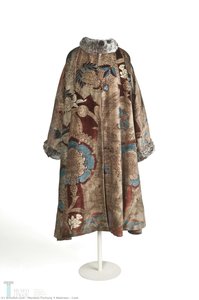
Einige seiner bemerkenswertesten Kunstwerke finden sich in verschiedenen Museen, darunter:- Mariano Fortuny: Teegewand (Museum of Fine Arts, Boston, Vereinigte Staaten), das seine Beherrschung der Pigmentierung auf Leinwand zeigt.
- Mariano Fortuny: Stoffprobe (Museo del Traje, Madrid, Spanien), die seine Verwendung von Baumwolle und eklektischen Designmotiven hervorhebt.
- Seine innovativen Kleiderdesigns, wie das "Delphos"-Kleid, sind berühmt für ihre fließenden Formen und plissierten Stoffe.
Vermächtnis und historische Bedeutung
Marianos Fortuny y Madrazos Vermächtnis reicht über seine eigenen Werke hinaus und beeinflusst Generationen von Künstlern und Designern. Seine Beiträge zur Welt der Kunst und Mode sind ein Beweis für seinen innovativen Geist. Er gilt als Pionier in den Bereichen Textildesign, Bühnenbeleuchtung und Modedesign des frühen 20. Jahrhunderts. Sein Palazzo Fortuny in Venedig ist heute ein Museum, das sein Leben und Werk feiert. Seine Entdeckungen und Innovationen haben die Mode- und Kunstwelt nachhaltig geprägt und inspirieren bis heute Designer und Künstler weltweit.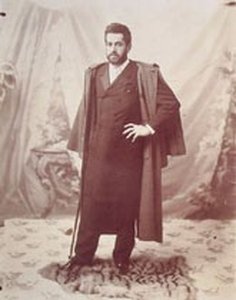
Mariano Fortuny
1871 - 1949 , Spanien
Kurzinfos
- Beeinflusste Künstler:
- Modedesigner
- Textilkünstler
- Bemerkenswerte Werke: ['Fetching Water']
- Geburtsdatum: 11. Mai 1871
- Geburtsort: Granada, Spanien
- Künstlerische Richtung: Art Deco, Venezianisch
- Nationalität: Spanisch
- Sterbedatum: 1949
- Vollständiger Name: Mariano Fortuny y Madrazo
Ähnliche Artikel
Mariano Fortuny: Ein Synthese aus Kunst, Mode und Design – Das Erbe eines venezianischen Innovators
Entdecken Sie das faszinierende Erbe von Mariano Fortuny, dem venezianischen Künstler und Innovator! Erfahren Sie mehr über seine bahnbrechenden Stoffe, seinen Einfluss auf Mode & Design und die Bewahrung seines Schaffens im Museo Fortuny.
Silent Narratives: Exploring the Enduring Appeal of Still Life Painting Across Centuries
Explore the rich history of still life painting with ArtsDot. Discover Dutch Masters, decode vanitas symbolism & learn about collecting timeless art. Expert insights and museum-quality reproductions.

Jacopo Tintoretto: Die 25 Meisterwerke des venezianischen Dramatikers | ArtsDot
Entdecken Sie die 25 Meisterwerke von Jacopo Tintoretto! Tauchen Sie ein in die dramatische Welt der venezianischen Renaissance. Hochwertige Kunst-Reproduktionen & Inspiration für Ihr Zuhause – jetzt auf ArtsDot.com.
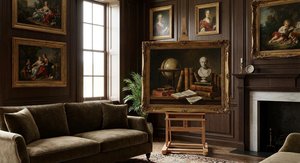
Akademischer Realismus: Die 10 Meisterwerke, die eine Epoche prägten | ArtsDot
Entdecken Sie die 10 prägendsten Meisterwerke des Akademischen Realismus! Erfahren Sie die Geschichten hinter berühmten Gemälden, Künstlern & Techniken. Hochwertige Reproduktionen für Ihr Zuhause – jetzt auf ArtsDot.com!
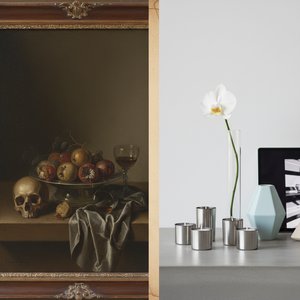
The Enduring Appeal of Still Life: A Historical & Contemporary Exploration
Explore the rich history & symbolism of still life painting with ArtsDot. Discover masterpieces from the Dutch Golden Age, learn about vanitas art, and find expert guidance for collecting timeless artworks.