


 Vorschau anzeigen
 Versenden
 Teilen
 Details anzeigen

 Herunterladen
 Ähnliche Objekte
 Röntgenaufnahme
 Diashow
Samuel Birch (1757–1841), Lord Mayor of London (1814)
 147.0 x 119.0 cm
 Guildhall Art Galerie
 Weiterlesen
Erwerben Sie ein hochauflösendes, optimiertes digitales Bild, das der Online-Vorschau weit überlegen ist.
Jede Datei wird von unseren hauseigenen Spezialisten mit modernsten Werkzeugen und fachmännischer manueller Retusche sorgfältig vorbereitet. Wir stellen sicher, dass jedes Bild eine außergewöhnliche Klarheit, präzise Farbgenauigkeit und feinste Details aufweist.
Die endgültige Datei wird innerhalb von 72 Stunden per E-Mail zugestellt und ist für den sofortigen Einsatz in professionellen, redaktionellen und Druckumgebungen optimiert. Es handelt sich um dieselbe Qualität, der führende Designstudios, Verlage und Galerien vertrauen.
Digitales Bild
Laden Sie eine hochauflösende Datei für die persönliche Präsentation, den Druck und kreative Projekte herunter. ( Druck bestellen Handgemalte Reproduktion bestellen)
In jeder Bestellung digitaler Bilder enthalten
Professionelle digitale Bereitstellung, garantiert
Wenn Sie sich für ArtsDot.com entscheiden, erhalten Sie nicht nur ein Bild – Sie erhalten ein professionell aufbereitetes digitales Kunstwerk, das mit höchster Präzision erstellt und durch eine Zufriedenheitsgarantie abgesichert wird. Hier ist alles, was automatisch mit Ihrer Bestellung geliefert wird:

Schnelle E-Mail-Zustellung
Ihre hochauflösende digitale Bilddatei wird Ihnen innerhalb von 72 Stunden nach der Bestellung per E-Mail zugestellt – bereit zur sofortigen Verwendung.

KI-optimierte digitale Datei
Ihre Kunstwerke werden professionell mithilfe fortschrittlicher KI-Tools und manueller Bearbeitung optimiert, um maximale Detailtreue, Klarheit und Farbgenauigkeit zu gewährleisten.

Lebenslanger kostenloser Neudruckservice
Datei versehentlich gelöscht oder verloren? Keine Sorge – wir senden sie Ihnen jederzeit kostenlos erneut zu.

Keine Einfuhrgebühren – jemals
Genießen Sie Ihr Kunstwerk sofort ohne Zollgebühren, Einfuhrabgaben oder Versandkosten – digitale Downloads sind immer steuerfrei.

Garantierte Farbtreue
Wir garantieren, dass Ihr digitales Bild mithilfe professioneller Werkzeuge und Farbmanagement die Originalfarben so präzise wie möglich wiedergibt.

60-Tage-Zufriedenheitsgarantie
Sollten Sie mit Ihrem digitalen Bild nicht zufrieden sein, werden wir es überarbeiten oder Ihnen innerhalb von 60 Tagen 100% erstatten – ohne Wenn und Aber.

100% Geld-zurück-Garantie
Nicht zufrieden? Erhalten Sie innerhalb von 60 Tagen nach Erhalt Ihrer digitalen Datei eine vollständige Rückerstattung – ohne Angabe von Gründen.

Rabatte bei Großbestellungen
3 Bilder kaufen, 10% sparen – 5 Bilder kaufen, 15% sparen – Ab 10 Bildern 20% sparen. Ideal für kreative Projekte, Galerien und Agenturen.
Ähnliche Kunstwerke








Biografie des Künstlers
A Legacy of Dignity: The Artistry of Mary Martha Pearson
In the vibrant, shifting landscape of nineteenth-century British art, few figures captured the quiet gravity of the Victorian era as effectively as Mary Martha Pearson. Born in June 1798 within the bustling heart of London’s Birchin Lane, Pearson was the daughter of a bookseller, an upbringing that likely immersed her in the rich textures of literature and classical imagery from her earliest years. Her journey into the world of fine art began not with grand declarations, but through the disciplined study of the old masters. Under the guidance of a drawing-master named Lewis, she honed a precision that would become her hallmark. By 1813, she was already finding her footing in the prestigious galleries of the British Institution in Pall Mall, where she practiced the delicate art of copying classical works. This period of intense study culminated in a significant triumph in 1815, when she was awarded a gold medal by the Institution for her masterful copy of Claude Lorrain’s The Embarkation of the Queen of Sheba—a feat so accomplished that her rendition was hung alongside the original masterpiece.
As her talent matured, Pearson’s life became intertwined with the upper echelons of British society. Her marriage in 1823 to Stapleton Cotton, who would ascend to the title of Viscount Combermere, provided her with a unique vantage point from which to observe and document the influential figures of her age. This social standing did more than merely offer subject matter; it granted her access to the very heart of aristocratic culture, allowing her to undertake significant commissions that required both technical excellence and an understanding of social nuance. Her work was never merely about likeness; it was about capturing the identity and status of her sitters. Critics of her time noted that her portraits possessed an "air of identity," a rare quality in portraiture that suggests a deep, psychological connection between the artist’s brush and the subject's soul.
Technique, Style, and the Victorian Eye
Pearson’s artistic style was a sophisticated blend of Neoclassical discipline and the meticulous realism favored during the transition from the Regency to the Victorian era. Her technique was characterized by an extraordinary attention to detail, particularly in the rendering of luxurious fabrics, lace, and the subtle complexities of human expression. She possessed a masterful command of oil paint and glazing techniques, which allowed her to create depth and a luminous quality in skin tones. Many of her compositions utilized stable, pyramidal structures—a nod to the Renaissance traditions she studied—to instill a sense of permanence and dignity in her subjects.
<- Mastery of Detail: Her ability to capture the tactile nature of silk, velvet, and fine embroidery made her portraits highly sought after by the nobility.
- Classical Influence: Drawing from her early training in copying masters like Claude, she brought a sense of classical balance and light to her portraiture.
- Versatility in Subject Matter: While primarily recognized as a portraitist, Pearson also demonstrated her skill through landscapes, earning silver medals for her evocative views of Bodiam Castle and the Rhine.
Her exhibition record further cements her place in the annals of British art history. Between 1821 and 1842, she was a frequent presence at the Royal Academy, exhibiting thirty-one works that showcased her evolving skill. Furthermore, as an early member of the Society of British Artists, she contributed significantly to the gallery scene in Suffolk Street, exhibiting dozens of works that reflected the changing tastes of the mid-nineteenth century.
Historical Significance and Enduring Impression
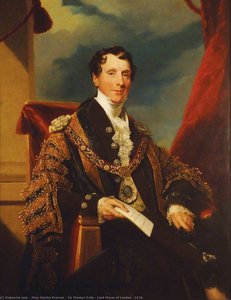
Though history often focuses on the male titans of the Victorian era, Mary Martha Pearson’s contribution remains vital for understanding the social fabric of her time. Her body of work, consisting of approximately eighty portraits, serves as a visual archive of the British aristocracy and the rising professional classes. Through her eyes, we see the faces of dignitaries such as Sir Thomas Kelly, the Lord Mayor of London, and the distinguished Viscount Combermere himself. Her paintings are more than mere representations; they are historical documents that capture the poise, fashion, and social hierarchies of a bygone era.
Pearson’s life and art represent the intersection of personal discipline and social opportunity. She navigated the constraints placed upon women artists of her period by leveraging her technical brilliance to command respect in the most prestigious institutions of London. Today, her legacy lives on through the meticulous detail of her canvases, which continue to offer a window into the dignity, grace, and structured elegance of the nineteenth-century British spirit.
Kurzinfos
- Artistic Movement Or Style: Academic Portraiture
- Artists Or Movements Influenced By This Artist: ['Romanticism']
- Artists Who Influenced This Artist: ['George Romney']
- Date Of Birth: 18 June 1798
- Date Of Death: 15 April 1871
- Full Name: Mary Martha Pearson
- Nationality: British
- Notable Artworks:
- Stapleton Cotton, 1st Viscount Combermere
- Sir Thomas Kelly, Lord Mayor of London (1836)
- Place Of Birth: England

