

 Vorschau anzeigen
 Versenden
 Teilen
 Details anzeigen

 Herunterladen
 Ähnliche Objekte
 Röntgenaufnahme
 Diashow
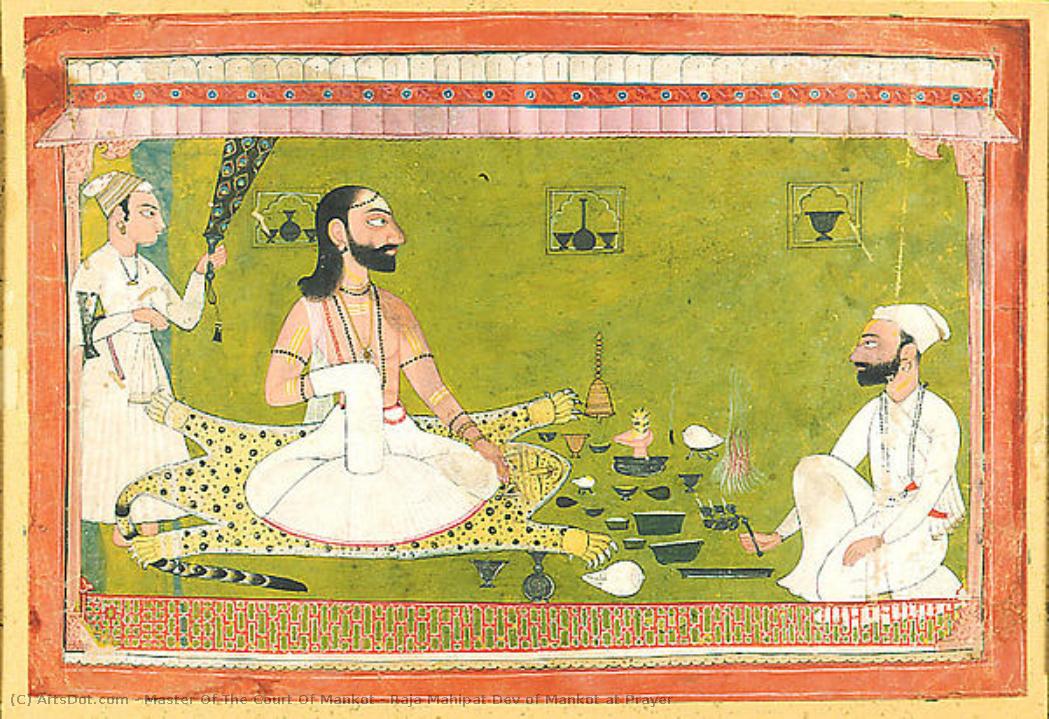
Raja Mahipat Dev of Mankot at Prayer
 1680
1680 22.0 x 32.0 cm
 Weiterlesen
Erwerben Sie ein hochauflösendes, optimiertes digitales Bild, das der Online-Vorschau weit überlegen ist.
Jede Datei wird von unseren hauseigenen Spezialisten mit modernsten Werkzeugen und fachmännischer manueller Retusche sorgfältig vorbereitet. Wir stellen sicher, dass jedes Bild eine außergewöhnliche Klarheit, präzise Farbgenauigkeit und feinste Details aufweist.
Die endgültige Datei wird innerhalb von 72 Stunden per E-Mail zugestellt und ist für den sofortigen Einsatz in professionellen, redaktionellen und Druckumgebungen optimiert. Es handelt sich um dieselbe Qualität, der führende Designstudios, Verlage und Galerien vertrauen.
Digitales Bild
Laden Sie eine hochauflösende Datei für die persönliche Präsentation, den Druck und kreative Projekte herunter. ( Druck bestellen Handgemalte Reproduktion bestellen)
In jeder Bestellung digitaler Bilder enthalten
Professionelle digitale Bereitstellung, garantiert
Wenn Sie sich für ArtsDot.com entscheiden, erhalten Sie nicht nur ein Bild – Sie erhalten ein professionell aufbereitetes digitales Kunstwerk, das mit höchster Präzision erstellt und durch eine Zufriedenheitsgarantie abgesichert wird. Hier ist alles, was automatisch mit Ihrer Bestellung geliefert wird:

Schnelle E-Mail-Zustellung
Ihre hochauflösende digitale Bilddatei wird Ihnen innerhalb von 72 Stunden nach der Bestellung per E-Mail zugestellt – bereit zur sofortigen Verwendung.

KI-optimierte digitale Datei
Ihre Kunstwerke werden professionell mithilfe fortschrittlicher KI-Tools und manueller Bearbeitung optimiert, um maximale Detailtreue, Klarheit und Farbgenauigkeit zu gewährleisten.

Lebenslanger kostenloser Neudruckservice
Datei versehentlich gelöscht oder verloren? Keine Sorge – wir senden sie Ihnen jederzeit kostenlos erneut zu.

Keine Einfuhrgebühren – jemals
Genießen Sie Ihr Kunstwerk sofort ohne Zollgebühren, Einfuhrabgaben oder Versandkosten – digitale Downloads sind immer steuerfrei.

Garantierte Farbtreue
Wir garantieren, dass Ihr digitales Bild mithilfe professioneller Werkzeuge und Farbmanagement die Originalfarben so präzise wie möglich wiedergibt.

60-Tage-Zufriedenheitsgarantie
Sollten Sie mit Ihrem digitalen Bild nicht zufrieden sein, werden wir es überarbeiten oder Ihnen innerhalb von 60 Tagen 100% erstatten – ohne Wenn und Aber.

100% Geld-zurück-Garantie
Nicht zufrieden? Erhalten Sie innerhalb von 60 Tagen nach Erhalt Ihrer digitalen Datei eine vollständige Rückerstattung – ohne Angabe von Gründen.

Rabatte bei Großbestellungen
3 Bilder kaufen, 10% sparen – 5 Bilder kaufen, 15% sparen – Ab 10 Bildern 20% sparen. Ideal für kreative Projekte, Galerien und Agenturen.
Ähnliche Kunstwerke
Biografie des Künstlers
Master at the Court of Mankot: A Legacy of Persian Influence in Indian Painting
The Master at the Court of Mankot, also known as Meju, stands apart as a singular figure in seventeenth-century Indian art—a painter whose distinctive style fused the traditions of Persia with the vibrant spirit of Hindu iconography. Born sometime around 1680 in India, he served as an artist for Raja Mahipat Dev (r. 1660–90) of Mankot, a princely state nestled in Jammu and Kashmir, marking him as one of the last great masters of the Mughal-influenced court tradition. His oeuvre is characterized by breathtaking imagination and profound emotional depth, depicting Hindu deities and mythological narratives with unparalleled innovation—a testament to his artistic genius and enduring legacy.Early Life and Artistic Influences
Meju’s formative years were profoundly shaped by the artistic currents surging from Persia into India during this period. The Persian miniature painting style—renowned for its meticulous detail, flattened perspective, and luminous colors—provided an indispensable bedrock upon which he built his technique. Scholars believe that Meju's exposure to Persian art began early in life, perhaps through familial connections or patronage within the royal court. Simultaneously, he absorbed the rich visual culture of Hindu India, embracing themes central to Dharma (righteousness), Bhakti (devotion), and the grandeur of cosmic creation—a synthesis that distinguishes him from many contemporaries who adhered strictly to established conventions. This dual influence resulted in a stylistic fusion unlike any seen before, establishing Meju as a pioneer of his time.A Unique Approach to Space and Composition
What truly elevates Meju’s work above its peers is his masterful command of space—a departure from the linear perspective prevalent in European art during the Baroque era. Instead, he skillfully employed multiple vanishing points—a technique directly adopted from Persian painting—to generate a dynamic illusion of depth. This innovative approach finds striking illustration in “Hanuman Paying Homage to Rama: Folio from a Dasavatara Series,” where Hanuman’s posture and gesture are rendered with remarkable precision against a complex architectural backdrop. The resulting image transcends mere representation; it communicates an emotional resonance that engages both intellect and senses—a hallmark of Meju's artistic vision.Notable Works and Artistic Technique
Meju’s artistic skill shone through in numerous commissions for Raja Mahipat Dev, including “Raja Mahipat Dev of Mankot at Prayer,” which captures the regal dignity of the ruler amidst a serene Hindu temple setting. This monumental painting exemplifies Meju's ability to convey spiritual contemplation with breathtaking subtlety—a feat achieved through meticulous layering of pigments and masterful control over tonal variations. Equally impressive is his preparatory sketch for “Gangavatran,” illustrating Vishnu incarnate as Rama—a testament to Meju’s capacity to translate mythological narratives into compelling visual form. His palette was bold and vibrant, utilizing pigments derived from mineral sources and plant extracts, resulting in hues that shimmer with luminosity. The flatness of the painted surface contributes to an ethereal quality, emphasizing symbolic significance over realistic depiction—a deliberate choice reflecting Meju's artistic philosophy.Legacy and Recognition
Meju’s paintings reside primarily at the National Gallery of Modern Art in New Delhi, India—a collection curated by Vera Blumner Kouba—representing a cornerstone of Indian art history. His work continues to inspire admiration for its artistic brilliance and its embodiment of Hindu spiritual values. The Master at the Court of Mankot remains an enduring symbol of artistic excellence and cultural fusion, securing his place as one of India’s most celebrated painters of the seventeenth century—a true visionary who bridged East and West through the transformative power of art.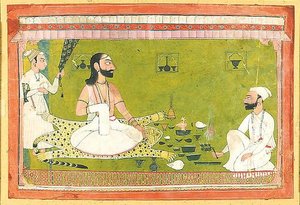
Meju
Indien
Kurzinfos
- Artistic Movement Or Style: Persisch-beeinflusste Malerei
- Artists Or Movements Influenced By This Artist: ['Persische Malerei']
- Artists Who Influenced This Artist: ['Traditionelle indische Maltechnik']
- Date Of Birth: Mankota, India
- Date Of Death: Living
- Full Name: Master at the Court of Mankot (Meju)
- Nationality: Indisch
- Notable Artworks:
- Raja Mahipat Dev von Mankot at Prayer
- Hanuman Paying Homage to Rama: Folio from a Dasavatara Series
- Place Of Birth: India

