

 Vorschau anzeigen
 Versenden
 Teilen
 Details anzeigen

 Herunterladen
 Ähnliche Objekte
 Röntgenaufnahme
 Diashow
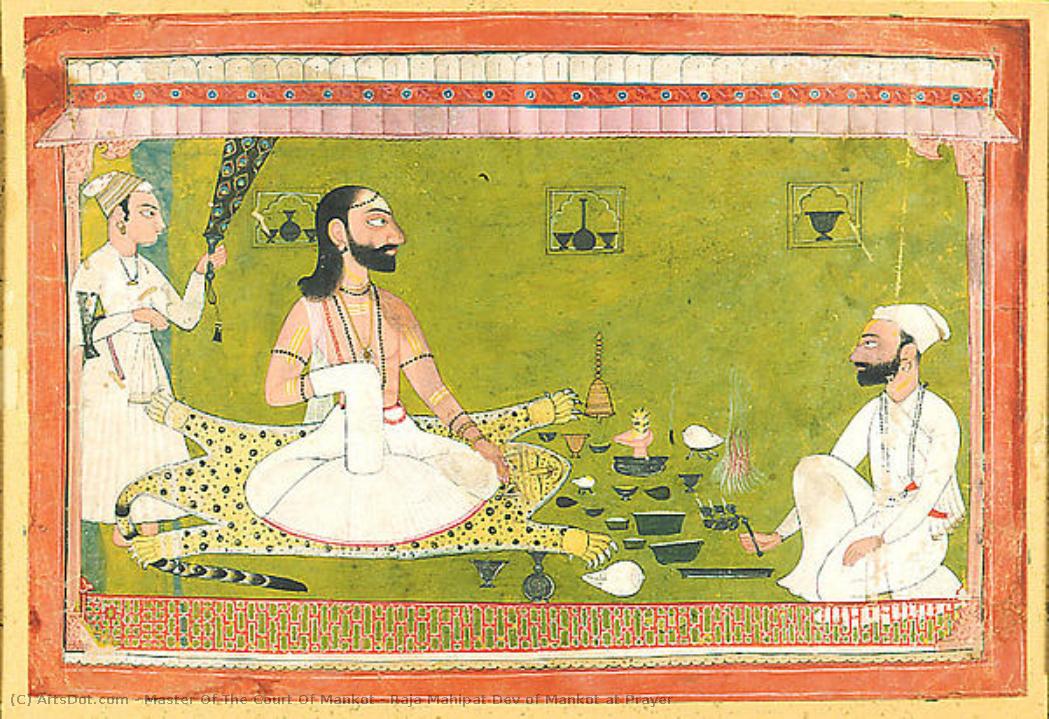
Raja Mahipat Dev of Mankot at Prayer
 1680
1680 22.0 x 32.0 cm
 Weiterlesen
Giclée / Kunstdruck
Giclée- oder Leinwanddruck in Museumsqualität mit schneller Produktion und flexiblen Veredelungsoptionen. ( Handgemalte Reproduktion bestellen Bild kaufen)




































Wählen Sie aus unseren vordefinierten Formaten, die den ursprünglichen Proportionen des Kunstwerks entsprechen.

Sie können Ihre eigenen Maße eingeben, um ein bestimmtes Format oder einen speziellen Platz einzupassen. Wenn das von Ihnen gewählte Format nicht den Proportionen des Originalbildes entspricht, werden wir das Kunstwerk entweder beschneiden oder das Bild mit einem gespiegelten oder einfarbigen Rand erweitern. Ein digitaler Entwurf wird Ihnen zur Genehmigung zugesandt, bevor die Produktion beginnt.
Bitte beachten Sie, dass die Vorschau auf dem Bildschirm nicht den tatsächlichen Zuschnitt oder die Erweiterung widerspiegelt. Nur der Entwurf zeigt die endgültige Komposition präzise an.
Obwohl Sondermaße verfügbar sind, empfehlen wir die Auswahl eines Maßes aus der vordefinierten Liste, um die ursprünglichen Proportionen zu bewahren.
Weltweiter Versand () innerhalb von 2 Wochen statt der üblichen 4/5 Wochen. (1 September)

Kostenloser weltweiter Expressversand

Hochwertige Leinenleinwand

Umfassender Versicherungsschutz beim Versand

Zollgebühren-Rückerstattungsgarantie

Garantie für exakte Farbtreue

60 Tage Rückgaberecht (nur bei Mängeln)

100% Geld-zurück-Garantie

Mengenrabatt verfügbar
 Die Glasoption ist nur für Größen unter 110 cm verfügbar.

Raja Mahipat Dev of Mankot at Prayer
Giclée / Kunstdruck
Format der Reproduktion
-


Gesamtpreis
$ 62
Ähnliche Kunstwerke
Über den Künstler
Master at the Court of Mankot: A Legacy of Persian Influence in Indian Painting
The Master at the Court of Mankot, also known as Meju, stands apart as a singular figure in seventeenth-century Indian art—a painter whose distinctive style fused the traditions of Persia with the vibrant spirit of Hindu iconography. Born sometime around 1680 in India, he served as an artist for Raja Mahipat Dev (r. 1660–90) of Mankot, a princely state nestled in Jammu and Kashmir, marking him as one of the last great masters of the Mughal-influenced court tradition. His oeuvre is characterized by breathtaking imagination and profound emotional depth, depicting Hindu deities and mythological narratives with unparalleled innovation—a testament to his artistic genius and enduring legacy.Early Life and Artistic Influences
Meju’s formative years were profoundly shaped by the artistic currents surging from Persia into India during this period. The Persian miniature painting style—renowned for its meticulous detail, flattened perspective, and luminous colors—provided an indispensable bedrock upon which he built his technique. Scholars believe that Meju's exposure to Persian art began early in life, perhaps through familial connections or patronage within the royal court. Simultaneously, he absorbed the rich visual culture of Hindu India, embracing themes central to Dharma (righteousness), Bhakti (devotion), and the grandeur of cosmic creation—a synthesis that distinguishes him from many contemporaries who adhered strictly to established conventions. This dual influence resulted in a stylistic fusion unlike any seen before, establishing Meju as a pioneer of his time.A Unique Approach to Space and Composition
What truly elevates Meju’s work above its peers is his masterful command of space—a departure from the linear perspective prevalent in European art during the Baroque era. Instead, he skillfully employed multiple vanishing points—a technique directly adopted from Persian painting—to generate a dynamic illusion of depth. This innovative approach finds striking illustration in “Hanuman Paying Homage to Rama: Folio from a Dasavatara Series,” where Hanuman’s posture and gesture are rendered with remarkable precision against a complex architectural backdrop. The resulting image transcends mere representation; it communicates an emotional resonance that engages both intellect and senses—a hallmark of Meju's artistic vision.Notable Works and Artistic Technique
Meju’s artistic skill shone through in numerous commissions for Raja Mahipat Dev, including “Raja Mahipat Dev of Mankot at Prayer,” which captures the regal dignity of the ruler amidst a serene Hindu temple setting. This monumental painting exemplifies Meju's ability to convey spiritual contemplation with breathtaking subtlety—a feat achieved through meticulous layering of pigments and masterful control over tonal variations. Equally impressive is his preparatory sketch for “Gangavatran,” illustrating Vishnu incarnate as Rama—a testament to Meju’s capacity to translate mythological narratives into compelling visual form. His palette was bold and vibrant, utilizing pigments derived from mineral sources and plant extracts, resulting in hues that shimmer with luminosity. The flatness of the painted surface contributes to an ethereal quality, emphasizing symbolic significance over realistic depiction—a deliberate choice reflecting Meju's artistic philosophy.Legacy and Recognition
Meju’s paintings reside primarily at the National Gallery of Modern Art in New Delhi, India—a collection curated by Vera Blumner Kouba—representing a cornerstone of Indian art history. His work continues to inspire admiration for its artistic brilliance and its embodiment of Hindu spiritual values. The Master at the Court of Mankot remains an enduring symbol of artistic excellence and cultural fusion, securing his place as one of India’s most celebrated painters of the seventeenth century—a true visionary who bridged East and West through the transformative power of art.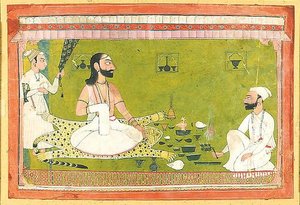
Meju
Indien
Kurzinfos
- Artistic Movement Or Style: Persisch-beeinflusste Malerei
- Artists Or Movements Influenced By This Artist: ['Persische Malerei']
- Artists Who Influenced This Artist: ['Traditionelle indische Maltechnik']
- Date Of Birth: Mankota, India
- Date Of Death: Living
- Full Name: Master at the Court of Mankot (Meju)
- Nationality: Indisch
- Notable Artworks:
- Raja Mahipat Dev von Mankot at Prayer
- Hanuman Paying Homage to Rama: Folio from a Dasavatara Series
- Place Of Birth: India

