 Vorschau anzeigen
 Versenden
 Teilen
 Details anzeigen

 Herunterladen
 Ähnliche Objekte
 Röntgenaufnahme
 Diashow
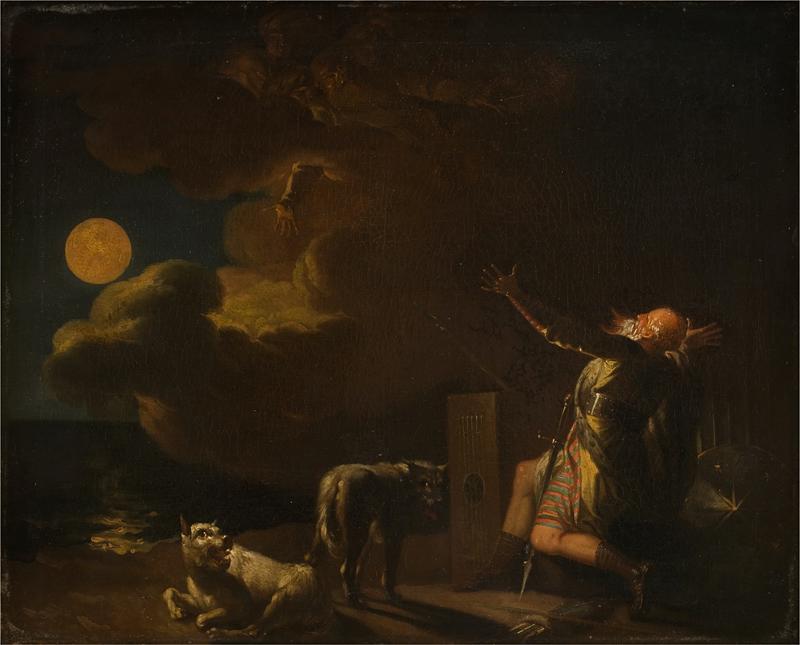
Fingal Sees the Ghosts of his Forefathers by Moonlight
 Acrylic On Canvas
- WallArt
- Neoclassical Romanticism
 1782
1782 61.0 x 49.0 cm
 Statens Museum for Kunst
 Weiterlesen
Handgefertigte Ölreproduktion
Handgemaltes Ölgemälde auf Leinwand in Ihrer Wunschgröße und mit Rahmen, auf Bestellung von unseren Künstlern angefertigt. ( Druck bestellen Bild kaufen)




P118B $10

P118H $10

P118W $10

P438Z $10

P508JH $12

P508YH $12

P805H $10

P805Z $10

P919BZ $10

P919G $10

P919XJ $10

P959ZH $10

P968JZ $12

W106C $8

W218G $10

W218JH $8

W218Y $10

W307PJ $10

W316G $10

W316PJ $8

W316Y $10

W398PJ $8

W4111J $10

W500HY $15

W500JH $15

W692G $12

W849H $8

W940BG $15

W953PJ $8




Wählen Sie aus unseren vordefinierten Formaten, die den ursprünglichen Proportionen des Kunstwerks entsprechen.

Sie können Ihre eigenen Maße eingeben, um einen bestimmten Rahmen oder Platz auszufüllen. Wenn die gewählte Größe nicht den Proportionen des Originalbildes entspricht, werden wir das Kunstwerk entweder beschneiden oder das Gemälde durch zusätzliche, handgemalte Elemente erweitern. Ein digitales Mockup wird Ihnen zur Genehmigung zugesandt, bevor die Produktion beginnt.
Bitte beachten Sie, dass die Bildschirmvorschau nicht die tatsächliche Beschneidung oder Erweiterung widerspiegelt. Nur das Mockup zeigt die endgültige Komposition exakt an.
Obwohl Sondermaße verfügbar sind, empfehlen wir, eine Größe aus der vordefinierten Liste zu wählen, um die ursprünglichen Proportionen beizubehalten.
Nach der Bestellung wird das ArtsDot.com-Team dem Kunden Anweisungen per E-Mail zusenden und eine Mockup-Vorschau bereitstellen.
Weltweiter Versand () in nur 3 bis 4 Wochen statt der üblichen 5 Wochen. (30 August). Keine Kompromisse bei der Qualität.

Kostenloser weltweiter Expressversand

Hochwertige Leinenleinwand

Umfassender Versicherungsschutz beim Versand

Zollgebühren-Rückerstattungsgarantie

Garantie für exakte Farbtreue

60 Tage Rückgaberecht (nur bei Mängeln)

100% Geld-zurück-Garantie

Mengenrabatt verfügbar
 Die Glasoption ist nur für Größen unter 110 cm verfügbar.

Fingal Sees the Ghosts of his Forefathers by Moonlight
Art der Reproduktion
Format der Reproduktion
-


Gesamtpreis
$ 263
A Moonlit Reverie: Nicolai Abildgaard’s “Fingal Sees the Ghosts of his Forefathers”
Nicolai Abraham Abildgaard's "Fingal Sees the Ghosts of his Forefathers by Moonlight," painted in 1782, is more than a mere depiction of a solitary figure; it’s a profound meditation on memory, lineage, and the ethereal realm between worlds. This evocative work, rendered in a masterful blend of Neoclassical precision and burgeoning Romantic sensibility, offers a glimpse into the artist's complex worldview and his fascination with Norse mythology and the weight of history.
The painting immediately draws the eye to its central figure – a man standing upon a small boat, his posture suggesting both contemplation and a yearning gaze. He’s not actively reaching for the moon, as the initial impression might suggest, but rather seems enveloped within its silvery light, almost dissolving into it. This deliberate ambiguity is key to understanding Abildgaard's intent. The composition isn’t about literal observation; it’s about capturing an emotional state – a sense of melancholy and connection to something vast and ancient.
The Language of Symbolism
Abildgaard was deeply influenced by the Romantic movement, which emphasized emotion, imagination, and the sublime. “Fingal Sees the Ghosts of his Forefathers” is saturated with symbolic elements that reinforce this theme. The moon itself isn’t simply a celestial body; it represents memory, intuition, and the passage of time. Its light bathes the scene in an otherworldly glow, blurring the boundaries between reality and dream.
The two dogs flanking the figure are particularly significant. Often interpreted as representing loyalty and guardianship, they also evoke the ancient Celtic traditions that Abildgaard admired – a connection to nature and ancestral spirits. The clock on the wall behind the man serves as a stark reminder of linear time, contrasting sharply with the timelessness suggested by the moonlit scene. The bird soaring above symbolizes freedom and transcendence, while the books represent knowledge and the accumulated wisdom of generations.
A Masterclass in Technique
Abildgaard’s skill as a painter is evident in every detail of “Fingal Sees the Ghosts of his Forefathers.” The use of chiaroscuro – the dramatic contrast between light and shadow – creates a powerful sense of depth and atmosphere. The subtle gradations of grey and silver capture the ethereal quality of moonlight, while the carefully rendered textures of the boat’s wood and the man's clothing add to the painting’s realism.
Notably, Abildgaard employed a technique reminiscent of Dutch masters like Rembrandt, utilizing light not just for illumination but also for emotional effect. The shadows are particularly rich and expressive, hinting at hidden emotions and unspoken narratives. The meticulous detail in the depiction of the landscape – the subtle ripples on the water, the distant shoreline – demonstrates his deep understanding of perspective and composition.
Historical Context and Artistic Legacy
Created during a period of significant artistic and intellectual ferment in Denmark, “Fingal Sees the Ghosts of his Forefathers” reflects Abildgaard’s engagement with both classical ideals and emerging Romantic sensibilities. He was part of a generation of Danish artists who sought to forge a distinctly national style, drawing inspiration from Norse mythology and folklore while maintaining a connection to European artistic traditions.
Abildgaard's work profoundly influenced the development of Danish art, establishing him as one of the country’s most important painters. His exploration of themes such as memory, lineage, and the relationship between humanity and nature continues to resonate with viewers today. Reproductions of this captivating painting offer a beautiful way to bring this evocative vision into your home or office – a testament to the enduring power of art to transport us beyond the confines of time and space.
Ähnliche Kunstwerke

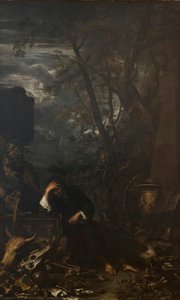
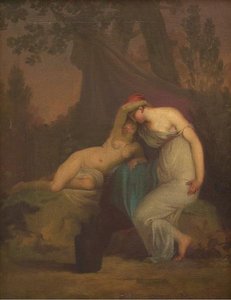
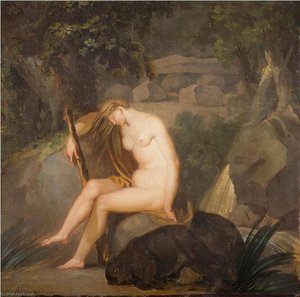
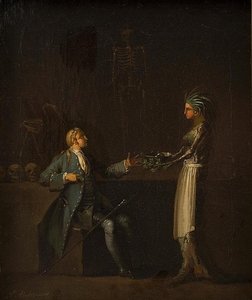
Über den Künstler
Frühes Leben und Ausbildung
- Geboren: 11. September 1743, Kopenhagen, Dänemark
- Eltern: Søren Abildgaard (Antiquarischer Zeichner) und Anne Margrethe Bastholm
- Frühe Ausbildung bei einem Malermeister.
- Tret der Neuen Königlichen Dänischen Akademie der Künste in Kopenhagen (Det Kongelige Danske Kunstakademi) im Jahr 1764 bei.
- Gewinnt von 1764 bis 1767 mehrere Medaillen an der Akademie, was frühes Talent demonstriert.
- Erhält 1767 ein Reisestipendium, das er fünf Jahre später nutzt.
- Studierte unter Johan Edvard Mandelberg und Johannes Wiedewelt an der Akademie.
Die Römische Periode und Künstlerische Entwicklung (1772-1777)
- Reiste von 1772 bis 1777 nach Rom, eine entscheidende Periode in seiner künstlerischen Entwicklung.
- Studierte Bildhauerei, Architektur, Dekoration, Fresken (im Palazzo Farnese) und Wandmalereien.
- Besuchte 1776 mit Jens Juel Neapel.
- Konzentrierte sich auf die Entwicklung von Fähigkeiten in der historischen Malerei.
- Lass sich von Annibale Carraccis Fresken, Raffael, Tizian und Michelangelo inspirieren.
- Entfernt sich vom strengen Klassizismus, beeinflusst von Künstlern wie Johan Tobias Sergel und Johann Heinrich Füssli.
- Entwickelte eine Wertschätzung für Literatur, darunter Shakespeare, Homer und Ossian.
Rückkehr nach Dänemark und Königliche Aufträge
- Kehrt im Dezember 1777 nach Kopenhagen zurück.
- Wird 1778 Professor an der Akademie ernannt.
- Wird um 1780 königlicher Historienmaler.
- Erhält den bedeutenden Auftrag von der dänischen Regierung: die Malerei einer Geschichte Dänemarks für den Rittersaal (Riddersal) im Schloss Christiansborg.
- Dieses Projekt umfasste monumentale Werke, die historische Darstellungen, allegorische Elemente und mythologische Bezüge kombinierten, um die Monarchie zu verherrlichen.
- Arbeitete mit Johan Edvard Mandelberg an Dekorationen für den Fredensborg Palast.
Hauptwerke und Künstlerischer Stil
- Bemerkenswerte Gemälde: "Christian I erhebt Holstein zum Herzogtum im Jahr 1474", "Der Alptraum", "Porträt von Nicolai Abraham Abildgaard", "Erscheinung des Geistes Culmins an seine Mutter", "Szenen aus 'Niels Klims unterirdische Reise'", "Die Amme verabschiedet sich vom Mädchen aus Andros (aus Terenz's Andria)", "Magnus Stenbock übergibt die Festung Tønningen an Frederik IV im Jahr 1714", "Sitzender männlicher Akt mit dem teilweise von seinen erhobenen Armen bedeckten Gesicht", “Audhumla”, und "Der verwundete Philoctetes."
- Künstlerischer Stil: Abildgaards Stil vermischte neoklassische Elemente mit aufkommenden romantischen Einflüssen. Er integrierte bildliche Allegorien, wobei er Symbole verwendete, um Ideen einem gebildeten Publikum zu vermitteln. Seine Werke zeichneten sich oft durch dramatische Beleuchtung, reiche Farben und sorgfältige Details aus.
- Themen: Erkundete Themen aus der griechischen und nordischen Mythologie, historischen Ereignissen und literarischen Erzählungen.
Vermächtnis und Einfluss
- War von 1789 bis 1791 und von 1801 bis 1809 Direktor der Akademie.
- Lehrte einflussreiche Künstler wie Asmus Jacob Carstens, Bertel Thorvaldsen, J. L. Lund und Christoffer Wilhelm Eckersberg.
- Eckersberg, sein Schüler, wurde als der "Vater der dänischen Malerei" bekannt und legte den Grundstein für das Goldene Zeitalter der Dänischen Malerei.
- Starb am 14. November 1809 in Kopenhagen.
- Seine Arbeit beeinflusste maßgeblich die Entwicklung des nordischen Romantismus und trug zur künstlerischen Landschaft Dänemarks bei.
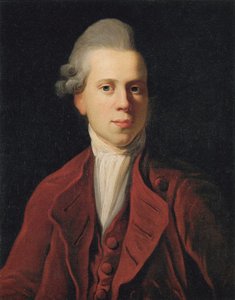
Nicolai Abraham Abildgaard
1743 - 1809 , Dänemark
Kurzinfos
- Beeinflusste Künstler:
- Asmus Jacob Carstens
- Bertel Thorvaldsen
- J. L. Lund
- Christoffer Wilhelm Eckersberg
- Bemerkenswerte Werke:
- Christian I erhebt Holstein
- Der Alptraum
- Porträt Nicolai Abildgaard
- Culins Geist erscheint Mutter
- Szenen aus 'Niels Klim'
- Die Hebamme verabschiedet Mädchen
- Magnus Stenbock übergibt Festung
- Sitzender Akt mit erhobenen Armen
- Audhumla
- Der verwundete Philoctetes
- Geburtsdatum: 11. September 1743
- Künstlerische Einflüsse:
- Annibale Carracci
- Rafael
- Titian
- Michelangelo
- Künstlerischer Stil: Neoklassizismus, Historienmalerei
- Nationalität: Dänisch
- Vollständiger Name: Nicolai Abraham Abildgaard
Ähnliche Artikel
The Allure of the Horizon: A Comprehensive Exploration of Seascape Art Through History & Emotion
Explore the captivating world of seascape art! Discover its history, key artists & movements – from Dutch Masters to Impressionism. Expert insights for collectors and enthusiasts at ArtsDot.
Echoes of Olympus: Mythological Narratives in Western Art Through the Ages
Explore the captivating history of mythological narratives in Western art! From ancient Greece to modern masterpieces, discover iconic artworks & symbolism. Expert analysis and high-quality reproductions at ArtsDot.
The Evocative Brushstroke: Exploring Emotion, Individuality & the Sublime in Romanticism's Artistic Landscape
Explore the passionate world of Romanticism! Discover masterpieces by Friedrich & Goya, delve into the sublime, and understand the movement's lasting impact on art history. Expert analysis & insights at ArtsDot.
Romantik in der Kunst: Die 10 Meisterwerke, die eine Epoche prägten |
Entdecken Sie die 10 Meisterwerke der Romantik! Von Caspar David Friedrich bis Delacroix – erleben Sie Gefühl, Landschaft & Historie. Hochwertige Kunst Reproduktionen auf . Jetzt entdecken!
The Sublime and the Sensual: Exploring Emotion & Individuality in Romanticism's Artistic Revolution
Explore the passionate world of Romanticism! Discover masterpieces by Friedrich & Goya, delve into the sublime, and understand the movement's lasting impact on art history. Expert analysis & insights.