 Vorschau anzeigen
 Versenden
 Teilen
 Details anzeigen

 Herunterladen
 Ähnliche Objekte
 Röntgenaufnahme
 Diashow
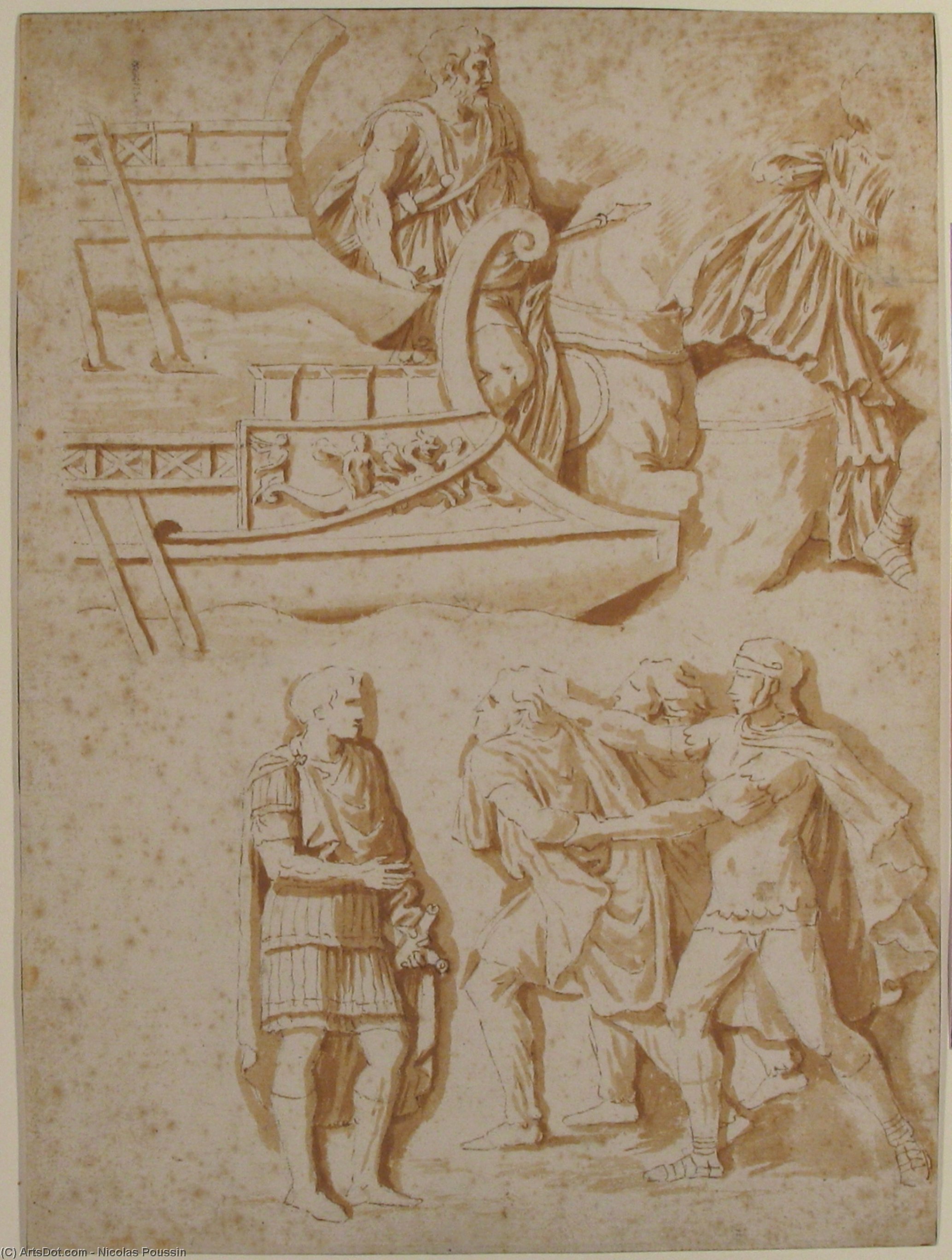
Studien von Details aus der Säule Trajans


 Weiterlesen
Giclée / Kunstdruck
Giclée- oder Leinwanddruck in Museumsqualität mit schneller Produktion und flexiblen Veredelungsoptionen. ( Handgemalte Reproduktion bestellen Bild kaufen)




P118B $10

P118H $10

P118W $10

P438Z $10

P508JH $12

P508YH $12

P805H $10

P805Z $10

P919BZ $10

P919G $10

P919XJ $10

P959ZH $10

P968JZ $12

W106C $8

W218G $10

W218JH $8

W218Y $10

W307PJ $10

W316G $10

W316PJ $8

W316Y $10

W398PJ $8

W4111J $10

W500HY $15

W500JH $15

W692G $12

W849H $8

W940BG $15

W953PJ $8




Wählen Sie aus unseren vordefinierten Formaten, die den ursprünglichen Proportionen des Kunstwerks entsprechen.

Sie können Ihre eigenen Maße eingeben, um ein bestimmtes Format oder einen speziellen Platz einzupassen. Wenn das von Ihnen gewählte Format nicht den Proportionen des Originalbildes entspricht, werden wir das Kunstwerk entweder beschneiden oder das Bild mit einem gespiegelten oder einfarbigen Rand erweitern. Ein digitaler Entwurf wird Ihnen zur Genehmigung zugesandt, bevor die Produktion beginnt.
Bitte beachten Sie, dass die Vorschau auf dem Bildschirm nicht den tatsächlichen Zuschnitt oder die Erweiterung widerspiegelt. Nur der Entwurf zeigt die endgültige Komposition präzise an.
Obwohl Sondermaße verfügbar sind, empfehlen wir die Auswahl eines Maßes aus der vordefinierten Liste, um die ursprünglichen Proportionen zu bewahren.
Weltweiter Versand () innerhalb von 2 Wochen statt der üblichen 4/5 Wochen. (20 August)

Kostenloser weltweiter Expressversand

Hochwertige Leinenleinwand

Umfassender Versicherungsschutz beim Versand

Zollgebühren-Rückerstattungsgarantie

Garantie für exakte Farbtreue

60 Tage Rückgaberecht (nur bei Mängeln)

100% Geld-zurück-Garantie

Mengenrabatt verfügbar
 Die Glasoption ist nur für Größen unter 110 cm verfügbar.

Studien von Details aus der Säule Trajans
Giclée / Kunstdruck
Format der Reproduktion
-


Gesamtpreis
$ 62
Sammlerstück-Beschreibung
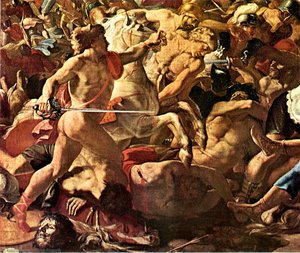
Studies of Details from Trajan's Column
The painting by Nicolas Poussin, “Studies of Details from Trajan’s Column,” stands as an exceptional testament to the artist’s unwavering dedication to classical ideals and his mastery of Baroque artistic principles. Created in approximately 1635 during his formative years in Rome—a city that served as a crucible for artistic innovation—this artwork transcends mere visual representation; it embodies a profound engagement with history, philosophy, and the very essence of human perception. As an art historian specializing in Baroque decoration and a seasoned salesman at ArtsDot.com, I recognize immediately the significance of this piece within Poussin’s oeuvre and its enduring influence on subsequent generations of artists. It's more than just pigment on canvas; it’s a distillation of intellectual curiosity and artistic virtuosity.Composition and Symbolism: A Dialogue with Antiquity
Poussin meticulously crafted his composition to evoke the grandeur and solemn contemplation characteristic of Roman sculpture, specifically Trajan’s Column—a monumental edifice commemorating Emperor Trajan's victory over Dacia. The scene unfolds with a deliberate restraint, prioritizing clarity and geometric precision over flamboyant ornamentation. Figures are arranged in pyramidal groupings, mirroring the architectural structure itself, creating a harmonious visual rhythm that guides the viewer’s gaze. Notice the subtle interplay of light and shadow—a technique known as *chiaroscuro*—which sculpts volume and enhances dramatic effect. Beyond its formal beauty lies a rich tapestry of symbolism. The figures represent not merely individuals but archetypal roles within human experience: piety, courage, and contemplation. They engage in dialogue, conveying moral lessons rooted in Stoic philosophy – a cornerstone of Poussin’s intellectual worldview.The Artist's Vision: Line Over Color
Nicolas Poussin’s artistic style is instantly recognizable for its preference for *line* over *color*. Unlike many contemporaries who embraced vibrant hues and expressive brushstrokes, Poussin favored muted tones—primarily ochre, umber, and ivory—allowing the contours of his figures to dominate the canvas. This stylistic choice reflects his belief that line possesses a superior capacity to convey emotion and intellectual thought. He meticulously rendered drapery folds with painstaking accuracy, capturing the subtle nuances of fabric texture and movement. The artist’s meticulous attention to detail is further evidenced by the rendering of architectural elements—particularly Trajan's Column itself—which appears as an almost palpable presence within the painting. This dedication to realism was not merely decorative; it served to elevate the artwork beyond mere visual pleasure, inviting viewers to contemplate its philosophical implications.Influence and Legacy: Echoes in Later Art
Poussin’s influence extended far beyond his own lifetime, shaping the artistic sensibilities of artists such as Jacques-Louis David and Jean-Auguste-Dominique Ingres—figures who championed classical ideals in their respective eras. His compositional strategies—particularly the pyramidal structure—became a standard formula for portraying heroic narratives and conveying moral truths. Furthermore, Poussin’s exploration of landscape—evident in works like “The Pastoral” and “Landscape with Saint George and the Dragon”—established him as a pioneer of topographical painting and foreshadowed developments in Romantic art. The Musée du Louvre houses numerous masterpieces by Poussin, including "The Ecstasy of Saint Paul" and "Pieta," offering visitors an unparalleled opportunity to immerse themselves in the splendor of Baroque artistry and contemplate the enduring legacy of this singular genius. For deeper insights into Poussin’s life and artistic journey, explore ArtsDot.com or Wikipedia.- “Studies of Details from Trajan’s Column” exemplifies Poussin's Baroque style through masterful *chiaroscuro* and sfumato techniques, creating a sense of depth and emotional resonance.
- The painting’s pyramidal composition reflects the architectural grandeur of Trajan’s Column and embodies Stoic philosophical principles—a hallmark of Poussin’s intellectual heritage.
- As a handmade oil painting reproduction available on ArtsDot.com, this artwork allows collectors to appreciate the intricate textures and subtle nuances of Poussin's artistic vision.
The Santa Bibiana museum in Rome showcases artworks by Poussin, furthering the appreciation for his contribution to the Baroque movement. Visit ArtsDot.com for more information on Poussin’s artistic achievements and the stylistic innovations of his time.
Additional Resources:
- Studies of Details from Trajan’s Column is a prime example of Poussin's Baroque style, with its use of dramatic lighting and intense emotions.
- The painting's composition and symbolism are reminiscent of other works by Poussin, such as The Triumph of Silenus and The Death of Hippolytus.
- As a handmade oil painting reproduction, Studies of Details from Trajan’s Column can be appreciated in a new light, with its intricate details and textures.
- Nicolas Poussin was a French painter who spent most of his working life in Rome.
- His work is characterized by clarity, logic, and order—a deliberate departure from the flamboyant styles prevalent at the time.
- The Musée du Louvre houses many of his notable works, including The Ecstasy of St. Paul and Pieta.
- Nicolas Poussin's influence on subsequent artists is undeniable—David and Cézanne among them.
- Visit Wikipedia for comprehensive biographical information and scholarly analyses.
- Nicolas Poussin’s artistic vision—rooted in classical ideals and meticulous observation—continues to inspire artists today.
- Discover more about Baroque art and its enduring impact on Western culture at ArtsDot.com.
- Admire artworks by Poussin alongside other masterpieces of the Baroque era at The Santa Bibiana museum in Rome, Italy.
- Learn about Poussin’s artistic techniques and his contribution to shaping the aesthetic sensibilities of his time.
- Explore ArtsDot.com for detailed information on Poussin’s oeuvre and its historical context.
Ähnliche Kunstwerke
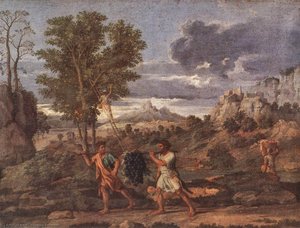
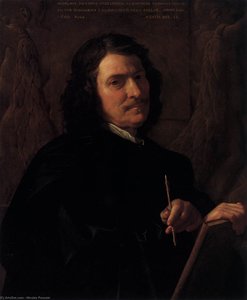
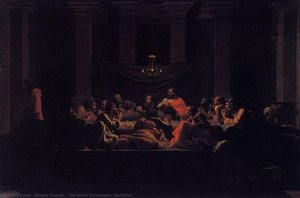
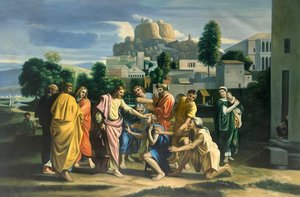
Über den Künstler
frühes Leben und Ausbildung
Nikos Poussin, geboren im Juni 1594, war die Quintessenz der französischen Barockmalerei des Klassikers. Obwohl er den Großteil seiner Karriere in Rom verbrachte, blieb er tief in den französischen künstlerischen Traditionen verwurzelt. Seine frühen Tage als Maler waren von Unsicherheit umhüllt, aber bereits im Jahr 1612 hatte er formale Studien in Paris begonnen und sich von weniger bekannten Künstlern beeinflussen lassen, bevor er 1624 nach Rom zog.Künstlerischer Stil und Einflüsse
Poussins Ästhetik, die für ihre kohärente Komposition und Priorisierung der Linearität bekannt ist, legte einen Präzedenzfall fest, der Meister wie Jacques-Louis David und Paul Cézanne noch bis ins 20. Jahrhundert beeinflusste. Sein unverwechselbarer Stil kristallisierte sich in herausragenden Werken wie Der Tod des Germanikers und seiner einflussreichen Sieben Sakramente-Serie.Bekannte Werke und Museen
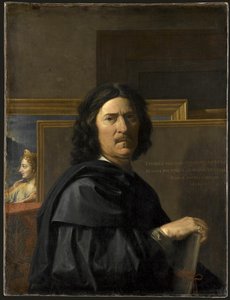
- Nikos Poussin: Selbstporträt 1 (Barock, Öl), ein Beweis für seine Meisterschaft in der Technik.
- Bacchanten vor einem Tempel (74 x 101 cm, Legion of Honor, San Francisco, USA, Öl auf Leinwand), das seine Fähigkeit zur Balance von Komposition und Erzählung demonstriert.
- Das Musée des Beaux-Arts de Carcassonne, ein Muss für Kunstliebhaber, beherbergt eine beeindruckende Sammlung westlicher Gemälde vom 17. bis zum 20. Jahrhundert.
Vermächtnis und Einfluss
Poussins Loyalität blieb Rom, wo er schließlich darauf konzentrierte sich, weitreichende Landschaften in seine Kunst zu integrieren. Seine Reife als Künstler wird in Werken wie Orion, der von der Sonne geblendet sucht und Die Jahreszeiten verkörpert, die eine Ära strenger Komposition einleitet, die von der ruhigen Schönheit der Natur durchdrungen ist.Erfahren Sie mehr mit ArtsDot.com
Entdecken Sie die Meisterwerke des Musée France und tauchen Sie ein in die Welt der französischen Barockmalerei mit Musée Picasso, Musée des Beaux-Arts de Carcassonne und anderen bemerkenswerten Museen. Besuchen Sie Nikos Poussins Seite auf ArtsDot.com, um mehr über seine Werke zu erfahren und den Kontext, in dem sie entstanden sind.Referenzen
Nikolaus Poussin
1594 - 1665 , Frankreich
Kurzinfos
- Bemerkenswerte Werke:
- Der Tod des Germanicus
- Die Sieben Sakramente
- Eine römische Straße
- Orion auf der Suche nach der Sonne
- Die Jahreszeiten
- Geburtsdatum: Juni 1594
- Geburtsort: Le Havre, Frankreich
- Künstler, Die Ihn Beeinflussten:
- Raphael
- Titian
- Künstlerische Bewegung: Barock
- Nationalität: Französisch
- Todatum: 1665
- Vollständiger Name: Nicolas Poussin
- Von Ihm Beeinflusste Künstler:
- Jacques-Louis David
- Paul Cézanne
Ähnliche Artikel

Bronze-Meisterwerke: Die 10 Skulpturen, die Kunstgeschichte schrieben | ArtsDot
Entdecken Sie die 10 legendärsten Bronze Skulpturen der Kunstgeschichte! Von Michelangelo bis Rodin – erfahren Sie die Geschichten hinter den Meisterwerken und lassen Sie sich von Wanddeko-Ideen inspirieren. Hochwertige Kunstdrucke auf ArtsDot.com.
Nicolas Poussin: Klassizismus, Allegorie und Ordnung in der französischen Malerei des 17. Jahrhunderts
Entdecken Sie Nicolas Poussins Meisterwerke und seinen Einfluss auf den französischen Klassizismus. Analyse von Allegorie, Komposition und der Bedeutung seiner Kunst im 17. Jahrhundert.

The Enduring Form: Exploring Themes & Techniques in Sculpture Across Historical Periods
Explore the rich history of sculpture from ancient masterpieces to contemporary innovations. Discover key techniques, influential artists & investment potential for discerning art collectors.
The Enduring Allure of Marble in Art History: From Classical Sculpture to Modern Abstraction
Explore the captivating history of marble sculpture from ancient Greece to modern art. Discover renowned artists like Canova & Michelangelo, carving techniques, and investment insights at ArtsDot.
The Enduring Form: Sculpture Across History, Technique & Emotional Resonance
Explore the rich history of sculpture with ArtsDot. Discover key techniques, influential artists & investment potential for discerning collectors. Expert insights into valuing and collecting timeless masterpieces.