

 Vorschau anzeigen
 Versenden
 Teilen
 Details anzeigen

 Herunterladen
 Ähnliche Objekte
 Röntgenaufnahme
 Diashow
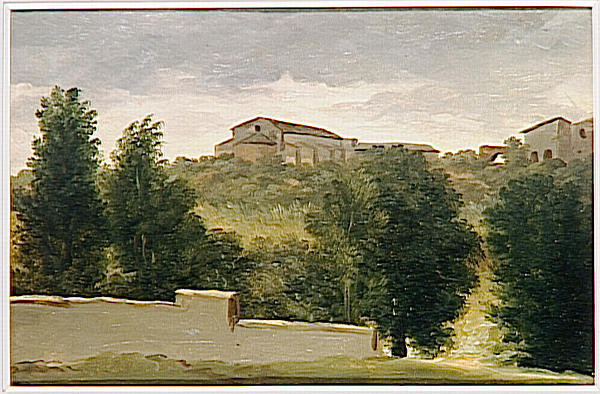
A LA VILLA FARNESE LE MUR


 Weiterlesen
Erwerben Sie ein hochauflösendes, optimiertes digitales Bild, das der Online-Vorschau weit überlegen ist.
Jede Datei wird von unseren hauseigenen Spezialisten mit modernsten Werkzeugen und fachmännischer manueller Retusche sorgfältig vorbereitet. Wir stellen sicher, dass jedes Bild eine außergewöhnliche Klarheit, präzise Farbgenauigkeit und feinste Details aufweist.
Die endgültige Datei wird innerhalb von 72 Stunden per E-Mail zugestellt und ist für den sofortigen Einsatz in professionellen, redaktionellen und Druckumgebungen optimiert. Es handelt sich um dieselbe Qualität, der führende Designstudios, Verlage und Galerien vertrauen.
Digitales Bild
Laden Sie eine hochauflösende Datei für die persönliche Präsentation, den Druck und kreative Projekte herunter. ( Druck bestellen Handgemalte Reproduktion bestellen)
In jeder Bestellung digitaler Bilder enthalten
Professionelle digitale Bereitstellung, garantiert
Wenn Sie sich für ArtsDot.com entscheiden, erhalten Sie nicht nur ein Bild – Sie erhalten ein professionell aufbereitetes digitales Kunstwerk, das mit höchster Präzision erstellt und durch eine Zufriedenheitsgarantie abgesichert wird. Hier ist alles, was automatisch mit Ihrer Bestellung geliefert wird:

Schnelle E-Mail-Zustellung
Ihre hochauflösende digitale Bilddatei wird Ihnen innerhalb von 72 Stunden nach der Bestellung per E-Mail zugestellt – bereit zur sofortigen Verwendung.

KI-optimierte digitale Datei
Ihre Kunstwerke werden professionell mithilfe fortschrittlicher KI-Tools und manueller Bearbeitung optimiert, um maximale Detailtreue, Klarheit und Farbgenauigkeit zu gewährleisten.

Lebenslanger kostenloser Neudruckservice
Datei versehentlich gelöscht oder verloren? Keine Sorge – wir senden sie Ihnen jederzeit kostenlos erneut zu.

Keine Einfuhrgebühren – jemals
Genießen Sie Ihr Kunstwerk sofort ohne Zollgebühren, Einfuhrabgaben oder Versandkosten – digitale Downloads sind immer steuerfrei.

Garantierte Farbtreue
Wir garantieren, dass Ihr digitales Bild mithilfe professioneller Werkzeuge und Farbmanagement die Originalfarben so präzise wie möglich wiedergibt.

60-Tage-Zufriedenheitsgarantie
Sollten Sie mit Ihrem digitalen Bild nicht zufrieden sein, werden wir es überarbeiten oder Ihnen innerhalb von 60 Tagen 100% erstatten – ohne Wenn und Aber.

100% Geld-zurück-Garantie
Nicht zufrieden? Erhalten Sie innerhalb von 60 Tagen nach Erhalt Ihrer digitalen Datei eine vollständige Rückerstattung – ohne Angabe von Gründen.

Rabatte bei Großbestellungen
3 Bilder kaufen, 10% sparen – 5 Bilder kaufen, 15% sparen – Ab 10 Bildern 20% sparen. Ideal für kreative Projekte, Galerien und Agenturen.
Details zum Sammlerstück
A Serene Vista of Italian Grandeur: Valenciennes’ “À la Villa Farnèse le Mur”
Pierre-Henri de Valenciennes' "À la Villa Farnèse le Mur" (circa 1782-1784) is more than just a landscape painting; it’s a carefully constructed evocation of the Italian countryside, imbued with the spirit of the late Enlightenment and the burgeoning Romantic movement. This captivating work, currently residing in the Louvre Museum's collection, offers a glimpse into a world of refined beauty and subtle observation – a testament to Valenciennes’ pioneering approach to landscape painting.
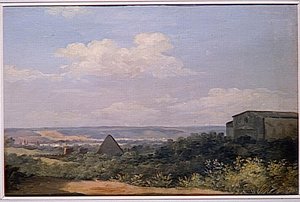
The scene unfolds within the Villa Farnese at Caprarola, a magnificent Renaissance villa nestled amidst rolling hills near Rome. The composition immediately draws the eye to the imposing structure, perched dramatically on a hilltop, its walls partially obscured by a dense tapestry of foliage. A low, weathered wall snakes across the foreground, acting as an anchor for the viewer and subtly hinting at the vastness of the surrounding landscape. Valenciennes masterfully employs atmospheric perspective – distant elements recede into a hazy blue, creating a convincing illusion of depth and drawing the eye towards the villa’s central prominence. The muted color palette—dominated by earthy greens, browns, and greys—evokes a sense of timeless tranquility, mirroring the classical ideals of harmony and balance that characterized much of 18th-century art.
The Dawn of “En Plein Air” – Valenciennes’ Revolutionary Technique
Valenciennes' contribution to the art world extends far beyond simply depicting a beautiful landscape. He was a key figure in establishing the revolutionary technique of "en plein air" painting, or working directly from nature. Prior to his influential treatise, “Reflections and Advice to a Student on Painting, Particularly on Landscape” (1800), artists typically worked from sketches created indoors. Valenciennes argued passionately for observing and capturing the fleeting effects of light and weather directly in the field. This approach demanded a new level of artistic skill and sensitivity, allowing painters to truly capture the essence of a scene – its subtle shifts in color, texture, and atmosphere.
"À la Villa Farnèse le Mur" exemplifies this revolutionary technique. The loose brushstrokes, blended tones, and lack of sharp outlines demonstrate Valenciennes’ commitment to representing the immediate impression of the landscape. He wasn't striving for photographic accuracy; instead, he sought to convey the *feeling* of being present in that particular place at that specific moment. The hazy atmosphere isn’t merely a stylistic choice; it reflects the artist’s deliberate attempt to capture the ephemeral qualities of light and shadow.
Symbolism and the Pursuit of Ideal Beauty
Beyond its technical brilliance, the painting is rich in symbolic meaning. The Villa Farnese itself represents the ideals of Roman grandeur and Renaissance humanism – a testament to wealth, power, and artistic achievement. However, Valenciennes doesn’t simply celebrate this opulence; he presents it within a broader landscape context, suggesting a harmonious relationship between man-made structures and the natural world. The wall in the foreground, partially obscured by vegetation, symbolizes the inevitable encroachment of nature upon even the most imposing monuments. It's a subtle reminder of the transient nature of human endeavors against the backdrop of enduring beauty.
Furthermore, the painting’s overall mood—serene, contemplative, and bathed in diffused light—reflects the philosophical currents of the Enlightenment, emphasizing reason, order, and the pursuit of ideal beauty. The scene invites the viewer to step into a world of quiet contemplation, mirroring the artistic ideals of balance, harmony, and proportion that were so central to the era.
A Timeless Masterpiece for Collectors and Designers
"À la Villa Farnèse le Mur" remains a captivating work of art, offering a glimpse into the artistic sensibilities of 18th-century Italy. Its masterful composition, innovative technique, and evocative symbolism continue to resonate with viewers today. Whether admired as a historical artifact or sought after for its aesthetic qualities, this painting represents a pivotal moment in the development of landscape painting – a testament to Valenciennes’ legacy as a pioneer of “en plein air” and a champion of capturing the fleeting beauty of the natural world. Reproductions of this stunning artwork offer an accessible way to bring a touch of Italian grandeur into any interior space, evoking a sense of timeless elegance and serene contemplation.
Ähnliche Kunstwerke

Biografie des Künstlers
Frühes Leben und Ausbildung
Pierre-Henri de Valenciennes, ein bedeutender französischer Maler, wurde am 6. Dezember 1750 geboren. Während sein genauer Geburtsort in den verfügbaren Aufzeichnungen nicht explizit genannt wird, sind seine Beiträge zur Kunstwelt hervorragend dokumentiert. Über die frühen Jahre seiner Ausbildung und Erziehung ist wenig detailliert überliefert; fest steht jedoch, dass er zwischen 1778 und 1782 in Rom wirkte. In dieser Zeit schuf er zahlreiche Landschaftsstudien, die direkt in der Natur entstanden sind.Beiträge zur Freilichtmalerei
Valenciennes spielte eine entscheidende Rolle bei der Aufwertung des Status der En plein air-Malerei, also der Malerei unter freiem Himmel. Seine Erfahrungen in Rom führten zur Entwicklung seiner theoretischen Grundlagen, die er im Jahr 1800 in seiner Abhandlung „Reflexionen und Ratschläge für einen Studenten der Malerei, insbesondere der Landschaftsmalerei“ darlegte. Dieses Konzept führte die Idee des „Landschaftsporträts“ ein – eine Methode, bei der der Künstler eine Landschaft direkt beim Betrachten malt, um ihre ganz besonderen Details einzufangen. Dieser Ansatz ermöglichte es Valenciennes, die flüchtigen Veränderungen einer Landschaft, hervorgerufen durch Licht und Wetter, meisterhaft festzuhalten.Bemerkenswerte Schüler und Einfluss
Zu seinen bedeutendsten Schülern gehörten Jean-Victor Bertin, Achille Etna Michallon, Louis Étienne Watelet, Louis-François Lejeune sowie der erste französische Panoramamaler Pierre Prévost. Valenciennes' Einfluss auf diese Künstler und seine Pionierarbeit in der Entwicklung der Freilichtmalerei haben die Kunstwelt nachhaltig geprägt.Späteres Leben und Tod
Valenciennes verstarb am 16. Februar 1819 in Paris. Er fand seine letzte Ruhe auf dem Père-Lachaise-Friedhof, jenem berühmten Pariser Friedhof, der für seine hochkarätigen Persönlichkeiten bekannt ist.- Betrachten Sie die Kunstwerke von Pierre-Henri de Valenciennes auf ArtsDot.com
- Entdecken Sie das Musée des Beaux-Arts Valence, ein Museum mit europäischen Gemälden und Skulpturen, auf ArtsDot.com
- Erfahren Sie mehr über die französische Kunst und ihre Geschichte auf Wikipedia
Vermächtnis
Das Vermächtnis von Pierre-Henri de Valenciennes in der Kunstwelt ist unbestreitbar. Seine wegweisende Arbeit in der Freilichtmalerei hat Generationen von Künstlern inspiriert, und sein Einfluss ist bis heute spürbar. Durch seine theoretischen Schriften und die Ausbildung seiner Schüler hat De Valenciennes einen unauslöschlichen Eindruck in der Welt der Kunst hinterlassen.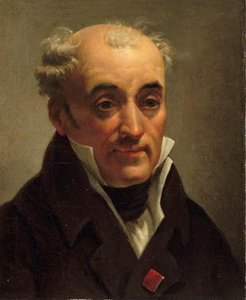
Pierre-Henri De Valenciennes
1750 - 1819 , Frankreich
Kurzinfos
- Artistic Movement Or Style: En plein air peinture
- Artists Or Movements Influenced By This Artist: ['Claude Lorrain']
- Artists Who Influenced This Artist:
- Jean Victor Bertin
- Achille Etna Michallon
- Date Of Birth: 6 Dezember 1750
- Date Of Death: 16 Februar 1819
- Full Name: Pierre Henri de Valenciennes
- Nationality: Französisch
- Notable Artworks:
- Village de Nemi
- A LA Villa Borghese Chemin borde d’arbres
- Place Of Birth: Toulouse, Frankreich

