

 Vorschau anzeigen
 Versenden
 Teilen
 Details anzeigen

 Herunterladen
 Ähnliche Objekte
 Röntgenaufnahme
 Diashow
 Statistiken
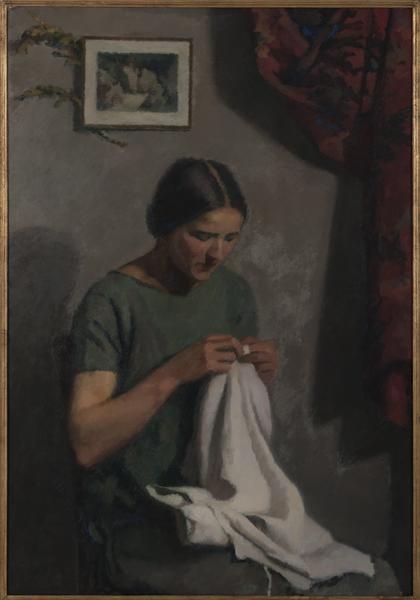
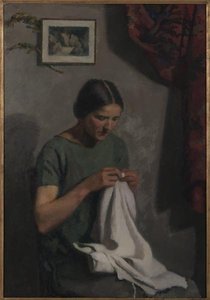
Femme cousant


 Weiterlesen
Giclée / Kunstdruck
Giclée- oder Leinwanddruck in Museumsqualität mit schneller Produktion und flexiblen Veredelungsoptionen. ( Handgemalte Reproduktion bestellen Zum digitalen Bild wechseln)




































Wählen Sie aus unseren vordefinierten Formaten, die den ursprünglichen Proportionen des Kunstwerks entsprechen.

Sie können Ihre eigenen Maße eingeben, um ein bestimmtes Format oder einen speziellen Platz einzupassen. Wenn das von Ihnen gewählte Format nicht den Proportionen des Originalbildes entspricht, werden wir das Kunstwerk entweder beschneiden oder das Bild mit einem gespiegelten oder einfarbigen Rand erweitern. Ein digitaler Entwurf wird Ihnen zur Genehmigung zugesandt, bevor die Produktion beginnt.
Bitte beachten Sie, dass die Vorschau auf dem Bildschirm nicht den tatsächlichen Zuschnitt oder die Erweiterung widerspiegelt. Nur der Entwurf zeigt die endgültige Komposition präzise an.
Obwohl Sondermaße verfügbar sind, empfehlen wir die Auswahl eines Maßes aus der vordefinierten Liste, um die ursprünglichen Proportionen zu bewahren.
Weltweiter Versand () innerhalb von 2 Wochen statt der üblichen 4/5 Wochen. (10 September)

Kostenloser weltweiter Expressversand

Hochwertige Leinenleinwand

Umfassender Versicherungsschutz beim Versand

Zollgebühren-Rückerstattungsgarantie

Garantie für exakte Farbtreue

100-Tage-Rückgaberecht (nur bei Mängeln)

100% Geld-zurück-Garantie

Mengenrabatt verfügbar
 Die Glasoption ist nur für Größen unter 110 cm verfügbar.

Femme cousant
Giclée / Kunstdruck
Format der Reproduktion
-


Gesamtpreis
$ 62
Ähnliche Kunstwerke
Über den Künstler
The Quiet Observer of Normandy: The Life and Legacy of Raymond Dendeville
In the soft, diffused light of the French countryside, there exists a particular kind of stillness—a moment caught between the passing of an era and the dawn of modernity. It was within this atmospheric realm that Raymond Auguste Maurice Albert Densely (1901–1968) found his true calling. A painter and engraver of profound sensitivity, Dendeville did not seek the loud provocations of the avant-garde; instead, he dedicated his life to the meticulous documentation of the serene, the domestic, and the pastoral. Born in Rouen, Normandy, his early years were steeped in a deep connection to the natural world, an appreciation nurtured by his father, the director of Crédit du Nord. This foundational bond with his surroundings would later manifest in works that breathe with the quiet dignity of the French landscape.
Dendeville’s artistic journey was irrevocately shaped by the tremors of the Great War. As a young man witnessing the movement of troops through Normandy, he felt a poignant duty to capture the human element of the conflict. He embarked on an ambitious project of sketching soldiers stationed along the coast, particularly English regiments, imbuing his drawings with an empathy that transcended mere reportage. These early sketches were not merely records of war but emotional landscapes, capturing the vulnerability and fleeting presence of young men amidst a changing world. It was during this period that he caught the eye of Louis Fabulet, a renowned translator of Rudyard Kipling, who recognized Dendeville’s burgeoning talent and provided the vital bridge to the vibrant Parisian art scene.
A Mastery of Impressionistic Realism
Following the war, Dendeville sought formal refinement in Paris, immersing himself in the prestigious studios of the Académie de la Grande Chaumière. This period of intense study allowed him to synthesize the structural discipline of realism with the luminous, atmospheric qualities of Impressionism. His mature style emerged as a delicate balance: a technique characterized by subtle tonal gradations and a masterful command of light that could transform a simple domestic scene into a profound meditation on existence. Whether depicting the rhythmic motion of a woman sewing or the nostalgic silhouette of an industrial townscape like Eglise Saint Jean et les toits, his brushwork possessed an understated elegance that invited the viewer into a state of quiet reflection.
Despite his technical prowess and participation in significant exhibitions, such as the Salon des Indépendants, Dendeville’s fame remained largely localized during his lifetime. In 1924, driven by a need to tend to fragile health, he returned to Elbeuf, where he would remain for the rest of his life. This return to his roots, while perhaps limiting his international reach, allowed him to deepen his connection to the local landscape and the rhythms of provincial life. His work became an intimate archive of a vanishing way of life, capturing the textures of rural Normandy with a precision that felt both timeless and deeply rooted in a specific historical moment.
An Enduring Artistic Heritage
The true breadth of Dendeville’s contribution to French art was perhaps most poignantly realized after his passing. The generous donation of forty-four paintings by his widow to the Musée d'Elbeuf ensured that his vision would not fade into obscurity. Today, his oeuvre serves as a vital window into the early 20th century, offering a glimpse into the domesticity, landscapes, and social fabric of a period marked by both profound loss and enduring beauty. His legacy is defined by several key artistic contributions:
- The Documentation of Wartime Humanity: His early sketches provide an empathetic, non-combative record of the soldiers traversing Normandy during World War I.
- Synthesis of Styles: He successfully bridged the gap between the structural integrity of Realism and the emotive light of Impressionism.
- Preservation of Rural Identity: Through his landscapes and domestic scenes, he preserved the atmospheric essence of the Normandy region for future generations.
- Mastery of Detail: His ability to find grandeur in the mundane—the act of reading, the texture of a roof, or the quietude of a room—remains his most enduring gift to the art historian.
Ultimately, Raymond Dendeville remains an artist of the soul and the soil. He reminds us that there is profound significance in the overlooked, and that the most lasting art often comes from the most observant eyes, watching the world unfold with patience and grace.
raymond dendeville
1901 - 1968
Kurzinfos
- Artistic Movement Or Style: Realism
- Artists Or Movements Influenced By This Artist: ['Rudyard Kipling']
- Artists Who Influenced This Artist: ['Louis Fabulet']
- Date Of Death: 1968
- Full Name: Raymond Auguste Maurice Albert Dendeville
- Nationality: French
- Notable Artworks:
- Femme cousant
- Eglise Saint Jean et les toits
- Place Of Birth: Rouen, France
Ähnliche Artikel
The Evocative Embrace of Reality: Exploring Romantic Realism in 19th-Century Painting
Explore the captivating world of Romantic Realism! Discover key artists like Courbet & Millet, masterpieces, and the social context behind this influential art movement. Expert insights for collectors at ArtsDot.
The Poetic Truth of Observation: Exploring 19th-Century Realism in Painting
Explore the captivating world of 19th-century Realism! Discover key artists like Courbet & Millet, masterpieces, and the powerful social commentary behind this influential art movement. Expert insights at ArtsDot.

10 Meisterwerke des Romantischen Realismus: Wenn Emotion auf Wahrheit trifft
Entdecken Sie 10 Meisterwerke des Romantischen Realismus. Erleben Sie die emotionale Tiefe von Künstlern wie Constable und Friedrich – perfekt als Inspiration für Ihre Kunstsammlung oder Wandgestaltung. Finden Sie museale Reproduktionen auf ArtsDot.com.
Émile Munier: Capturing 19th-Century French Life with Tender Realism
Discover Émile Munier's tender depictions of 19th-century French life. Explore his Realist style, charming paintings of children & pets, and lasting artistic legacy. Expert insights at ArtsDot.
Émile Vernet: Romantische Realität und die Darstellung des Lebens im 19. Jahrhundert
Entdecken Sie das faszinierende Werk von Émile Vernet! Expertenwissen über den französischen Maler der Romantik und des Realismus, seine ikonischen Schlachtszenen und orientalistischen Gemälde. Hochwertige Reproduktionen & individuelle Kunstberatung bei ArtsDot.