 Vorschau anzeigen
 Versenden
 Teilen
 Details anzeigen

 Herunterladen
 Ähnliche Objekte
 Röntgenaufnahme
 Diashow
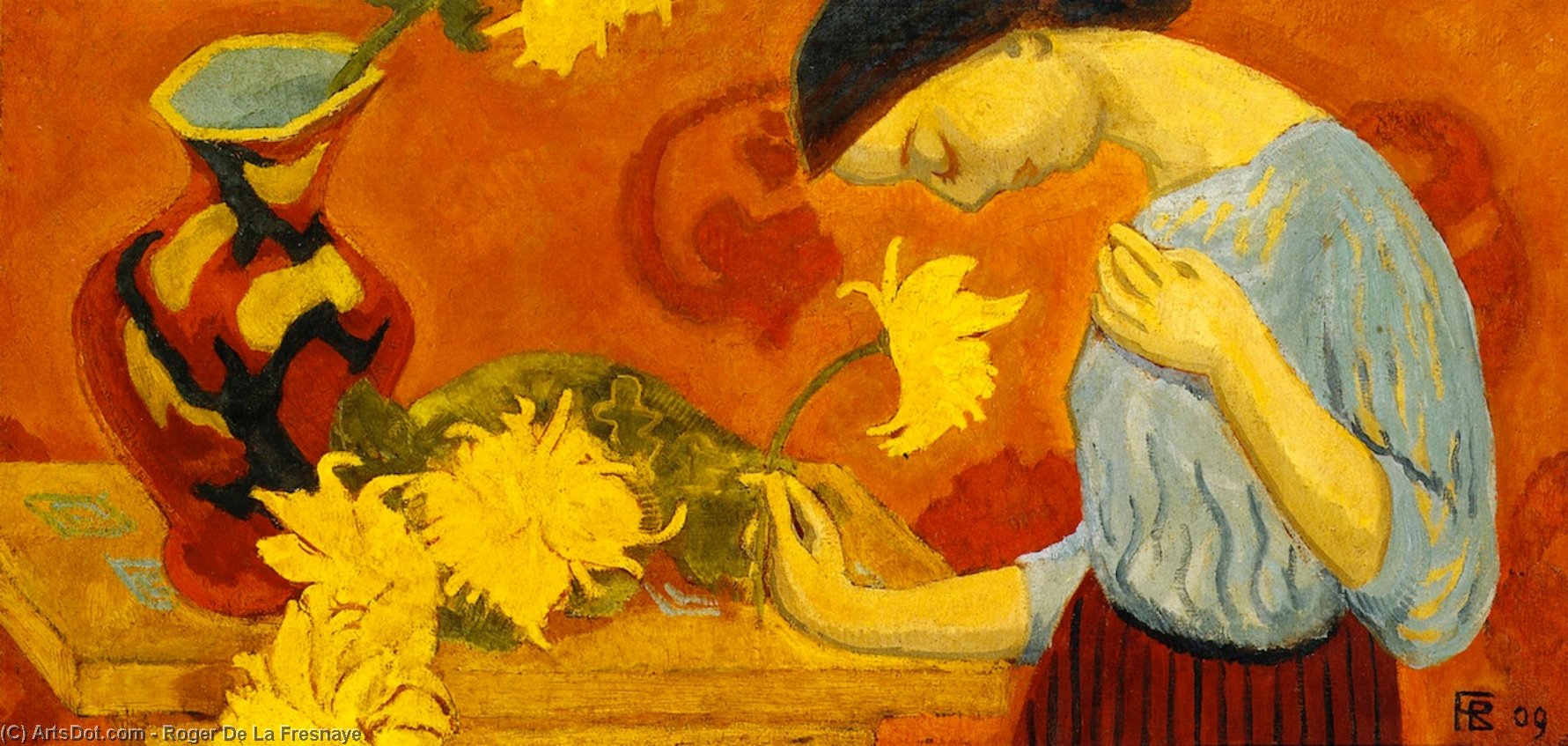
Mademoiselle Maria Zimmern
 Oil On Canvas
- WallArt
- Cubism
 1909
1909 59.0 x 115.0 cm
 Musée National d'Art Moderne Centre Georges Pompidou
 Weiterlesen
Giclée / Kunstdruck
Giclée- oder Leinwanddruck in Museumsqualität mit schneller Produktion und flexiblen Veredelungsoptionen. ( Handgemalte Reproduktion bestellen Bild kaufen)




P118B $10

P118H $10

P118W $10

P438Z $10

P508JH $12

P508YH $12

P805H $10

P805Z $10

P919BZ $10

P919G $10

P919XJ $10

P959ZH $10

P968JZ $12

W106C $8

W218G $10

W218JH $8

W218Y $10

W307PJ $10

W316G $10

W316PJ $8

W316Y $10

W398PJ $8

W4111J $10

W500HY $15

W500JH $15

W692G $12

W849H $8

W940BG $15

W953PJ $8




Wählen Sie aus unseren vordefinierten Formaten, die den ursprünglichen Proportionen des Kunstwerks entsprechen.

Sie können Ihre eigenen Maße eingeben, um ein bestimmtes Format oder einen speziellen Platz einzupassen. Wenn das von Ihnen gewählte Format nicht den Proportionen des Originalbildes entspricht, werden wir das Kunstwerk entweder beschneiden oder das Bild mit einem gespiegelten oder einfarbigen Rand erweitern. Ein digitaler Entwurf wird Ihnen zur Genehmigung zugesandt, bevor die Produktion beginnt.
Bitte beachten Sie, dass die Vorschau auf dem Bildschirm nicht den tatsächlichen Zuschnitt oder die Erweiterung widerspiegelt. Nur der Entwurf zeigt die endgültige Komposition präzise an.
Obwohl Sondermaße verfügbar sind, empfehlen wir die Auswahl eines Maßes aus der vordefinierten Liste, um die ursprünglichen Proportionen zu bewahren.
Weltweiter Versand () innerhalb von 2 Wochen statt der üblichen 4/5 Wochen. (30 August)

Kostenloser weltweiter Expressversand

Hochwertige Leinenleinwand

Umfassender Versicherungsschutz beim Versand

Zollgebühren-Rückerstattungsgarantie

Garantie für exakte Farbtreue

60 Tage Rückgaberecht (nur bei Mängeln)

100% Geld-zurück-Garantie

Mengenrabatt verfügbar
 Die Glasoption ist nur für Größen unter 110 cm verfügbar.

Mademoiselle Maria Zimmern
Giclée / Kunstdruck
Format der Reproduktion
-


Gesamtpreis
$ 62
Mademoiselle Maria Zimmern: A Fauvist Echo in Cubist Form
Roger de La Fresnaye’s “Mademoiselle Maria Zimmern,” completed in 1909, stands as a pivotal moment in the burgeoning avant-garde movement of early 20th century France. More than just a portrait, it's an exploration of color and form—a daring experiment that foreshadowed the radical stylistic shifts to come within Cubism and cemented De La Fresnaye’s place amongst the influential figures shaping modern art.
The Fauvist Influence: Initially rooted in Symbolist aesthetics – characterized by muted tones and evocative imagery – De La Fresnaye swiftly embraced the vibrant palette championed by Matisse and Cézanne. This embrace of “Fauvism,” meaning "wild beasts," is immediately apparent in the painting’s dominant hues: a fiery orange that saturates the background, punctuated by yellows and reds that illuminate the woman's dress and floral arrangements. The audacious use of color wasn’t merely decorative; it aimed to convey emotion directly—a deliberate rejection of Impressionism’s optical realism.
Cubist Decomposition: However, De La Fresnaye didn’t simply adopt Fauvist color theory wholesale. He skillfully integrated Cubist principles into his composition. The woman's figure is rendered in profile, fragmented into geometric planes that subtly overlap and intersect—a technique borrowed from Picasso and Braque. This fragmentation isn’t jarring; rather, it creates a sense of dynamism and depth, suggesting multiple perspectives simultaneously.
Composition & Symbolism: The arrangement of objects within the frame contributes to the painting's symbolic resonance. A dark vase holds several large chrysanthemums—flowers traditionally associated with mourning and remembrance—underscoring themes of contemplation and perhaps melancholy. Alongside the vase sits a smaller bowl, adding visual complexity and reinforcing the sense of stillness. The careful positioning of these elements reflects De La Fresnaye’s meticulous attention to detail and his desire to communicate meaning beyond mere representation.
Technique & Texture: Executed in oil paint on canvas, “Mademoiselle Maria Zimmern” showcases De La Fresnaye's mastery of impasto—thickly applied pigment that creates a palpable textural surface. Visible brushstrokes ripple across the canvas, capturing the energy and spontaneity of the artist’s process. This technique enhances the painting’s visual impact, inviting viewers to engage with its materiality and experiencing the vibrancy of color firsthand.
Historical Context & Legacy: De La Fresnaye's work emerged during a period of intense artistic debate—a challenge to established conventions and a fervent pursuit of new expressive possibilities. “Mademoiselle Maria Zimmern” exemplifies this spirit, representing an important step toward the development of Cubism and demonstrating the transformative power of color and form in conveying emotion and exploring complex ideas. Its enduring appeal lies in its ability to capture a fleeting moment—a portrait imbued with both beauty and subtle sorrow—and remains a testament to De La Fresnaye’s visionary artistic vision.
Further Exploration: For those interested in delving deeper into Roger de La Fresnaye's oeuvre, we encourage you to visit Roger De La Fresnaye at ArtsDot for additional information and reproductions.
Ähnliche Kunstwerke
Über den Künstler
Roger de La Fresnaye: Bridging Tradition and Revolution
Roger de la Fresnaye (1885-1925) stands as a singular figure in the constellation of early 20th-century French painting, embodying a fascinating paradox: he was born into aristocratic privilege yet embraced artistic innovation with unwavering conviction. His life’s trajectory—from classical education to fervent engagement with Symbolism and Cubism—represents a pivotal moment in modern art history, demonstrating how tradition could be reinvigorated through radical experimentation. The Château de la Fresnaye, ancestral home to his family steeped in military heritage, provided an early backdrop for a young man destined to forge his own path amidst the turbulent currents of artistic change.Early Influences and Artistic Formation
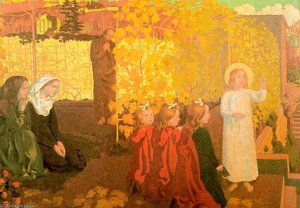
Roger’s formative years were characterized by a grounding in classical scholarship—a tradition upheld by his parents—yet he swiftly recognized the limitations of formal study when confronted with the burgeoning aesthetic landscape of Paris. He enrolled at the Académie Julian and subsequently the École des Beaux-Arts, institutions where he absorbed the stylistic precepts championed by Maurice Denis and Paul Sérusier – artists who profoundly shaped his artistic sensibilities. These mentors instilled in him a deep appreciation for Symbolist aesthetics—characterized by dreamlike imagery and evocative color palettes—evident in early works such as *Woman with Chrysanthemums*. This piece exemplifies the Nabis philosophy that art should be subjective (rather than realist) and should pursue a spiritual resonance beyond mere visual representation. The influence of Sérusier’s distinctive style, particularly his exploration of tonal harmonies and textural surfaces, would prove enduring throughout de la Fresnaye’s artistic career.The Embrace of Cubism: A Revolutionary Shift
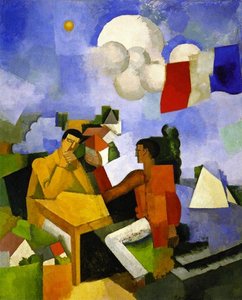
Around 1912, Roger de la Fresnaye decisively embraced the revolutionary ideas emanating from Cubism—a movement spearheaded by Georges Braque and Pablo Picasso. This marked a transformative juncture in his artistic journey, propelling him beyond the decorative conventions of Symbolism toward geometric abstraction. He joined the Section d’Or group, aligning himself with fellow artists who sought to dismantle traditional perspectival representations and explore new visual languages. The resulting canvases—such as *The Conquest of the Air*—burst forth with prismatic colors and fragmented forms, reflecting both Braque’s pioneering explorations of simultaneity and Picasso’s groundbreaking innovations in compositional structure. De la Fresnaye wasn't merely imitating; he was actively responding to the intellectual ferment of his time, synthesizing diverse influences into a singular artistic vision. This bold stylistic choice signaled a rejection of academic conventions and an embrace of experimental techniques—a hallmark of the modernist ethos.War Service and Artistic Transformation
The outbreak of World War I profoundly impacted Roger’s life and artistic output. He enlisted in the French army, documenting the realities of trench warfare with poignant depictions of soldiers' daily lives. These paintings—executed during a period of intense physical strain—demonstrate his unwavering patriotism and capture the psychological complexities inherent in confronting the horrors of conflict. However, the war also inflicted grievous wounds upon his health, culminating in tuberculosis and subsequent discharge from military service. This debilitating illness dramatically curtailed his creative endeavors, prompting him to abandon the dynamic geometric style of Cubism for a more contemplative aesthetic—characterized by linear precision and subdued color palettes. The shift reflected not merely physical limitations but also an introspective reckoning with mortality—a quest for beauty amidst fragility that resonated deeply within his artistic sensibility.Legacy and Enduring Influence
Roger de la Fresnaye died prematurely in 1925 at the age of forty, leaving behind a relatively modest yet remarkably influential body of work. Despite the brevity of his career, he secured a prominent place within the annals of modern art history—a testament to his ability to synthesize disparate artistic traditions into a cohesive and compelling visual language. His paintings reside in prestigious museums across Europe, including the Musée d’Art Moderne de Troyes and the Centre Pompidou in Paris, ensuring that his distinctive style continues to inspire artists and captivate audiences worldwide. The record-breaking sale of *La Conquête de l’Air* at Christie’s in 2017 served as a powerful affirmation of his artistic merit—a symbol of enduring beauty and innovation within the broader context of modernist art. De la Fresnaye remains an artist whose legacy transcends stylistic boundaries, embodying the spirit of experimentation and intellectual curiosity that defined the era—a beacon illuminating the path toward artistic progress.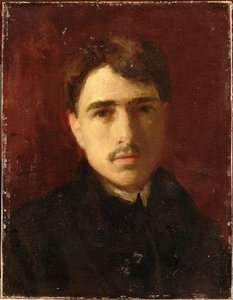
Roger de La Fresnaye
1885 - 1925 , Frankreich
Kurzinfos
- Artistic Movement Or Style: Kubismus, Symbolismus
- Artists Or Movements Influenced By This Artist: ['Cubismus']
- Artists Who Influenced This Artist:
- Maurice Denis
- Paul Sérusier
- Georges Braque
- Date Of Birth: 11 Juli 1885
- Date Of Death: 27 Novembr 1925
- Full Name: Roger de La Fresnaye
- Nationality: Französisch
- Notable Artworks:
- Die Eroberung der Luft
- La Madelon
- Der Kavallerieritt
- Place Of Birth: Le Mans, Frankreich
Ähnliche Artikel
Roger de la Fresnaye: Cubism, Tradition & the Search for Order in Early 20th-Century French Painting
Explore the captivating world of Roger de la Fresnaye, a pivotal French Cubist painter. Discover his unique blend of tradition & modernity, influences, and lasting legacy with ArtsDot.

Goya: Die 25 Meisterwerke des spanischen Genies – Kunst für Ihr Zuhause | ArtsDot
Entdecken Sie die 25 Meisterwerke von Francisco Goya! Tauchen Sie ein in die düstere Romantik spanischer Malerei, Porträts & Historienbilder. Hochwertige Kunstdrucke auf ArtsDot.com – für Kunstliebhaber und stilvolles Wohnen.
Águeda Ruiz de la Prada: Eklektizismus und emotionale Resonanz in der zeitgenössischen spanischen Malerei
Entdecken Sie die faszinierende Welt von Águeda Ruiz de la Prada! Unsere Expertenanalyse beleuchtet Eklektizismus, emotionale Tiefe und Investitionspotenzial dieser zeitgenössischen spanischen Malerin. Für anspruchsvolle Kunstsammler.

Über uns
Entdecken Sie unsere Geschichte! Wir bringen Weltklasse-Kunst in Ihr Leben durch fachkundige Auswahl, individuelle Kreationen und kostenlose Vorschauen. Seit dem Jahr 2000 von Privatpersonen und Unternehmen geschätzt.
Maurice Quentin de La Tour: Licht, Schatten und die Intimität des Rokoko-Porträts
Entdecken Sie das Werk von Maurice Quentin de La Tour! Erfahren Sie mehr über seine innovative Pastelltechnik, die psychologische Tiefe seiner Porträts und seinen Einfluss auf die Rokoko-Malerei. Einblick in königliche Aufträge & sein Vermächtnis.