 Vorschau anzeigen
 Versenden
 Teilen
 Details anzeigen

 Herunterladen
 Ähnliche Objekte
 Röntgenaufnahme
 Diashow
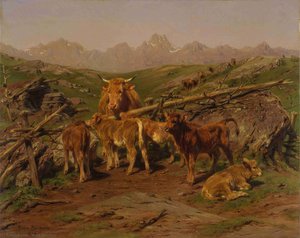
Cattle at Rest on a Hillside in the Alps


 Weiterlesen
Handgefertigte Ölreproduktion
Handgemaltes Ölgemälde auf Leinwand in Ihrer Wunschgröße und mit Rahmen, auf Bestellung von unseren Künstlern angefertigt. ( Druck bestellen Bild kaufen)




P118B $10

P118H $10

P118W $10

P438Z $10

P508JH $12

P508YH $12

P805H $10

P805Z $10

P919BZ $10

P919G $10

P919XJ $10

P959ZH $10

P968JZ $12

W106C $8

W218G $10

W218JH $8

W218Y $10

W307PJ $10

W316G $10

W316PJ $8

W316Y $10

W398PJ $8

W4111J $10

W500HY $15

W500JH $15

W692G $12

W849H $8

W940BG $15

W953PJ $8




Wählen Sie aus unseren vordefinierten Formaten, die den ursprünglichen Proportionen des Kunstwerks entsprechen.

Sie können Ihre eigenen Maße eingeben, um einen bestimmten Rahmen oder Platz auszufüllen. Wenn die gewählte Größe nicht den Proportionen des Originalbildes entspricht, werden wir das Kunstwerk entweder beschneiden oder das Gemälde durch zusätzliche, handgemalte Elemente erweitern. Ein digitales Mockup wird Ihnen zur Genehmigung zugesandt, bevor die Produktion beginnt.
Bitte beachten Sie, dass die Bildschirmvorschau nicht die tatsächliche Beschneidung oder Erweiterung widerspiegelt. Nur das Mockup zeigt die endgültige Komposition exakt an.
Obwohl Sondermaße verfügbar sind, empfehlen wir, eine Größe aus der vordefinierten Liste zu wählen, um die ursprünglichen Proportionen beizubehalten.
Nach der Bestellung wird das ArtsDot.com-Team dem Kunden Anweisungen per E-Mail zusenden und eine Mockup-Vorschau bereitstellen.
Weltweiter Versand () in nur 3 bis 4 Wochen statt der üblichen 5 Wochen. (20 August). Keine Kompromisse bei der Qualität.

Kostenloser weltweiter Expressversand

Hochwertige Leinenleinwand

Umfassender Versicherungsschutz beim Versand

Zollgebühren-Rückerstattungsgarantie

Garantie für exakte Farbtreue

60 Tage Rückgaberecht (nur bei Mängeln)

100% Geld-zurück-Garantie

Mengenrabatt verfügbar
 Die Glasoption ist nur für Größen unter 110 cm verfügbar.

Cattle at Rest on a Hillside in the Alps
Art der Reproduktion
Format der Reproduktion
-


Gesamtpreis
$ 263
Beschreibung des Kunstwerks
A Moment of Tranquility: Rosa Bonheur’s “Cattle at Rest on a Hillside in the Alps”
Rosa Bonheur's "Cattle at Rest on a Hillside in the Alps," painted in 1885, is more than just a depiction of livestock; it’s a profound meditation on peace, nature, and the quiet dignity of rural life. This oil-on-canvas masterpiece, currently residing within the esteemed halls of the Art Institute of Chicago, offers viewers an intimate glimpse into a world untouched by the frenetic pace of modern existence. Bonheur, a pioneering figure in 19th-century art, dedicated her career to capturing the essence of animals with unparalleled realism and empathy – a commitment evident in every brushstroke of this evocative scene.
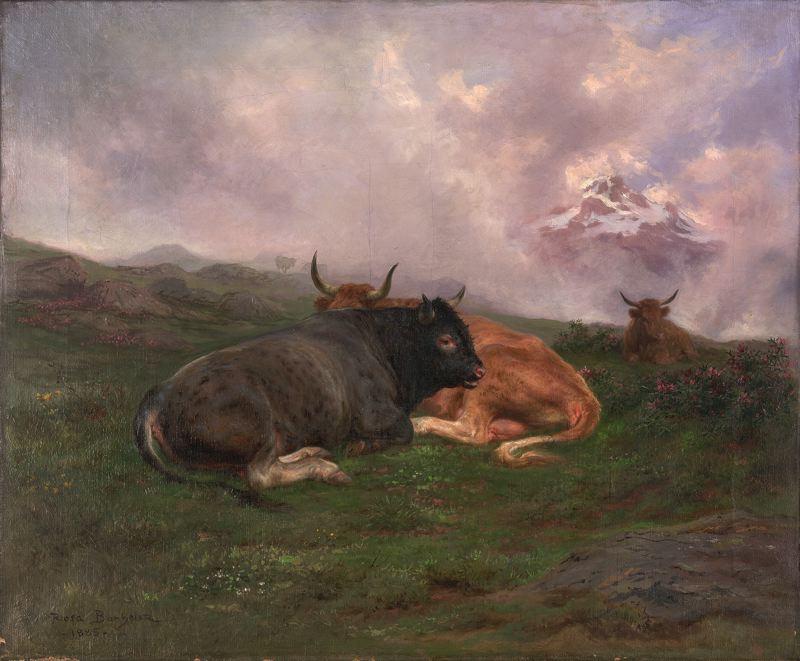
The painting immediately draws the eye with its harmonious composition. Three cows—a magnificent dark brown specimen lying languidly on the verdant hillside, and two standing attentively nearby—occupy the foreground, their forms rendered with meticulous detail. The artist’s skill is particularly evident in the subtle variations of light and shadow that define each animal's musculature and texture, conveying a palpable sense of weight and stillness. The background subtly shifts to reveal a majestic mountain range, partially shrouded in mist, lending depth and scale to the landscape while simultaneously reinforcing the cows’ humble position within nature’s grandeur. The muted palette—dominated by earthy greens, browns, and blues—creates a serene atmosphere, inviting the viewer to lose themselves in the tranquility of the scene.
The Realist Vision of Rosa Bonheur
Rosa Bonheur's artistic approach was revolutionary for her time. Rejecting the idealized representations prevalent in academic art, she championed realism, meticulously studying animal anatomy and behavior to achieve an unprecedented level of accuracy. Her dedication extended beyond mere imitation; she sought to capture not just the outward appearance of animals but also their inner lives—their contentment, their vulnerability, and their connection to the natural world. This is powerfully demonstrated here, as the cows appear utterly relaxed, embodying a state of blissful repose.
Bonheur’s process involved extensive fieldwork and direct observation. She spent countless hours sketching animals in their natural habitats – fields, pastures, and even abattoirs (slaughterhouses) – to gain an intimate understanding of their movements, postures, and expressions. This commitment to firsthand experience is reflected in the painting's authenticity; it feels less like a painted image and more like a fleeting moment captured from life. The artist’s use of impasto—thickly applied paint—adds texture and dimension to the canvas, further enhancing the sense of physicality and immediacy.
Symbolism and Context
Beyond its aesthetic qualities, “Cattle at Rest on a Hillside in the Alps” carries symbolic weight. The scene evokes a romanticized vision of rural life – a time when humans lived in harmony with nature, relying on the land for sustenance and finding solace in simple pleasures. The cows themselves can be interpreted as emblems of fertility, abundance, and pastoral virtue—themes frequently explored in art throughout history. Furthermore, the mountainous backdrop subtly references the Alps, a region deeply ingrained in European artistic tradition and often associated with notions of strength, resilience, and spiritual contemplation.
Painted during a period of significant social and political change, Bonheur’s work also reflects the broader currents of 19th-century France. The rise of realism coincided with growing interest in scientific observation and a renewed appreciation for the beauty of the natural world. Bonheur's success as a female artist challenged prevailing gender stereotypes and paved the way for future generations of women to pursue careers in the arts. Her legacy continues to inspire artists today, reminding us of the power of art to capture the essence of our shared human experience.
Bringing “Cattle at Rest” into Your Space
ArtsDot offers meticulously crafted hand-painted reproductions of Rosa Bonheur’s "Cattle at Rest on a Hillside in the Alps," allowing you to bring this timeless masterpiece into your home or office. Our skilled artisans replicate the painting's intricate details and atmospheric qualities with exceptional precision, ensuring that your reproduction captures the full emotional impact of the original. Available in a range of sizes and framing options, our reproductions provide an authentic and affordable way to own a piece of art history. Consider how this serene scene can contribute to a calming and contemplative atmosphere – a perfect addition to any room seeking tranquility and connection with nature.
Ähnliche Kunstwerke

Über den Künstler
Rosa Bonheur: Ein Leben der Tierkunst
- Geboren: 16. März 1822, Bordeaux, Frankreich
- Gestorben: 25. Mai 1899
- Bekannt für: Malerei und Skulptur in einem realistischen Stil (Animalière)
Rosa Bonheur, geboren als Marie-Rosalie Bonheur, gilt als eine der berühmtesten weiblichen Künstlerinnen des neunzehnten Jahrhunderts. Ihre Hingabe zur Darstellung von Tieren mit bemerkenswerter Realitätstreue und Detailgenauigkeit sicherte ihr einen Platz in der Kunstgeschichte.
Frühes Leben und künstlerische Ausbildung
Oscar-Raymond Bonheur, Rosa's Vater, war ein Landschafts- und Porträtmaler, der die Begabung seiner Tochter aktiv förderte. Ihre Mutter, Sophie Bonheur (geborene Marquis), gab ihr Klavierunterricht, verstarb jedoch bereits im Alter von elf Jahren. Die Familie Bonheur befürwortete den Saint-Simonianismus, eine christlich-sozialistische Sekte, die die Bildung von Frauen neben Männern unterstützte. Diese fortschrittliche Erziehung beeinflusste Bonheurs künstlerische Entwicklung maßgeblich und vermittelte ihr ein Gefühl der Unabhängigkeit und Entschlossenheit.
Im Jahr 1828 zog die Familie nach Paris, wo Rosa ihre formelle Ausbildung begann. Zunächst kopierte sie Bilder aus Zeichenbüchern und skizzierte Stuckmodelle. Ihr Fokus verlagerte sich bald auf domestizierte Tiere – Pferde, Schafe, Kühe, Ziegen, Kaninchen –, die sie sorgfältig in der Umgebung von Paris beobachtete. Diese frühe Hingabe an die direkte Beobachtung sollte zu einem Kennzeichen ihres künstlerischen Stils werden.
Hauptwerke und künstlerischer Stil
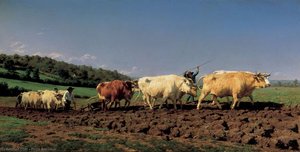
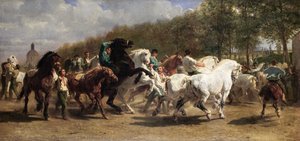
Bonheur's Durchbruch gelang ihr mit Ploughing in the Nivernais (1848), das im Salon in Paris ausgestellt wurde und große Aufmerksamkeit erregte. Doch es war The Horse Fair (1853-1855), die ihren Ruhm international festigte. Dieses monumentale Gemälde, heute im Metropolitan Museum of Art in New York City untergebracht, zeigt einen belebten Pferdemarkt mit dynamischer Energie und anatomischer Genauigkeit. Queen Victoria selbst bewunderte das Werk.
- Bemerkenswerte Werke:
- Ploughing in the Nivernais (1848) – Musée d'Orsay, Paris
- The Horse Fair (1853-1855) – Metropolitan Museum of Art, New York City
- Kopf eines Esels - Auf ArtsDot.com erhältlich
Bonheur's künstlerischer Stil zeichnete sich durch sorgfältige Beobachtung und ein unerschütterliches Engagement für den Realismus aus. Sie arbeitete oft im Freien und studierte ihre Motive direkt in ihrer natürlichen Umgebung. Ihre Gemälde sind bekannt für ihre anatomische Präzision, dynamischen Kompositionen und die Fähigkeit, den individuellen Charakter jedes Tieres einzufangen.
Vermächtnis und historische Bedeutung
Rosa Bonheur's Vermächtnis geht weit über ihre künstlerischen Leistungen hinaus. Als erfolgreiche weibliche Künstlerin in einem von Männern dominierten Bereich diente sie als Inspiration für zukünftige Generationen von Künstlerinnen. Sie trug berühmt Männerkleidung, da sie diese bei der Arbeit mit Tieren praktischer fand – ein Beweis für ihren unabhängigen Geist und ihren unkonventionellen Ansatz.
Bonheur's Werk wird heute in wichtigen Museen auf der ganzen Welt gefeiert, darunter das Musée d'Orsay und das Metropolitan Museum of Art. Ihre Beiträge zum Realismus werden für ihre technische Fertigkeit und ihre tiefe Wertschätzung für die Natur anerkannt. Sie bleibt eine ikonische Figur, die künstlerisches Talent, Ausdauer und einen Pioniergeist symbolisiert.
Weitere Informationen
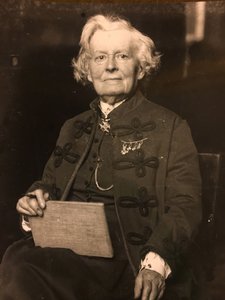
Rosa Bonheur
1822 - 1899 , Frankreich
Kurzinfos
- Bemerkenswerte Werke:
- Pflügen im Nivernais
- Der Pferdemarkt
- Geburtsdatum: 16. März 1822
- Geburtsort: Bordeaux, Frankreich
- Künstlerische Richtung: Realismus, Animalière
- Nationalität: Französisch
- Sterbedatum: 25. Mai 1899
- Vollständiger Name: Rosa Bonheur
Ähnliche Artikel
Rosa Bonheur: Realism, Rural Life & Redefining Women's Roles in 19th-Century Art
Explore the life & art of Rosa Bonheur, a pioneering Realist painter who redefined women's roles in 19th-century France. Discover her iconic animal paintings and lasting influence on art history. Learn more at ArtsDot.

Die schönsten Landschaftsbilder: 10 Meisterwerke für Ihr Zuhause | ArtsDot.com
Entdecken Sie die 10 schönsten Landschaftsbilder der Kunstgeschichte! Von Monet bis Van Gogh – erfahren Sie die Geschichten hinter Meisterwerken & finden Sie Inspiration für Ihr Zuhause. Hochwertige Kunstdrucke auf ArtsDot.com.
Romantic Realism's Finest: 10 Masterpieces for Your Home | ArtsDot
Explore 10 defining masterpieces of Romantic Realism! Discover Courbet, Millet & Daumier's powerful paintings—capturing emotion and social realities. Find museum-quality reproductions for your home at ArtsDot.com.

Romantische Landschaften: Die 10 Meisterwerke, die eine Epoche prägten | ArtsDot
Entdecken Sie die 10 Meisterwerke der Romantischen Landschaftsmalerei! Von Caspar David Friedrich bis Turner – erleben Sie die Kunst, Emotion & Natur. Hochwertige Reproduktionen auf ArtsDot.com

Evocations of Place: A Historical Journey Through Landscape Art
Explore the rich history of landscape art with ArtsDot. Discover renowned artists, movements like Impressionism & Romanticism, and expert guidance for collecting timeless pieces. Find your perfect serene escape today!