

 Vorschau anzeigen
 Versenden
 Teilen
 Details anzeigen

 Herunterladen
 Ähnliche Objekte
 Röntgenaufnahme
 Diashow
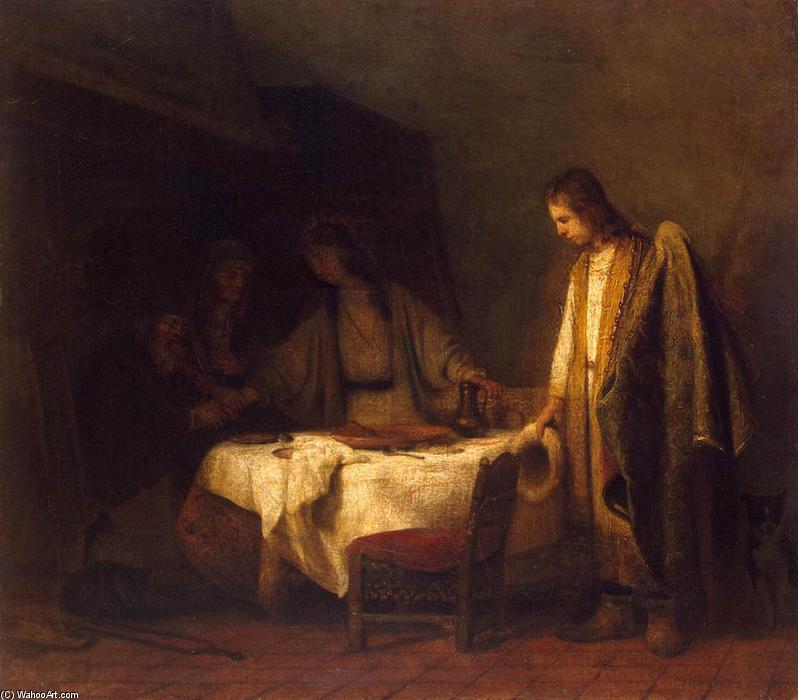
Tobias's Farewell to his Parents
 Oil On Canvas
- WallArt
- Baroque
 Early Modern
 65.0 x 73.0 cm
 Eremitage Museum
 Weiterlesen
Erwerben Sie ein hochauflösendes, optimiertes digitales Bild, das der Online-Vorschau weit überlegen ist.
Jede Datei wird von unseren hauseigenen Spezialisten mit modernsten Werkzeugen und fachmännischer manueller Retusche sorgfältig vorbereitet. Wir stellen sicher, dass jedes Bild eine außergewöhnliche Klarheit, präzise Farbgenauigkeit und feinste Details aufweist.
Die endgültige Datei wird innerhalb von 72 Stunden per E-Mail zugestellt und ist für den sofortigen Einsatz in professionellen, redaktionellen und Druckumgebungen optimiert. Es handelt sich um dieselbe Qualität, der führende Designstudios, Verlage und Galerien vertrauen.
Digitales Bild
Laden Sie eine hochauflösende Datei für die persönliche Präsentation, den Druck und kreative Projekte herunter. ( Druck bestellen Handgemalte Reproduktion bestellen)
In jeder Bestellung digitaler Bilder enthalten
Professionelle digitale Bereitstellung, garantiert
Wenn Sie sich für ArtsDot.com entscheiden, erhalten Sie nicht nur ein Bild – Sie erhalten ein professionell aufbereitetes digitales Kunstwerk, das mit höchster Präzision erstellt und durch eine Zufriedenheitsgarantie abgesichert wird. Hier ist alles, was automatisch mit Ihrer Bestellung geliefert wird:

Schnelle E-Mail-Zustellung
Ihre hochauflösende digitale Bilddatei wird Ihnen innerhalb von 72 Stunden nach der Bestellung per E-Mail zugestellt – bereit zur sofortigen Verwendung.

KI-optimierte digitale Datei
Ihre Kunstwerke werden professionell mithilfe fortschrittlicher KI-Tools und manueller Bearbeitung optimiert, um maximale Detailtreue, Klarheit und Farbgenauigkeit zu gewährleisten.

Lebenslanger kostenloser Neudruckservice
Datei versehentlich gelöscht oder verloren? Keine Sorge – wir senden sie Ihnen jederzeit kostenlos erneut zu.

Keine Einfuhrgebühren – jemals
Genießen Sie Ihr Kunstwerk sofort ohne Zollgebühren, Einfuhrabgaben oder Versandkosten – digitale Downloads sind immer steuerfrei.

Garantierte Farbtreue
Wir garantieren, dass Ihr digitales Bild mithilfe professioneller Werkzeuge und Farbmanagement die Originalfarben so präzise wie möglich wiedergibt.

60-Tage-Zufriedenheitsgarantie
Sollten Sie mit Ihrem digitalen Bild nicht zufrieden sein, werden wir es überarbeiten oder Ihnen innerhalb von 60 Tagen 100% erstatten – ohne Wenn und Aber.

100% Geld-zurück-Garantie
Nicht zufrieden? Erhalten Sie innerhalb von 60 Tagen nach Erhalt Ihrer digitalen Datei eine vollständige Rückerstattung – ohne Angabe von Gründen.

Rabatte bei Großbestellungen
3 Bilder kaufen, 10% sparen – 5 Bilder kaufen, 15% sparen – Ab 10 Bildern 20% sparen. Ideal für kreative Projekte, Galerien und Agenturen.
A Pioneer of Trompe-l'œil and Artistic Theory
Samuel Dirksz van Hoogstraten (1627–1678) stands as a pivotal figure in the Dutch Golden Age, an artist whose legacy transcends mere visual representation. More than simply capturing a scene on canvas; he fundamentally questioned how perception itself could be manipulated—a characteristic that distinguishes him from his contemporaries and cemented his place amongst the most innovative thinkers of his time.
Born in Dordrecht, Van Hoogstraten’s artistic journey began within the influential workshop of his father, Dirk van Hoogstraten, fostering a deep understanding of foundational artistic principles before venturing into Amsterdam—the epicenter of Dutch artistic fervor during the seventeenth century. This formative experience instilled in him not only exceptional skill but also an intellectual curiosity that would propel him to become one of the era’s foremost art theorists.
The Art of Illusion: Trompe-l'œil and Spatial Mastery
Van Hoogstraten’s distinctive style is instantly recognizable by his masterful execution of trompe-l'œil—a technique that deliberately deceives the eye, creating illusions of depth and perspective. Unlike many artists who sought to faithfully reproduce reality, Van Hoogstraten actively engaged with visual perception, crafting artworks that challenged conventional notions of space and dimensionality.
Consider “Tobias’s Farewell to his Parents,” housed at The Hermitage in St. Petersburg. Observe how the artist meticulously constructs a darkened room with a wooden floor, juxtaposed against figures bathed in soft light—a deliberate tactic designed to heighten emotional impact and reinforce the illusion of depth. This technique wasn't merely decorative; it served as a conduit for conveying profound psychological truths about human experience.
Influenced by Rembrandt: A Dialogue Between Genius
Van Hoogstraten’s artistic sensibilities were profoundly shaped by Rembrandt Harmenszoon van Rijn, whom he apprenticed under. This mentorship fostered an admiration for Rembrandt's dramatic chiaroscuro—the skillful use of light and shadow—which Van Hoogstraten skillfully adopted in his own paintings.
Works like “Portrait of Mathys van den Brouck” exemplify this stylistic kinship, mirroring Rembrandt’s masterful rendering of human anatomy and emotion. However, Van Hoogstraten wasn't merely imitating Rembrandt; he engaged in a critical dialogue with his predecessor, pushing the boundaries of artistic expression while acknowledging the enduring influence of Rembrandt’s vision.
Beyond Painting: Art Theory and Literary Legacy
Van Hoogstraten’s contribution to art history extends far beyond his paintings. His magnum opus, “Introduction to the Academy of Painting,” or “The Visible World,” represents a monumental achievement in artistic scholarship—a comprehensive treatise that interrogated fundamental questions about visual representation and its relationship to philosophy.
Published in 1678, this groundbreaking work anticipated developments in European art theory for decades to come. It championed the importance of illusionism and perspective, arguing persuasively that artists should strive to emulate nature while simultaneously elevating their craft to a higher level of intellectual contemplation. Furthermore, Van Hoogstraten’s meticulous study of ancient texts—particularly Aristotle—demonstrated his commitment to integrating philosophical ideas into artistic practice.
A Lasting Impression: Symbolism and Emotional Resonance
“Tobias's Farewell to His Parents” encapsulates the essence of Van Hoogstraten’s artistic ethos. The artist’s careful attention to detail—the luminous drapery, the expressive faces of Tobias’s parents—serves not only to depict a poignant familial scene but also to convey profound emotional resonance.
The use of color and light contributes dramatically to the painting's dramatic effect, mirroring the stylistic conventions of Baroque art. Ultimately, Van Hoogstraten succeeded in creating an artwork that transcends mere visual beauty—it speaks to universal themes of love, loss, and remembrance, securing his place as one of the most enduring figures in Dutch artistic history.
Ähnliche Kunstwerke

Biografie des Künstlers
Samuel Dirksz van Hoogstraten: A Master of Illusion and Intellect
Samuel Dirksz van Hoogstraten (1627-1678) stands as a towering figure in the annals of Dutch Golden Age art, an artist whose legacy extends far beyond his stunning visual creations. He wasn’t merely capturing scenes from his era; he was dissecting them, manipulating perception, and exploring the very essence of artistic representation—a pursuit that cemented his place as one of the most influential thinkers and practitioners of Baroque painting in Holland. Born in Dordrecht, Netherlands, into a family steeped in artisanal tradition – his father a silversmith and painter, his grandfather a guild member – Van Hoogstraten’s formative years instilled within him an appreciation for craftsmanship and a keen understanding of visual principles that would inform his entire artistic career.Early Training and Rembrandt's Influence
His formal artistic education began under the tutelage of his father, Dirk van Hoogstraten, grounding him in the foundational techniques of painting before he embarked on his apprenticeship with Rembrandt Harmenszoon van Rijn around 1640. This association proved transformative, exposing Van Hoogstraten to Rembrandt’s groundbreaking approach to chiaroscuro—the dramatic interplay of light and shadow—a technique that would become a hallmark of his own style. Unlike many artists of his time who slavishly imitated their masters, Van Hoogstraten possessed an inquisitive mind and a restless spirit that propelled him beyond mere replication. He meticulously studied Rembrandt’s compositions, analyzing the subtleties of tonal gradation and exploring how light could convey emotion and create illusionistic depth. This dedication to Rembrandt's method is evident in his early portraits, where he skillfully employs chiaroscuro to sculpt form and imbue his subjects with psychological nuance.A Journey Through Europe: Observation and Innovation
Driven by an unwavering desire for artistic advancement, Van Hoogstraten undertook extensive travels throughout Europe during the 1650s and early 1660s—a period marked by intellectual ferment and artistic experimentation. He visited Vienna, Rome, and London, immersing himself in diverse artistic traditions and absorbing influences from artists such as Johannes Vermeer and Pieter de Hooch. These journeys weren’t merely sightseeing expeditions; they were intensive studies of architecture, perspective, and the prevailing aesthetic sensibilities of each locale—observations that profoundly shaped his artistic vision. He meticulously documented his findings in notebooks filled with sketches and diagrams, demonstrating a commitment to scientific inquiry alongside artistic creativity. This meticulous attention to detail is particularly apparent in his architectural paintings, where he employs precise mathematical calculations to achieve breathtaking realism and convey spatial illusion.The Triumph of Trompe-l’œil and Perspective Boxes
Perhaps Van Hoogstraten's most remarkable achievement was his mastery of trompe-l’œil—the art of deceiving the eye—a technique that he elevated to unprecedented heights. He skillfully crafted illusions within still lifes, creating seemingly three-dimensional representations of objects that defied conventional perspective. His celebrated “Peepshow with Views of the Interior of a Dutch House,” housed at the National Gallery in London, exemplifies this innovative approach, transporting viewers into miniature worlds rendered with astonishing accuracy and depth. Similarly, he constructed perspective boxes—elaborate architectural models designed to simulate realistic interiors when viewed through peepholes—demonstrating his profound understanding of spatial illusion and challenging viewers’ perceptions of reality. These creations weren't merely decorative objects; they were intellectual puzzles that demanded careful observation and contemplation.A Theoretician's Legacy: Shaping Artistic Discourse
Beyond his artistic accomplishments, Van Hoogstraten was a prolific art theorist who sought to codify the principles of painting in his magnum opus, *Inleyding tot de hooge schoole der schilderkonst* (Introduction to the Academy of Painting), published in 1678. This ambitious treatise stands as one of the most comprehensive and intellectually rigorous explorations of art theory produced in the Dutch Republic during the Baroque era—a testament to his erudition and unwavering dedication to advancing artistic knowledge. Van Hoogstraten drew upon a vast range of sources, from classical philosophy to contemporary treatises on optics, analyzing issues of pictorial persuasion, illusionism, moral responsibility, and the relationship between painting and intellect. He built upon the foundations laid by Karel van Mander in his earlier work, *Het Schilder-Boeck*, aiming to establish a systematic framework for understanding and practicing the art of painting—a legacy that continues to inspire artists and scholars alike. His writings reflect both international influences gleaned from his travels and debates within Dutch artistic circles, securing his place as a pivotal figure in shaping the intellectual landscape of his time.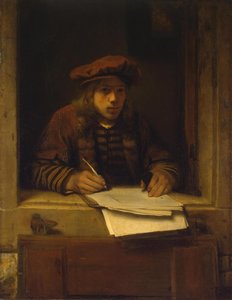
Samuel van Hoogstraten
1627 - 1678 , Niederlande
Kurzinfos
- Artistic Movement Or Style: Dutch Golden Age, Baroque
- Artists Who Influenced This Artist:
- Rembrandt
- Dirk van Hoogstraten
- Date Of Birth: August 2, 1627
- Date Of Death: October 19, 1678
- Full Name: Samuel Dirksz van Hoogstraten
- Nationality: Dutch
- Notable Artworks:
- Portrait of Mathys van den Brouck
- The Anemic Lady
- View of a Corridor
- Man at a Window
- Vanitas
- Place Of Birth: Dordrecht, Netherlands

