 Versenden
 Teilen
 Details anzeigen

 Herunterladen
 Ähnliche Objekte
 Diashow
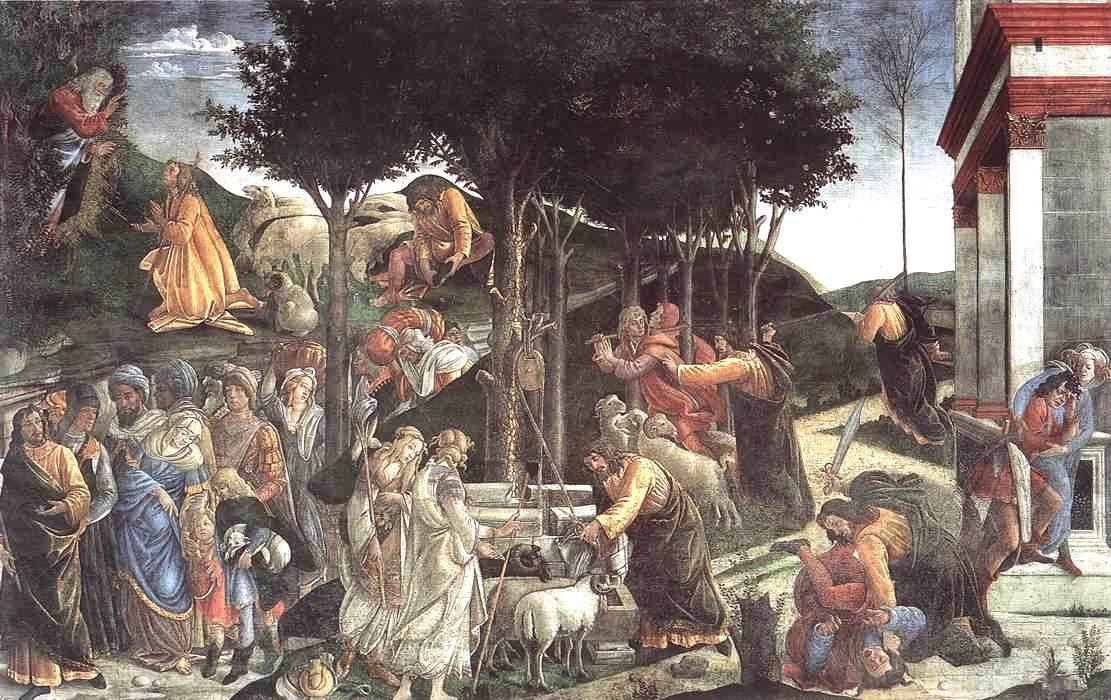
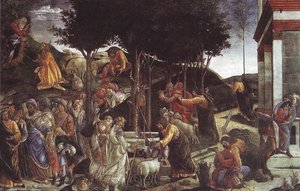
The Trials and Calling of Moses (Cappella Sistina, Vatican)
 Fresco
- Decor
- Early Renaissance
 1481
1481- Renaissance
 348.0 x 558.0 cm
 Weiterlesen
Handgefertigte Ölreproduktion
Handgemaltes Ölgemälde auf Leinwand in Ihrer Wunschgröße und mit Rahmen, auf Bestellung von unseren Künstlern angefertigt. ( Druck bestellen Bild kaufen)




































Wählen Sie aus unseren vordefinierten Formaten, die den ursprünglichen Proportionen des Kunstwerks entsprechen.

Sie können Ihre eigenen Maße eingeben, um einen bestimmten Rahmen oder Platz auszufüllen. Wenn die gewählte Größe nicht den Proportionen des Originalbildes entspricht, werden wir das Kunstwerk entweder beschneiden oder das Gemälde durch zusätzliche, handgemalte Elemente erweitern. Ein digitales Mockup wird Ihnen zur Genehmigung zugesandt, bevor die Produktion beginnt.
Bitte beachten Sie, dass die Bildschirmvorschau nicht die tatsächliche Beschneidung oder Erweiterung widerspiegelt. Nur das Mockup zeigt die endgültige Komposition exakt an.
Obwohl Sondermaße verfügbar sind, empfehlen wir, eine Größe aus der vordefinierten Liste zu wählen, um die ursprünglichen Proportionen beizubehalten.
Nach der Bestellung wird das ArtsDot.com-Team dem Kunden Anweisungen per E-Mail zusenden und eine Mockup-Vorschau bereitstellen.
Weltweiter Versand () in nur 3 bis 4 Wochen statt der üblichen 5 Wochen. (23 August). Keine Kompromisse bei der Qualität.

Kostenloser weltweiter Expressversand

Hochwertige Leinenleinwand

Umfassender Versicherungsschutz beim Versand

Zollgebühren-Rückerstattungsgarantie

Garantie für exakte Farbtreue

60 Tage Rückgaberecht (nur bei Mängeln)

100% Geld-zurück-Garantie

Mengenrabatt verfügbar
 Die Glasoption ist nur für Größen unter 110 cm verfügbar.

The Trials and Calling of Moses (Cappella Sistina, Vatican)
Art der Reproduktion
Format der Reproduktion
-


Gesamtpreis
$ 263
Beschreibung des Kunstwerks
A Divine Encounter in the Sistine Chapel
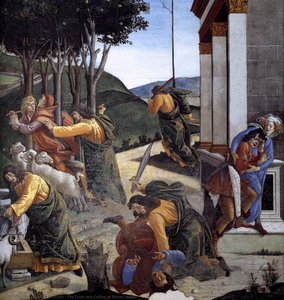
Within the hallowed, silent corridors of the Vatican’s Sistine Chapel, where the echoes of centuries of prayer linger, lies one of Sandro Botticelli’s most profound narrative achievements. The Trials and Calling of Moses is not merely a fresco; it is a breathtaking window into the spiritual intensity of the Early Renaissance. Painted in 1481, this masterpiece occupies a prestigious position on the south wall, serving as a visual testament to the pivotal moments of biblical liberation. As one gazes upon the scene, the viewer is transported to the rugged wilderness of the Exodus, witnessing the monumental tension of Moses standing before Pharaoh’s court. Botticelli does not simply depict a historical event; he captures the very breath of faith and the heavy weight of divine destiny as the Israelites prepare to journey toward freedom.
The composition is a masterclass in movement and human emotion. Unlike the static, iconographic styles of previous eras, Botticelli breathes life into every figure through his signature graceful lines and delicate coloration. The scene is teeming with a vibrant, restless energy—a multitude of people gathered in a state of both anticipation and trepidation. While Moses stands as the central pillar of strength and divine mediation, the surrounding crowd provides a rich tapestry of human reaction. Through subtle gradations of tone and an ethereal approach to beauty, Botticelli avoids harsh realism in favor of a humanist elegance that emphasizes the dignity of the human spirit even amidst the trials of oppression.
Symbolism and the Language of Nature
Beyond the central drama of the biblical narrative, Botticelli weaves a complex web of symbolism that rewards the contemplative eye. The artist meticulously integrates the natural world to reinforce the theological themes of the work. Amidst the figures, one finds a carefully curated collection of animals—sheep, goats, and horses—that ground the divine event in the earthly reality of the wandering Israelites. Yet, even within this pastoral setting, spiritual metaphors abound. The presence of doves offers a soft whisper of peace and divine mercy, while the soaring eagle serves as a powerful emblem of God’s sovereignty and protective gaze over His people.
For the discerning collector or interior designer, these symbolic layers offer an unparalleled depth of meaning. The interplay between the wild landscape and the structured court of Pharaoh creates a visual dialogue between chaos and order, much like the internal struggle of faith itself. This richness makes the artwork an extraordinary centerpiece for any space dedicated to contemplation, intellectual rigor, or classical elegance. To possess a reproduction of such a work is to invite a piece of the Renaissance's most profound theological and philosophical inquiries into one's own environment.
A Legacy of Masterful Technique
The technical execution of this fresco represents the pinnacle of 15th-century Florentine craftsmanship. Utilizing the traditional method of tempera on plaster, Botticelli achieved a luminous quality that allows light to seem as though it is emanating from within the pigments themselves. His ability to manage the drying time of the fresco technique allowed for incredible precision in detail, from the intricate folds of the classical drapery to the subtle expressions of the faces in the crowd. This meticulous attention to detail ensures that every viewing of the piece reveals something new—a hidden gesture, a shifting shadow, or a symbolic creature tucked into the periphery.
As an element of high-end decor, a hand-painted reproduction of The Trials and Calling of Moses brings with it the prestige of the Medici era. It serves as a bridge between the historical grandeur of the Vatican and the modern aesthetic, offering a sophisticated focal point that commands attention through its narrative complexity and artistic grace. Whether placed in a grand library, a formal salon, or a curated gallery space, this work continues to inspire awe, reminding us of the timeless human pursuit of truth, justice, and divine guidance.
Ähnliche Kunstwerke
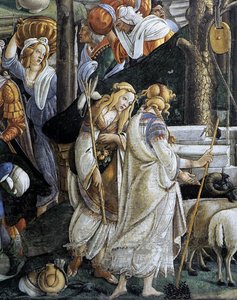
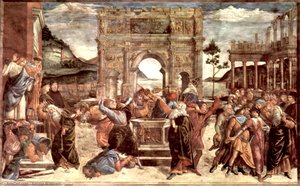
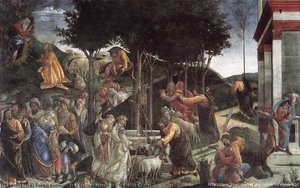
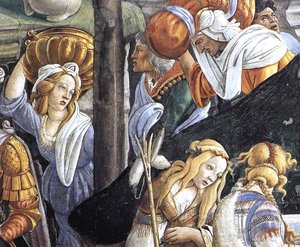
Über den Künstler
frühes Leben und Ausbildung
Sandro Botticelli, geboren Alessandro di Mariano di Vanni Filipepi um 1445, war eine zentrale Figur im frühen italienischen Frührenaissance der Malerei. Zunächst posthumig vernachlässigt, wurde Botticellis Werk im späten 19. Jahrhundert von den Präraffaeliten revitalisiert und führte zu einer Neubewertung seiner künstlerischen Beiträge. Botticelli wurde in Florenz, Italien, geboren und lebte sein ganzes Leben im selben Viertel. Seine Familie, darunter sein Vater Mariano di Vanni d’Amedeo Filipepi, war in verschiedene Berufe involviert, was sie mit Künstlern in Kontakt brachte. Giorgio Vasari berichtete, dass Botticelli zunächst als Goldschmied ausgebildet wurde.Künstlerischer Stil und bemerkenswerte Werke
Botticellis Werk ist durch elegante Linearität gekennzeichnet, die die Lücke zwischen der späten italienischen Gotik und dem frühen Frührenaissance schließt. Seine berühmtesten Werke, die Geburt des Venus und Primavera, werden in der Uffizialleerie in Florenz ausgestellt, die eine bedeutende Sammlung seiner Kunst beherbergt. * die Geburt des Venus (ansicht auf ArtsDot) * Primavera (Sandro Botticellis Kunst erkunden auf ArtsDot) * Mystische Geburt (Nationalgalerie, London), datiert 1501, ist das einzige Werk von Botticelli mit einem klaren Datum.Vermächtnis und Einfluss
Botticellis Stil entwickelte sich in den 1490er Jahren zu einem persönlicheren Ansatz und unterschied sich von Zeitgenossen wie Leonardo da Vinci und dem aufkommenden Hochrenaissance-Stil. Sein Werk wurde als bedeutende Beiträge zur italienischen Renaissance Kunstbewegung anerkannt. * Die italienische Renaissance Kunstbewegung * Sandro Botticelli auf Wikipedia- Bekannte Künstler der italienischen Renaissance umfassen Sandro Botticelli, Leonardo da Vinci, Michelangelo und Tizian.
- Die Uffizialleerie in Florenz beherbergt eine bedeutende Sammlung von Botticellis Kunst.
- Botticellis Werk wurde als eine zentrale Figur im frühen italienischen Frührenaissance der Malerei anerkannt.
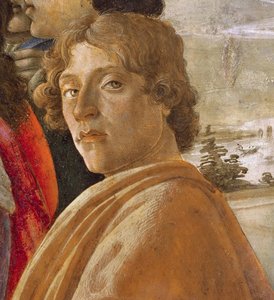
Sandro Botticelli
1445 - 1510 , Italien
Kurzinfos
- Beeinflusste Künstler: ['Präraffaeliten']
- Bemerkenswerte Werke:
- Die Geburt der Venus
- Primavera
- Mystische Geburt
- Einflussreiche Künstler:
- Fra Angelico
- Paolo Uccello
- Geburtsdatum: ca. 1445
- Geburtsort: Florenz, Italien
- Künstlerische Bewegung: Frührenaissance
- Nationalität: Italienisch
- Sterbedatum: 1510
- Vollständiger Name: Sandro Botticelli
Ähnliche Artikel
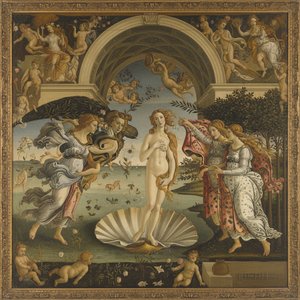
Sandro Botticelli: Die 25 Meisterwerke des Renaissance-Genies – Kunst für Ihr Zuhause
Entdecken Sie die 25 schönsten Meisterwerke von Sandro Botticelli! Erleben Sie die Renaissance-Kunst mit 'Geburt der Venus', 'Primavera' & mehr. Hochwertige Reproduktionen für Ihr Zuhause – jetzt auf ArtsDot.com!

Das Familienerbe an die Wand bringen: Wandgemälde als Generationenschatz
Verwandeln Sie Ihre Familiengeschichte in ein beeindruckendes Wandgemälde! Expertenrat & hochwertige Handwerkskunst für einzigartige Kunstwerke, die Generationen verbinden. Entdecken Sie jetzt!

The Enduring Legacy of Fresco: Technique, History & Artistic Expression Across Cultures
Explore the rich history & enduring legacy of fresco painting! Discover ancient techniques, Giotto's masterpieces, and modern applications. Expert insights for art lovers & professionals.

The Enduring Legacy of Fresco Painting: Techniques, History & Contemporary Relevance
Explore the rich history & enduring artistry of fresco painting – from Giotto to Michelangelo! Discover techniques, conservation efforts, & modern applications. Learn how ArtsDot brings this timeless art form to your home.
Die bleibende Pracht der Freskomalerei: Technik, Geschichte und künstlerischer Ausdruck
Entdecken Sie die faszinierende Welt der Freskomalerei! Von den Ursprüngen bis zur Renaissance – wir beleuchten Technik, Geschichte und künstlerischen Ausdruck dieser einzigartigen Kunstform. Expertenwissen für Sammler & Liebhaber.