 Vorschau anzeigen
 Versenden
 Teilen
 Details anzeigen

 Herunterladen
 Ähnliche Objekte
 Röntgenaufnahme
 Diashow
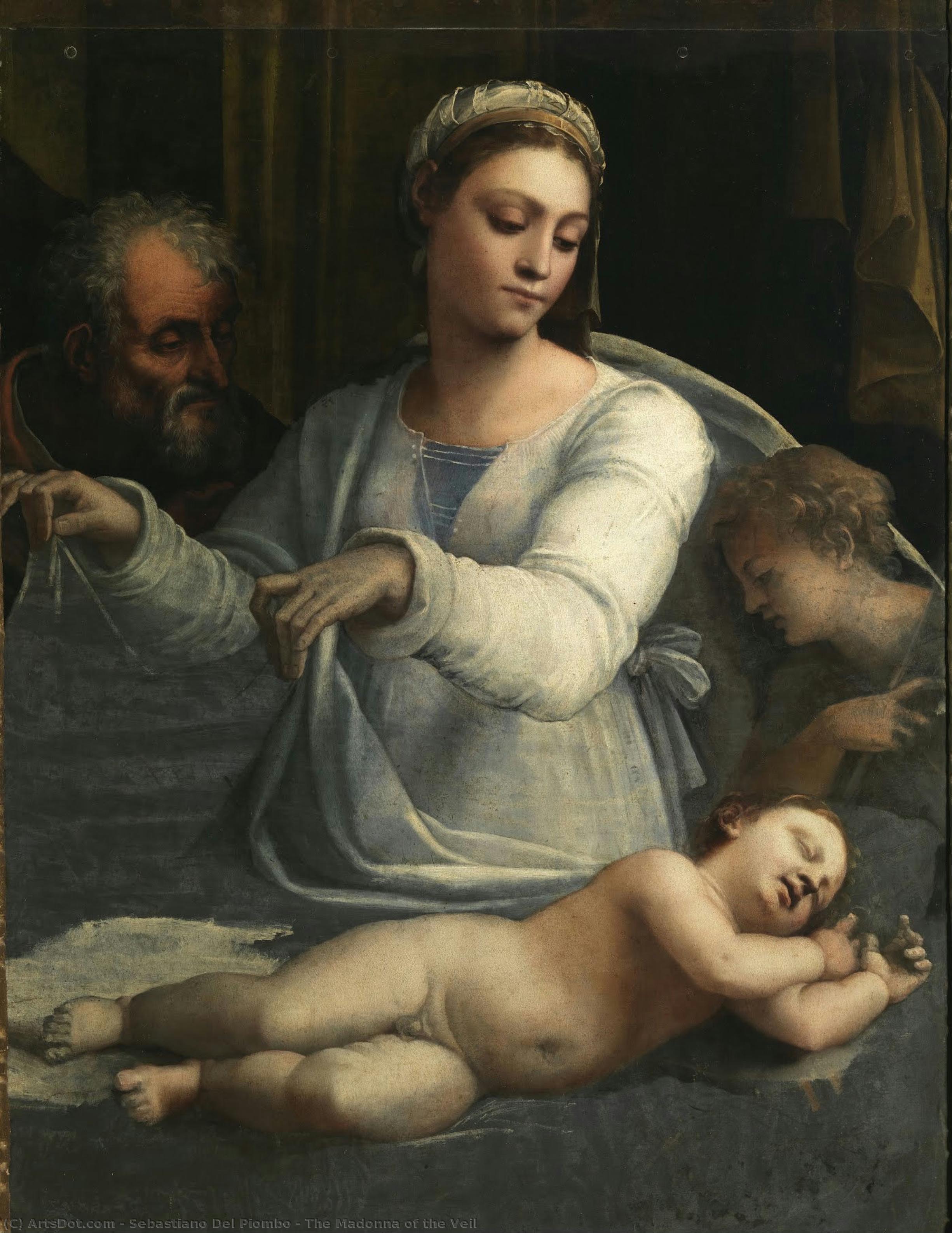
The Madonna of the Veil


 Weiterlesen
Handgefertigte Ölreproduktion
Handgemaltes Ölgemälde auf Leinwand in Ihrer Wunschgröße und mit Rahmen, auf Bestellung von unseren Künstlern angefertigt. ( Druck bestellen Bild kaufen)




P118B $10

P118H $10

P118W $10

P438Z $10

P508JH $12

P508YH $12

P805H $10

P805Z $10

P919BZ $10

P919G $10

P919XJ $10

P959ZH $10

P968JZ $12

W106C $8

W218G $10

W218JH $8

W218Y $10

W307PJ $10

W316G $10

W316PJ $8

W316Y $10

W398PJ $8

W4111J $10

W500HY $15

W500JH $15

W692G $12

W849H $8

W940BG $15

W953PJ $8




Wählen Sie aus unseren vordefinierten Formaten, die den ursprünglichen Proportionen des Kunstwerks entsprechen.

Sie können Ihre eigenen Maße eingeben, um einen bestimmten Rahmen oder Platz auszufüllen. Wenn die gewählte Größe nicht den Proportionen des Originalbildes entspricht, werden wir das Kunstwerk entweder beschneiden oder das Gemälde durch zusätzliche, handgemalte Elemente erweitern. Ein digitales Mockup wird Ihnen zur Genehmigung zugesandt, bevor die Produktion beginnt.
Bitte beachten Sie, dass die Bildschirmvorschau nicht die tatsächliche Beschneidung oder Erweiterung widerspiegelt. Nur das Mockup zeigt die endgültige Komposition exakt an.
Obwohl Sondermaße verfügbar sind, empfehlen wir, eine Größe aus der vordefinierten Liste zu wählen, um die ursprünglichen Proportionen beizubehalten.
Nach der Bestellung wird das ArtsDot.com-Team dem Kunden Anweisungen per E-Mail zusenden und eine Mockup-Vorschau bereitstellen.
Weltweiter Versand () in nur 3 bis 4 Wochen statt der üblichen 5 Wochen. (27 August). Keine Kompromisse bei der Qualität.

Kostenloser weltweiter Expressversand

Hochwertige Leinenleinwand

Umfassender Versicherungsschutz beim Versand

Zollgebühren-Rückerstattungsgarantie

Garantie für exakte Farbtreue

60 Tage Rückgaberecht (nur bei Mängeln)

100% Geld-zurück-Garantie

Mengenrabatt verfügbar
 Die Glasoption ist nur für Größen unter 110 cm verfügbar.

The Madonna of the Veil
Art der Reproduktion
Format der Reproduktion
-


Gesamtpreis
$ 263
The Madonna of the Veil: A Venetian Masterpiece Bridging Worlds
Sebastiano del Piombo’s “Madonna of the Veil,” painted around 1540, is not merely a depiction of the Virgin Mary and Child; it's a profound meditation on faith, family, and the delicate balance between earthly beauty and divine grace. Born Sebastiano Luciani in Venice, he embarked on an extraordinary artistic journey, initially drawn to music before finding his true calling in painting. His early training under Giovanni Bellini and Giorgione instilled within him a deep appreciation for rich color palettes and atmospheric perspective – hallmarks that would later define his unique style as he migrated to Rome.
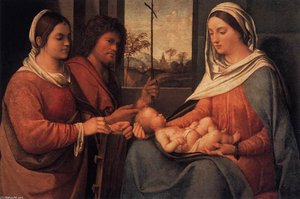
The painting immediately captivates with its intimate portrayal of the Madonna, holding her infant Jesus in a tender embrace. Mary’s gaze is serene yet thoughtful, directed towards her child, while the Christ Child playfully drapes himself with her veil – an act laden with symbolic weight. This simple gesture speaks volumes about their bond and hints at the Virgin's role as protector and guide. Beyond this central scene, the composition unfolds within a carefully constructed architectural setting, suggesting a domestic interior bathed in soft light. Two figures stand observing the Madonna and Child; one on the left and another on the right, adding a layer of narrative complexity and inviting speculation about their identities and roles.
A Roman Synthesis: Del Piombo’s Unique Vision
Del Piombo's artistic evolution is particularly fascinating. Initially rooted in Venetian colorism – characterized by luminous hues and shimmering effects – he skillfully adapted these techniques to the monumental grandeur of Roman painting, influenced heavily by Michelangelo. This synthesis resulted in a style that retained the vibrancy of Venice while embracing the solidity and dramatic intensity of Rome. The use of pyramidal composition, evident here, is a key element of this transition, lending stability and formality to the scene.
The painting’s execution reveals a masterful understanding of oil paint. Del Piombo employed layering techniques to create depth and texture, particularly noticeable in the folds of Mary's garments and the delicate details of the Child’s face. The subtle gradations of color – from the warm ochres and reds of the Madonna’s robes to the cooler blues and greens of the background – contribute significantly to the painting’s atmospheric quality. Notably, the figures are rendered with a remarkable degree of realism, capturing not just their physical appearance but also their emotional states.
Symbolism and Historical Context
The veil itself is a potent symbol within this work. Beyond its literal function as a covering for the infant Jesus, it represents Mary’s role as protector and intercessor – a conduit between the earthly and divine realms. The inclusion of the two observers adds another layer of interpretation. They could represent Joseph, contemplating his role as guardian, or perhaps members of the family, reflecting on the sacredness of this moment. The date of 1540 places the painting within a period of significant artistic and political upheaval in Rome – a time when papal patronage fueled an explosion of creativity.
Rediscovering a Master: Research and Legacy
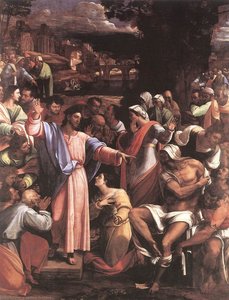
Scholarly research has shed new light on Del Piombo’s life and work, revealing a complex and often overlooked figure within the High Renaissance. Resources like ArtsDot.com offer valuable insights into his artistic development, including detailed analyses of his techniques and stylistic influences. The Wikipedia entry provides a comprehensive overview of his biography and career, while other sources delve deeper into specific aspects of his paintings, such as “The Raising of Lazarus.”
Furthermore, the painting’s history itself is intriguing, having been part of a pair with Raphael's "Portrait of Pope Julius II" for centuries. Its journey through private collections and its eventual arrival at the Mauritshuis museum in The Hague represents a fascinating chapter in art history. Reproductions of “The Madonna of the Veil” offer an opportunity to appreciate the beauty and complexity of this remarkable masterpiece, allowing viewers to connect with Del Piombo’s vision across time and space.
Ähnliche Kunstwerke
Über den Künstler
Frühes Leben und Ausbildung
Sebastiano del Piombo, ein italienischer Maler der Hochrenaissance, hinterließ mit seiner einzigartigen Verbindung aus venezianischer Farbe und römischen monumentalen Formen einen bleibenden Eindruck in der Kunstwelt. Geboren um 1485 in Venedig, ist Sebastianos frühes Leben von Geheimnissen umgeben, aber es ist bekannt, dass er erst spät im Leben mit dem Malen begann und Schüler Giorgiones (1477/78 oder 1473/74 – 1510) wurde, einem bedeutenden Maler der venezianischen Hochrenaissance.Aufstieg in Rom
Sebastianos Karriere gewann an Schwung, als er 1511 nach Rom zog, wo er zusammen mit Raffael arbeitete und schließlich zu den wenigen Malern gehörte, die eine gute Beziehung zu Michelangelo pflegten, der ihn ermutigte, gegen Raffael um Aufträge zu konkurrieren. Diese Erfahrung führte dazu, dass Sebastiano zum führenden Maler Roms nach Raffaels Tod im Jahr 1520 wurde.Wichtige Werke und Kooperationen
- Die drei Philosophen (Kunsthistorisches Museum, Wien, Österreich), eine Zusammenarbeit mit Giorgione, zeigt Sebastianos einzigartigen Stil.
- Moses empfängt die Gesetzestafeln (Detail) (Madonna dell'orto, Venedig, Italien) demonstriert seine Meisterschaft in Öl auf Leinwand.
Entwicklung und künstlerischer Stil
Sebastiano del Piombo vereinte Elemente des venezianischen Kolorits mit der monumentalen Stärke römischer Kunst. Sein Stil zeichnete sich durch eine kraftvolle Darstellung von Figuren aus, oft größer als das Leben, die er durch lebendige Farben und eindrucksvolle Lichteffekte ausglichen konnte. Er bevorzugte Ölfarben und schuf sowohl Porträts als auch religiöse Szenen. Obwohl er in seinen frühen Jahren in Venedig bereits einen eigenen Stil entwickelte, festigte er ihn in Rom unter dem Einfluss Michelangelos.Bedeutung und Vermächtnis
Trotz seiner Bedeutung zu Lebzeiten war Sebastiano del Piombos Einfluss auf andere Künstler begrenzt, da er wenige prominente Schüler hatte und seine Werke nur selten verbreitet wurden. Sein einzigartiger Stil, der venezianische Farbenreichtum mit römischer Monumentalität verbindet, inspiriert jedoch weiterhin Kunstliebhaber. Erkunden Sie weitere Werke von Giorgione auf ArtsDot, Vertiefen Sie sich in Sebastiano del Piombos Biografie auf Wikipedia, Entdecken Sie Sebastiano del Piombos Profil auf ArtsDot. Wichtige Daten: * Geboren: ca. 1485, Venedig * Gestorben: 21. Juni 1547 * Bemerkenswerte Zusammenarbeit: Die drei Philosophen, mit Giorgione (Kunsthistorisches Museum, Wien, Österreich)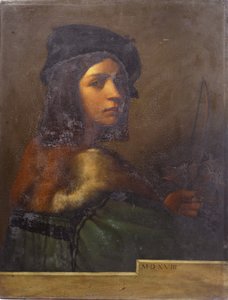
Sebastiano del Piombo
1485 - 1547 , Italien
Kurzinfos
- Beeinflusste Künstler:
- Giorgione
- Raphael
- Michelangelo
- Bemerkenswerte Werke:
- Die drei Philosophen
- Moses empfängt die Tabellen
- Geburtsdatum: ca. 1485
- Geburtsort: Venedig, Italien
- Künstlerische Richtung: Hochrenaissance
- Nationalität: Italiener
- Todatum: 21. Juni 1547
- Vollständiger Name: Sebastiano del Piombo
Ähnliche Artikel
Sebastiano del Piombo: Bridging Venetian Colorism & Roman Grand Manner Portraiture
Explore the captivating art of Sebastiano del Piombo, a Renaissance master bridging Venetian colorism & Roman grandeur. Discover his iconic portraits and lasting influence on art history. Learn more at ArtsDot.

Jacopo Tintoretto: Die 25 Meisterwerke des venezianischen Dramatikers | ArtsDot
Entdecken Sie die 25 Meisterwerke von Jacopo Tintoretto! Tauchen Sie ein in die dramatische Welt der venezianischen Renaissance. Hochwertige Kunst-Reproduktionen & Inspiration für Ihr Zuhause – jetzt auf ArtsDot.com.
Sebastiano Ricci: Venezianischer Meister der Barockillusion und Rokoko-Eleganz
Entdecken Sie das Werk des venezianischen Barockmeisters Sebastiano Ricci! Erfahren Sie mehr über seinen Stil, seine Fresken und sein Vermächtnis. Kunstberatung & hochwertige Reproduktionen bei ArtsDot.
Andrea del Sarto: Florentinische Eleganz und die Meisterschaft der Renaissance
Entdecken Sie das Werk von Andrea del Sarto, einem Meister der Florentiner Renaissance. Erfahren Sie mehr über seine Fresken, seinen Stil und sein Vermächtnis in diesem umfassenden Artikel. Hochwertige Reproduktionen bei ArtsDot!
Raphael: Die 25 Meisterwerke des Renaissance-Genies – Kunst für Ihr Zuhause
Entdecken Sie die 25 schönsten Meisterwerke von Raphael! Tauchen Sie ein in die Welt der Renaissance-Kunst, erfahren Sie faszinierende Geschichten und lassen Sie sich von den Farben und Kompositionen inspirieren. Hochwertige Reproduktionen auf ArtsDot.com.