 Vorschau anzeigen
 Versenden
 Teilen
 Details anzeigen

 Herunterladen
 Ähnliche Objekte
 Röntgenaufnahme
 Diashow
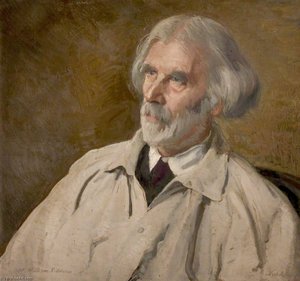
John Gibson (1790–1866), RA
 Oil On Canvas
- WallArt
- Academic Realism
 1850
1850- 19th Century
 93.0 x 72.0 cm
 Weiterlesen
Handgefertigte Ölreproduktion
Handgemaltes Ölgemälde auf Leinwand in Ihrer Wunschgröße und mit Rahmen, auf Bestellung von unseren Künstlern angefertigt. ( Druck bestellen Bild kaufen)




































Wählen Sie aus unseren vordefinierten Formaten, die den ursprünglichen Proportionen des Kunstwerks entsprechen.

Sie können Ihre eigenen Maße eingeben, um einen bestimmten Rahmen oder Platz auszufüllen. Wenn die gewählte Größe nicht den Proportionen des Originalbildes entspricht, werden wir das Kunstwerk entweder beschneiden oder das Gemälde durch zusätzliche, handgemalte Elemente erweitern. Ein digitales Mockup wird Ihnen zur Genehmigung zugesandt, bevor die Produktion beginnt.
Bitte beachten Sie, dass die Bildschirmvorschau nicht die tatsächliche Beschneidung oder Erweiterung widerspiegelt. Nur das Mockup zeigt die endgültige Komposition exakt an.
Obwohl Sondermaße verfügbar sind, empfehlen wir, eine Größe aus der vordefinierten Liste zu wählen, um die ursprünglichen Proportionen beizubehalten.
Nach der Bestellung wird das ArtsDot.com-Team dem Kunden Anweisungen per E-Mail zusenden und eine Mockup-Vorschau bereitstellen.
Weltweiter Versand () in nur 3 bis 4 Wochen statt der üblichen 5 Wochen. (25 August). Keine Kompromisse bei der Qualität.

Kostenloser weltweiter Expressversand

Hochwertige Leinenleinwand

Umfassender Versicherungsschutz beim Versand

Zollgebühren-Rückerstattungsgarantie

Garantie für exakte Farbtreue

60 Tage Rückgaberecht (nur bei Mängeln)

100% Geld-zurück-Garantie

Mengenrabatt verfügbar
 Die Glasoption ist nur für Größen unter 110 cm verfügbar.

John Gibson (1790–1866), RA
Art der Reproduktion
Format der Reproduktion
-


Gesamtpreis
$ 263
Beschreibung des Kunstwerks
A Study in Dignity: The Soul of a Portrait
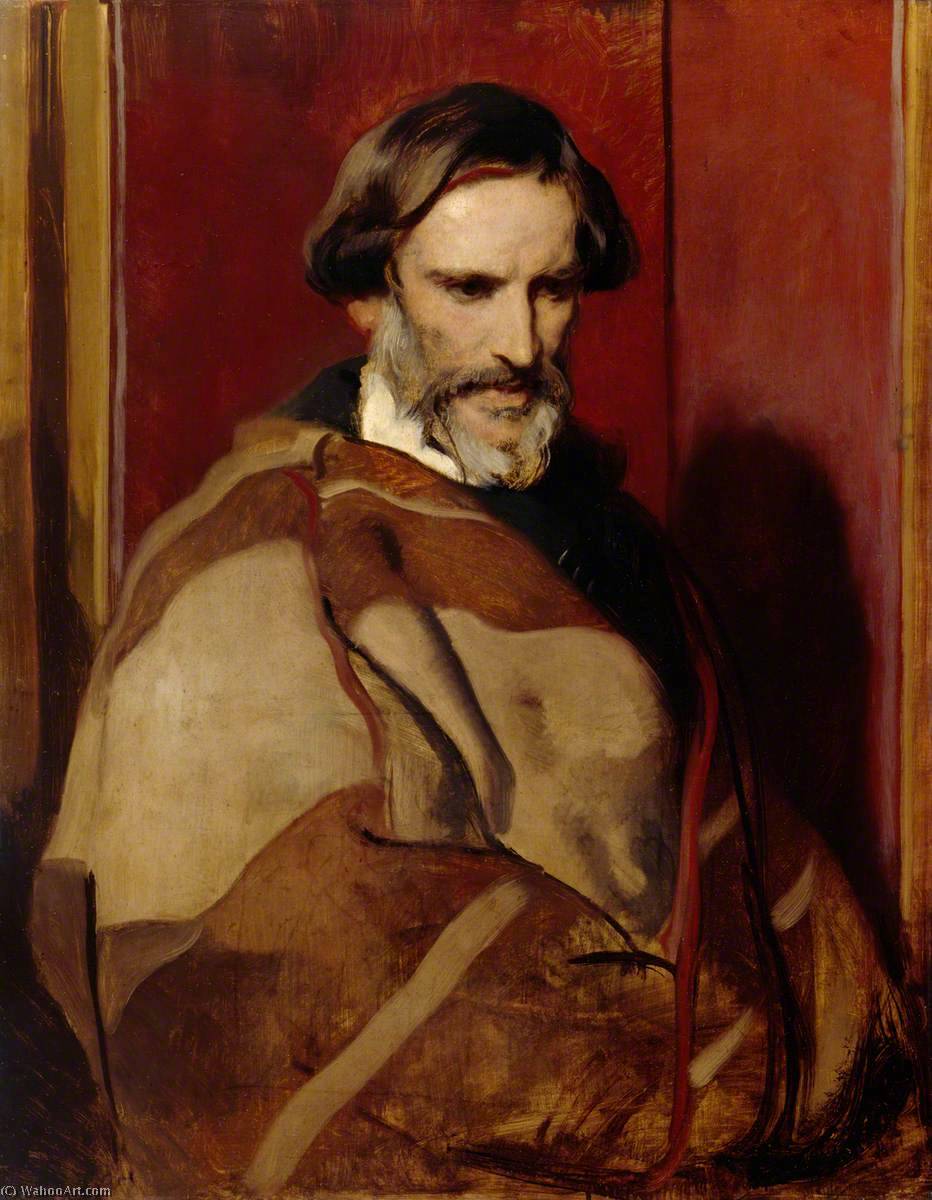
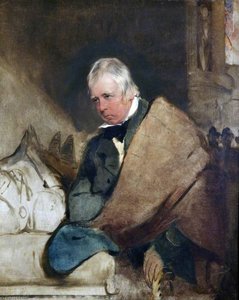
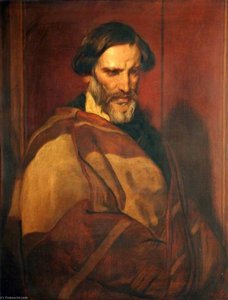
In this evocative portrait of John Gibson, Sir Edwin Henry Landseer transcends the boundaries of traditional portraiture to capture not just a likeness, but a profound sense of character and temporal weight. The painting presents an elderly man seated in a moment of quiet contemplation, his presence commanding the space through a masterful use of light and shadow. Set against a deep, resonant red background, the subject emerges from the darkness with a striking clarity that draws the viewer into his personal orbit. Every wrinkle, every strand of his weathered hair, and the heavy folds of his garments are rendered with an academic precision that speaks to the sitter's importance and the artist's immense skill.
The composition is intimate yet grand, focusing the observer's gaze on the interplay between the man’s features and the textures surrounding him. There is a palpable sense of history within the frame; the way the light catches the contours of his face suggests a life lived through seasons of intellect and experience. For the collector or interior designer, this piece offers a focal point of immense gravity, capable of anchoring a room with its somber elegance and timelessness.
Technique and the Mastery of Light
Landseer’s technical prowess is on full display through his use of the impasto technique, where thick, deliberate applications of oil paint create a tactile surface that breathes life into the canvas. This layering of pigment does more than just define shape; it creates a physical topography that catches actual light within a room, adding a dynamic quality to the work. The artist employs a rich, warm palette dominated by earthy browns, deep crimsons, and soft creams, creating a harmonious atmosphere that feels both luxurious and grounded.
The lighting is decidedly directional, reminiscent of the great masters of the Baroque period, casting intentional shadows that lend a sculptural depth to the subject. This chiaroscuro effect serves to highlight the organic shapes of the man's face and the heavy, draped fabric of his clothing, suggesting a scholarly or perhaps even religious significance to his station in life. The visible brushstrokes do not detract from the realism but rather add an energetic, human element to the work, reminding us of the hand of the artist behind the meticulous detail.
A Legacy of Victorian Realism
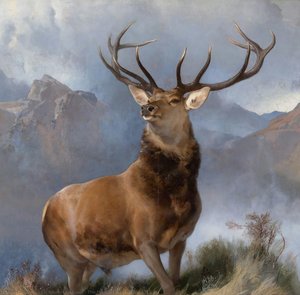
Created in 1850, this portrait stands as a testament to the height of 19th-century academic realism. While Landseer is often celebrated for his emotive and legendary animal portraits, such as The Monarch of the Glen, his ability to imbue human subjects with similar psychological depth is equally remarkable. In this work, he applies the same anatomical rigor and emotional sensitivity that defined his wildlife studies to the human form, treating the sitter's features with the same reverence one might accord a majestic creature of the wild.
The painting evokes an era of profound transition, capturing a sense of stability and dignity amidst the changing tides of the Victorian age. For those seeking to adorn a space with art that inspires reflection, this reproduction offers more than mere decoration; it provides a window into a bygone era of intellectual rigor and artistic devotion. It is a piece designed for those who appreciate the nuances of texture, the drama of light, and the enduring power of a well-told visual story.
Ähnliche Kunstwerke
Über den Künstler
Frühes Leben und Ausbildung
Sir Edwin Henry Landseer, ein bedeutender englischer Maler und Bildhauer, wurde am 7. März 1802 in London, im Vereinigten Königreich, geboren. Als Sohn des Graveurs John Landseer A.R.A. war er schon in jungen Jahren der Welt der Kunst ausgesetzt. Landseers außergewöhnliches Talent wurde früh erkannt, was dazu führte, dass er unter mehreren Künstlern studierte, darunter sein Vater und der Historienmaler Benjamin Robert Haydon.Künstlerische Karriere
Landseers künstlerische Karriere zeichnete sich durch seine herausragende Fähigkeit aus, Tiere, insbesondere Pferde, Hunde und Hirsche, einzufangen. Seine berühmtesten Werke sind jedoch die Löwenskulpturen im Trafalgar Square in London. Sir Edwin Henry Landseer war Mitglied der Royal Academy, stellte bereits im Alter von 13 Jahren Arbeiten aus und wurde später mit 24 zum Associate und mit 31 zum Akademiker ernannt.Bemerkenswerte Werke und Kooperationen
Zu Landseers bemerkenswertesten Werken gehören:- Monarch of the Glen (1851), eine majestätische Hirschstudie, die seine Fähigkeit zeigt, die Schönheit der Natur einzufangen.
- Off to the Rescue (1827), ein Gemälde mit einem Neufundländer, das Landseers Fähigkeit hervorhebt, edle Tiere darzustellen.
- Laying Down the Law (1840), ein satirisches Werk mit einer Gruppe von Hunden, das seinen Sinn für Humor und Kreativität demonstriert.
Museen mit Landseers Werken
Landseers Werke sind in verschiedenen Museen zu finden, darunter:- Tate Britain, London, Großbritannien
- Victoria and Albert Museum, London, Großbritannien
- Kenwood House, London, Großbritannien
- The Wallace Collection, London, Großbritannien
Vermächtnis
Landseers Vermächtnis geht über seine Kunst hinaus, wobei die "Landseer"-Rasse des Neufundländerhundes nach ihm benannt wurde. Seine Zusammenarbeit mit dem Maler Frederick Richard Lee und seine Porträts von Königin Victoria und ihrer Familie festigen seinen Einfluss auf die britische Kunst weiter.Online-Ressourcen
Für weitere Informationen über das Leben und Werk von Sir Edwin Henry Landseer besuchen Sie:- ArtsDot.com: Sir Edwin Henry Landseer
- Wikipedia: Sir Edwin Landseer
Schlussfolgerung
Sir Edwin Henry Landseers bemerkenswertes Talent und seine Beiträge zur britischen Kunst haben einen bleibenden Eindruck hinterlassen. Seine Werke, die Tiere und satirische Themen darstellen, inspirieren weiterhin Künstler und Kunstliebhaber gleichermaßen.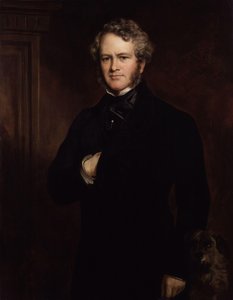
Sir Edwin Henry Landseer
1802 - 1873 , Vereinigtes Königreich
Kurzinfos
- Bemerkenswerte Werke:
- Monarch of the Glen
- Off to the Rescue
- Laying Down the Law
- Geburtsdatum: 7. März 1802
- Geburtsort (Stadt, Land): London, Vereinigtes Königreich
- Künstler, Die Diesen Künstler Beeinflussten:
- Benjamin Robert Haydon
- John Landseer
- Künstlerische Bewegung Oder Stil: Viktorianische Kunst
- Nationalität: Britisch
- Todatum: 1873
- Vollständiger Name: Sir Edwin Henry Landseer
Ähnliche Artikel
Sir Joshua Reynolds: Die 25 Meisterwerke des Porträtmalers | ArtsDot
Entdecken Sie die 25 Meisterwerke von Sir Joshua Reynolds! Erleben Sie Rokoko & Klassizismus durch ikonische Porträts. Hochwertige Reproduktionen für Ihr Interieur auf ArtsDot.com – jetzt entdecken!
Sir Edwin Landseer: Sentiment, Society & the Victorian Animalier Tradition
Explore the life & art of Sir Edwin Landseer, Victorian Britain's foremost animal painter. Discover his iconic works, societal impact, and collecting guide at ArtsDot.

John Singer Sargent: Die 25 Meisterwerke des Porträts – Kunst für Ihr Zuhause | ArtsDot
Entdecken Sie die 25 Meisterwerke von John Singer Sargent! Tauchen Sie ein in die Welt der Porträtmalerei, des Impressionismus & der Belle Époque. Hochwertige Kunstdrucke & Reproduktionen für Ihr Zuhause – jetzt auf ArtsDot.com!

John Constable: Die 25 Meisterwerke des englischen Landschaftsgenies – ArtsDot
Entdecken Sie die 25 Meisterwerke von John Constable! Erleben Sie englische Landschaftsmalerei vom Hay Wain bis zur Stour Valley. Hochwertige Reproduktionen & Kunst für Ihr Zuhause auf ArtsDot.com.

Sir Alfred James Munnings: Die 25 Meisterwerke des Pferdebildes | ArtsDot
Entdecken Sie die 25 Meisterwerke von Sir Alfred James Munnings! Erleben Sie seine beeindruckenden Pferdebilder, geprägt vom Impressionismus und Realismus. Hochwertige Kunstdrucke & Reproduktionen auf ArtsDot.com – für elegante Wandkunst & stilvolles Interieurdesign.